 Birch Bay Window
 Why Nooksack-Area Homes Wear Out Their Siding Faster
Homes around Nooksack and the wider Whatcom County corridor deal with a combination of weather stresses that most siding products were never designed to handle for the long haul. Salt-laden air drifts in off the Strait of Georgia and Puget Sound, driving rain comes in sideways for months at a stretch, and the shaded, damp conditions common here keep moss and algae active for most of the year instead of just a few weeks. Individually, any one of those is manageable. Together, year after year, they're what actually shortens the life of a home's exterior.
Salt air accelerates corrosion on fasteners and metal trim, and it degrades certain paint and coating systems faster than manufacturers' published timelines assume. Driving rain finds its way into any gap in the water management behind the siding — house wrap seams, poorly flashed windows, caulked joints that were never meant to be a primary water barrier. And moss doesn't just look bad; it holds moisture against the wall assembly, which is exactly the condition that causes rot, delamination, and paint failure in siding that isn't built to shed water and resist organic growth.
Replacing siding here isn't just a cosmetic decision. Done right, it's a chance to correct the water management behind the wall and put a cladding system on the house that's actually engineered for this climate — not just repainted every few years to keep up appearances.
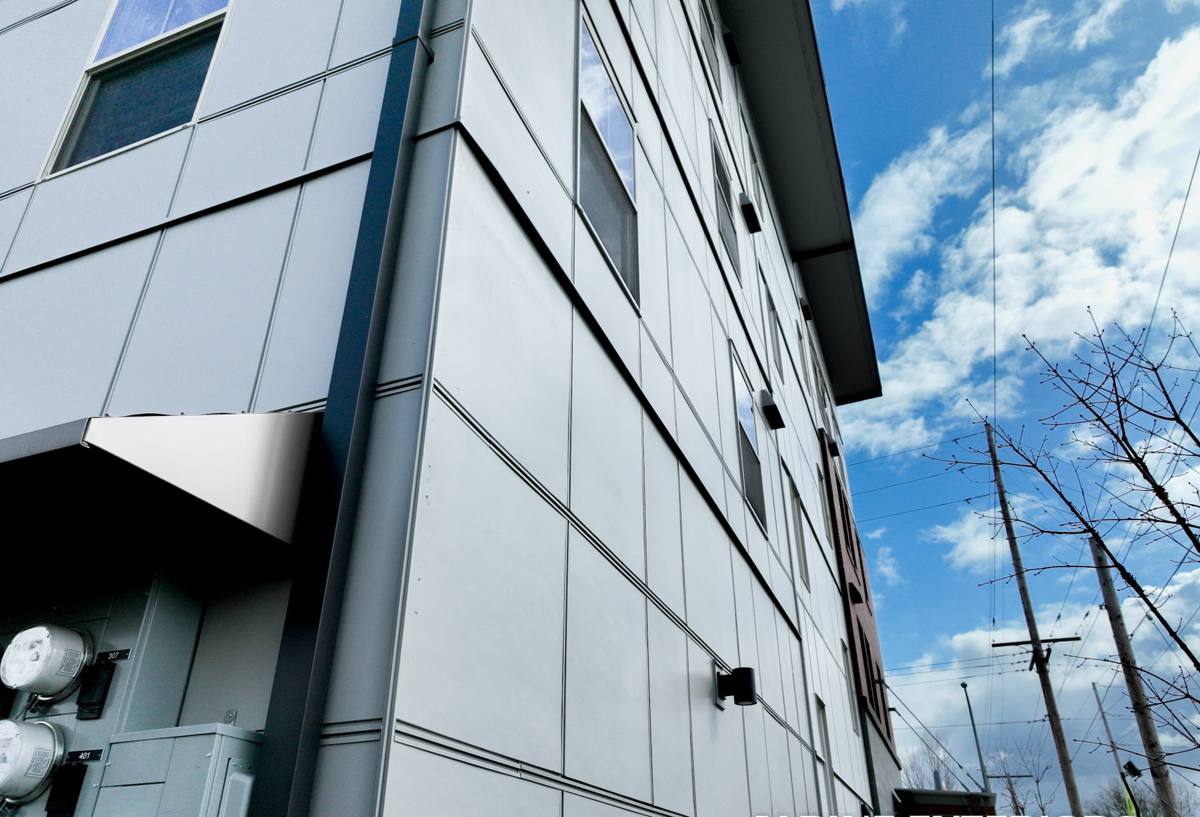
Signs a Nooksack Home Needs Replacement, Not Just Repair
Not every siding problem calls for a full tear-off. But there's a point where patching becomes a waste of money and the underlying wall assembly needs a real reset. Watch for:
- Soft or spongy spots when you press on the siding, especially near the bottom courses and around window and door trim
- Paint that's peeling or bubbling in patterns that follow seams, corners, or fastener lines rather than random weathering
- Moss or algae that returns within weeks of being pressure washed or treated
- Visible warping, cupping, or separation at panel joints
- Interior signs — musty smell, staining, or soft drywall near exterior walls — that point to moisture getting past the siding
- Siding that's simply reached the end of its practical service life and is costing more in repairs and repainting than a replacement would
If you're seeing two or more of these, it's worth having someone look at the wall assembly itself, not just the surface.
Why We Install Only James Hardie Fiber Cement
We standardized on James Hardie fiber cement siding for every job we do, including replacements in the Nooksack area, and we don't install vinyl, LP SmartSide, Cemplank, Allura, primed spruce, or cedar. That's a deliberate choice, not a sales pitch, and it's worth explaining honestly.
Each of those alternatives has real strengths — vinyl is inexpensive and low-maintenance in mild climates, engineered wood products install quickly, and cedar has a natural look plenty of homeowners love. But in a climate with sustained damp conditions, salt air, and heavy moss pressure, the trade-offs stack up: vinyl can warp and fade, and its seams are a weak point for wind-driven rain. Engineered wood siding is more vulnerable to moisture intrusion at cut edges and fastener points if it isn't sealed and maintained precisely per the manufacturer's specification. Cedar and primed spruce need regular refinishing to hold up against moss and rot, which is an ongoing cost most homeowners underestimate when they're comparing upfront prices.
James Hardie fiber cement is non-combustible, dimensionally stable in wet-dry cycling, and available in HardieZone HZ product lines engineered specifically for climates like ours. The factory-applied ColorPlus finish is baked on and warrantied against fading and peeling in a way field-applied paint can't match, which matters a lot when the whole reason you're repainting is moss and salt damage in the first place. It's also backed by a strong transferable warranty when installed to Hardie's specification — which is the other half of the equation, because Hardie's performance depends on correct installation as much as the product itself.
What a Correct Fiber Cement Installation Actually Involves
Water Management Comes First
Before a single piece of siding goes up, the wall needs a properly lapped weather-resistive barrier, correctly flashed windows and doors, and drainage planes that let any incidental moisture escape rather than pool behind the cladding. This is the step that determines whether your new siding lasts 30-plus years or starts failing in five, and it's also the step that's easiest for a rushed crew to shortcut.
Fastening and Clearances
Hardie panels need to be fastened per the manufacturer's pattern and spacing, with proper clearance from grade, roof lines, and decks so water has somewhere to go instead of wicking up into the bottom edge of the siding. Gaps at butt joints and around penetrations need to be sized and sealed per spec — not just caulked shut and hoped for the best.
Cutting and Finishing
Cut edges on fiber cement need to be primed or sealed, because a raw cut edge is more absorbent than the factory-finished face. Skipping this is a common shortcut that leads to premature edge deterioration, especially in a climate that stays damp as long as ours does.
HardieZone Climate Engineering
Hardie makes region-specific formulations (HZ5 and HZ10) engineered for different climate zones, accounting for freeze-thaw cycling and moisture exposure. Using the product line that actually matches Whatcom County's conditions is part of doing the job correctly, not an upsell.
Our Process for a Nooksack Siding Replacement
- On-site assessment — we inspect the existing siding, sheathing, and water management, and identify any rot or hidden damage before quoting the job
- Tear-off and sheathing check — old siding comes off and we evaluate the wall behind it, repairing or replacing any compromised sheathing or framing
- Weather barrier and flashing — a new, correctly lapped weather-resistive barrier and properly flashed openings go in before any siding is installed
- Hardie installation — panels, planks, or shingles installed to manufacturer spec, with correct fastening, clearances, and sealed cut edges
- Trim and detail work — corners, trim boards, and joints finished to shed water rather than trap it
- Final walkthrough — we go over the finished job with you and explain basic care so the siding performs the way it's designed to
Because we work this area regularly, we're already familiar with the kind of exposure — wind direction, rain load, shade and moss patterns — that varies house to house around Birch Bay and the surrounding Whatcom County communities. That local pattern recognition shapes decisions like flashing details and product line selection before we ever start tearing off old siding.
Choosing Colors and Profiles
James Hardie's ColorPlus line comes in a range of factory-finished colors and several siding profiles — lap siding, shingle-style panels, and vertical board-and-batten among them. In a region where a lot of homes lean toward Pacific Northwest craftsman or modern coastal styling, we help homeowners pick a profile and color that fits the house and holds up visually against the muted, often overcast light typical of this part of Washington. A factory finish also means the color won't chalk or fade the way field-applied paint can after a few damp winters.
Cost Factors to Understand
| Factor | Why It Affects Cost |
|---|---|
| Existing wall condition | Rot or damaged sheathing found during tear-off adds repair scope before new siding goes on |
| Home size and complexity | Roof lines, dormers, and wall penetrations add labor for cutting, flashing, and trim |
| Siding profile chosen | Lap, shingle, and vertical board-and-batten differ in material and install time |
| Trim and detail scope | Full trim replacement costs more than reusing sound existing trim where appropriate |
| Access and site conditions | Multi-story sections, tight lot lines, or landscaping can affect staging and labor |
We give a firm, itemized estimate after the on-site assessment so you know exactly what you're paying for and why — no vague allowances that turn into surprises mid-project.
Why Local Experience Matters Here
A crew that hasn't worked in this climate can install siding correctly by the book and still miss the details that matter most for salt air and sustained moisture — things like exactly how tight to run clearances near grade, or where moss pressure is heaviest on a given elevation. We work Nooksack, Birch Bay, and the surrounding Whatcom County area consistently, which means we're not guessing at how a wall assembly will hold up here — we've seen how it plays out over multiple wet seasons on homes with similar exposure.
After Installation: What Keeps Hardie Siding Performing
- Rinse the exterior periodically to keep salt residue and organic buildup from accumulating, especially on north-facing and shaded walls
- Keep gutters clean and downspouts directed away from the foundation so water isn't sheeting down the siding
- Trim back vegetation and tree cover that keeps walls shaded and damp, which is what drives moss growth
- Inspect caulked joints annually and have any cracked or failed sealant addressed before the wet season
- Address any impact damage or chipping promptly so the substrate underneath isn't exposed
None of this is heavy maintenance — it's the kind of upkeep that, combined with a factory-finished, climate-engineered product, is what actually gets you the decades of service life fiber cement is capable of.
If your siding is showing its age or you're planning ahead for a replacement, we're happy to come take a look and walk you through what we're seeing — no pressure, no obligation. Reach out using the form below to schedule a free estimate.