 Birch Bay Window
 Roof Repair Built for Point Roberts Conditions
Point Roberts sits on its own peninsula, surrounded on three sides by the Salish Sea, which means roofs here take on a combination of stresses that inland Whatcom County homes simply don't deal with the same way. Salt-laden air off the water accelerates corrosion on fasteners, flashing, and metal roofing components. Driving rain, pushed sideways by wind coming off open water, finds every weak seam and undersized flashing detail a roof has. And the long Pacific Northwest wet season gives moss and algae months at a time to take hold on north-facing slopes and shaded valleys. A roof repair here isn't just patching a leak — it's addressing why that spot failed in the first place, given what this specific location throws at it year-round.
We work on roofs throughout Birch Bay and the surrounding Whatcom County coastline, and Point Roberts is part of that territory. That matters more than it sounds like it should, for reasons we'll get into below.
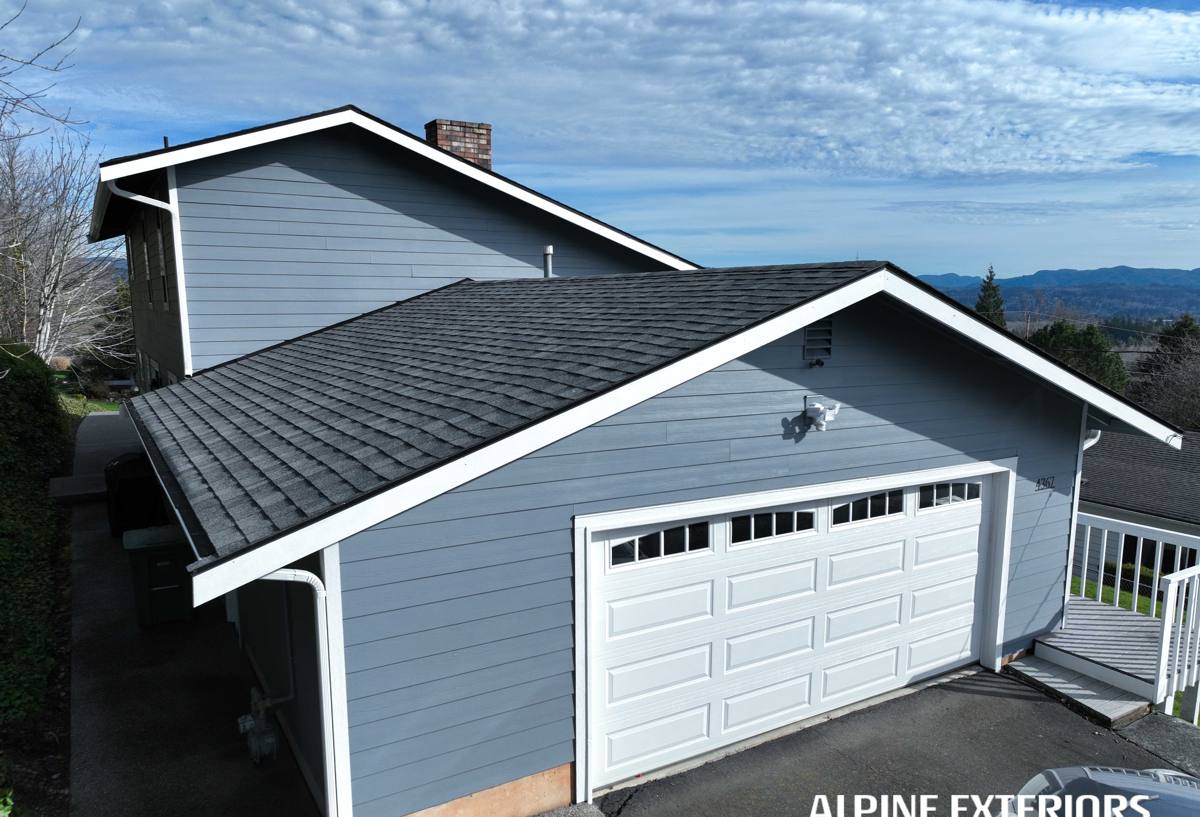
What Salt Air and Coastal Wind Actually Do to a Roof
Corrosion Where You Can't See It
Salt air doesn't just sit on the surface — it works into fastener heads, exposed nail penetrations, and the cut edges of metal flashing. Galvanized fasteners that would last decades inland can start showing rust streaks and weakening well before a roof's shingles are due for replacement. When we're repairing a roof in Point Roberts, we pay close attention to fastener condition, not just the visible leak, because a repair that reuses corroded hardware is a repair that fails again soon.
Wind-Driven Rain and Uplift
Open water exposure means wind here isn't just stronger on average — it's more consistently directional, which stresses the same edges, ridges, and rake details repeatedly instead of spreading wear evenly across the roof. Shingle tabs along windward edges loosen and lift, ridge caps work loose, and any flashing that was installed with minimal overlap or insufficient sealant tends to show it first at Point Roberts homes.
Signs a Roof Needs Repair — Not a Full Replacement
Most roofs don't fail all at once. They fail in specific spots while the rest of the roof still has useful life left. Catching those spots early is what keeps a repair a repair instead of turning into a premature full replacement.
- Water stains on interior ceilings or upper walls, especially after a windy rainstorm rather than a calm one
- Missing, cracked, or curling shingles concentrated on one slope, particularly a windward or north-facing one
- Rust streaking below metal flashing, vents, or fastener heads
- Moss or algae buildup thick enough to hold moisture against the shingle surface
- Sagging or soft spots near valleys, chimneys, or skylights
- Granules collecting in gutters in noticeably larger amounts than in past years
- Daylight visible through roof sheathing from inside an attic
If what you're seeing matches one or two items on that list and is limited to a defined area, a targeted repair is usually the right call. If it's several items across multiple slopes, that's a conversation worth having honestly during an inspection, rather than assuming either way.
Moss, Algae, and the Long Wet Season
Whatcom County's wet season stretches long, and Point Roberts' marine exposure keeps humidity and moisture lingering even on days without active rain. Moss thrives in that environment, particularly on north-facing and shaded roof sections that don't get enough sun to dry out between rain events. The problem isn't just cosmetic — moss holds water against the shingle surface far longer than bare shingles would experience, which accelerates granule loss and, over years, can lift shingle edges as moss mats grow underneath them.
A proper moss-related repair goes beyond scraping the visible growth off. It means checking what condition the shingles are in underneath, whether any have already lost enough granule protection to need replacement, and addressing why moss took hold there in the first place — often a combination of shade, slope, and debris buildup in valleys or against roof-to-wall transitions.
Common Point Roberts Roof Repair Issues
The repair calls we see most often in this area tend to cluster around a handful of causes. Here's how those typically break down:
| Issue | Typical Cause | What a Correct Repair Involves |
|---|---|---|
| Leak at chimney or skylight | Flashing sealant failure, corroded step flashing | Remove and reinstall flashing with proper counter-flashing, not just re-sealing over the old joint |
| Leak along a valley | Debris damming water, undersized valley metal, or worn valley shingles | Clear debris, inspect valley metal for corrosion, replace shingles showing granule loss |
| Loose or missing ridge cap shingles | Wind uplift from sustained coastal exposure | Reinstall with fasteners suited to the wind exposure, checking ridge vent condition underneath |
| Rust stains below vents or fasteners | Corrosion from prolonged salt-air exposure | Replace corroded hardware with appropriate corrosion-resistant fasteners, not a spot cover-up |
| Soft or spongy deck sections | Long-term moisture intrusion, often from an earlier undetected leak | Cut back to sound decking, replace sheathing, then address the roofing above it |
Repair vs. Replacement: What Actually Tips the Scale
Homeowners understandably want a straight answer on repair versus replacement, and the honest answer depends on a few concrete factors rather than a rule of thumb. We walk through these openly during an inspection rather than defaulting to whichever answer is more profitable for us.
| Factor | Leans Toward Repair | Leans Toward Replacement |
|---|---|---|
| Roof age | Under roughly two-thirds of expected material lifespan | At or beyond expected lifespan for the material |
| Extent of damage | Isolated to one slope, flashing detail, or penetration | Spread across multiple slopes or recurring in several spots |
| Underlying decking condition | Solid, dry sheathing found during inspection | Soft, delaminated, or repeatedly wet sheathing |
| Granule loss / shingle wear | Localized, surrounding shingles still intact | Widespread granule loss visible across the field |
| History of past repairs | First repair, or repairs in different unrelated areas | Same area repaired multiple times already |
How Our Repair Process Works
1. Inspection First, Not a Guess From the Ground
We get on the roof (weather permitting) and check the specific area of concern along with the rest of the roof surface, flashing details, valleys, and vents. A leak's visible entry point inside a home is often several feet away from where water is actually getting in on the roof, so we trace it rather than assume.
2. A Straight Explanation Before Any Work Starts
You get told what we found, what's causing it, and what fixing it correctly involves — including if we think a full replacement makes more sense than sinking money into a repair. No pressure either direction.
3. Repair to Match the Original Material and Exposure
We match shingle type, color, and profile as closely as possible, and use fasteners and flashing suited to Point Roberts' salt-air and wind exposure rather than whatever's cheapest. A repair that doesn't account for local conditions is a repair you'll be paying for again in a few years.
4. Cleanup and a Final Walkthrough
We clear debris, old materials, and stray fasteners from the roof and gutters, then walk the completed repair with you so you know exactly what was done and where.
Why Working With a Crew Already Serving Point Roberts Matters
Point Roberts is a bit of a logistical outlier — reaching it means routing around Boundary Bay and crossing the international border, which some contractors simply won't factor into scheduling for a single repair call. That can mean longer waits, higher trip charges, or crews unfamiliar with how differently coastal exposure ages a roof compared to inland Whatcom County. A crew that already routes through the area regularly can respond faster, carries a working knowledge of what fails first out here, and isn't treating your repair as an inconvenient outlier on their schedule.
It also means we're not learning on your roof. We've seen how salt air treats fasteners and flashing in this exact area, and that shapes the materials and methods we default to, rather than generic recommendations that work fine sixty miles inland but underperform on a peninsula.
Between-Visit Maintenance That Actually Helps
A repair holds up longer when a few basic things get done between professional visits. None of this replaces a proper inspection, but it reduces how often you need one urgently.
- Clear gutters and valleys of debris at least twice a year, more often under overhanging trees
- Trim back branches that shade roof sections and keep them from drying out
- Check attic spaces after major storms for new water staining
- Have moss addressed before it forms a thick mat, not after
- Note any granule buildup in gutters and mention it at your next inspection
- Avoid pressure-washing a roof surface directly — it can strip granules and force water under shingles
Getting a Repair Estimate
Every roof repair situation is a little different, and the only way to give you an accurate, honest answer — repair, replace, or watch-and-wait — is to actually look at it. If you're seeing signs of trouble on a Point Roberts roof, or just want a second opinion before winter storms roll in, we're happy to come take a look. Reach out for a free, no-pressure estimate using the form below.