 Birch Bay Window
 Decks Built for Point Whitehorn's Waterfront Climate
Point Whitehorn sits close enough to the water that homes here deal with a different set of conditions than decks built ten or twenty miles inland. Salt-laden air, wind-driven rain off the Strait, and long stretches of shade and dampness through fall and winter add up to a tough environment for outdoor structures. A deck that would hold up fine in a drier, more sheltered part of Whatcom County can start showing problems here within a few seasons if it wasn't built with this specific exposure in mind.
We build and repair decks for homes in and around Point Whitehorn, and the material choices, fastener selection, and structural details we use are informed by what actually happens to a deck in this microclimate — not a generic build spec pulled from a catalog.
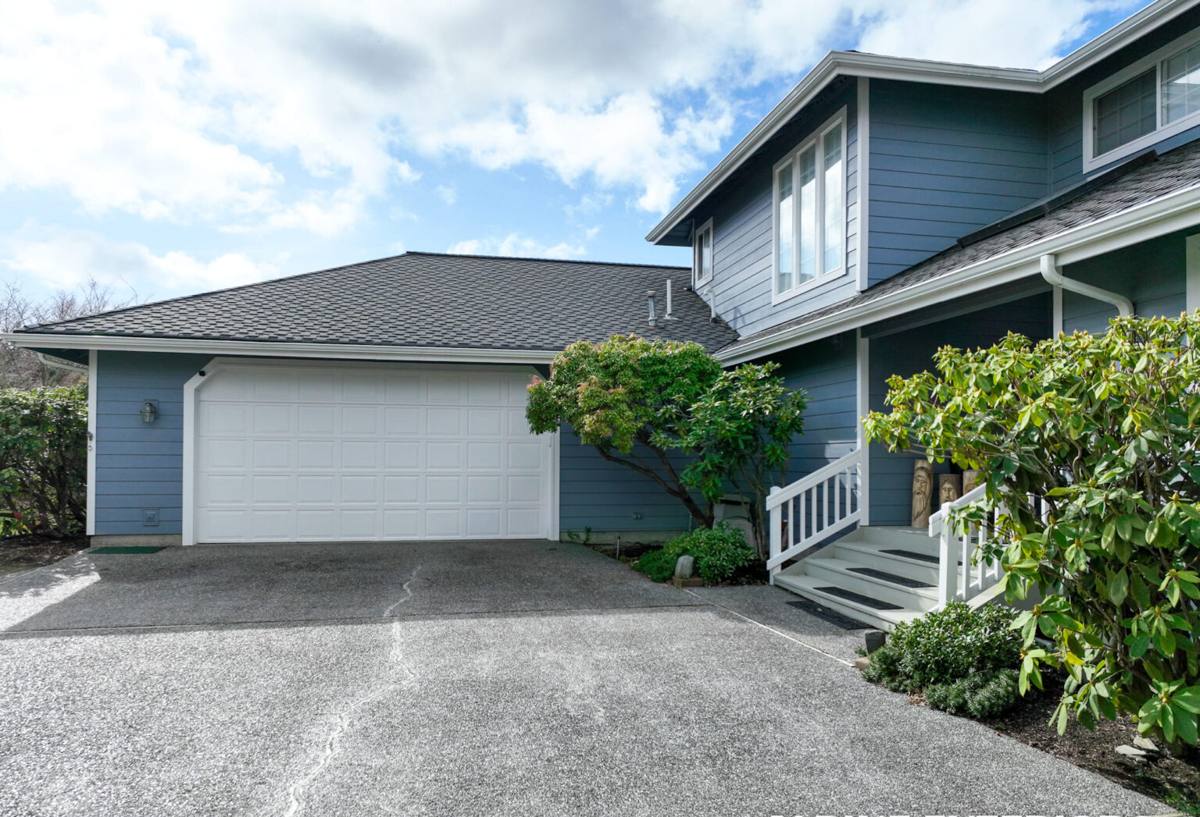
What Salt Air, Rain, and Moss Actually Do to a Deck
Each of these factors attacks a deck in a different way, and a correctly built deck has to account for all three at once.
Salt Air
Airborne salt accelerates corrosion on any exposed metal — screws, joist hangers, bolts, and railing hardware. Standard galvanized fasteners can start rusting and staining decking boards well before the wood itself is due for replacement. Once a fastener starts to corrode, it loses holding strength long before the failure is visible from the surface.
Driving Rain
Wind off the water doesn't just fall straight down — it drives rain sideways and up under boards, railings, and ledger connections. Any gap, seam, or fastener hole that isn't properly sealed becomes a path for water to reach framing lumber. This is especially a problem at the ledger board, where the deck attaches to the house, since a poorly flashed ledger is one of the most common causes of hidden rot and, in worst cases, structural failure.
Moss and Algae
Shaded, damp decks — common under tree cover or on the north side of a house — grow moss and algae readily in this climate. Beyond looking bad, moss holds moisture against the deck surface long after the rest of the yard has dried out, which softens wood fibers and turns even a small amount of surface neglect into a slip hazard on top of a maintenance headache.
Choosing the Right Decking Material for This Exposure
There's no single "best" decking material for every home — it depends on your budget, how much upkeep you want to do, and how exposed the deck is to salt air and shade. Here's how the common options compare for a Point Whitehorn property specifically.
| Material | Moisture & Salt Resistance | Moss/Algae Resistance | Maintenance | Typical Lifespan |
|---|---|---|---|---|
| Pressure-treated lumber | Good if fasteners and flashing are correct; wood itself is treated for rot | Moderate — needs periodic cleaning and re-sealing | Annual cleaning, re-staining every 2-3 years | 15-25 years with upkeep |
| Cedar | Naturally rot-resistant, but softer and more prone to surface wear near salt spray | Moderate — same shading issues as any wood | Regular sealing to preserve color and resist moisture | 15-20 years with upkeep |
| Capped composite | Very good — non-porous cap resists moisture and salt staining | Good — smoother surface sheds moss more easily than wood | Occasional washing, no staining or sealing | 25-30+ years |
| Uncapped composite (older style) | Fair — can absorb moisture at cut edges over time | Fair — more texture for moss to grip than capped boards | Periodic cleaning; more attention at exposed edges | 15-25 years |
For decks with heavy shade or close proximity to the water, we generally steer homeowners toward capped composite or well-detailed pressure-treated framing with composite decking on top — not because wood is a bad product, but because the maintenance burden of a natural wood surface in this specific exposure is real, and it's fair for homeowners to know that going in. If you want the look and feel of real wood and are willing to keep up with sealing, cedar remains a solid, honest choice — it just asks more of you over the life of the deck.
Fasteners and Hardware
Regardless of decking material, the hardware underneath matters just as much. In a salt-air environment we use stainless steel or heavy-duty coated fasteners and structural connectors rated for coastal exposure, not standard interior-grade hardware. This is one of the areas where cutting corners doesn't show up for a year or two — and then shows up all at once.
What a Correctly Built Deck Includes
A deck that's going to hold up to Point Whitehorn's weather needs more than good-looking boards on top. The details that don't show once the project is finished are the ones that determine whether it lasts.
- Properly flashed ledger board connection, with flashing tucked under the house's existing weather barrier — not just caulked over
- Corrosion-resistant fasteners and structural hardware throughout, sized and rated for the load
- Joist tape or equivalent protection on framing lumber to keep water from sitting on top of joists
- Adequate air gap and slope for drainage so water doesn't pool under or on the deck surface
- Footings set to local frost depth and soil conditions, not a one-size-fits-all spec
- Railing and stair hardware that meets current code for the deck's height and use
- Decking board spacing that allows for material expansion and proper drainage between boards
Any one of these done wrong can look fine on the day the job wraps up and still cause problems within a few seasons — which is exactly the timeline where marine air and heavy rain do their damage.
How We Approach a Point Whitehorn Deck Project
Our process is straightforward, and it's built around getting the details above right the first time.
- On-site assessment. We look at sun exposure, shade patterns, existing structure (for repairs or rebuilds), and how close the deck is to salt spray or standing water runoff.
- Material and design discussion. We walk through the trade-offs between materials honestly — cost, maintenance, and how each option holds up specifically in this location — so you're choosing based on real information, not a sales pitch.
- Written estimate. Clear scope, materials, and timeline before any work starts.
- Permitting. Whatcom County has specific requirements for deck size, height, and railings — we handle the permit process so you don't have to chase it down yourself.
- Construction. Framing, flashing, and fastening done to the standard above, with attention paid to the connections and details that don't show once the decking is installed.
- Final walkthrough. We go over the finished deck with you, including basic care guidance specific to your material and site conditions.
Repair, Resurface, or Rebuild?
Not every deck problem means starting over. If the framing underneath is sound — no soft spots, no rot at the ledger, hardware still solid — resurfacing with new decking boards can extend the life of a structurally good deck for a fraction of the cost of a full rebuild. But if we find rot at the ledger connection, undersized or corroded structural hardware, or footings that were never adequate to begin with, patching the surface just delays a bigger problem. We'll tell you plainly which situation you're in, including what we find underneath that you can't see from the surface, before recommending a direction.
Warning Signs Worth a Look
- Soft or spongy spots when you walk across the deck, especially near the house
- Persistent moss or dark staining in the same spots after cleaning
- Rust streaks running down from screw heads or hardware
- Gaps opening up where the ledger board meets the house
- Railings or stair posts that feel loose or flex under weight
Ongoing Care in a Moss-Prone, Salt-Air Setting
Even a well-built deck needs some seasonal attention here. A yearly cleaning to knock back moss and algae buildup — before it gets a foothold rather than after — goes a long way, especially on shaded sections. Composite decking generally just needs washing; wood decking needs periodic sealing to keep moisture out of the fibers. Keeping gutters and downspouts clear near the deck also matters more than people expect, since concentrated runoff onto or near a deck footing is a common source of long-term moisture problems that has nothing to do with the deck itself.
Why Local Experience in Point Whitehorn Matters
A deck built to a generic spec sheet can still fail early if it doesn't account for where it actually sits. Crews who regularly work Point Whitehorn and the broader Birch Bay area already know which sides of a house tend to hold moss, how far wind-driven rain reaches under an eave, and what hardware actually holds up here versus what looks fine on paper. That local pattern recognition shows up in decisions during the build — where to add extra flashing, which fasteners to spec, how to detail a ledger board — long before any of it would show up as a problem down the road. It also means we're not guessing at Whatcom County permit requirements or showing up without knowing what typical soil and drainage conditions look like on this stretch of coastline.
If you're planning a new deck, or dealing with one that's showing its age faster than it should, we're happy to take a look and give you a straight assessment. Reach out for a free, no-pressure estimate using the form below — we'll walk the site, talk through your options, and give you honest numbers before you decide anything.