 Birch Bay Window
 Why California Creek Roofs Wear Differently
Homes along California Creek and the surrounding Birch Bay shoreline sit in one of the more demanding roofing environments in Whatcom County. You've got salt-laden air rolling in off the water, long stretches of driving rain through fall and winter, and a moss season that can run nearly year-round in the shaded, damp spots on north-facing slopes. None of these factors are dramatic on their own, but stacked together over a few seasons, they quietly break down roofing systems that would last much longer twenty or thirty miles inland.
Salt air accelerates corrosion on any exposed metal — flashing, fasteners, vent caps, gutter hardware. Driving rain, especially when it comes in sideways off wind gusts common to this stretch of coastline, finds every weak seam and gap in flashing or underlayment that a straight-down rain would never expose. And moss doesn't just sit there looking bad; its root structure lifts shingle edges and holds moisture directly against the roofing material, which is exactly the condition that leads to premature granule loss and rot in the decking underneath.
We repair roofs across Birch Bay and Whatcom County, but California Creek homes get a specific kind of attention because of where they sit relative to the water and tree cover. A repair that works fine in a dry inland neighborhood can fail here within a season or two if it doesn't account for these conditions.
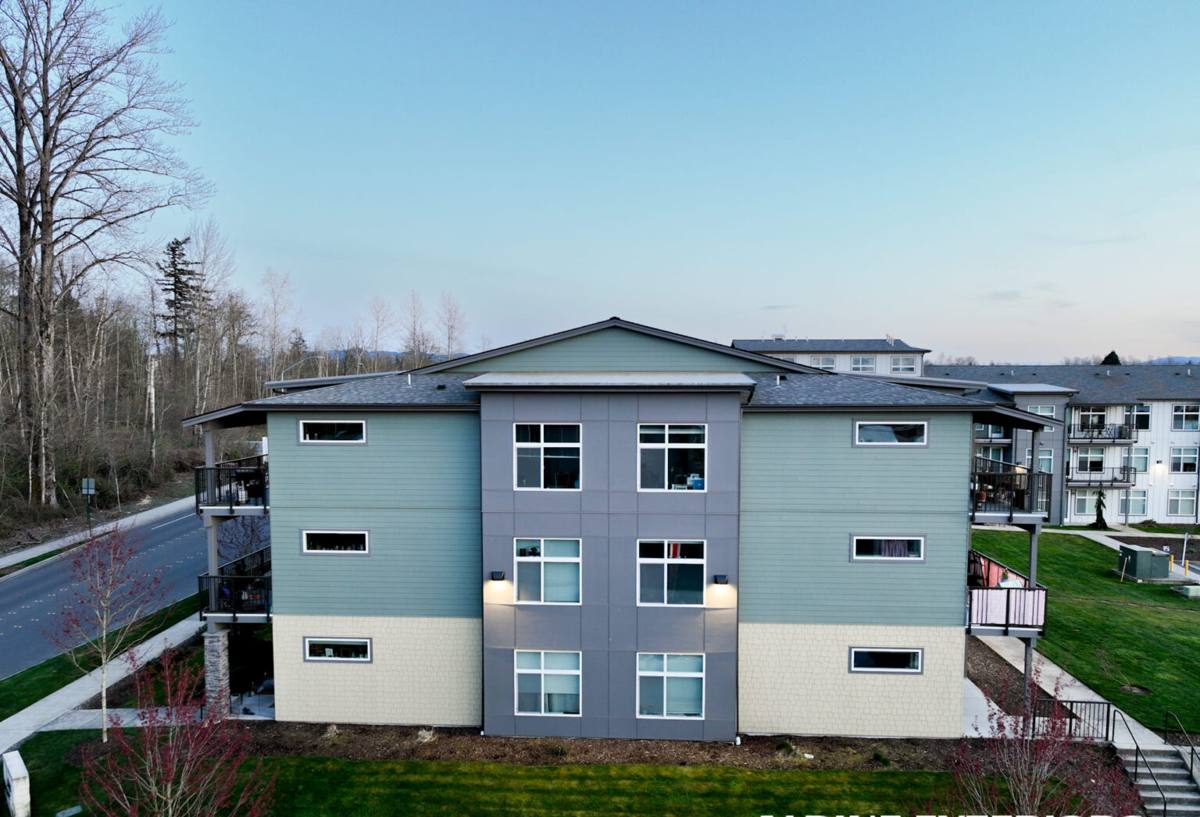
Signs a California Creek Roof Needs Repair
Most roof problems here don't announce themselves with a dramatic leak on day one. They show up as smaller signals first. Homeowners who catch these early save real money down the line.
- Granules collecting in gutters or at downspout outlets — a sign shingles are wearing faster than they should
- Dark streaking or green-black growth on north-facing or shaded roof planes
- Soft or spongy spots underfoot near valleys, chimneys, or skylights (never walk a roof to check this yourself — this is what an inspection is for)
- Rust staining below metal flashing, vent boots, or nail heads
- Curling, cracked, or lifted shingle edges, especially on the windward side of the roof
- Daylight visible through the attic roof deck, or damp insulation below a specific spot
- Water stains on interior ceilings that appear only during heavy wind-driven rain
That last one is a California Creek-specific tell. A leak that only shows up during storms with strong onshore wind, but not during calmer rain, almost always points to a flashing or underlayment gap that only gets tested when rain is being pushed sideways under the shingle line.
What a Correct Repair Actually Involves
It's Rarely Just the Shingle
A patch job that replaces a damaged shingle without checking what's underneath is a short-term fix, not a repair. Water that's made it past the shingle layer has usually already reached the underlayment, and sometimes the decking. A correct repair traces the water's actual path, which is frequently not directly above where the interior stain shows up — water can travel along rafters or decking seams before dripping somewhere else entirely.
Flashing Gets Priority
Given the wind-driven rain this area sees, flashing around chimneys, skylights, vent pipes, and roof-to-wall transitions is where we spend the most diagnostic time. Flashing that looks intact from the ground can have separated seams, failed sealant, or corrosion from salt exposure that's invisible until you're up close. Step flashing, counter-flashing, and valley metal all need to be checked independently — a failure in one doesn't mean the others are fine.
Decking and Ventilation Matter Too
If moisture has reached the roof deck, soft or delaminated plywood needs to be cut out and replaced, not just covered over. We also check attic ventilation during any repair that involves opening up the roof, because poor airflow traps moisture from the inside and speeds up the same rot that salt air and rain cause from the outside. A repair that ignores ventilation is treating half the problem.
Roofing Materials Common in This Area
Different roofing materials hold up differently under salt air, moss pressure, and coastal wind-driven rain. This is a general comparison to help frame what you're working with — the right approach always depends on your specific roof's age, exposure, and condition.
| Material | Salt Air / Corrosion | Moss Resistance | Typical Repair Approach |
|---|---|---|---|
| Asphalt composition shingle | Fasteners and flashing are the vulnerable point, not the shingle itself | Moderate — moss gets a foothold in granule loss areas | Section replacement plus flashing and underlayment check |
| Metal (standing seam or panel) | Coating quality determines long-term corrosion resistance | Low — sheds moss more easily due to slope and surface | Fastener and seam resealing, panel replacement if punctured |
| Cedar shake | Naturally rot-resistant wood, but fasteners still corrode | High — needs the most active moss management | Individual shake replacement, ongoing treatment |
| Composite/synthetic shingle | Generally strong, but manufacturer warranty terms vary widely | Moderate to low depending on product | Manufacturer-specific replacement components |
We work with what's already on your roof rather than pushing a switch to a different material unless the existing system is genuinely failing. A well-maintained asphalt roof and a well-maintained metal roof can both perform fine here — the difference comes down to installation quality and how consistently flashing and ventilation were handled the first time around.
Our Roof Repair Process
We keep this straightforward because homeowners deserve to know exactly what's happening to their roof and why.
- Ground and interior assessment. We start by asking what you've noticed — staining, timing of leaks, any recent storms — before we ever get on the roof.
- Roof inspection. We physically walk the roof (when safe to do so) and check flashing, valleys, penetrations, shingle condition, and moss coverage plane by plane.
- Attic check. Where accessible, we look at the underside of the deck for moisture staining, rot, and ventilation condition — this often tells us more than the exterior does.
- Written explanation of findings. You get a clear rundown of what's actually wrong, what's causing it, and what repair options exist — no pressure toward the most expensive fix.
- Repair. We replace damaged materials, correct flashing, address any decking issues, and confirm ventilation is functioning before closing everything back up.
- Final check. We verify the repair holds under close inspection and walk you through what to watch for going forward.
Moss and Ongoing Maintenance
Moss is less a one-time problem and more a maintenance relationship, especially on shaded or north-facing roof planes near tree cover — common around California Creek's more wooded lots. Left alone, moss holds moisture against the roofing surface and works its way under shingle edges, which is how a moss problem quietly becomes a leak problem.
- Have moss and debris cleared before it visibly mats down on the roof surface, not after
- Keep gutters and downspouts clear so water isn't backing up under the roof edge
- Trim back overhanging branches where reasonable to reduce shade and debris buildup
- Avoid pressure washing shingles — it strips protective granules and shortens roof life
- Have flashing and seals checked every couple of years, not just when a leak shows up
- Address small repairs promptly — a lifted shingle or gapped flashing seam only gets worse with another wet season
Repair vs. Replacement: What Actually Drives the Decision
Not every roof problem means you need a new roof, and not every roof problem should be patched indefinitely either. Here's how we think through it.
| Factor | Leans Toward Repair | Leans Toward Replacement |
|---|---|---|
| Roof age | Well within expected service life for the material | At or past the material's typical lifespan |
| Extent of damage | Isolated to one section, flashing point, or penetration | Widespread across multiple planes |
| Decking condition | Solid, dry decking beneath the damaged area | Repeated rot or soft spots in multiple areas |
| Repair history | First or infrequent repair on this roof | Same areas needing repeat repairs |
| Underlying cause | A specific, fixable cause (one bad flashing detail, storm damage) | Systemic wear across the whole roofing system |
We'll always tell you honestly which side of this table your roof falls on. A roof that just needs a section repaired shouldn't be sold a full replacement, and a roof that's genuinely failing shouldn't be patched over and over at the homeowner's expense.
Why It Matters to Hire a Crew That Already Works California Creek
Roofing crews who mostly work drier, inland parts of the region don't always account for how much harder salt air and wind-driven rain work against a roof here. That shows up in small but meaningful ways — using standard fasteners instead of corrosion-resistant ones, underestimating how far sideways rain can travel under a flashing gap, or not accounting for moss regrowth patterns tied to a specific lot's tree cover and sun exposure.
We work on roofs throughout Birch Bay and Whatcom County regularly enough to know how this coastal environment actually behaves, not just how a roofing manual describes average conditions. That local familiarity shapes real decisions — which fastener grade we use, how we detail flashing around penetrations, and how seriously we treat a "minor" moss patch before it becomes a bigger issue.
Get a Straight Answer About Your Roof
If you're seeing early warning signs, dealing with a leak that only shows up in certain storms, or just want an honest read on your roof's condition, we're glad to take a look. The estimate is free, there's no pressure attached to it, and you'll get a clear explanation of what we find — use the form below to get started.