 Birch Bay Window
 Roof Replacement Built for Cottonwood Beach's Shoreline Conditions
Cottonwood Beach sits close enough to the water that its roofs age on a different timeline than homes a few miles inland. Salt-laden marine air, wind-driven rain coming straight off open water, and a moss season that can run most of the year all work on a roof at the same time, and they don't take breaks for a slow winter. A roof replacement here isn't just about swapping old material for new — it's about building a roof system that's specifically accounting for what this stretch of Whatcom County coastline actually does to it.
This page covers what a full roof replacement looks like for a Cottonwood Beach home: how to tell when repair has stopped making sense, what a correctly built replacement actually involves layer by layer, how material choices hold up here specifically, and why a crew that already works this neighborhood tends to get better long-term results than one seeing it for the first time.
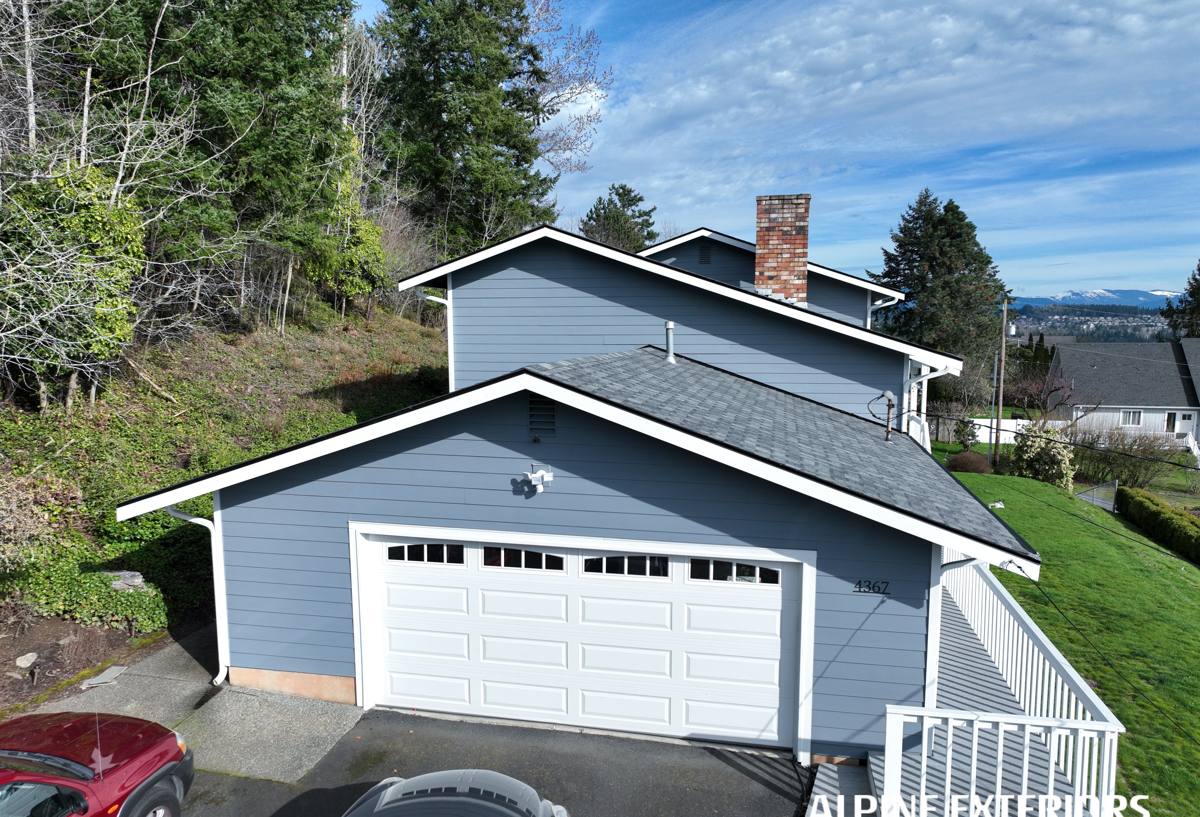
What Cottonwood Beach's Climate Does to a Roof
Every roof in this community is dealing with the same three stresses, and understanding them is the difference between a replacement that lasts decades and one that starts causing problems within a few years.
Salt Air and Metal Fatigue
Marine air carries salt further inland than most homeowners realize, and it works quietly on anything metal — fasteners, flashing, vent stacks, drip edge. Lower-grade or undersized metal corrodes faster here than the same material would a few miles from the water, and once flashing starts to rust through at a valley or a wall transition, that's usually where the first real leak shows up, often years after the roof was installed.
Wind-Driven Rain Off the Water
Being this close to open water means storms don't just drop rain straight down — wind pushes it sideways and forces it upward under shingle edges and around flashing details that would never get tested in a calmer setting. A roof system built around the assumption that water only ever flows downhill is already behind before the first storm of the season hits.
Moss, Shade, and a Long Wet Season
North-facing roof planes and anything shaded by trees or a neighboring structure stay damp longer here than most of the year allows for real drying-out time. That damp, shaded environment is exactly what moss and algae need to take hold, and once moss establishes itself under shingle tabs, it holds moisture against the roof deck instead of letting it shed — which accelerates the very wood rot and granule loss that eventually forces a replacement.
Repair or Replace? Reading the Signs on a Cottonwood Beach Roof
Not every roof problem in this neighborhood means a full replacement. But a few signs point specifically toward a roof that's past the point where patching makes financial sense.
- Granules building up in the gutters, a sign the shingle surface is wearing thin rather than just dirty
- Multiple soft spots or visible sagging across the roof deck, which usually means moisture has already reached the plywood or OSB underneath
- Flashing that's visibly rusted or pulling away at valleys, chimneys, or wall intersections
- Repeated leaks in different spots each season, rather than one isolated failure point
- Heavy, established moss growth that keeps returning within a year of cleaning
- A roof already at or past its material's expected lifespan, especially on a shaded or wind-exposed plane
If you're only seeing one of these and the roof is still relatively young, a targeted repair is often the right call. When several of these show up together, or the roof is already older, replacement usually ends up costing less over time than another round of patches.
What a Correct Roof Replacement Actually Involves
A roof replacement done right is a system built in layers, not a single product laid over the old one. Skipping steps here doesn't save meaningful time — it just moves the failure point up by several years.
Full Tear-Off and Deck Inspection
Stripping the roof down to bare decking is the only way to actually see what's underneath — rot, soft spots, or moisture damage that's been developing quietly and won't show up from inside the attic until it's advanced. A layover, where new material goes directly over the old roof, seals whatever problems already exist under a fresh surface instead of fixing them.
Underlayment Rated for the Exposure
Basic felt underlayment is a weaker second line of defense than synthetic or self-adhered underlayment when rain is being forced sideways and upward rather than simply running off. Ice-and-water shield membrane at eaves, valleys, and other vulnerable transitions adds protection exactly where wind-driven rain is most likely to find a way in.
Flashing at Every Transition
Most leaks on roofs in this area don't start out in the open field of shingles or panels — they start at flashing. Valleys, chimneys, vent penetrations, and roof-to-wall transitions all need flashing that's correctly lapped, integrated with the underlayment, and built as part of the system rather than caulked on afterward.
Ventilation That Actually Balances
Balanced intake and exhaust airflow keeps the underside of the roof deck dry, which slows both wood rot and moss growth working from underneath at the same time weather works on the roof from above. A roof can look sound from the ground and still be losing years of life because attic airflow was never corrected during the last replacement.
Fastening to Spec, Not to Speed
Nail pattern and count have to follow manufacturer specification, not whatever's fastest. That's what keeps material locked down under wind load instead of lifting at the edges over the following winters — a real concern on open, wind-exposed lots near the water.
Choosing the Right Material for a Cottonwood Beach Home
There's no single correct material for every home here — it depends on budget, roof pitch, how much shade the roof sits in, and how long you plan to stay in the house. The honest trade-offs matter more than any one brand name.
| Material | Typical Lifespan | Salt Air / Wind Performance | Moss Resistance |
|---|---|---|---|
| Architectural Asphalt Shingles | 25-30 years | Good with corrosion-resistant fasteners and proper wind-rated installation | Fair; algae-resistant granules recommended on shaded planes |
| Premium/Designer Shingles | 30+ years | Strong; heavier construction handles wind-driven rain well | Better; typically includes stronger algae-resistant treatment |
| Standing Seam Metal | 40-50+ years | Excellent when finished and fastened with marine-grade hardware | Very good; smooth surface sheds moss more easily than shingles |
Architectural shingles with algae-resistant granules remain the practical middle ground for most homes in this neighborhood — a reasonable upfront cost paired with a lifespan that holds up to the local exposure. Metal roofing costs more to install but asks less of you over time on a heavily shaded or wind-exposed lot, and it's worth a real conversation if you're planning to stay in the home long-term. We'll walk through which option fits your roof's pitch, shade, and exposure rather than defaulting to one product for every job.
Our Roof Replacement Process
- In-person inspection: We get on the roof and in the attic ourselves and document what we actually find, rather than estimating from photos or a drive-by.
- Written, itemized estimate: Tear-off, underlayment grade, flashing scope, ventilation, and material selection are broken out separately, not bundled into one vague number.
- Scheduling around the weather: We build realistic flexibility into the timeline, since storm delays are a normal part of working this stretch of coastline, not an excuse we reach for later.
- Tear-off and deck repair: The old roof comes off completely, and any deck damage we find gets fixed before anything new goes down.
- Underlayment, flashing, and installation: Each layer goes on to manufacturer specification, with extra time spent at valleys, penetrations, and wall transitions.
- Final walkthrough and cleanup: We review the finished roof with you and do a full site and magnetic nail sweep before calling the job done.
Why a Crew That Already Works Cottonwood Beach Matters
Cottonwood Beach has its own mix of housing — older beach cottages built decades ago sitting alongside newer homes, many on tighter lots with limited access for equipment and material staging. A crew that's already worked in this neighborhood knows how to plan a tear-off and material delivery around that reality instead of figuring it out on the day of the job. They've also seen firsthand which roof orientations in this specific pocket of Birch Bay hold moss longest, how far salt air actually reaches inland from the shoreline, and which flashing shortcuts consistently fail first when a real winter storm pushes rain sideways off the water.
That kind of local knowledge shows up in decisions that never come up in a sales pitch — how much lap a valley needs on a wind-exposed roof plane, when a vent stack boot needs a better seal than the standard kit provides, which properties need extra bracing at the ladder or staging area because of a narrow approach. It also matters after the job is finished. A workmanship warranty only means something if the company behind it is still reachable in this area years later, not a crew that worked one job here and moved on.
Protecting a New Roof After It Goes On
A correctly installed roof still benefits from basic upkeep in this climate. A short annual routine goes a long way toward getting the full lifespan out of the investment:
- Clear gutters and downspouts at least twice a year so water isn't backing up under the roof edge
- Have moss and debris cleared from shaded roof planes before it has a chance to establish, rather than after it's thick
- Trim back branches that keep a section of roof shaded and slow to dry out
- Have flashing and vent boots checked periodically, since these are the components most likely to need attention first
If your roof in Cottonwood Beach is showing its age or you're weighing repair against replacement, it's worth having someone look at it in person before deciding either way. We offer free, no-pressure estimates for roof replacement in Cottonwood Beach and the surrounding Birch Bay area — use the form below to get a time on the schedule.