 Birch Bay Window
 Building Decks for Sandy Point's Waterfront Conditions
Sandy Point sits right up against the water in Whatcom County, and that changes what a deck has to survive. A deck built to a generic spec sheet might look fine the day it's finished and still show corrosion streaks, soft framing, or a slick, moss-covered surface within a few winters. Homes here deal with salt-laden air blowing off the water, long stretches of driving rain, and a moss season that can run from fall through spring. A deck that holds up in this setting is built differently than one going up on a dry inland lot, and that difference shows up in the fasteners, the footings, the wood treatment, and even the slope of the decking boards.
We work in Birch Bay and the surrounding Whatcom County waterfront neighborhoods regularly, and Sandy Point's exposure is some of the toughest around. This page walks through what actually matters when you're planning a deck here — not marketing points, just the practical decisions that determine whether a deck lasts fifteen years or needs major repairs in five.
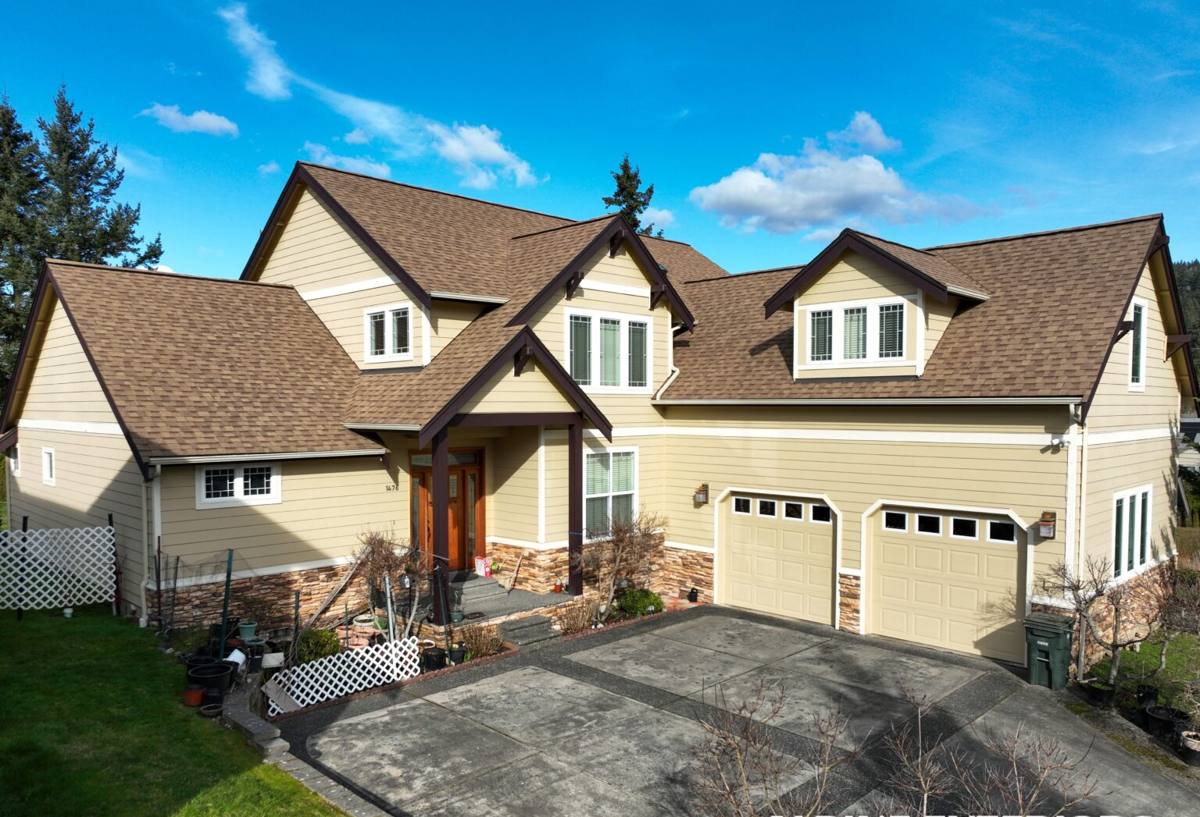
What Salt Air and Coastal Rain Actually Do to a Deck
Salt air is corrosive in a way that's easy to underestimate. Airborne salt settles on every exposed surface, and combined with our region's humidity, it accelerates rust and metal fatigue far faster than the same materials would experience even twenty miles inland. On a deck, that means:
- Fasteners and joist hangers corrode faster, especially where two different metals touch and react against each other
- Any exposed cut end of pressure-treated lumber becomes a moisture entry point that salt-laden air keeps damp longer
- Finishes and sealants break down quicker under the combination of UV, salt, and constant moisture cycling
- Wood that isn't allowed to dry between rain events stays wetter for longer stretches, which speeds up rot in ledger boards and framing
None of this means a deck near the water is a bad idea — it just means the build has to account for it from the footings up, not patched over with a coat of stain after the fact.
The Moss Factor
Whatcom County's long, wet moss season is its own separate problem. Moss and algae thrive on horizontal wood and composite surfaces that stay shaded and damp, and a deck under trees or on the north side of a home can grow a slick green film within a single winter if it isn't detailed to shed water and dry out between storms. Beyond looking neglected, a mossy deck surface is a genuine slip hazard, especially on stairs.
Getting the Foundation Right
Everything above the footings depends on what's below them. In this part of Whatcom County, footings need to be set below the local frost depth and bear on soil that's been properly evaluated — waterfront lots can have variable soil conditions, including areas with higher water tables or sandy, less stable fill near the shoreline. We don't guess on this; footing depth and sizing get confirmed for the specific lot, not assumed from a standard plan.
A number of homes in and around Sandy Point sit elevated on pilings or raised foundations due to the waterfront setting. That changes deck design in a real way: stair runs are longer, guardrail height and structural attachment points need extra attention, and the ledger connection (if there is one) has to tie into a structure that may behave differently than a standard slab-on-grade home. We look at how the existing structure is built before we finalize a deck design, not after framing has started.
Framing and Fasteners: Where Corrosion Actually Starts
This is the part of a coastal deck build that separates a deck that lasts from one that doesn't, and it's mostly invisible once the project is finished. A few things we hold as a standard on every coastal build:
- Stainless steel or heavy hot-dip galvanized fasteners throughout — standard electro-galvanized screws and nails corrode noticeably faster in salt air and are not what we use near the water
- Matched metals between fasteners and joist hangers, since mixing incompatible metals creates galvanic corrosion that eats away at the weaker metal from the inside
- Properly rated joist hangers and structural connectors sized and coated for treated lumber exposure, not general-purpose hardware
- Sealed or capped cut ends on treated lumber, since a factory-treated board loses its protection the moment it's cut and the raw end is left exposed
None of this is visible in a finished photo, which is exactly why it's worth asking about directly when you're comparing quotes. A deck that looks identical on day one can perform very differently five years in based on hardware choices alone.
Choosing Decking Material for a Salt-Air, High-Moss Environment
There's no single right answer here — it depends on your budget, how much upkeep you want to do, and how the deck sits relative to shade and moisture. Here's how the common options actually compare in this specific climate:
| Material | Salt Air Behavior | Moss/Algae Resistance | Maintenance |
|---|---|---|---|
| Pressure-treated wood | Good if properly sealed and re-coated; cut ends need field treatment | Needs regular cleaning; textured grain can hold moisture | Annual cleaning, periodic re-staining/sealing |
| Cedar | Naturally decay-resistant but still needs finish upkeep near salt spray | Similar to treated wood; smoother grain helps somewhat | Regular finish maintenance to preserve color and protection |
| Composite decking | Handles salt exposure well; no risk of rot in the board itself | Can still grow surface film if shaded and damp; usually easier to clean off | Occasional washing; no staining or sealing needed |
| PVC decking | Fully resistant to moisture absorption and salt-related decay | Smooth, non-porous surface resists algae adhesion better than most options | Lowest maintenance; periodic washing only |
We'll walk you through these trade-offs honestly based on your specific lot — shade cover, proximity to the water, and how much maintenance you actually want to commit to all factor into which material makes sense.
Railings, Stairs, and Structural Details
Guardrail height, baluster spacing, and stair rise/run all have to meet current code, and on elevated Sandy Point homes the stakes are higher simply because the fall distance is greater. A few details that matter more here than on a typical inland deck:
- Guardrail posts need solid blocking and correctly rated connectors — a rail that's screwed to rim joists without proper backing is a common failure point, especially once fasteners start to corrode
- Stair stringers on elevated structures need to be sized for the actual rise, not a generic stock cut
- Any railing or stair component exposed to direct wind off the water benefits from tighter fastening schedules than a sheltered deck would need
Wind Exposure
Open waterfront lots see more direct wind than sheltered inland lots, which matters for how decking boards are fastened and how railings are braced. We account for that exposure in the build rather than treating every deck the same regardless of its setting.
Permits and Shoreline Considerations
Deck projects in and around Sandy Point may fall under Whatcom County shoreline regulations depending on the property's proximity to the water, in addition to standard building permit requirements. Setback rules, permitted footprint, and elevation requirements can vary lot to lot near the shoreline. We handle the permit process as part of the job and will tell you upfront if your specific property needs shoreline review — better to know that before design work starts than after.
Our Process for a Sandy Point Deck Project
- On-site visit — we look at the existing structure, soil conditions, sun/shade exposure, and how the deck will be used before recommending anything
- Design and material selection — we walk through the trade-offs between wood and composite/PVC options based on your specific lot and budget
- Permitting — we handle the county paperwork, including shoreline review if your property requires it
- Footings and framing — footings set to proper depth, framing built with corrosion-appropriate hardware throughout
- Decking, railing, and stairs — installed to code with attention to drainage and airflow to reduce moss buildup
- Final walkthrough — we go over basic maintenance so the deck actually gets the lifespan it's built for
A Quick Pre-Project Checklist
- Know whether your lot is close enough to the water to trigger shoreline permit review
- Decide how much annual maintenance you're realistically willing to do
- Note any shaded or low-airflow areas of the deck footprint where moss is likely to be a bigger issue
- Check whether your home's foundation is elevated, which affects stair and railing design
- Ask any contractor you're considering what fastener and hardware grade they use as standard, not as an upgrade
Why a Crew That Already Works Sandy Point Matters
A lot of deck problems near the water don't come from bad workmanship in the obvious sense — they come from a build that would have been perfectly fine forty miles inland but wasn't adapted for salt air, moss, and elevated coastal structures. A crew that regularly works Birch Bay and Sandy Point already knows to spec stainless or heavy-galvanized hardware as standard, already accounts for the local frost depth and soil conditions, and already understands which materials actually hold up under this specific combination of salt spray and long wet winters. That local experience shows up in decisions you'd never think to ask about — and in a deck that's still solid well past when a generic build would start showing problems.
If you're planning a new deck or replacing one that's showing its age, we're happy to come take a look and give you a straightforward, no-pressure estimate — just fill out the form below.