 Birch Bay Window
 Deck Repair for Sandy Point Homes
Sandy Point sits close to the water, and that changes how a deck ages. A deck built the same way in an inland neighborhood might go fifteen years before it needs real attention. In Sandy Point, salt-laden air, wind-driven rain off the Strait, and a wet, mossy shoulder season put more stress on fasteners, framing, and decking than most homeowners expect. We repair decks in this area regularly, and the pattern is consistent: the failures aren't random, they're climate-driven, and they show up in the same handful of spots year after year.
This page is about deck repair specifically — not full deck construction, not a general contractor's overview of decks everywhere. It's what we've learned from working on decks in Sandy Point and the rest of Birch Bay, and what a correct repair actually requires here.
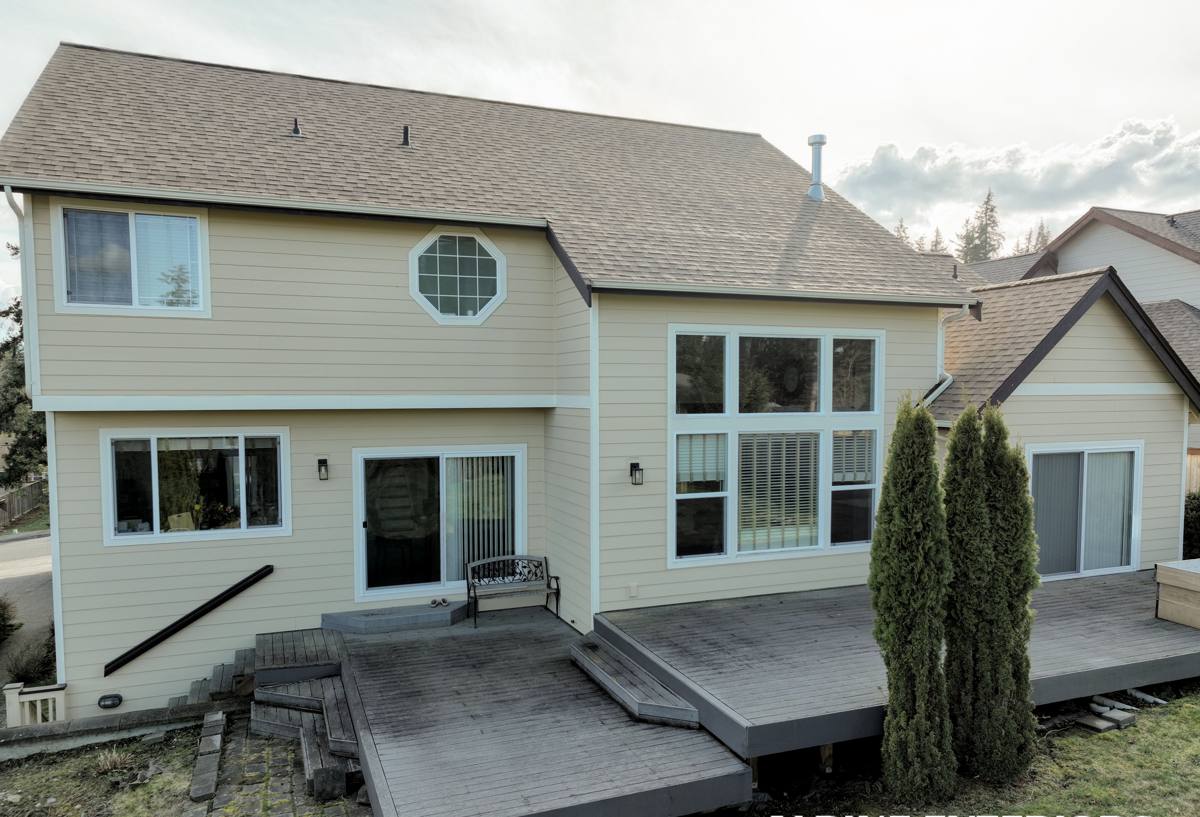
Why Sandy Point Decks Wear Differently
Three things drive most of the deck problems we see in this part of Whatcom County:
- Salt air. Airborne salt from the nearby water accelerates corrosion on any metal component — nails, screws, joist hangers, bolts — faster than it would inland. Once a fastener starts to corrode, it loses holding strength long before it looks obviously bad.
- Driving rain. Storms here don't just fall straight down — wind pushes rain sideways and up under railings, ledger boards, and stair stringers. Water finds gaps that would stay dry in a calmer climate.
- A long moss season. Cool, damp stretches for much of the year let moss and algae establish on any shaded or north-facing deck surface. Moss holds moisture against the wood and makes boards slicker and softer over time.
None of this means a deck in Sandy Point is doomed — it means the repair work has to account for these conditions instead of treating the deck like it's in a dry inland yard.
Signs Your Deck Needs Repair — And What They Actually Mean
Homeowners often notice the symptom without knowing what it points to underneath. Here's how we read the common warning signs:
| What You Notice | What It Usually Means | Urgency |
|---|---|---|
| Boards feel spongy or bounce underfoot | Moisture has reached the wood fibers, often from below or through end grain | High — structural check needed |
| Rust streaks near screws or hangers | Fastener corrosion has begun; holding strength is already reduced | Medium to high depending on location |
| Green or black film on the surface | Moss or algae growth, usually on shaded or low-airflow areas | Low urgency but should be addressed before it spreads to fasteners and seams |
| Railing feels loose or wobbly | Post connections or blocking have loosened, often from repeated wet-dry cycling | High — safety issue |
| Gaps or separation at the house ledger board | Possible water intrusion behind the ledger, one of the most serious deck problems | High — needs inspection before it worsens |
| Boards cupping or splitting | Repeated saturation and drying cycles stressing the wood grain | Medium — plan for board replacement |
What a Correct Deck Repair Actually Involves
It Starts Below the Surface, Not on Top of It
A repair that only replaces the boards you can see is a cosmetic fix, not a real repair. Before we touch decking, we check the framing underneath: joists, beams, posts, and — critically in this climate — the ledger board connection to the house, since that's the single most common place for hidden water damage to develop.
Fasteners Matter More Here Than Almost Anywhere
Standard interior-grade or basic exterior fasteners corrode faster in salt air than they would twenty miles inland. Any repair we do near the water uses hardware rated for coastal or marine exposure — stainless steel or hot-dip galvanized, not electroplated hardware that looks fine off the shelf but breaks down within a few seasons of salt exposure.
Flashing and Water Management
Where the deck meets the house, and at any point where boards butt against a post or railing, water needs a path to shed rather than pool. Proper flashing at the ledger and correct board spacing for drainage are basic requirements we won't skip, even on a repair job, because skipping them just guarantees a repeat visit in a year or two.
Matching the Repair to the Rest of the Deck
When we replace individual boards or sections, we match species, dimension, and fastening pattern to the existing deck wherever possible, so the repair doesn't create a weak seam or an obvious patch that ages differently than the rest of the structure.
Repair Materials: What Actually Holds Up in This Climate
Every material has trade-offs. We're honest about them rather than pushing one option as a cure-all.
| Material | Salt Air / Moisture Behavior | Moss & Algae Resistance | Maintenance |
|---|---|---|---|
| Pressure-treated wood | Handles moisture well when properly sealed; needs re-sealing over time | Moderate — moss will still colonize shaded areas without upkeep | Periodic cleaning and re-staining or sealing |
| Cedar or other naturally durable wood | Good natural resistance but still needs sealing at cut ends and fastener holes | Moderate — same moss exposure as any wood surface | Regular sealing; graying if left untreated |
| Composite decking | Very stable in moisture, doesn't rot, but installation details still matter for water flow underneath | Lower food source for organic growth, though surface films can still form | Occasional washing; no sealing required |
| Hardware and fasteners (any decking type) | Corrosion risk is the real weak point in this climate regardless of decking material | Not applicable | Coastal-rated stainless or hot-dip galvanized only |
For a repair — as opposed to a full rebuild — matching the existing material is often the right call, both for appearance and for keeping costs proportional to the scope of damage. We'll tell you honestly if a section has failed badly enough that patching it would just move the problem down the deck a few feet.
Our Deck Repair Process
- On-site inspection. We check framing, ledger connection, fasteners, and decking condition, including areas that aren't obvious from a casual look — under railings, around posts, and at the house connection.
- Honest scope assessment. We tell you what's cosmetic, what's structural, and what can wait versus what shouldn't. Not every soft board means the whole deck is failing, and not every deck that "looks fine" is actually sound underneath.
- Structural repair first. Any compromised framing, posts, or ledger connections get addressed before cosmetic work, using coastal-rated fasteners and correct flashing.
- Decking and railing repair. Damaged boards, loose railing components, and worn stair treads are replaced or resecured to match the existing deck.
- Moss and algae treatment. Where growth has taken hold, we clean and treat the affected surfaces rather than just covering them, so the repair doesn't have moss re-establish within a season.
- Final check. We walk the deck with you, point out what was done, and flag anything worth monitoring going forward.
Why a Crew That Already Works Sandy Point Makes a Difference
Deck repair isn't unique to Birch Bay, but the specifics of doing it well here are. A crew that hasn't worked near the water regularly can miss things a locally experienced crew catches automatically — which fasteners actually hold up, where moisture tends to hide on a shaded, canal-adjacent lot, and how much drainage a deck needs given the amount of driving rain this stretch of Whatcom County gets in the wetter months.
There's also a scheduling piece: moss and algae removal is more effective and longer-lasting when it's timed around the wet season rather than done once and forgotten. A crew already familiar with Sandy Point's rhythm plans repairs accordingly instead of treating every job the same regardless of season.
Deck Maintenance Checklist for Sandy Point Homeowners
Between repairs, a few habits go a long way toward avoiding bigger problems:
- Sweep debris off the deck regularly — trapped leaves and needles hold moisture against the boards
- Check for moss buildup in shaded corners each fall and address it before it spreads
- Look at fasteners and hardware for early rust or staining once or twice a year
- Inspect the ledger board area where the deck meets the house for gaps, staining, or soft wood
- Test railings and stair treads for looseness, especially after a hard winter
- Reseal wood decking on the schedule appropriate for the product — don't wait until it's visibly gray and dry
- Make sure gutters and downspouts near the deck aren't dumping extra water onto or under it
Repair or Replace? A Practical Way to Decide
Most Sandy Point decks we look at don't need a full replacement — they need targeted repair of the areas the climate has actually damaged. Replacement makes more sense when the framing itself has widespread rot or corrosion damage, when repairs would end up costing close to what a rebuild would, or when the deck's original construction didn't account for drainage and water management in the first place. We'll give you a straight answer on which category your deck falls into rather than defaulting to the bigger job.
If you've got a deck in Sandy Point that's showing soft spots, rust, moss, or loose railings, we're happy to take a look and give you a clear, no-pressure estimate on what it actually needs. Use the form below to get started.