 Birch Bay Window
 Sandy Point sits out on a low, exposed stretch of shoreline near Birch Bay, and that location shapes what "energy-efficient windows" actually has to mean here. Wind comes off the water with almost nothing to slow it down, salt air settles on every exterior surface, and rain rarely falls straight down — it drives sideways into whatever it hits. On a site like that, a window's energy performance and its ability to survive the exposure aren't two separate questions. They're the same question, because a seal that fails from salt and wind pressure stops being efficient long before it stops looking fine from the curb.
A lot of the housing in Sandy Point started out as smaller cabins and seasonal places, many of them converted or added onto for year-round living over time. That history matters for windows specifically, because insulation and glazing were rarely a priority when these homes were first built, and older aluminum-frame single-pane units are still common. We approach energy-efficient window work here as a coastal durability project first and an energy-savings project second — the two only line up if the frame, glass, and installation are chosen for this specific exposure, not for a generic Whatcom County home set back from the water.
Why Energy Efficiency Means Something Different in Sandy Point
Inland, a window with a slightly worn seal might just mean a modest bump in the heating bill. On an exposed, low-lying site like Sandy Point, constant wind pressure pushes air through that same gap far more aggressively, so the energy loss shows up faster and hits harder. Salt-laden air also works on hardware, fasteners, and lower-grade frame finishes faster than it would a few miles inland, which shortens the useful life of components that keep a window sealed tight in the first place.
What We Actually See in This Neighborhood
A few patterns come up repeatedly on Sandy Point homes. Older aluminum-frame single-pane windows from the original cabin-era construction are still in service on some properties, offering very little insulating value even when they're in decent cosmetic shape. Early double-pane units frequently show seal failure — fogging or condensation trapped between the panes — because the insulating gas fill escapes once the perimeter seal breaks down under repeated wind pressure and temperature swings. Wood sills and lower frame sections on older units often show swelling or soft spots from sustained dampness. And gaps around frames where old caulk or flashing has failed are common, letting in both drafts and moisture at the same time.
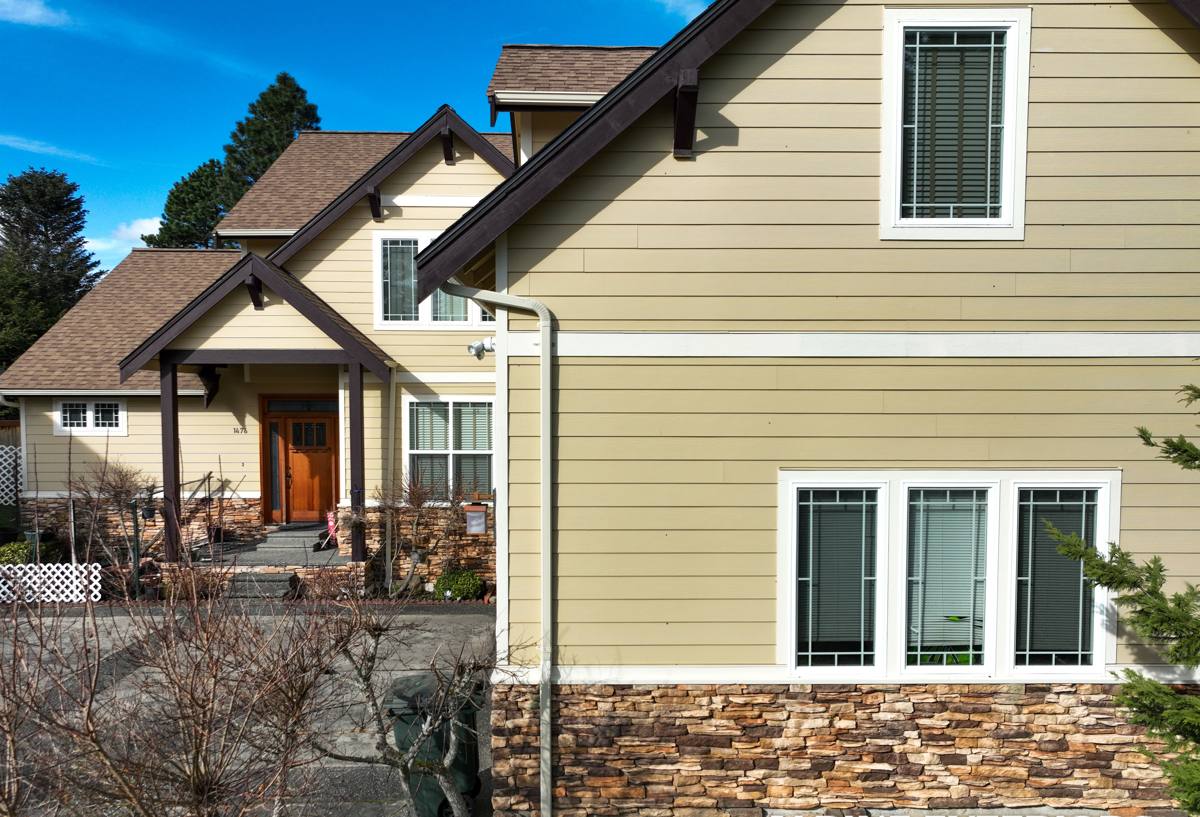
The Climate Factor: Salt Air, Driving Rain, and Moss Season
Three conditions define window performance at Sandy Point, and they compound each other. Salt-laden marine air accelerates corrosion on hinges, locks, and lower-grade frame hardware, which is often what fails before the glass ever does. Wind-driven rain doesn't just test a window's face — it pushes water sideways into flashing and sill details that a calmer inland site would rarely stress. And the region's long, damp moss season keeps shaded and north-facing walls wet for extended stretches, which is hard on wood trim and sill components in particular.
None of this means efficient windows can't hold up here. It means the frame material, seal design, and installation sequence all have to be chosen with this specific exposure in mind, rather than defaulted to whatever's easiest to install.
Where Efficiency Actually Leaks Out
It's rarely the center of the glass losing energy on a failing window — modern glass packages are good at that part. The losses show up at the perimeter: the seal between sash and frame, the weep system that's supposed to drain water back outside, and the hardware that holds the sash tight against the frame. In a wind-exposed site like this, a small gap that wouldn't matter much inland becomes a real, measurable energy leak, because the wind is constantly pushing air through it rather than leaving it alone.
Signs Your Windows Are Losing You Money
- Visible fogging or condensation trapped between panes — a sign the seal has failed and the insulating gas fill is gone
- A noticeable draft near the frame edges, especially on windy days off the water
- Frames that feel cold to the touch on the inside even when the glass itself seems fine
- Hardware that's stiff, corroded, or hard to latch — a sign the window isn't closing tight anymore
- Heating bills that have crept up without any other clear explanation
- Soft, discolored, or swollen trim and sill material around the window frame
What a Correct Energy-Efficient Window Job Involves
Frame Material Matters More Here Than Inland
Frame choice carries more weight on an exposed site like Sandy Point than it would on a sheltered inland lot, because the material has to resist salt corrosion and moisture cycling in addition to insulating well. Vinyl and fiberglass frames generally hold up to sustained coastal exposure with less ongoing maintenance than bare wood or standard aluminum, which is why we lead with them on weather-facing installs here. Wood-clad options can still make sense where the interior look matters, provided the exterior cladding is genuinely low-maintenance and properly detailed — it's a trade-off worth discussing against your specific home, not a default answer.
Glass Package and Seal Design
Double-pane with a low-E coating is the baseline for efficient performance in this climate; triple-pane can make sense on the most wind-exposed elevations, though it adds weight and cost. What matters just as much as pane count is the spacer between the panes — a warm-edge, non-metal spacer resists heat loss and corrosion better at the seal than an older-style metal spacer, and on a salt-exposed site that difference shows up in how long the seal actually lasts before it fogs.
Installation and Sealing
An efficient window is only as good as the installation around it. That means a proper sill pan to direct any water that gets past the window back outside, correctly lapped flashing tied into the existing wall's drainage plane, and sealant rated for sustained exterior exposure rather than standard interior caulk. On a site with this much wind-driven rain, skipping any one of those steps tends to show up as a leak or a draft within a few seasons, not decades.
Practical Checklist Before You Order
- Ask what frame material is recommended for a site this exposed, and why
- Ask about the spacer type and the seal warranty — fogging is a seal failure, and warranties vary
- Confirm the installer plans a sill pan and full flashing integration, not just caulk around the frame
- Get a straight answer on expected lead time before committing to a schedule
- Ask whether the window unit and the installation labor are covered separately under warranty
Frame Options for a Sandy Point Exposure
| Frame Material | Corrosion Resistance | Thermal Performance | Maintenance |
|---|---|---|---|
| Vinyl | Strong — no metal corrosion to manage | Good, especially with multi-chamber designs | Low |
| Fiberglass | Strong, holds finish well in salt air | Very good, low expansion/contraction | Low |
| Wood-clad | Depends entirely on cladding quality and detailing | Very good | Moderate to high on exposed elevations |
| Standard aluminum | Weaker — prone to salt-driven corrosion over time | Poor without thermal break | Moderate, hardware needs regular attention |
What actually drives the cost on an energy-efficient window project is fairly consistent from job to job: the number of openings, the glass package chosen, the frame material, whether any rot or flashing repair is needed at the existing opening, and how many elevations face direct wind and rain. We won't put a number on a project without seeing the openings in person, but we'll walk through which of these factors apply to your home before you commit to anything.
Our Process, Start to Finish
- On-site assessment — we check each opening's condition, note any existing seal failures, rot, or corrosion, and evaluate which elevations take the most direct wind and rain
- Honest recommendation — frame material and glass package matched to your specific exposure and budget, explained plainly
- Ordering and lead time — a realistic timeline, since better-performing units are typically built to order rather than pulled from generic stock
- Removal and opening prep — the old window comes out carefully, and any hidden rot, corrosion, or flashing damage gets addressed before the new unit goes in
- Installation and flashing — the new window is set, shimmed level, and flashed with a sill pan and lapped drainage plane tied into the surrounding wall
- Final check — hardware operation, weep paths, and exterior sealant are all checked before we call the job finished
Why a Local Sandy Point Crew Matters
Manufacturer installation instructions are written for average conditions, not for a low-lying, wind-exposed shoreline site. A crew that has actually installed and serviced windows in Sandy Point and the surrounding Birch Bay area knows which hardware corrodes fastest in this air, which sealants actually hold up through a full wet season, and where a few extra minutes on a sill pan or flashing lap is worth it even when it isn't strictly required elsewhere. That's the kind of judgment that doesn't come up in a sales pitch, but it's what decides whether a window is still sealing tight in fifteen years or fogging and drafting in five.
What to Ask Before Hiring for This Kind of Work
- Ask what frame and hardware choices they'd make specifically for a wind- and salt-exposed site
- Ask how they handle flashing and drainage on a window replacement, not just installation of the unit itself
- Confirm current Washington contractor licensing and insurance
- Get a written scope of work before any demolition starts
- Ask how labor and the window unit are each covered under warranty
If your Sandy Point home has drafty, fogged, or aging windows, it's worth having someone look at the actual openings before you start comparing prices. We offer free, no-pressure estimates for energy-efficient window projects in Sandy Point and the greater Birch Bay area — use the form below to get a time on the schedule.