 Birch Bay Window
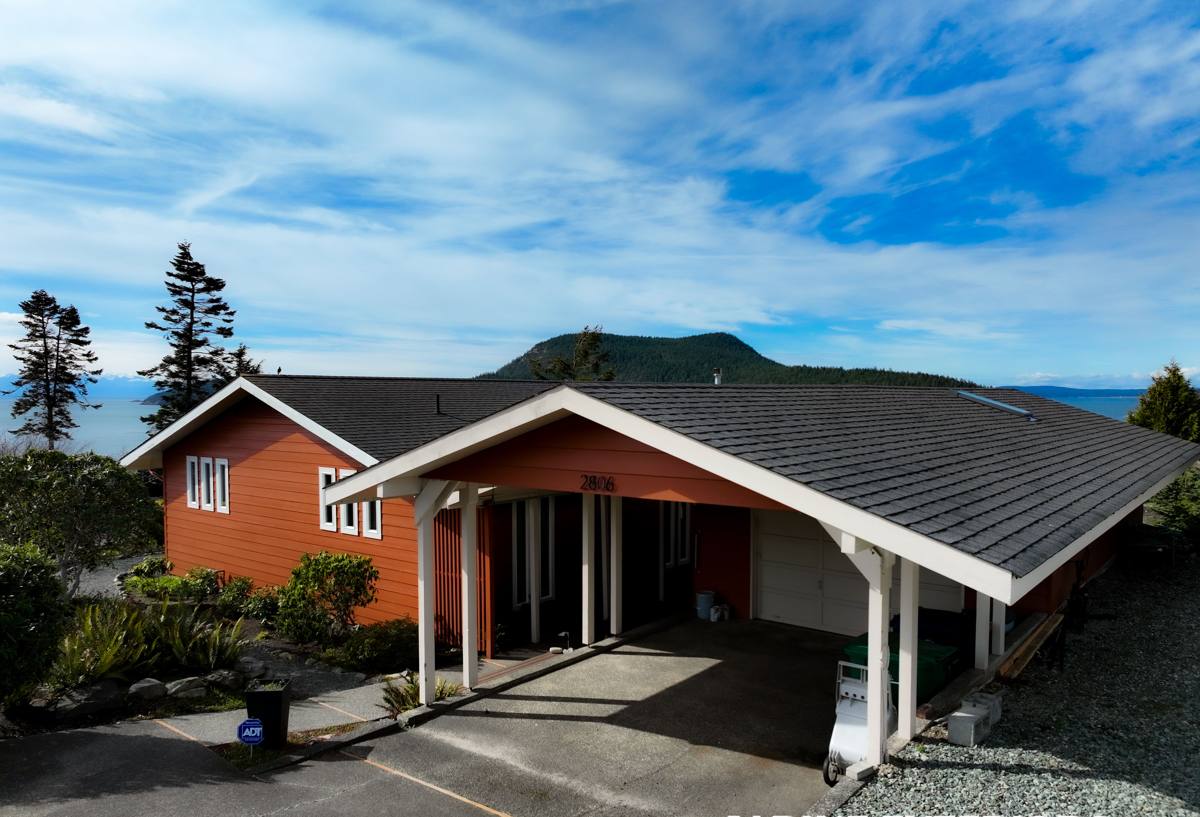
 Point Whitehorn is a quieter, more wooded stretch of coastline than the main Birch Bay strip, tucked into the shoreline north of the bay in Whatcom County. Homes out here run the range from older cabins on wooded lots to newer construction closer to the water, and most of them share the same two problems: constant marine exposure from the Strait of Georgia, and a lot of shade from mature trees that keeps walls damp long after a storm has passed. That combination is hard on siding in ways that don't always show up right away.
We handle siding repair as its own category of work, not a scaled-down version of a full re-side. A repair that's diagnosed correctly and tied into the surrounding wall properly can add years to a siding system's life. A repair that just patches the visible damage without addressing what caused it usually comes back within a season or two. In a climate like Point Whitehorn's, getting that diagnosis right the first time matters more than it would somewhere drier.
Why Siding Fails Faster in Point Whitehorn
Salt Air and Driving Rain
Being this close to the water means siding out here takes on more airborne salt than homes further inland in Whatcom County. Salt accelerates corrosion in fasteners, trim flashing, and any exposed metal hardware, and it can break down lower-grade finishes faster than a calmer, drier location would. Storms off the strait also push rain sideways into wall assemblies instead of letting it run straight down, which means water finds its way behind siding at seams, corners, and trim joints that a straight-down rain would never reach.
Shade, Tree Cover, and Moss
Point Whitehorn's wooded lots cut down on wind and add a lot of curb appeal, but they also mean less direct sun hitting the walls, which means siding stays wet longer after every rain. That's the setup a long moss season needs. Moss and mildew take hold fastest on shaded, north-facing walls and anywhere siding sits close to overgrown landscaping, and once it's established it holds moisture directly against the material rather than letting it dry out between storms.
Freeze-Thaw and Seasonal Moisture Cycling
Whatcom County gets enough cold snaps each winter that any siding already holding moisture from a wet fall is at risk of freeze-thaw damage — water expands as it freezes, and that stress on already-compromised material is often what turns a small crack or soft spot into a section that needs real repair. Homes that go into winter with unaddressed moisture problems tend to come out of it noticeably worse.
Common Siding Repair Issues We See in This Area
- Soft or rotted bottom courses — siding closest to grade or a deck takes on splashback moisture and often shows damage first
- Moisture trapped behind older siding — especially on homes where the original siding wasn't installed with any drainage gap behind it
- Failed caulking at trim, corners, and window flashing — a small gap here lets water track behind the siding for months before it's visible from outside
- Nail pops and loose panels — often from seasonal expansion and contraction, worse where fasteners have corroded from salt exposure
- Moss and organic growth holding moisture against siding — most common on shaded, tree-covered walls that don't get direct sun
- Impact damage — from storms, falling branches, or general wear, which is common on wooded lots
What a Correct Siding Repair Actually Involves
Diagnosing the Cause, Not Just the Damage
The visible problem — a soft spot, a cracked panel, a stained section — is almost never the whole story. Before we touch anything, we look at what's happening behind the siding: whether water is getting in from a failed seal above, whether there's a drainage problem at that section of wall, or whether the damage is isolated or a sign of a broader moisture issue across that wall. Repairing the visible symptom without finding the cause just buys a little time before the same spot fails again.
Matching Repairs to What's Already There
Not every repair calls for tearing into a full wall. If the existing siding is sound everywhere except a section that's been damaged, a well-matched, properly flashed repair can be the right call — patching in a compatible material, sealing it correctly, and making sure it ties into the surrounding wall's drainage rather than creating a new water trap. We're honest about when that's the right scope and when it isn't.
Flashing and Water Management
This is the step that decides whether a repair actually lasts. Any repair that doesn't restore proper flashing and drainage at that section of wall is just a temporary cosmetic fix, even if it looks fine the day it's finished. We treat flashing detail on a repair with the same care we'd use on new construction, because in a climate like this, shortcuts at that stage are exactly what shows back up a year or two later.
Repair vs. Full Re-Side: How We Make That Call
| Factor | Points Toward Repair | Points Toward Full Re-Side |
|---|---|---|
| Extent of damage | Isolated to one or two sections | Spread across multiple walls or the whole exterior |
| Underlying cause | A specific, fixable issue like a failed seal or impact damage | A systemic problem like missing drainage behind the whole wall |
| Age and condition of existing siding | Still structurally sound elsewhere | Nearing the end of its service life or already failing in other spots |
| Material availability | A close, durable match is available for a clean patch | Original material is discontinued or a match would be visibly inconsistent |
| Long-term cost | Lower upfront cost, appropriate for the scope | Higher upfront cost, but resets the clock on the whole exterior |
We'll walk you through where your home falls on that list before recommending either option. A repair that's the right scope is the right call — we're not going to push a full re-side on a wall that just needs a properly done patch.
When Repair Isn't Enough: Why We Re-Side with James Hardie
Some homes in Point Whitehorn come to us with damage spread across enough of the exterior, or an underlying moisture problem serious enough, that patch repairs won't hold up. When that's the honest assessment, we recommend a full re-side, and we install James Hardie fiber cement exclusively for that work. That's not a brand preference — it's a professional standard we settled on after years of repairing and replacing siding in exactly this kind of coastal, wet climate.
- Non-combustible core: fiber cement doesn't feed a fire the way wood-based siding products can
- Factory-applied ColorPlus finish: baked on under controlled conditions rather than field-applied, so it holds up longer against fading and moisture than site-applied paint
- Climate-engineered HZ5 formulation: built for regions with heavy moisture exposure and freeze-thaw cycling, which fits Point Whitehorn's shoreline climate directly
- Dimensional stability: it doesn't swell, cup, or warp the way engineered wood products can after repeated wet-season exposure
- A strong transferable warranty, provided the installation follows Hardie's specification
We don't install LP SmartSide, vinyl siding, Cemplank, Allura, primed spruce, or cedar. Each has a place in the market, and plenty of homeowners are satisfied with them elsewhere. But when we're the ones recommending a full re-side after seeing what a wall has been through, we'd rather stand fully behind one system than offer something cheaper that shifts more maintenance risk back onto the homeowner down the road.
Our Siding Repair Process
- On-site inspection — we look at the damaged section and the surrounding wall, not just the spot that's visibly failing
- Honest diagnosis — what caused the damage, and whether it's isolated or a sign of a broader issue
- Written scope — a clear recommendation, repair or replacement, with the reasoning explained before any work starts
- The repair itself — matched material where appropriate, correct flashing and drainage restored, and a clean tie-in to the existing siding
- Final check — confirming the repaired section sheds water the way the rest of the wall does before we call the job done
Why a Local Point Whitehorn Crew Matters
A contractor who already works this stretch of coastline knows the difference between a wall that's failing because of one bad seal and a wall that's failing because the whole system was never detailed for this much moisture. That distinction is exactly what separates a repair that lasts from one that doesn't, and it's harder to get right from a general estimate than it is from someone who's already seen how salt air, driving rain, and heavy shade play out on homes in this specific area.
What to Ask Before Hiring for Siding Repair
- Ask what they think caused the damage, not just what they plan to patch
- Ask whether the repair will restore proper flashing and drainage at that section, specifically
- Confirm current Washington contractor licensing and insurance
- Get a written scope of work before any repair begins, including what material will be used
- Ask directly whether they think repair is the right call or if they'd recommend replacement, and why
If you've got a section of siding on your Point Whitehorn home that's soft, stained, cracked, or holding moss, it's worth having someone take an honest look before it gets worse over another wet season. We offer free, no-pressure estimates for siding repair in Point Whitehorn and the surrounding area — use the form below to get a time on the schedule.