 Birch Bay Window
 Storm Damage Roof Repair for Sumas Homeowners
Whatcom County weather doesn't do subtle. Homes in and around Sumas take a steady beating from wind-driven rain, salt-laden coastal air pushing inland off the Strait, and winters mild and wet enough to keep moss growing on a roof nearly year-round. Add in the occasional windstorm that peels back shingles or drops a branch across a ridge line, and it's no surprise storm damage repair is one of the most common calls we get from this area. The problem is that a lot of storm damage doesn't announce itself. It shows up months later as a stain on a ceiling, a soft spot near a chimney, or a spike in a heating bill nobody can explain.
This page is about doing that repair correctly the first time — not patching over a symptom, but fixing the actual failure so the next storm doesn't undo the work.
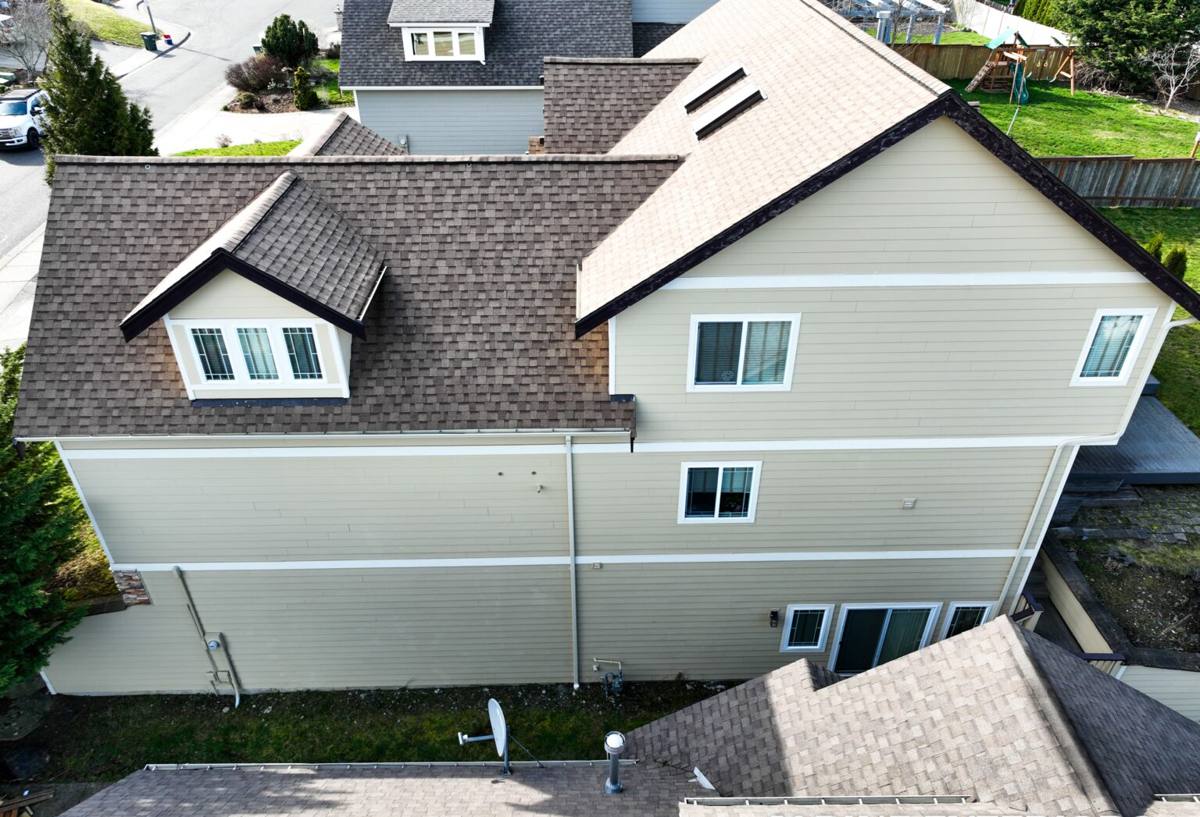
How Local Weather Actually Damages a Roof
Wind-Driven Rain
Straight-down rain is easy on a roof. Wind-driven rain isn't. When storms push rain sideways at 30-40 mph, water gets forced up and under shingle edges, into nail holes, and through any gap in flashing that a calm-weather roof would never notice. This is why storm damage so often shows up first at valleys, ridge caps, and anywhere two roof planes meet — those are the spots wind-driven rain finds a way in.
Moss, Moisture, and a Long Wet Season
Whatcom County's mild, damp winters keep moss growing on north-facing and shaded roof sections for much of the year. Moss holds moisture against the roofing material long after a storm has passed, which accelerates granule loss on shingles, softens wood shakes, and can lift shingle edges enough for wind to get underneath them in the next blow. A roof that's dealt with a few seasons of unmanaged moss is more vulnerable to storm damage than a clean one, even if the two roofs are the same age.
Sudden Wind Events
Windstorms strong enough to strip shingles, crack ridge caps, or drop limbs are a regular part of the fall and winter pattern here. The damage from these events tends to be more obvious — missing shingles, visible dents or cracks, debris on the roof — but it's often accompanied by less obvious damage nearby that a homeowner walking the yard won't catch from the ground.
Signs Your Roof May Have Storm Damage
Most storm damage is visible if you know where to look, but a lot of homeowners don't check until there's a leak indoors. If a storm has recently come through, it's worth a quick look for:
- Shingles that are missing, curling, cracked, or visibly out of alignment
- Granules collecting in gutters or at downspout outlets
- Dented or dislodged flashing around chimneys, vents, or skylights
- Soft or spongy spots when the roof deck is walked (a sign water has already gotten in)
- Water stains on interior ceilings or in the attic, especially near exterior walls
- Daylight visible through the roof deck from inside the attic
- Sagging sections along the ridge or eaves
- Debris — branches, needles, moss clumps — built up in valleys where water should be draining freely
None of these guarantee major damage on their own, but any one of them is a reason to get a roof looked at before the next storm rather than after.
What a Correct Storm Damage Repair Actually Involves
The difference between a repair that lasts and one that fails again in the next storm usually comes down to whether the underlying cause was addressed, not just the visible symptom.
Full Assessment Before Any Work Starts
We inspect the full roof, not just the area where the damage is visible from the ground. Wind and water damage frequently extend beyond the obvious spot — a missing shingle near a ridge can mean the row below it was also lifted and needs to come up and be reset properly, not just covered.
Matching Materials, Not Just Covering Gaps
Replacement shingles, flashing, or underlayment need to match the existing roofing system in both material and installation method. Mismatched shingle profiles or the wrong flashing gauge can create new weak points even when the repair looks fine from the street.
Flashing and Underlayment Get Checked, Not Assumed
A huge share of "storm damage leaks" are actually flashing failures — around chimneys, skylights, vent pipes, or where a roof meets a wall. We check and, where needed, replace flashing and underlayment as part of the repair rather than just re-shingling over a flashing problem that will leak again.
Moss and Debris Removal Where It's Contributing to the Problem
If moss buildup contributed to the damage, we address it as part of the repair — clearing growth and debris so water can shed properly, rather than repairing the roof and leaving the underlying moisture problem in place to cause the same issue again next season.
| Repair Type | What's Typically Involved | What Drives the Cost |
|---|---|---|
| Shingle replacement (isolated) | Removing and replacing damaged shingles, resetting adjacent rows | Number of shingles, roof pitch, access |
| Flashing repair | Removing and replacing flashing at chimneys, vents, walls, or valleys | Flashing type, extent of surrounding damage |
| Deck repair | Replacing soft or rotted roof decking beneath the roofing material | Size of affected area, extent of water intrusion |
| Moss treatment and cleanup | Removing moss and debris, treating affected areas | Roof size, severity of buildup |
| Ridge cap repair | Replacing cracked or displaced ridge cap sections | Length of ridge affected |
Our Storm Damage Repair Process
We keep this straightforward because storm damage is stressful enough without a confusing process on top of it.
- Inspection. We walk the roof and assess the full extent of damage, not just the visible trouble spot, and photograph what we find.
- Written estimate. You get a clear explanation of what's damaged, what needs to happen to fix it correctly, and what it will cost — no vague line items.
- Temporary protection if needed. If there's active leaking or exposed decking, we can install temporary protection to stop further water intrusion while repair work is scheduled.
- Repair. We complete the repair using materials that match your existing roof, addressing flashing, underlayment, and decking as needed — not just the surface layer.
- Final walkthrough. We review the completed work with you before we consider the job done.
Repair or Replace?
Not every storm-damaged roof needs a full replacement, but not every roof is a good candidate for another repair either. This is usually the honest breakdown:
| Factor | Favors Repair | Favors Replacement |
|---|---|---|
| Roof age | Under 15-20 years, no prior major repairs | Near or past expected lifespan for the material |
| Extent of damage | Isolated to one section or feature | Widespread across multiple roof planes |
| Underlying deck condition | Solid, no rot found during inspection | Soft decking or rot found in multiple areas |
| Repair history | First or second repair on this roof | Repeated repairs to the same or nearby areas |
When a roof is a genuine borderline case, we'll tell you that directly and lay out both options rather than defaulting to the more expensive one.
Storm Damage and Insurance Claims
Many storm damage repairs are covered in whole or in part by homeowners insurance, depending on the policy and the cause of damage. We can provide a written assessment and photo documentation of the damage that you can submit with a claim, and we're glad to walk an adjuster through what we found on-site. We don't handle the claim itself — that's between you and your insurer — but we make sure the documentation on the repair side is thorough and accurate.
Why It Matters That We Already Work in Sumas
Storm damage repair done by a crew unfamiliar with the area often misses the pattern behind the damage — treating a wind-driven leak as a simple missing-shingle fix, or ignoring moss buildup that's a bigger long-term issue than the storm damage itself. Working roofs throughout Whatcom County means we've seen how this specific combination of coastal wind, driving rain, and a long moss season plays out on real roofs here, season after season. That context shapes how we diagnose a problem, not just how we patch it.
If a recent storm has left you with damage, or you're not sure whether what you're seeing is worth worrying about, we're happy to take a look. Use the form below to request a free, no-pressure estimate — we'll tell you honestly what we find and what it would take to fix it right.