 Birch Bay Window
 Why Deck Replacement in Sumas Isn't a One-Size Job
Sumas sits in the low farmland of the Nooksack valley, tucked against the Canadian border in the northeast corner of Whatcom County. It's inland, away from the open coastline, but it isn't spared from the region's weather — the same marine-influenced air that carries a salt tang across the county still reaches this far in, and it arrives here as driving rain, long stretches of overcast damp, and a moss season that can run most of the year. A deck built without that in mind usually looks fine for a season or two, then starts showing problems earlier than it should.
When a deck in Sumas reaches the point where boards are soft, framing is questionable, or repairs keep coming back, replacement is often the more honest answer than another round of patching. This page covers what that actually involves — how to tell a deck is done, what a correct replacement looks like in this climate, and how our process works for homeowners here.
A Climate That Wears a Deck Down From Underneath
Whatcom County gets a long stretch of wet months where a horizontal wood or composite surface rarely gets a real chance to dry out between rain events. That steady dampness is what drives moss growth, and it's also what works its way into framing, fastener holes, and ledger connections that aren't detailed correctly. Driving rain adds to it — wind-pushed storms don't just fall on a deck, they push water sideways under railings and into joints that were never designed to shed water from that angle.
Sumas' Low-Lying, Damp Ground
The valley floor around Sumas tends to hold moisture in the soil longer than higher, better-drained ground elsewhere in the county. That matters for a deck because footings and posts sit directly in that ground, and structural framing above it stays closer to damp air than it would on a raised, well-drained lot. A replacement built here needs footing depth, drainage, and ground clearance that account for that, not a generic spec pulled from a drier site.
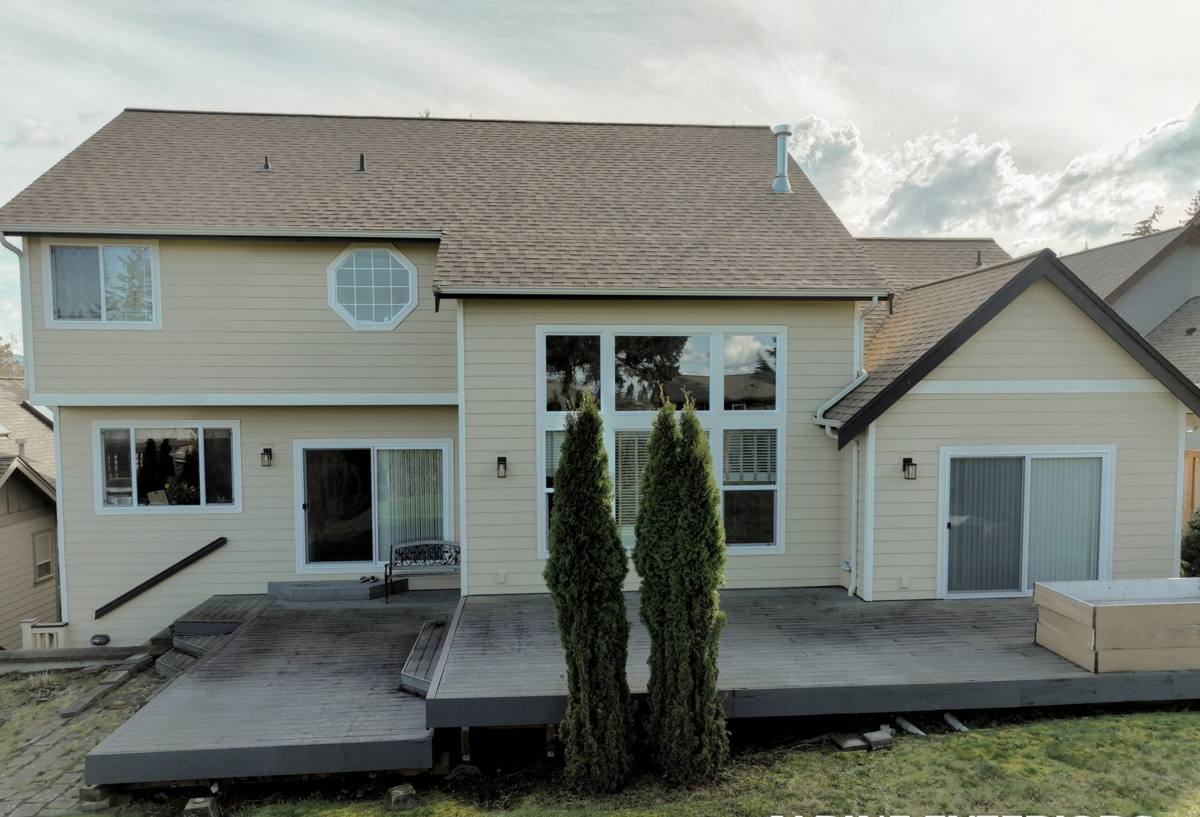
Signs Your Deck Has Reached the End of Its Useful Life
Not every tired-looking deck needs full replacement, but certain signs mean the structure itself is failing, not just the surface finish. Worth checking before deciding which way to go:
- Boards that feel soft, spongy, or spring underfoot when you walk across them
- Rust streaks bleeding out from around fasteners or hardware
- The ledger board — where the deck attaches to the house — showing gaps, dark staining, or separation from the siding
- Railing posts that wobble or flex when pushed, rather than staying rigid
- A persistent green or black film that comes back within weeks of pressure washing
- Widening gaps between boards, or boards that have visibly cupped or warped
- Footings or posts that look like they've shifted, sunk, or heaved out of level
- A deck more than 15–20 years old built with older lumber and fastening standards, even if it looks okay on the surface
Any one of these on its own might be a repair. Several of them together, especially anything involving the ledger connection or framing, usually means the deck has reached the point where replacement costs less over time than chasing repairs on a failing structure.
Repair or Replace? How We Make That Call Honestly
We don't default to recommending replacement just because it's the bigger job. If the framing underneath is sound and the problems are limited to surface boards or hardware, a repair or resurfacing can be the right call, and we'll say so. Replacement makes sense when the structural elements — ledger, joists, posts, or footings — are compromised, or when the cost and frequency of repairs start adding up to more than a new deck would run over a few years. We check the framing directly rather than guessing from the surface, since a deck can look rough on top with sound bones underneath, or look presentable on top while the structure underneath is failing.
What a Correct Deck Replacement Involves
Tearing Out and Inspecting What's Underneath
A proper replacement starts with full removal of the old decking, railings, and — where needed — framing, not just a new surface laid over old joists. That teardown is also the point where we actually see the condition of the ledger connection, framing, and footings, which tells us whether those can be reused or need to be replaced along with the surface. Skipping this step and building a new surface on old framing is one of the more common shortcuts that leads to a deck needing work again within a few years.
Footings and Framing Built to Last
Footings need to sit below the local frost line and bear on solid, well-compacted ground — something worth extra attention on Sumas' damp valley soil rather than an assumption carried over from drier sites. Framing lumber should be rated for ground contact or sustained moisture exposure where it's called for, sized correctly for the span and the loads the deck will actually see, not a generic layout applied regardless of site.
Fasteners, Flashing, and the Ledger Connection
Corrosion-resistant fasteners throughout — not standard hardware that starts rusting within a few wet seasons — protect both the structure and the finished look, since rust stains are one of the first things homeowners notice on an aging deck. The ledger board, where the deck ties into the house, needs proper flashing so water is directed away from that connection instead of collecting behind it. That single detail is one of the most common places we find rot starting on decks we're asked to replace.
Choosing the Right Decking Material for a Sumas Replacement
Material choice affects how much upkeep a new deck actually needs once it's built, and in a climate with this much sustained moisture, the gap between a well-suited material and a poorly-suited one shows up faster than it would in a drier region.
| Material | Moisture & Moss Resistance | Upkeep | Realistic Lifespan |
|---|---|---|---|
| Cellular PVC | Excellent — no wood fiber to absorb moisture | Occasional washing | 25+ years |
| Capped composite | Strong — cap layer resists staining and moss buildup | Occasional washing | 20–25 years |
| Uncapped composite | Moderate — some absorption at exposed fiber edges | Periodic cleaning | 15–20 years |
| Cedar | Moderate — needs sealing to hold up | Regular oiling or sealing | 12–18 years with upkeep |
| Pressure-treated wood | Weakest without consistent maintenance | Regular sealing or staining | 10–15 years with upkeep |
Pressure-treated lumber and cedar both cost less upfront and can look great freshly finished, but they're also the two materials most likely to need replacement again sooner in a climate that doesn't give a surface much time to dry. Composite and PVC cost more initially but generally mean less recurring work, which matters most for homeowners who don't want ongoing sealing or staining on the calendar every year.
Our Deck Replacement Process, Start to Finish
- On-site assessment of the existing deck, including checking framing and footing condition directly, not just the visible surface
- A straight conversation about repair versus replace, and what each option actually costs over time
- Material selection based on your budget, how the deck gets used, and how much upkeep you want to take on going forward
- Full removal of the old structure, disposed of properly
- New or reinforced footings and framing, built to current structural standards for the site
- Decking, railing, and stair installation with corrosion-resistant fasteners and correct board spacing for drainage
- Final walkthrough covering what your specific material needs going forward, and confirming everything meets code before we consider the job done
Permits and Whatcom County Building Basics
Deck replacement in Whatcom County generally requires a permit, particularly when framing, footings, or railings are being rebuilt rather than just resurfaced — the local building department sets the specific requirements for footing depth, railing height, and inspection sign-off. We handle that process as part of the job rather than leaving it for the homeowner to sort out, and we don't skip it to save time, since a deck that isn't permitted and inspected correctly can become a real problem at resale or insurance time.
Why Hiring a Crew That Already Works Sumas Matters
A crew that mostly builds decks on drier, better-drained lots elsewhere in the county can still do competent work, but a Sumas replacement has variables that don't come up as often on higher ground — damp valley soil affecting footing and drainage decisions, and a moss season that runs longer here than in more sheltered, sunnier parts of the county. Working this area regularly means we're not guessing at those conditions on your project. We've seen which materials and framing details actually hold up to Sumas' combination of driving rain, sustained ground moisture, and a long wet season, and which ones are worth the extra cost versus which are just an upsell.
That familiarity also shows up in smaller judgment calls — how to grade and drain a low-lying yard so the new deck doesn't inherit the same moisture problems as the old one, and being straightforward about what your specific deck actually needs versus what's optional.
Ready to Replace Your Deck?
Whether your deck is showing clear signs of failure or you just want an honest opinion on whether it's worth repairing versus replacing, we're happy to take a look and walk you through the options plainly. Reach out below for a free, no-pressure estimate.