 Birch Bay Window
 Roof Repair Built for What Sumas Weather Actually Does
A roof in Sumas doesn't fail the way a roof fails in a dry climate. It doesn't usually give out all at once from one dramatic storm. It wears down slowly, through repeated cycles of saturation, wind-driven rain, and the slow creep of moss working into seams and granule surfaces. By the time a homeowner notices a stain on a ceiling, the underlying damage has often been building for a season or two.
We're a Birch Bay based crew, and Sumas is part of the territory we work regularly. That matters more than it might seem, because roof repair here isn't a generic skill — it's shaped by this specific corner of Whatcom County. Salt-laden air off the water accelerates corrosion on fasteners and flashing. Driving rain, pushed sideways by wind off the strait, finds its way under shingles and around vents in ways that vertical rain never would. And moss season here runs long, which means moss isn't an occasional nuisance — it's a constant, ongoing pressure on the roof surface for much of the year.
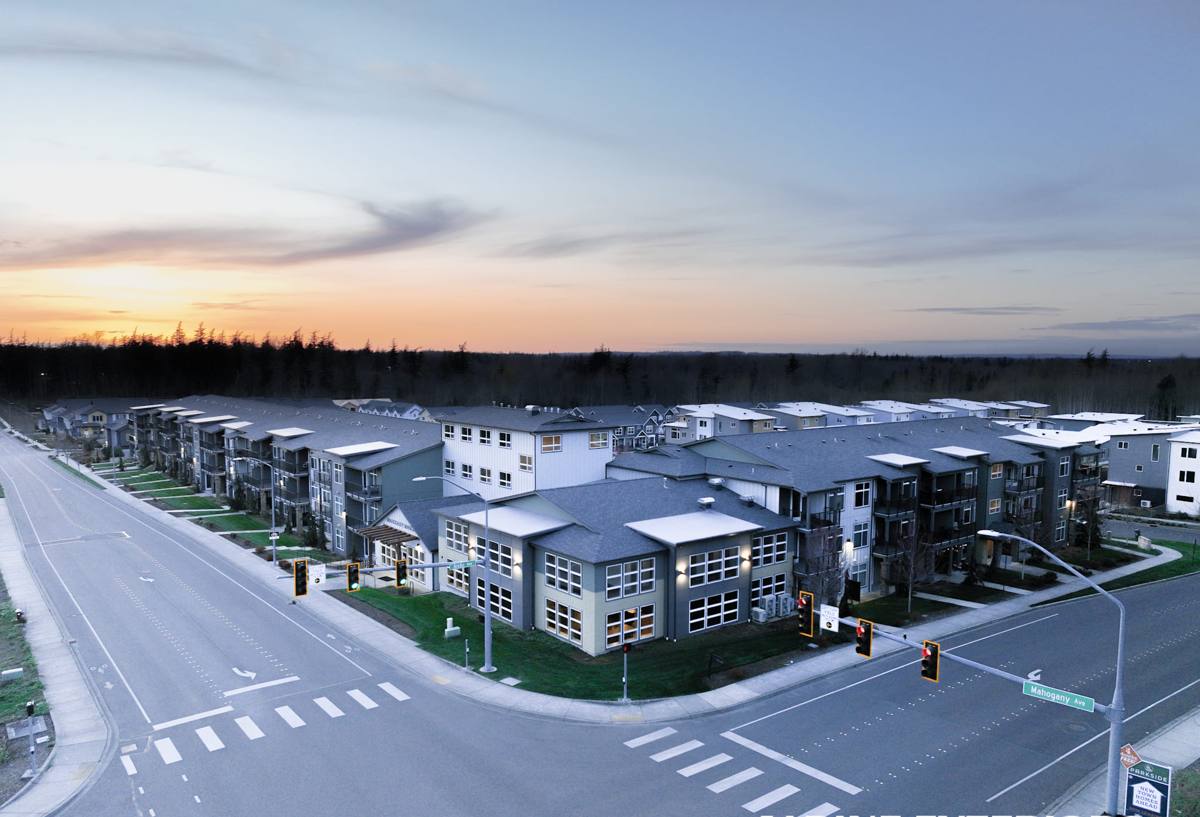
Common Roof Problems We See on Sumas Homes
Most of the repair calls we run in this area fall into a handful of recurring categories. Recognizing them early is the difference between a modest repair and a much larger one.
Moss and Organic Growth Damage
Moss doesn't just sit on top of shingles — it roots into the surface, lifts shingle edges, and holds moisture against the roof deck long after the rain has stopped. On shaded slopes, north-facing sections, and anywhere debris collects, moss growth accelerates. Left unaddressed, it shortens shingle life significantly and creates the damp conditions that lead to rot in the decking underneath.
Flashing and Penetration Leaks
Chimneys, vents, skylights, and any place two roof planes meet are the most common leak points on any roof, and salt air makes it worse by corroding fasteners and thinning metal flashing faster than it would inland. A flashing failure often shows up as a leak nowhere near where the water actually entered, which is why a proper diagnosis matters more than a quick patch.
Wind-Driven Rain Intrusion
Storms coming off the water push rain sideways, not straight down. That means water can be forced up under shingle tabs, through ridge vents, and into gaps that would never leak in a calmer climate. Repairs in this area have to account for lateral water movement, not just gravity drainage.
Gutter and Drainage Backup
Moss debris, fir needles, and general organic buildup clog gutters and downspouts quickly here. When water can't leave the roofline, it backs up under the edge of the roofing material — one of the more preventable causes of edge rot and fascia damage we see.
What a Correct Roof Repair Actually Involves
A repair that lasts starts with an honest diagnosis, not a guess based on where the ceiling stain showed up. The table below outlines how we approach the most common repair scenarios.
| Issue | Typical Cause | Repair Approach |
|---|---|---|
| Isolated roof leak | Failed flashing, cracked pipe boot, or wind-lifted shingles | Trace water path from the deck side, replace the specific failed component, reseal correctly |
| Heavy moss coverage | Shade, debris buildup, long wet season | Careful removal, treatment, and correcting the conditions that let it take hold |
| Soft or spongy decking | Long-term moisture intrusion under shingles | Remove affected section, replace rotted decking, reroof that area properly |
| Granule loss / bald patches | Age, weather exposure, foot traffic | Assess remaining shingle life; patch or recommend targeted section replacement |
| Gutter-edge rot | Clogged drainage holding water against the roof edge | Repair fascia/edge material, clear and correct drainage path |
The common thread across all of these: a repair that only addresses the visible symptom, without fixing the condition that caused it, tends to fail again within a season or two. That's especially true here, where moisture pressure on a roof rarely lets up for long.
Our Process, Start to Finish
1. Inspection
We get on or around the roof and look at the whole system — shingles, flashing, vents, gutters, and, where accessible, the underside of the decking. We're looking for the actual source of a problem, not just the spot where water showed up inside the home.
2. Honest Diagnosis and Written Estimate
We explain what we found in plain terms, what's causing it, and what it will take to fix it correctly. If a repair is genuinely all that's needed, we say so. If the damage has progressed to the point where a repair would just be a temporary patch over a bigger problem, we'll tell you that too.
3. The Repair Itself
We match materials appropriately, address the root cause, and make sure flashing, fasteners, and seals are suited to a coastal-influenced climate rather than generic hardware that corrodes fast in salt air.
4. Cleanup and Walkthrough
We clear debris, haul away old material, and walk the finished work with you so you can see exactly what was done and why.
Repair or Replace? How We Help You Decide
Not every roof problem calls for a full replacement, and not every leak can be fixed with a patch. The right call depends on the roof's age, how much of it is affected, and how many repairs it's already had.
| Factor | Leans Toward Repair | Leans Toward Replacement |
|---|---|---|
| Roof age | Well within its expected service life | At or past the end of its expected lifespan |
| Damage extent | Localized — one leak, one section | Widespread granule loss, multiple leak points, or deck rot in several areas |
| Repair history | First or second repair on this roof | Repeated repairs to the same or nearby areas |
| Underlying decking | Solid, dry, sound | Soft, rotted, or damaged in multiple spots |
Broad cost ranges vary a lot by scope — a small flashing or vent repair is a modest job, while a section reroof involving deck replacement runs considerably more. We won't quote a number without actually looking at the roof, because guessing over the phone does homeowners a disservice either way.
Materials and Methods We Rely On
For repairs in this climate, we favor materials and methods that hold up specifically against sustained moisture and salt exposure rather than whatever is cheapest to source. That means corrosion-resistant fasteners and flashing rather than standard galvanized hardware, underlayment suited to wind-driven rain rather than minimal-code product, and shingle or roofing matches that blend properly with the existing roof rather than a visibly mismatched patch.
Where a homeowner is deciding between materials for a larger repair section, it's worth understanding the basic tradeoffs:
- Asphalt composition shingles — the most common roofing material, cost-effective, and straightforward to patch or section-replace when matched correctly to the existing roof age and color.
- Metal roofing sections — excellent water shedding and long service life, but repairs require different fastening and sealing techniques than shingle roofs, and mismatched panels are more visible than mismatched shingles.
- Wood shake — can look great, but requires more attentive maintenance in a wet, moss-prone climate, and repair work demands careful attention to keep moisture from tracking under adjacent shakes.
We'll always explain the honest maintenance and moisture tradeoffs of a material before recommending one for your specific roof — the goal is a repair that actually holds up here, not just the easiest thing to install.
Homeowner Maintenance Checklist for This Climate
A lot of roof problems in Sumas and the surrounding area are preventable with a bit of regular attention between professional inspections.
- Clear gutters and downspouts at least twice a year, more often under overhanging trees
- Look for moss buildup on shaded or north-facing slopes each spring and fall
- Check attic spaces periodically for damp insulation, staining, or musty odor
- Watch for granules collecting in gutters — a sign of accelerating shingle wear
- Have flashing around chimneys, vents, and skylights inspected every couple of years
- Trim back overhanging branches that keep sections of the roof shaded and damp
Why It Matters to Hire a Crew That Already Works Sumas
Roofing crews unfamiliar with this area sometimes treat every repair the same way they would in a drier, calmer climate — standard hardware, standard underlayment, no particular attention to salt exposure or wind-driven rain. That approach tends to show up as a repeat leak within a year or two.
Working regularly throughout Whatcom County and the Birch Bay area, including Sumas, means we're not guessing at what this climate does to a roof over time — we're accounting for it from the first inspection. That includes knowing which repair approaches actually hold up through a full wet season and moss cycle here, not just on paper.
Get a Straightforward Roof Repair Estimate
If you're dealing with a leak, visible moss buildup, or just want an honest read on your roof's condition before it becomes a bigger problem, we're happy to take a look. Fill out the form below for a free, no-pressure estimate — we'll tell you plainly what we find and what it would take to fix it right.