 Birch Bay Window
 Siding Repair Built for Sumas Weather, Not Just Sumas Homes
Every siding repair job is a little different, but the ones we run in Sumas and the surrounding Birch Bay area share a common thread: the damage almost always traces back to moisture that had somewhere to go and no way to leave. Whatcom County sits in a corridor where marine air, driving rain, and long stretches of gray, damp weather work on a house nearly year-round. A repair that just patches the visible crack or replaces one cracked board without addressing how water is moving behind the siding is a repair that fails again in a season or two.
This page is about that one job, done right, for homes in this area — not a general overview of siding work everywhere.
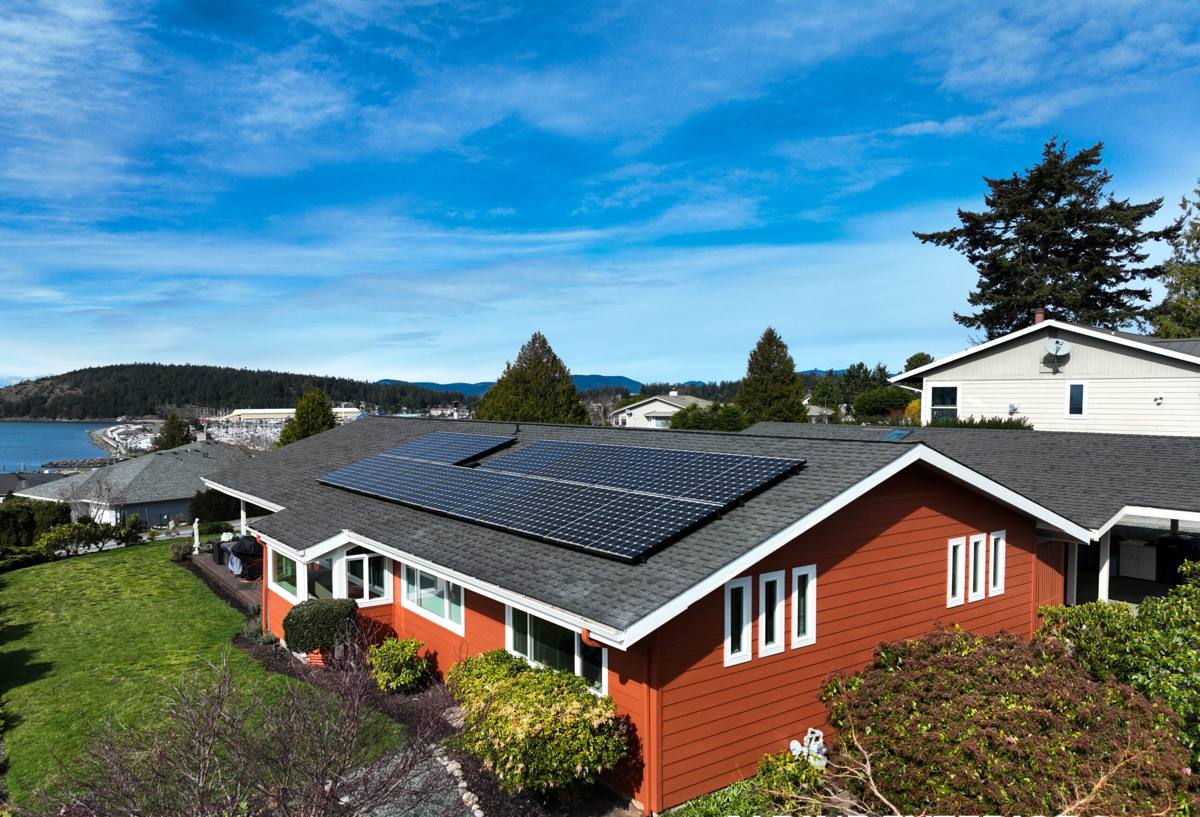
What This Climate Does to Siding Over Time
Homes in Sumas and the wider Birch Bay area deal with a few specific stresses that shorten the life of ordinary siding repairs if they're not accounted for:
Salt-Laden Air
Moist, salt-tinged marine air moves inland off the bay and settles into low areas and river valleys throughout this part of Whatcom County. That air accelerates corrosion on fasteners, flashing, and any metal trim tied into the siding system. A repair that reuses corroded nails or skips new flashing is starting from a weaker position than the original install.
Driving, Wind-Pushed Rain
Rain here rarely falls straight down. Wind-driven storms push water sideways into lap joints, corner boards, and anywhere siding meets a window, door, or roofline. Those are exactly the spots where a poorly sealed patch or a piece of siding installed without the right overlap will start letting water in.
A Long Moss and Algae Season
Shade, moisture, and mild temperatures for much of the year add up to a long window where moss, algae, and mildew can take hold on north-facing walls and anywhere siding stays damp longer than it should. Moss holds moisture against the surface, which speeds up rot in wood-based products and stains factory finishes on anything else.
None of this means siding repair is a losing battle in Sumas — it means the repair has to be done with these three factors in mind, not treated as a cosmetic fix.
Signs Your Siding Needs Repair
Homeowners often wait until damage is visible from the street, but the earlier signs are usually smaller and easier to catch during a walk around the house:
- Soft or spongy spots when you press on a wall, especially near the bottom courses or below windows
- Visible cracking, splitting, or buckling in individual boards or panels
- Paint that's peeling, bubbling, or failing faster than the rest of the house
- Persistent moss or dark streaking that comes back shortly after cleaning
- Gaps opening up at seams, corner boards, or where siding meets trim
- A musty smell or visible staining on interior walls that share an exterior wall with the damaged area
- Nail heads popping out or streaking with rust below them
Any one of these can be a simple, contained repair. Several of them together — especially soft spots plus interior staining — usually mean water has been getting behind the siding for a while, and the repair needs to include whatever's underneath, not just the visible surface.
What a Correct Siding Repair Actually Involves
Finding the Real Problem First
The visible crack or gap is rarely the whole story. Before we touch a piece of siding, we're looking at where water is actually entering and where it's traveling once it's behind the wall. A crack three feet from where the rot shows up is common — water runs downhill behind siding just like it does on top of it. Cutting out only the stained board without tracing the path means the same damage reappears next winter.
Checking What's Underneath
Once we open up the damaged section, we check the water-resistive barrier, the sheathing, and the framing behind it. Siding is the visible layer, but it's the drainage plane behind it doing most of the work of keeping a house dry. If that layer has failed or was installed incorrectly, replacing the siding alone won't fix the underlying problem.
Matching Material and Method
Repairs need to match the existing siding in profile, reveal, and fastening pattern, or the patch will stand out and behave differently than the rest of the wall. This is straightforward on some materials and much harder on others — older cedar, aging LP SmartSide, or discontinued vinyl profiles can be difficult or impossible to match exactly, which is a real factor in deciding whether a repair or a broader replacement makes more sense.
Flashing and Moisture Management
Any repair that touches a window, door, corner, or butt joint needs correct flashing and lap sequencing so water sheds outward and down, never inward. Given how much wind-driven rain this area sees, this step is not optional — it's the difference between a repair that lasts and one that's just cosmetic.
Repair or Replace? How We Make the Call
Not every damaged wall needs full replacement, and not every repair is worth doing instead of replacing. The honest answer depends on a few factors:
| Factor | Repair usually makes sense | Replacement usually makes sense |
|---|---|---|
| Extent of damage | Isolated to one or two sections | Spread across multiple walls or elevations |
| Underlying structure | Sheathing and framing are sound | Rot has reached sheathing or framing broadly |
| Material availability | Matching material or profile is available | Product is discontinued or won't match |
| Age of existing siding | Siding is well within its expected service life | Siding is near or past the end of its useful life |
| Recurrence | First time this area has had a problem | Same area has been patched before and failed again |
We'll always tell you honestly which side of this table your situation falls on, even when the cheaper short-term answer is a repair we could sell you instead.
Common Repair Mistakes We See
A lot of the siding repair calls we get in this area are actually second repairs — someone else patched the problem once, and it came back. The usual culprits:
- Caulk used as the primary defense against water instead of proper flashing and lap sequencing
- Patches that don't match the existing material's expansion and contraction, causing new cracks at the seam
- Reusing old fasteners or trim pieces that were already corroded from years of salt-laden air
- Painting over moss and mildew instead of treating the moisture source underneath
- Fixing the symptom (a cracked board) without checking whether the water-resistive barrier behind it also failed
A repair that skips any of these steps might look fine for a season. In this climate, it usually doesn't hold.
Our Process for a Sumas Siding Repair Call
The steps are the same whether the job is a single board or a full wall section:
- A straightforward inspection of the damaged area and the surrounding siding, from ground level and up close
- An honest assessment of whether the damage is isolated or connected to a larger moisture issue
- A written explanation of what we found, what caused it, and what it will take to fix correctly
- A clear recommendation — repair, partial replacement, or full replacement — with the reasoning behind it
- The repair itself, including correct flashing, fastening, and material matching, not just a patch
We don't upsell a full re-side when a contained repair will genuinely hold, and we don't recommend a repair when the underlying damage is too far along for that to be honest advice.
What We Use for Repairs — and Why
We install and repair James Hardie fiber cement siding as our standard, and it's what we recommend whenever a damaged section can't be reliably matched or a homeowner is ready to move past a cycle of repeated repairs. Hardie's HZ product lines are engineered for climates like this one, the ColorPlus factory finish resists the fading and peeling that plague field-painted repairs, and it's a non-combustible material that doesn't feed moss and mildew the way wood-based products can.
That said, plenty of homes in this area were built with cedar, vinyl, or engineered wood products like LP SmartSide, and we'll repair those honestly when a repair is the right call — matching material where we can, and being straight with you when a match isn't realistic. Wood-based siding in particular is more sensitive to the moisture and moss pressure this climate creates, which is part of why we don't install it new. When a repair on one of these materials turns into "this is the third time we've patched this wall," that's usually the point where we'll talk through what a Hardie replacement would look like instead — not because a repair isn't possible, but because it stops being the practical answer.
Why Hiring a Crew That Already Works in Sumas Matters
Siding repair done wrong is expensive twice — once for the repair, and again when it fails and the water damage underneath has spread. A crew that regularly works this stretch of Whatcom County already knows what driving rain and a long moss season do to a wall over time, and repairs with that in mind instead of learning it on your house.
Before hiring anyone for a siding repair, it's worth checking a few basics:
- Are they licensed and insured in Washington, and will they show you proof without being asked twice?
- Do they explain what caused the damage, or just quote a price to patch what's visible?
- Will they check what's behind the siding, not just replace the board you can see?
- Do they work with the specific material on your house, and can they match it credibly?
- Do they give you a straight answer on repair versus replace, even if replace is the harder sell?
A local crew with a real track record in this area should be able to answer all five without hesitation.
Get a Straight Answer on Your Siding
If you've got a section of siding in Sumas that's cracked, soft, staining, or just not holding up the way it used to, we'll come take an honest look. There's no pressure and no obligation — just a clear read on what's going on and what it would take to fix it right. Reach out below for a free estimate.