 Birch Bay Window
 Siding Replacement in Sumas: What Local Homes Are Up Against
Homes in the Sumas area sit under the same weather pattern that shapes exterior work across Whatcom County: long stretches of driving rain, salt-laden air moving in off the water, and a moss season that can run most of the year in shaded, north-facing spots. None of that is dramatic on its own, but siding doesn't fail dramatically either — it fails slowly, one wet season at a time, until a homeowner notices soft trim, a musty smell in a closet on an exterior wall, or paint that won't hold anymore.
Siding is the single largest weather barrier on a house. When it's doing its job, water sheds off the surface and out at the laps, air can move behind the cladding to dry out incidental moisture, and the wall assembly underneath stays dry. When it's not — because of the wrong material, a botched original install, or simple age — water finds its way behind the boards and starts working on sheathing, framing, and insulation that were never meant to get wet.
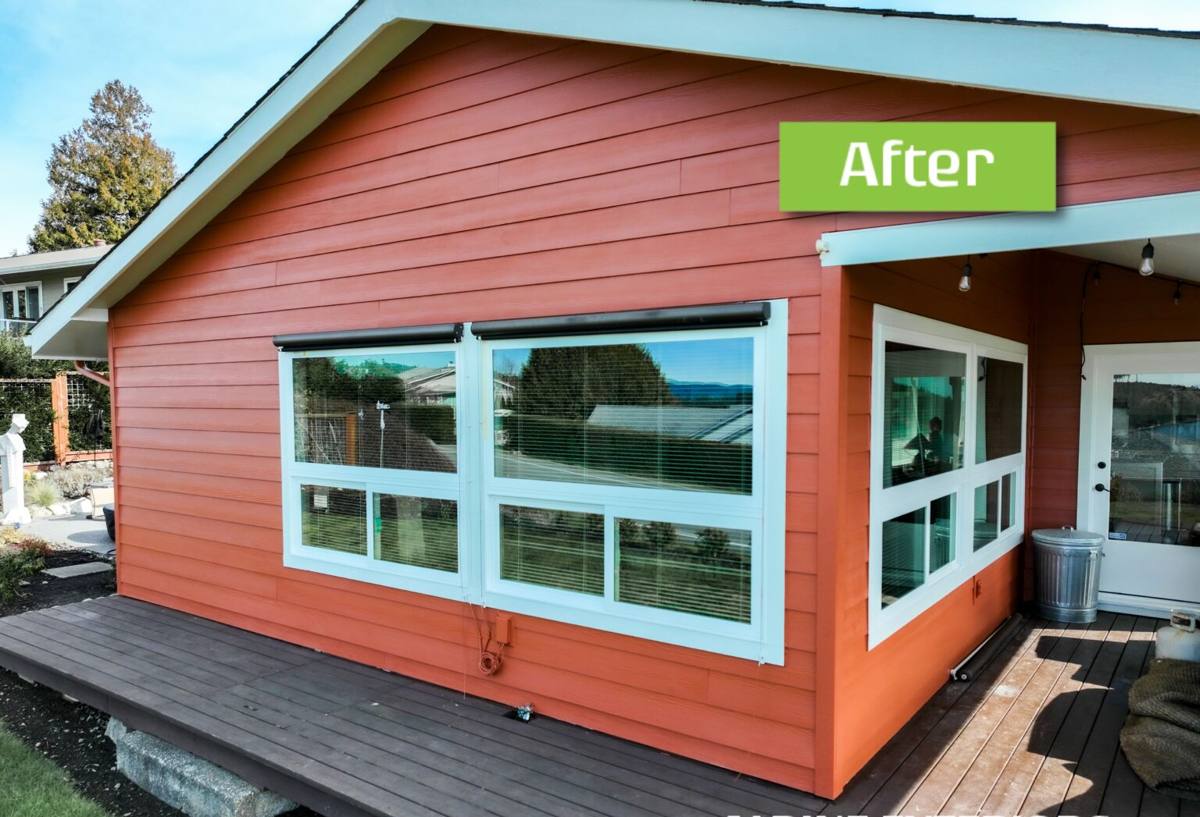
Signs a Sumas Home Needs Replacement, Not Repair
Not every siding problem calls for a full tear-off. But there's a point where patching stops making financial sense and replacement becomes the honest recommendation. Here's how we tell the difference on a walk-through:
- Soft or spongy siding when pressed, especially near the bottom courses and around window and door trim — usually means moisture has already gotten into the material itself.
- Persistent moss or algae staining that comes back within a season of cleaning, which points to a surface that's holding moisture rather than shedding it.
- Cupping, buckling, or visible gaps at the laps or corners, often from original installation that didn't account for expansion and contraction.
- Paint that won't hold — repeated peeling or blistering within a few years of repainting is a sign the substrate underneath is compromised, not just a paint quality issue.
- Interior signs like musty odor, discolored drywall, or bubbling paint on exterior-facing walls, which usually mean water has already reached the sheathing.
- Siding age approaching or past its expected service life for the material — this varies a lot by product, which is part of why material choice matters so much in this climate.
If you're seeing one or two of these in isolated spots, targeted repair may still make sense. If you're seeing several, or the same problem keeps recurring in the same areas, that's usually the wall assembly telling you it's time for a full replacement rather than another round of patchwork.
What a Correct Siding Replacement Actually Involves
Tear-Off and Inspection
A replacement starts with removing the old siding down to the sheathing — not just the visible panels, but the trim, flashing, and any old building paper underneath. This is the point where problems that were hidden for years finally show up: soft sheathing, rot at window sills, or gaps in the original flashing. A crew that rushes this step, or skips a real inspection because the old siding "looked fine" from the ground, is setting the new siding up to fail the same way the old one did.
Water-Resistive Barrier and Flashing
Everything behind the new siding matters as much as the siding itself. A correctly lapped water-resistive barrier, properly integrated flashing at every window, door, and roof-to-wall intersection, and flashing tape at seams are what actually keep water out of the wall — the siding is the first line of defense, not the only one. In a climate with as much sustained rain as Whatcom County sees, these details are where most long-term failures actually originate, not in the visible cladding.
Fastening and Clearances to Spec
Fiber cement has manufacturer-specified nailing patterns, fastener types, and minimum clearances from grade, roof lines, and abutting surfaces. Skipping these specs to save time is invisible on install day and shows up as cracking, moisture intrusion, or premature paint failure years later. We install to the manufacturer's written specification, not to "how it's usually done."
Finish and Caulking Details
Where trim meets siding, where two dissimilar materials abut, and around every penetration, sealant selection and application matter. Factory-finished products reduce how much of this depends on field painting, but the joinery details still have to be done correctly — this is a place where experienced crews and rushed crews produce visibly different results within a year or two.
Why We Install Only James Hardie Fiber Cement
We install one siding system: James Hardie fiber cement. That's a deliberate standard, not a lack of options. Fiber cement is non-combustible, holds paint and factory finish far longer than wood-based products, and doesn't absorb and swell with moisture the way engineered wood siding can. Hardie's ColorPlus factory finish is baked on under controlled conditions rather than field-applied, which matters directly in a climate where field-painted surfaces get less drying time between rain events. Hardie also offers HZ climate-engineered formulations suited to wetter regions, and backs the product with a strong, transferable warranty when it's installed to spec.
That last part — installed to spec — is the real reason we don't install other products alongside Hardie. Warranty coverage, moisture performance, and paint longevity are only as good as the installation behind them. Standardizing on one system means our crew installs it the same correct way on every job, instead of switching techniques and details between five different products.
How Siding Materials Compare in This Climate
Homeowners in Sumas often ask us to weigh in on vinyl, LP SmartSide, cedar, or engineered wood options they've seen priced elsewhere. Here's an honest comparison focused on how each performs against sustained rain, salt air, and moss exposure rather than on install-day appearance.
| Material | Moisture Behavior | Maintenance Burden | Typical Service Life |
|---|---|---|---|
| James Hardie fiber cement | Doesn't absorb/swell; engineered HZ formulas for wet climates | Low — factory finish holds color long-term | Decades when installed to spec |
| Vinyl siding | Sheds water but can warp/buckle with heat and doesn't stop moisture at seams | Low, but limited repair options if damaged | Moderate; fades and becomes brittle over time |
| LP SmartSide (engineered wood) | Wood-based core is moisture-sensitive at cut edges and seams | Moderate — edge sealing and paint upkeep matter | Shorter if moisture management isn't precise |
| Cedar / primed spruce | Absorbs moisture readily; needs consistent sealing | High — regular refinishing required | Variable, heavily maintenance-dependent |
None of these alternatives are "bad" products in every application — they each have a place. But in a climate defined by long wet seasons and persistent moss pressure, the moisture-sensitive core materials carry a maintenance burden that fiber cement simply doesn't, which is why it's the only system we put our name behind.
Our Process, Start to Finish
Estimate and Inspection
We start with an on-site look at the existing siding, trim, and any visible trouble spots, and give you an honest read on whether you're looking at repair or full replacement before we talk numbers.
Prep and Tear-Off
Old siding, trim, and building paper come off down to the sheathing, with any rot or damage documented and addressed before anything new goes up.
Weather Barrier, Flashing, and Install
New water-resistive barrier, correctly lapped flashing at every opening, and Hardie panels installed to manufacturer fastening and clearance specs.
Trim, Caulking, and Final Details
Trim and joinery details finished and sealed, with attention to the transitions that cause the most problems if rushed.
Walkthrough and Cleanup
A final walk-through with the homeowner before we consider the job done, and the site cleaned up — not left for you to deal with.
Why a Crew That Already Works Sumas Matters
Siding installed correctly on paper can still perform differently depending on exposure — how much a wall faces prevailing weather, how much shade keeps a section damp longer, how close a home sits to the salt air coming off the water. A crew that already works this area has seen how houses in Sumas actually weather over the seasons, not just how a spec sheet says a product should perform. That local pattern recognition shows up in small decisions on the job — where extra flashing attention is worth it, which sides of a house need it most — that don't show up on an estimate but show up in how the siding holds up ten years out.
It also means straightforward scheduling and follow-up. You're not waiting on a crew traveling in from out of the area, and if a question comes up after the job is done, you're calling a crew that's still working nearby, not one that's moved on to a different region entirely.
Protecting Your Investment After Installation
Fiber cement is low-maintenance, not no-maintenance. A few habits keep it performing for the long haul:
- Rinse off moss and algae buildup once or twice a year, especially on shaded or north-facing walls.
- Keep gutters clear so water isn't sheeting down over siding it wasn't meant to handle in volume.
- Trim back vegetation that keeps a wall section shaded and damp longer than the rest of the house.
- Re-caulk trim joints if you notice separation, rather than waiting for water to find its way in.
- Have any impact damage or cracking addressed promptly rather than left through another wet season.
If you're weighing repair versus replacement, or just want an honest look at what your current siding is telling you, we're glad to come take a look. The estimate is free, there's no pressure attached to it, and you'll get a straight answer either way — use the form below to get started.