 Birch Bay Window
 Why Window Installation in Ferndale Isn't a Generic Job
Ferndale sits close enough to the water and to the wet, wooded stretches of Whatcom County that its homes take a different kind of beating than houses further inland. You get salt-laden air rolling in off the bay, long stretches of driving rain that hits siding and window frames sideways rather than straight down, and a moss season that seems to start earlier and last longer every year. None of that is dramatic on its own, but stacked together over a decade or two, it's exactly the combination that finds every weak point in a window installation. A window that was installed correctly in a dry climate can still fail here if the crew didn't account for wind-driven moisture and constant humidity.
That's the real difference between a window replacement that looks fine on day one and one that actually holds up in Ferndale. The window unit itself matters, but the installation details around it — flashing, sealants, shimming, drainage — matter just as much, and they're the parts nobody sees once the trim is back on.
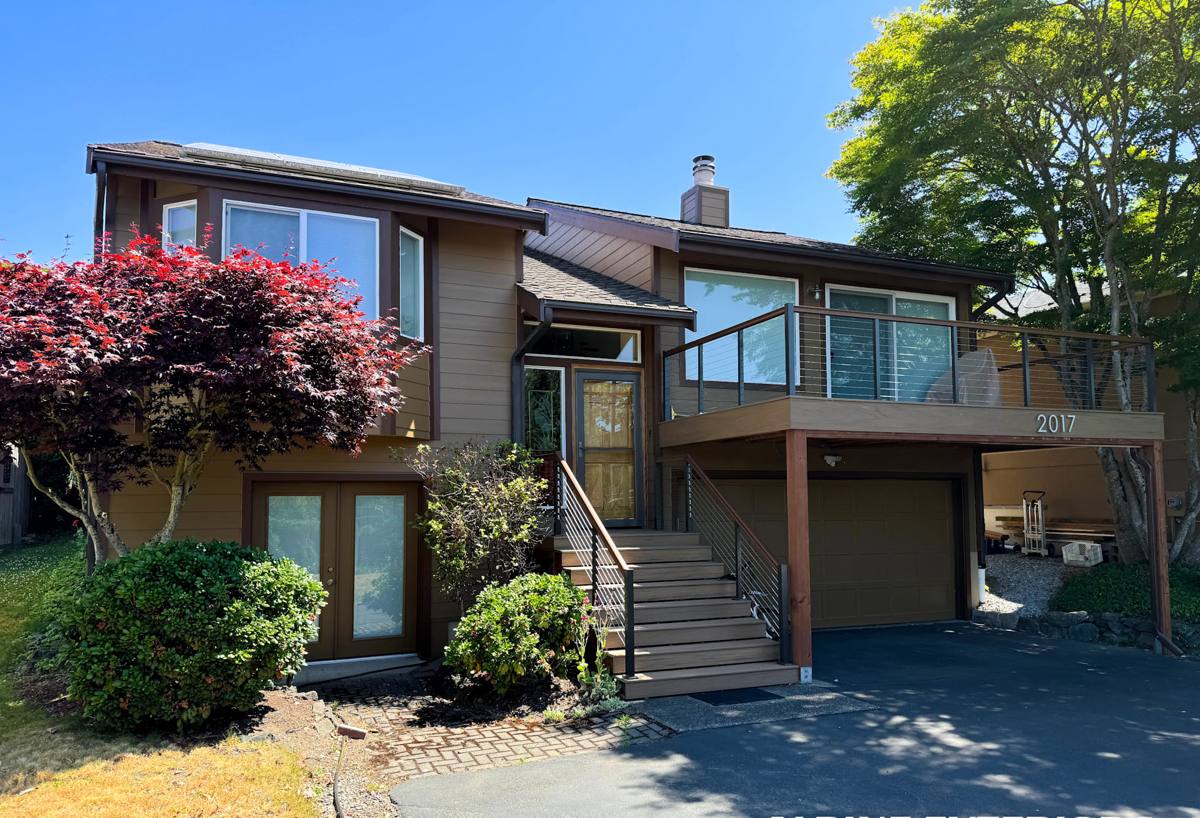
What Whatcom County's Climate Does to Windows Over Time
Salt Air and Metal Fatigue
Homes closer to the shoreline deal with airborne salt that settles on hardware, screens, and metal cladding. Over years, this accelerates corrosion on cheaper fasteners, hinges, and cranks. It's rarely a fast failure — it's a slow one, showing up as hardware that gets stiff, discolored, or eventually seizes.
Driving Rain and Wind-Loading
Rain in this part of Whatcom County doesn't always fall straight down. Wind off the water pushes it sideways and up under trim, siding laps, and window flanges. If a window wasn't flashed and sealed to shed water in that direction — not just from above — moisture works its way behind the frame. That's when you start seeing rot in the surrounding wall structure, sometimes long before there's a visible sign at the window itself.
Moss, Mildew, and a Long Wet Season
Moss doesn't just grow on roofs. Given a shaded, damp exterior wall, it colonizes window sills, trim, and cladding too, holding moisture against the surface for weeks at a stretch. On wood-trimmed windows especially, that constant dampness is what triggers rot at the sill — usually the first place a window installation starts to fail.
Signs a Ferndale Home Needs New Window Installation
- Soft or spongy wood at the window sill or lower corners of the frame
- Persistent fogging or a visible haze between panes on double-pane units (a sign the seal has failed)
- Drafts you can feel near the frame even when the window is fully latched
- Paint that keeps bubbling or peeling at the same spot on the frame or trim, year after year
- Windows that are hard to open, close, or lock — often from swelling, warping, or corroded hardware
- Visible daylight or gaps around the frame from outside
- Noticeably higher heating bills with no other explanation
Any one of these can be minor. Two or three together, especially on a wall that faces prevailing wind and rain, usually means the installation — not just the window — needs to be redone.
What a Correct Window Installation Actually Involves
A window installation is judged on how it performs during the next windstorm, not how it looks the day it's finished. In a climate like this, a few steps aren't optional extras — they're the difference between a window that lasts and one that has to be revisited in five years.
Removal and Inspection
Pulling the old window is also the only real chance to inspect the rough opening. Any rot, soft framing, or existing water damage needs to be dealt with before a new window goes in — installing a new unit into a compromised opening just hides the problem for a while.
Flashing and Drainage
Proper flashing is layered so that any water that does get behind the siding or trim drains back out and away from the wall — never toward the interior. This matters more here than in drier regions, because Ferndale windows deal with wind-driven rain far more often than a calm, straight-down shower.
Sealing Without Trapping Moisture
It's tempting to seal everything heavily and call it weatherproof, but the wrong sealant in the wrong place can trap moisture inside the wall assembly instead of keeping it out. A correct installation seals where it should and leaves drainage paths where it needs to, rather than caulking every gap indiscriminately.
Shimming and Squaring
A window that isn't shimmed level and square will bind, won't seal evenly against its own weatherstripping, and puts uneven stress on the frame — which shows up later as premature hardware wear or drafts along one edge.
Interior and Exterior Trim
Trim isn't just cosmetic. On the exterior, it's part of how water is shed away from the window. Reinstalling it correctly, with the right gaps and sealant, is part of the weatherproofing system, not an afterthought.
Our Installation Process
- On-site assessment — We look at each window's exposure, condition of the surrounding wall, and any existing moisture damage before quoting anything.
- Honest scope — If a wall needs repair beyond the window opening itself, we tell you before work starts, not after we've already opened it up.
- Removal and opening prep — Old units come out carefully, and the rough opening is inspected and repaired as needed.
- Flashing and weatherproofing — Installed in the correct order, built for wind-driven rain, not just vertical drainage.
- Window installation, shimmed and squared — Set level, plumb, and square, then fastened per the manufacturer's specification.
- Insulation and air sealing — The gap between frame and rough opening is insulated and sealed correctly — not overpacked, not left open.
- Trim and finish — Interior and exterior trim reinstalled or replaced, with attention to how it manages water on the exterior side.
- Walkthrough — We check operation, locks, and sightlines with you before we consider the job done.
Choosing Materials for This Climate
There's no single "best" window material — it depends on the wall's exposure, your maintenance preferences, and budget. Here's how the common options generally hold up under Ferndale conditions:
| Frame Material | How It Handles Salt Air & Rain | Maintenance |
|---|---|---|
| Vinyl | Doesn't corrode; handles moisture well when properly installed | Low — occasional cleaning |
| Fiberglass | Very stable in wet, salt-exposed conditions; resists warping | Low |
| Aluminum | Can corrode over time near salt air unless coated well; conducts cold | Moderate |
| Wood (clad or unclad) | Attractive but vulnerable to rot at the sill without diligent upkeep | High — regular painting/sealing |
| Wood-clad | Exterior cladding protects the wood core from direct moisture exposure | Moderate |
We'll walk you through which option fits your home's exposure and how much upkeep you actually want to take on — there's no reason to pay for low-maintenance materials on a sheltered wall, or to put high-maintenance wood on one that takes the brunt of the weather.
Cost Factors for Window Installation in Ferndale
Every home is different, but the main things that move the price on a window installation project here are:
| Factor | Why It Affects Cost |
|---|---|
| Number and size of windows | Larger openings and more units mean more material and labor |
| Condition of the rough opening | Existing rot or water damage adds repair work before the window goes in |
| Frame material chosen | Fiberglass and higher-end vinyl typically cost more upfront than basic vinyl |
| Wall exposure | Walls facing prevailing wind and rain may need more extensive flashing work |
| Full-frame vs. insert replacement | Full-frame replacement addresses the flashing and framing; inserts are faster but don't fix underlying wall issues |
We'd rather walk your specific windows with you and give you real numbers than throw out a broad estimate that doesn't reflect your home's condition.
Why a Crew That Already Works in Ferndale Matters
A window installer who only occasionally works this far into Whatcom County may install a window correctly for a dry inland climate and still miss what this area's wind and rain actually do to a wall over time. A crew that regularly works Ferndale homes has already seen where the moss builds up, which wall orientations take the worst of the weather, and what a five-year-old installation looks like when it was done right versus done for speed. That local pattern recognition is hard to replace with a manual or a manufacturer's install guide alone.
It also means someone who can talk through your specific home's exposure — corner windows on the windward side, sills that stay shaded and damp longer than others — rather than treating every opening the same way.
A Homeowner's Checklist Before Hiring
- Ask what flashing method they use and why — a vague answer is a red flag
- Confirm they inspect and repair the rough opening, not just swap the window itself
- Ask how they handle sealing so moisture can still drain, not just get trapped
- Get manufacturer warranty details in writing, separate from the installer's workmanship warranty
- Ask for a clear, itemized quote — materials, labor, and any anticipated repair work broken out
- Confirm licensing and insurance before any work begins
Getting Started
If you're dealing with drafts, fogged glass, sticking hardware, or just want an honest read on whether your windows still have life left in them, we're happy to come take a look. There's no pressure and no obligation — just a straight assessment of what your home actually needs, backed by years of installing and repairing windows in Whatcom County's weather. Fill out the form below to request a free estimate.