 Birch Bay Window
 Why Bellingham Homes Are Tougher on Siding Than People Expect
Bellingham sits right where Puget Sound weather meets Whatcom County's wet winters, and that combination is harder on exterior siding than most homeowners realize until they're dealing with the damage. Salt-laden air off the water accelerates corrosion on fasteners and hardware. Driving rain off Bellingham Bay gets pushed sideways into wall assemblies during winter storms, testing every seam, joint, and piece of flashing. And the long stretch of cool, damp months from fall through spring creates ideal conditions for moss and algae to take hold on north-facing walls and anything shaded by mature trees, which is most of Bellingham.
None of this is unusual for the region, but it means siding choice and installation quality matter more here than they would in a drier climate. A product or installation detail that would hold up fine in eastern Washington can fail years early in a coastal, marine-influenced setting like this one.
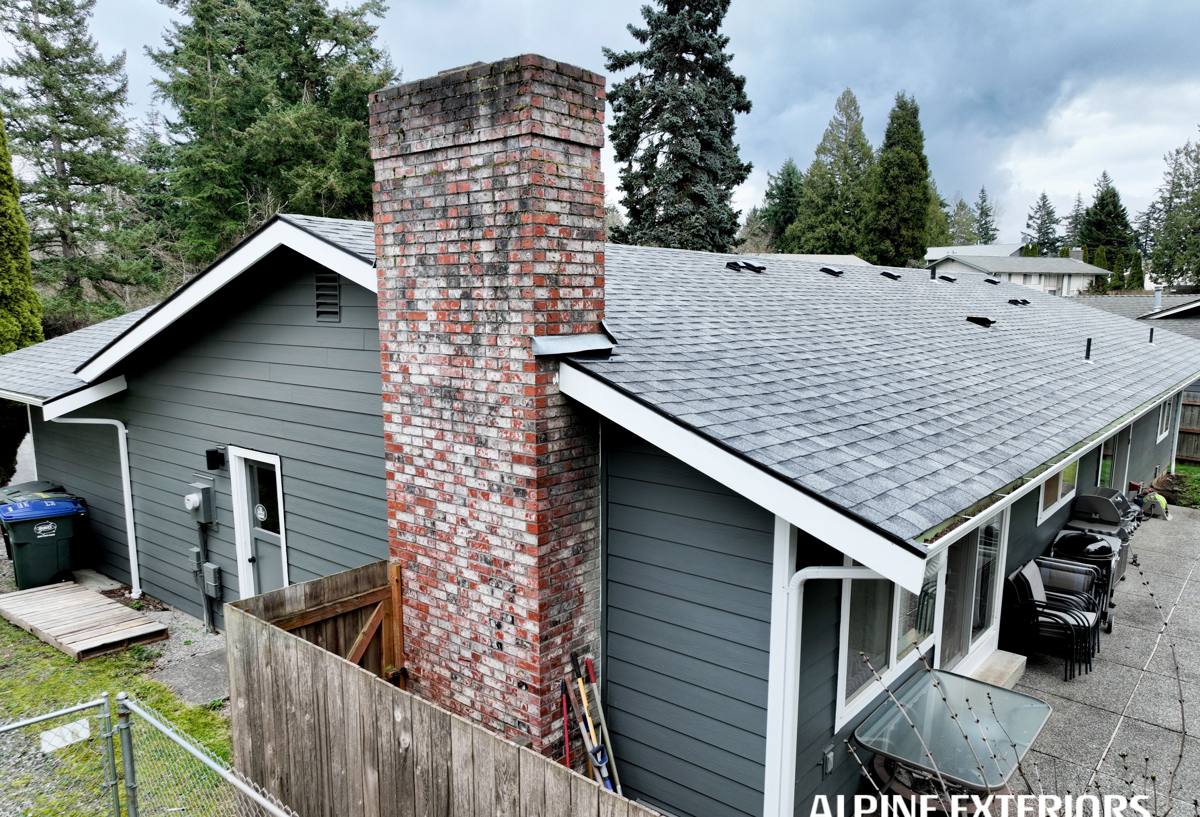
What Bellingham's Climate Actually Does to Siding Over Time
Salt Air and Metal Fatigue
Homes closer to the water deal with airborne salt that settles on exterior surfaces and accelerates corrosion of nail heads, trim fasteners, and any exposed metal flashing. Over years, corroded fasteners can loosen, stain the siding face, or fail to hold boards tight to the wall.
Driving Rain and Wall Moisture
Wind-driven rain doesn't just run down a wall, it gets forced up and under laps, into butt joints, and around window and door trim. If the water-resistive barrier, flashing, and siding overlaps aren't detailed correctly, water works its way behind the cladding and into the sheathing, where it can sit for months without anyone noticing.
Moss, Algae, and Prolonged Dampness
Whatcom County's moss season isn't a minor cosmetic issue. Moss and algae hold moisture against the siding surface far longer than a dry material would ever experience on its own, and on wood-based products that constant dampness is exactly what invites rot to start.
Why James Hardie Fiber Cement Is Built for This Climate
James Hardie engineers its siding into region-specific HardieZone formulations, and homes in this part of Washington fall into the HZ5 zone, built to handle freeze-thaw cycling, sustained moisture exposure, and the kind of wet-cool climate Bellingham sees most of the year. Fiber cement itself doesn't absorb and swell the way wood-based siding does, it won't rot from prolonged dampness, and it's non-combustible, which matters more each year as wildfire smoke and dry-season fire risk become a bigger part of Pacific Northwest summers.
The factory-applied ColorPlus finish is also worth understanding on its own terms. It's baked on under controlled conditions rather than brushed on at the jobsite, which gives it better adhesion and more consistent coverage than field-applied paint, and it resists fading and moss staining longer than a standard paint job would in this climate. That's a meaningful advantage on the north and shaded walls that make up a lot of Bellingham's tree-covered lots.
What Correct Installation Involves Here
Product quality only gets a home about halfway there. In a climate like this one, installation detailing is what actually determines whether a siding job lasts twenty years or needs repair work in five.
Drainage Plane and Weather-Resistive Barrier
Every Hardie installation should start with a properly lapped weather-resistive barrier, installed shingle-style so water is always directed outward and down, never trapped behind the siding. On homes exposed to driving rain, we also look closely at whether a rainscreen gap makes sense to let any incidental moisture drain and dry rather than sit against the sheathing.
Flashing at Every Penetration
Windows, doors, hose bibs, light fixtures, and vents are the places siding jobs actually fail. Each one needs proper flashing and integration with the weather barrier, not just a bead of caulk covering a gap. Caulk is a maintenance item, not a waterproofing strategy.
Fastening and Clearances
James Hardie publishes specific fastener types, spacing, and clearance requirements, including keeping siding a minimum distance above roof lines, decks, and grade. Skipping these details voids warranty coverage and, more importantly, sets up exactly the kind of moisture entry points that cause problems in a climate this wet.
Joint Treatment and Caulking
Butt joints and trim transitions need to be treated with the right sealant, applied correctly, at the right stage of installation. Poorly sealed joints are one of the most common causes of early water intrusion on otherwise good siding jobs.
James Hardie Product Lines That Fit Bellingham Homes
Not every Hardie product is the right fit for every home, and part of a good installation is matching the product line to the house.
- HardiePlank lap siding — the most common choice for Bellingham's traditional and craftsman-style homes, available in multiple exposure widths and textures.
- HardieShingle — a shingle-profile option for homes going for a coastal or cottage look without the maintenance burden of actual cedar shingles.
- HardiePanel — vertical panel siding often used for accent walls, gables, or more modern home designs.
- HardieTrim — matching trim boards that hold up around windows, corners, and fascia without the rot risk of wood trim.
How James Hardie Compares to the Alternatives
Homeowners often ask why we don't offer vinyl, LP SmartSide, or cedar as options. Here's an honest look at the trade-offs each one carries in a climate like Bellingham's.
| Material | How It Handles Moisture Here | Maintenance Burden | Fire Resistance | Typical Lifespan |
|---|---|---|---|---|
| James Hardie fiber cement | Doesn't absorb water or swell; engineered for wet, coastal climates | Low — factory finish resists moss staining and fading | Non-combustible | 30+ years with proper install |
| Vinyl siding | Doesn't rot, but can warp, crack in cold snaps, and trap moisture behind it if not detailed well | Low, but limited repair options when damaged | Combustible, can melt or deform near heat | 20-30 years, fades over time |
| LP SmartSide (engineered wood) | Treated to resist moisture, but still a wood-based product vulnerable to prolonged dampness at cut edges and joints | Moderate — edge sealing and joint maintenance matter | Combustible | 20-30 years, installation-sensitive |
| Cedar siding | Natural material, absorbs moisture, needs consistent upkeep in a damp climate | High — regular staining, sealing, and moss treatment | Combustible | Varies widely with maintenance |
Every one of these products has a place in the market. We simply made a decision, based on what we see happening to siding in this specific climate over time, to stand behind one product system rather than offer several and let installation quality vary by which one a homeowner picks on price alone.
Our Process for a Bellingham Siding Project
1. On-Site Assessment
We start by walking the exterior, checking for existing moisture damage, evaluating the current wall assembly, and identifying trouble spots like shaded walls with heavy moss growth or areas exposed to prevailing wind-driven rain.
2. Tear-Off and Sheathing Check
Once old siding comes off, we inspect the sheathing underneath. Any rot or moisture damage found at this stage gets addressed before new siding goes on, not covered up.
3. Weather Barrier and Flashing Installation
This is the step that actually determines long-term performance, and it's the one that's invisible once the job is finished, which is exactly why it has to be done right the first time.
4. James Hardie Installation to Manufacturer Spec
Fastening, clearances, joint treatment, and trim work all follow James Hardie's published installation requirements, which keeps the product warranty intact and gives you a siding job engineered to actually perform in this climate.
5. Final Walkthrough
We go over the finished work with you directly so you know what was done and why.
Signs a Bellingham Home Needs Siding Attention
You don't need to wait until siding is visibly failing to have it looked at. Watch for these signs, especially heading into another wet Whatcom County winter:
- Persistent moss or algae growth that returns quickly after cleaning
- Soft or spongy spots when you press on the siding, especially near the bottom edge
- Visible gaps, warping, or separation at joints and trim
- Peeling or bubbling paint, which often signals moisture trapped underneath
- Rising energy bills that suggest air and moisture are getting past the wall assembly
- Staining or streaking below window sills and other penetrations
Warranty and Long-Term Value
James Hardie backs its siding products with a strong, transferable limited warranty, and the ColorPlus finish carries its own separate finish warranty covering fade and peel resistance. That transferability matters if you ever sell the home, it's a real, documented feature buyers in this market pay attention to. But a warranty is only as good as the installation behind it, which is why we install strictly to manufacturer specification on every project, not just the parts that are easy to see.
If you're weighing siding options for a Bellingham home, we're happy to walk the property with you, look at what your current siding is telling you, and give you a straight, no-pressure estimate for a James Hardie installation built for this climate. Fill out the form below to get started.