 Birch Bay Window
 Roof Repair Built for Bellingham's Coastal Exposure
A roof in Bellingham doesn't fail the way a roof does in a drier, calmer part of the country. It fails at the edges first — at a flashing lap, a nail head, a shaded valley — because that's where salt-tinged marine air, wind-driven rain, and a moss season that runs most of the year do their work. Roof repair here isn't a smaller version of a full roof replacement. It's a different skill: finding exactly what's failing, understanding why it failed in this specific spot on this specific roof, and fixing that cause instead of just patching what's visible from the ground.
This page covers roof repair specifically for homes in and around Bellingham and the Birch Bay corridor of Whatcom County — what tends to go wrong here, how we tell a real repair candidate from a roof that's past the point where patching makes sense, and what a correct repair actually involves.
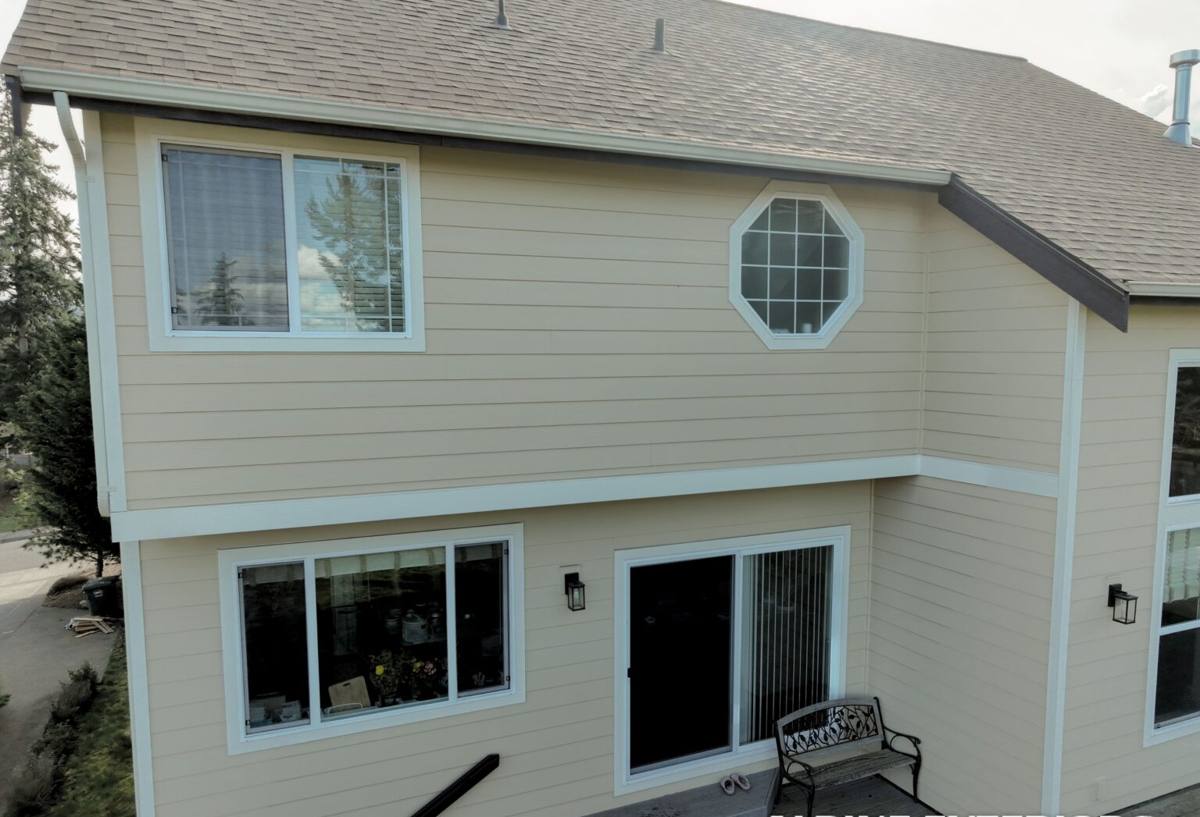
Why Roofs Along This Stretch of Whatcom County Wear the Way They Do
Three conditions do most of the damage, and they rarely act alone. A roof that's dealing with all three at once — which describes a lot of Bellingham and Birch Bay properties — wears faster than any one factor would explain by itself.
Salt Air
Airborne salt off the water accelerates corrosion on anything metal — fasteners, flashing, vent stacks, gutter hardware. It's a slow process, which is exactly what makes it dangerous: a fastener or flashing seam can be losing integrity for years before it shows up as a stain on the ceiling or a soft spot in the decking. By the time corrosion is visible from the ground, it's usually further along underneath than it looks.
Wind-Driven Rain
Rain here doesn't just fall straight down and run off. Storms push it sideways and up under shingle tabs, along valleys, and into flashing laps that were never tested by a calmer rain event. A roof built or repaired to a minimum standard for straight-down rain will leak in exactly these spots first — valleys, chimney flashing, roof-to-wall transitions — because that's where wind-driven water actually goes looking for a way in.
A Moss Season That Doesn't Really End
Shaded, damp, north-facing roof planes hold moisture long enough here to support moss and algae growth for most of the year, not just a few wet months. Moss isn't only cosmetic. It holds water against the roofing surface, lifts shingle edges as it grows, and works its way under laps that weren't sealed tightly to begin with. A roof that's been growing moss unchecked for a season or two is often dealing with more moisture damage underneath than the surface growth suggests.
Signs Your Roof Needs Repair
Most roof failures give warning before they turn into an active leak. Catching these early is usually the difference between a targeted repair and a much bigger job.
- A leak that only shows up during wind-driven storms, not steady rain — a strong sign of a flashing or lap problem rather than worn-out material
- Granules collecting in gutters or at downspout outlets in noticeable quantities
- Shingles that are curling, cracking, or lifting at the edges, especially on wind-exposed slopes
- Moss buildup on shaded or north-facing planes that keeps returning within a season of cleaning
- Rust staining at fastener heads, flashing, or metal vent stacks
- Water staining on an interior ceiling or attic sheathing, particularly near a valley, chimney, or skylight
- Daylight visible through the roof deck from inside the attic
- A soft or spongy feel underfoot in a specific area, which usually points to deck-level moisture damage
One or two of these on their own often mean a straightforward, targeted repair. Several at once, especially combined with a roof's age, is worth an honest conversation about whether repair is still the right call.
Repair or Replace? How We Make That Call
Homeowners often assume any active leak means the whole roof needs to come off, or the opposite — that a repair will always be the cheaper, equally durable answer. Neither assumption holds up consistently. The factors that actually decide it:
| Factor | Usually Points to Repair | Usually Points to Replacement |
|---|---|---|
| Extent of the problem | Isolated to one flashing detail, valley, or section of shingles | Multiple leak points or widespread granule loss across the roof |
| Roof age | Well within expected service life for the material | At or past the manufacturer's rated lifespan |
| Deck condition | Solid decking under the damaged area | Soft, rotted, or repeatedly repaired decking in multiple spots |
| Moss and algae extent | Limited to a section, manageable with cleaning and targeted repair | Widespread, long-term growth suggesting sustained moisture retention |
| Repair history | First or second repair on this roof | A pattern of recurring repairs in the same general area |
We'll give a straight answer on which category a given roof falls into, including telling you when a repair is genuinely the right move rather than defaulting to whichever job is larger. A well-maintained roof with an isolated problem is usually a strong repair candidate regardless of the material's overall age, as long as the deck underneath is sound.
What a Correct Roof Repair Actually Involves
Diagnosis Before Anything Gets Touched
The single biggest difference between a repair that holds and one that fails again within a year is whether the actual cause got identified first. A stain on a ceiling doesn't always mean the leak is directly above it — water travels along rafters and sheathing before it shows up inside, sometimes several feet from where it's actually entering the roof. We trace a leak to its real source before recommending a fix, rather than patching the spot closest to where the damage is visible.
Flashing Repair
Most roof leaks in this region trace back to flashing, not worn-out field shingles. Valleys, chimney and skylight penetrations, and wall-to-roof transitions all depend on flashing that's properly lapped, sealed, and integrated with the underlayment beneath it. A flashing repair done right rebuilds that integration rather than running a bead of sealant over the visible gap and calling it fixed — sealant alone is a short-term answer that fails again once it dries out and cracks.
Matching Materials
A patch that doesn't match the surrounding shingle profile, color, or exposure creates its own weak point, both visually and functionally, since mismatched materials don't always shed water the same way as the original installation. We match shingle type, exposure, and fastening pattern to what's already on the roof wherever a reasonable match is available, and we're upfront when an older or discontinued product makes an exact match difficult.
Moss and Debris Removal Done Right
Moss removal that scrapes or pressure-washes shingles aggressively can do more damage than the moss itself, stripping granules and shortening the shingles' remaining life. We remove moss and organic debris with methods that don't damage the roofing surface underneath, and we address why that section held moisture in the first place — often shade, poor airflow, or a low spot that doesn't drain cleanly — rather than just clearing what's there and leaving the same conditions to grow it back.
Verifying the Fix
A repair isn't finished when the visible patch is done. Where a leak's source wasn't completely obvious, we confirm the fix actually stopped the water before considering the job complete, rather than assuming a patch worked because it looks right from the outside.
Common Repair Calls We Handle Around Bellingham
- Flashing leaks at chimneys, skylights, and valleys — the most frequent source of active leaks on an otherwise sound roof
- Wind-lifted or missing shingles — common after a storm with sustained gusts, especially on exposed or elevated lots
- Moss-related shingle damage — lifted edges and granule loss on shaded, north-facing planes
- Vent and pipe boot deterioration — rubber boot seals around plumbing vents crack and shrink over time, and they're an easy leak point to overlook
- Storm damage patch repair — targeted fixes after a specific wind or rain event rather than a full section replacement
- Isolated deck repair under a failed section — replacing damaged sheathing found once the roofing above it is pulled back
Cost Factors for Roof Repair
Repair pricing varies more than replacement pricing, because the actual scope depends entirely on what's found once the problem area is opened up.
| Factor | Why It Affects Cost |
|---|---|
| Extent of hidden deck damage | Not visible until the affected roofing is pulled back, so it isn't always known until the job is underway |
| Flashing scope | A full flashing rebuild at a valley or chimney costs more than resealing an isolated seam, but lasts considerably longer |
| Material matching | Older or discontinued shingle products can require sourcing time or a less exact match |
| Roof pitch and access | Steep or hard-to-reach areas take longer and require more safety setup |
| Number of separate problem areas | Several unrelated repair points on one roof add labor and access time beyond a single fix |
| Timing and weather windows | Repairs scheduled between rain systems during the wetter months can affect how quickly work can start |
A written estimate that spells out what's included — flashing work, material matching, deck repair if found — tells you far more than a single number, and it's worth asking any contractor to walk through the scope before comparing bids.
Our Repair Process
- In-person inspection. We walk the roof and attic in person to trace the actual source of the problem, not just the visible symptom.
- Honest diagnosis. We explain what we found, what's causing it, and whether repair or replacement is the sensible path — including if the answer is that the roof doesn't need much right now.
- Written estimate. A clear scope covering flashing, materials, and any deck repair anticipated, so there's no vague single-line pricing.
- Scheduling around weather. We build reasonable flexibility into the timeline, since working around rain systems is a normal part of this region rather than an excuse.
- The repair itself. Flashing rebuilt, materials matched, moss and debris cleared, and any hidden deck damage addressed before anything is closed back up.
- Verification and cleanup. We confirm the fix holds and do a full site and debris sweep before calling the job done.
Why Hiring a Crew That Already Works Bellingham and Birch Bay Matters
A roofer who mostly works drier, inland jobs isn't wrong about roofing in general — they're just working from a different set of defaults. Flashing details, underlayment choices, and fastener grades that hold up fine somewhere calmer are often the exact things that are already failing on a Bellingham or Birch Bay roof by the time a repair call comes in. A crew that regularly works this stretch of Whatcom County has already seen how salt air corrodes underspecified metal, how wind-driven rain finds its way through a poorly lapped valley, and which roof orientations hold moss longest through the wet season. That's practical knowledge that shows up in the small decisions made during a repair — decisions a crew unfamiliar with this specific climate might not think to make at all.
It also matters for accountability. A repair warranty is only as good as the company standing behind it, and a contractor with an established, ongoing presence in the area is one you can actually reach if a question comes up two or three years down the road.
A Practical Checklist Before You Hire for Roof Repair
- Does the estimate explain what's causing the leak, not just where it's showing up inside?
- Is flashing work specifically addressed, rather than a general line item for "repair"?
- Will they check the deck condition under the damaged area before closing anything back up?
- Do they carry current WA contractor licensing, liability insurance, and workers' compensation?
- Can they point to recent, real repair work in or near Bellingham or Birch Bay?
- Is there a clear workmanship warranty on the repair itself, separate from any material warranty?
If you've got a leak, storm damage, or a roof that's been growing moss longer than it should, we're glad to take an honest look and tell you plainly what it needs — including if that's less than you expected. Use the form below to request a free, no-pressure estimate.