 Birch Bay Window
 Board & Batten Siding in Sumas: A Look That Has to Work As Hard As It Looks
Board and batten siding has become one of the most requested looks in Whatcom County — the vertical lines read as modern on a new build and as classic farmhouse on an older one, and it works on everything from a small addition to a full exterior. But board and batten is also one of the least forgiving siding styles to get wrong. The seams, the batten spacing, and the way water is meant to shed down a vertical plane all depend on details that either get handled correctly the first time or start causing problems within a few winters. For homeowners in Sumas, that distinction matters more than it does in a drier climate, because the local weather doesn't give a poorly built wall much room for error.
This page is specifically about board and batten siding for homes in and around Sumas, part of our Birch Bay based service area. We're not going to give you a generic rundown of siding styles — we want to walk through what this specific product, in this specific corner of Whatcom County, actually needs to hold up.
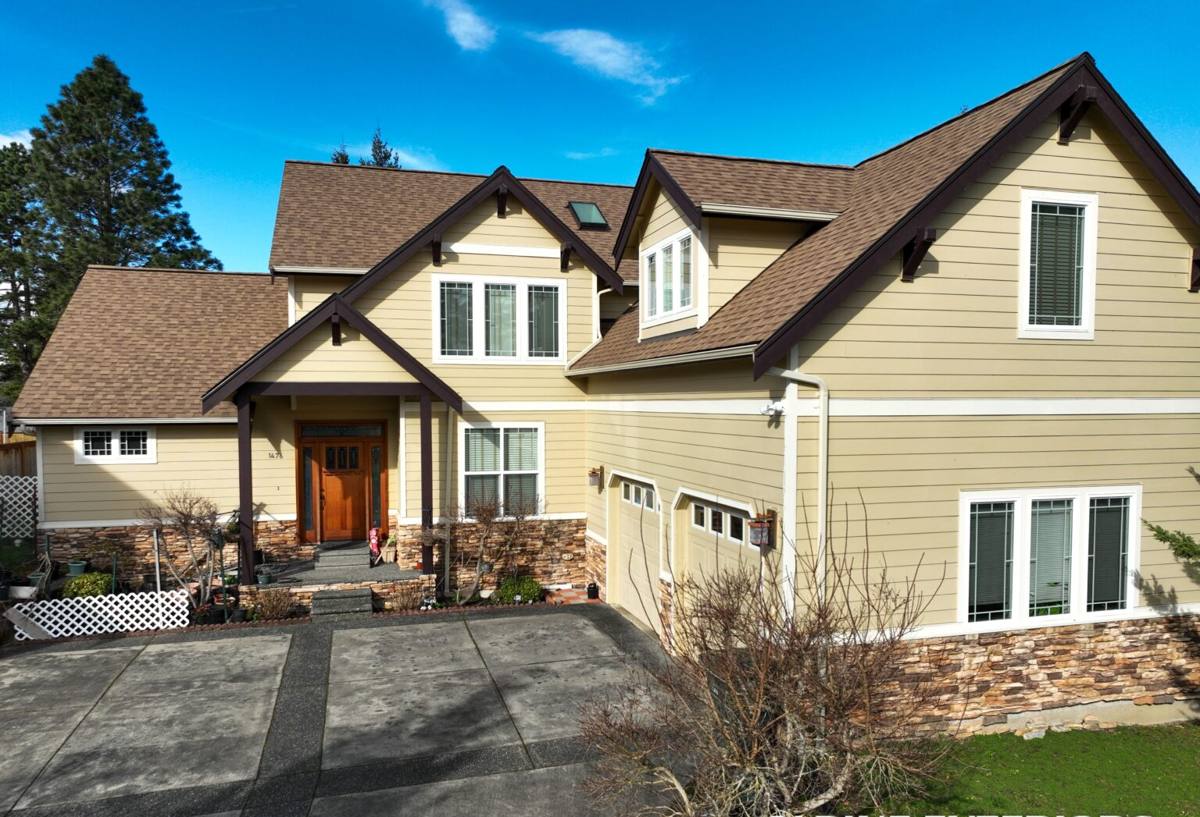
What Whatcom County Weather Does to a Vertical Siding System
Three things define exterior conditions across our part of Whatcom County, and all three show up on siding: salt-tinged marine air moving in off the water, driving rain that hits walls at an angle rather than falling straight down, and a moss season that can stretch across most of the year on shaded or north-facing walls. Each one interacts with board and batten siding differently than it does with standard horizontal lap siding.
Salt Air
Airborne salt accelerates corrosion on anything metal — fasteners, flashing, trim connectors. On a board and batten wall, the battens themselves cover a seam, and whatever holds that batten in place needs to survive decades of exposure without rusting, staining the panel below it, or losing its grip.
Driving Rain
Wind-driven rain doesn't just wet a wall, it pushes water sideways and upward into laps, seams, and butt joints. Vertical siding has more vertical seam length than horizontal lap siding does per square foot of wall, which means more linear feet of joint that has to be flashed, caulked, or gapped correctly to keep water out of the wall assembly.
Moss and Sustained Moisture
Shaded walls, tree cover, and the region's long stretches of overcast, damp weather all favor moss and algae growth. Moss holds moisture against a surface far longer than open air does, which is a problem for any siding material that can absorb water or swell when it stays wet.
None of this means board and batten is a bad choice for Sumas — it means the material and the installation both have to be chosen with these conditions in mind, not just for how the wall will look on day one.
What "Correct" Board & Batten Installation Actually Involves
Board and batten looks simple from the curb — vertical panels, vertical strips over the seams — but the installation has several details that determine whether it performs for 30-plus years or starts failing at year eight.
- Proper water-resistive barrier and drainage plane behind the panels, not just house wrap stapled up and covered — vertical siding needs a way for any moisture that gets behind it to drain and dry out.
- Correct panel-to-batten spacing and fastening so the assembly can expand and contract without cracking caulk lines or pulling fasteners loose.
- Flashing at every horizontal transition — window and door heads, water tables, roof-to-wall intersections — since these are the places driving rain finds its way in.
- Rust-resistant fasteners rated for coastal or marine-influenced air, not standard interior-grade fasteners that will bleed or fail early.
- Consistent, factory-controlled batten spacing so the finished wall reads as clean vertical lines rather than an uneven pattern that becomes obvious once the sun hits it at an angle.
- Correct clearance at the bottom of the wall from grade, decks, and roof lines, so splashback and standing water don't sit against the siding.
Skip or rush any one of these and the wall may look fine for a season or two before the shortcuts start showing.
Why We Install Only James Hardie for Board & Batten Siding
Board and batten can be built out of several materials — engineered wood, vinyl, primed spruce or cedar, and fiber cement all offer some version of the look. We made the decision, as a company, to install only James Hardie fiber cement siding, and it's worth explaining honestly why that applies to board and batten specifically, rather than just asserting it.
Engineered wood products can perform well when detailing is followed closely, but they're wood-based at the core, which means they're more sensitive to sustained moisture exposure than fiber cement — a real concern on shaded, moss-prone walls that stay damp for long stretches. Vinyl board and batten is affordable and low-maintenance in a general sense, but it's a thin, flexible material that can warp in sustained heat, crack in hard cold, and doesn't hold a factory finish the way a baked-on coating does — over time the color can look noticeably different from where it started, and repairs rarely blend in seamlessly. Primed, unfinished wood needs a maintenance commitment — regular repainting and moisture monitoring — that most homeowners don't want to sign up for on an exterior that's already dealing with driving rain and salt air.
Fiber cement doesn't have those same trade-offs. It's dimensionally stable, it doesn't feed mold or moss the way wood-based products can, it holds a factory-applied finish far longer than field-applied paint, and it's non-combustible — a genuine advantage during wildfire smoke and ember seasons that have become more common across the Pacific Northwest. That's the honest case for why board and batten, in this climate, is worth doing in fiber cement — and specifically in James Hardie's engineered product line rather than a generic or off-brand fiber cement alternative.
The James Hardie Board & Batten System
James Hardie's board and batten look is built from HardiePanel vertical siding combined with HardieTrim battens, rather than individual narrow boards nailed up one at a time. That matters for consistency — the panel joints and batten spacing are engineered as a system, not improvised on site board by board.
| Component | Role |
|---|---|
| HardiePanel vertical siding | The base panel — available in smooth or stucco-look textures, sized to minimize horizontal seams |
| HardieTrim battens | Cover panel seams and create the vertical batten pattern; also used at corners and window/door surrounds |
| ColorPlus factory finish | Baked-on, UV-cured color coat applied before the product ever reaches the site — more consistent and longer-lasting than field-applied paint |
| HZ10 formulation | James Hardie's product engineering for the Pacific Northwest's wetter, milder climate zone |
Because the panels are manufactured to consistent dimensions, batten spacing stays even across the whole wall — which is a big part of what makes board and batten look sharp instead of slightly off. And because the color is factory-applied, the finish holds up more evenly across sun-exposed and shaded sides of the same house, which is a real difference in a climate where one wall gets hammered by weather and another stays damp and shaded most of the year.
Our Process: From Estimate to Finished Wall
The steps don't change much from job to job, but the details we check at each one are specific to what this climate does to a vertical siding wall.
- On-site assessment — we look at sun exposure, shade patterns, drainage around the foundation, and any current moisture or moss issues on the existing siding before we talk products.
- Product and color selection — walking through HardiePanel textures, ColorPlus color options, and batten spacing so the finished look matches what you actually want, not just what's fastest to install.
- Written estimate — a clear scope covering removal of existing siding, water-resistive barrier, flashing detail, and the Hardie system itself, with no vague allowances.
- Tear-off and inspection — once old siding comes off, we check the sheathing underneath for any hidden moisture damage before anything new goes up.
- Drainage plane and flashing installation — the unglamorous work that determines whether the wall performs for decades or just looks good for a few years.
- Panel and batten installation — set to manufacturer spec for fastening, spacing, and clearance.
- Final walkthrough — we go over the finished wall with you directly, not just hand you an invoice.
Cost Factors for Board & Batten Siding in Sumas
Every home is different, so we won't quote a number here that doesn't mean anything without seeing the house — but these are the factors that actually move the price up or down on a board and batten project in this area.
| Factor | Why It Matters |
|---|---|
| Amount of existing siding to remove | Tear-off and disposal add labor before any new material goes up |
| Condition of the sheathing underneath | Moisture damage found during tear-off may need repair before siding continues |
| Wall height and roof lines | Multi-story walls and complex rooflines mean more flashing detail and staging |
| Number of window and door openings | Each opening needs its own flashing and trim work |
| Panel texture and batten style chosen | Some finishes and trim profiles cost more than others |
| Access and site conditions | Tight lots, slopes, or limited equipment access can add time |
The only way to get real numbers is a walk-through of your specific house, which is what our estimate covers.
Maintenance and Longevity After the Job Is Done
One of the practical advantages of a correctly installed James Hardie board and batten wall is how little it asks of you afterward, especially compared to a wood or vinyl alternative in this climate. A simple annual routine keeps it performing the way it was designed to.
- Rinse the siding down once or twice a year to clear salt residue and organic buildup, especially on shaded or north-facing walls prone to moss.
- Keep gutters clear so overflow isn't running down the wall face during heavy rain events.
- Trim back vegetation and tree cover that keeps a wall section shaded and damp longer than the rest of the house.
- Check caulking at trim and window transitions periodically — caulk is a maintenance item even on a fiber cement wall.
- Address any impact damage promptly rather than letting a chipped corner sit exposed through a wet winter.
Why a Local Crew That Already Works Sumas Matters
Board and batten installation is detail work, and the details that matter most — flashing choices, fastener selection, drainage planning — are the ones a crew learns by working the same climate and the same kinds of homes repeatedly. A crew based out of Birch Bay that regularly works the Sumas area already knows what this weather does to a wall over time, rather than treating every job as a generic install pulled from a manufacturer's manual with no regional judgment applied. That local familiarity is what turns a correct-on-paper installation into one that actually holds up through Whatcom County's rain, salt air, and moss seasons year after year.
If you're weighing board and batten siding for a home in Sumas, we're happy to walk the property with you, talk through what your specific walls need, and put together a clear, no-pressure estimate — just fill out the form below to get started.