 Birch Bay Window
 Roofing Built for Birch Bay Village's Coastal Weather
Birch Bay Village sits close enough to the water that a roof here does a different job than a roof twenty miles inland. Between the salt-laden air coming off the bay, wind-driven rain that doesn't fall so much as get pushed sideways into your eaves and valleys, and a moss season that can run most of the year under tree cover, an asphalt shingle roof in this part of Whatcom County earns its keep. Most of the roofing problems we see out here aren't caused by bad shingles — they're caused by details that were rushed or skipped during a prior install, and by moisture that had nowhere to go once it got in. A correctly built asphalt shingle roof handles all of that. The goal of this page is to explain what "correctly built" actually means for a Birch Bay Village home, not just sell you a roof.
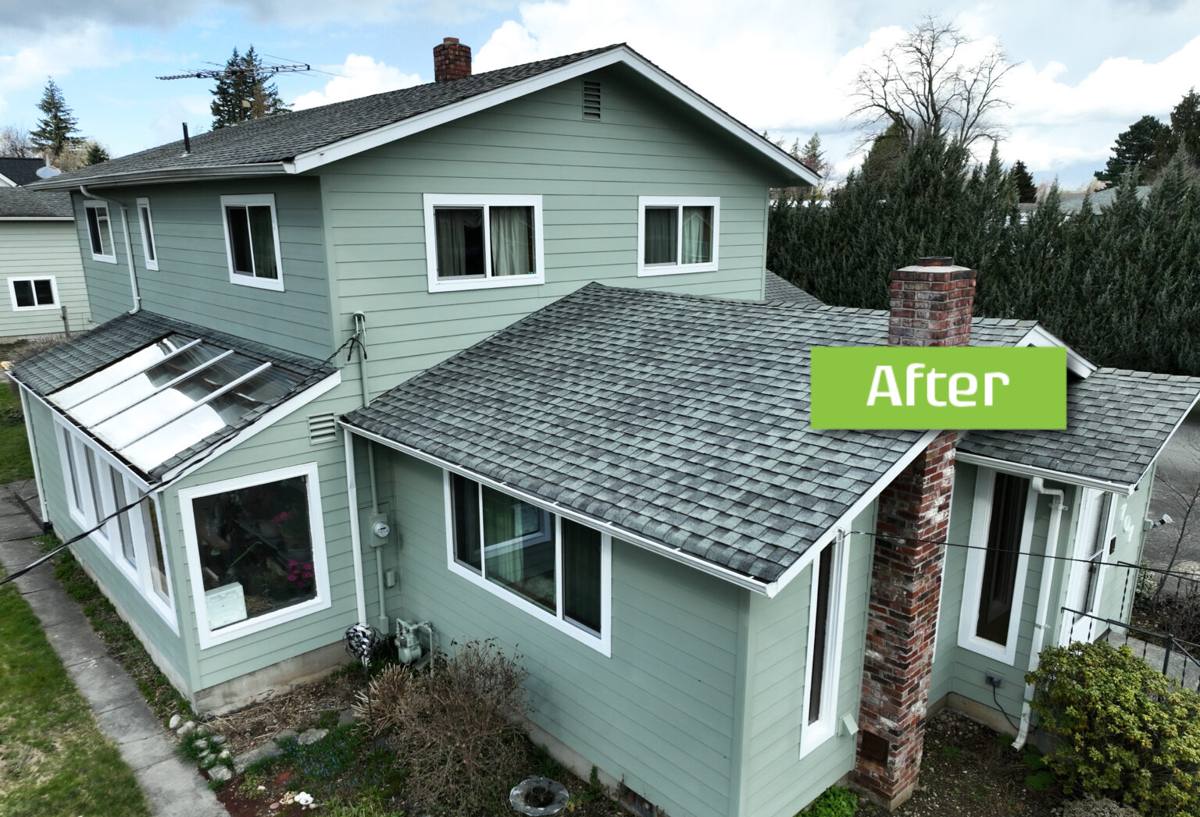
What Local Homes Need From an Asphalt Shingle Roof
Salt Air and Corrosion
Homes near the water deal with airborne salt settling on every exposed metal surface — flashing, fasteners, gutter hangers, roof vents. Over years, untreated or low-grade fasteners can corrode faster than the shingles themselves wear out. That's why fastener choice and flashing material matter more here than they do in a drier, inland neighborhood.
Driving Rain and Wind-Driven Water
Ordinary rain falls straight down and sheds off a roof with minimal fuss. Wind-driven rain off the water pushes up and under shingle edges, into valleys, and around penetrations like plumbing vents and chimneys. A roof that looks fine in a light drizzle can still leak in a January storm if the underlayment and flashing weren't built to handle water moving sideways and even slightly uphill.
Moss and Shade
Tree cover throughout Birch Bay Village keeps roofs shaded and damp for long stretches, which is exactly what moss needs to take hold. Moss isn't just cosmetic — as it grows it lifts shingle edges, holds moisture against the roof deck, and accelerates granule loss. Left unchecked for a few seasons, it shortens the life of an otherwise sound roof.
What a Correct Asphalt Shingle Installation Involves
The shingle brand on the roof matters far less than the details underneath it. A correct install for this climate includes:
- Ice and water shield at eaves, valleys, and around all penetrations — not just the code minimum, given how much sideways-moving water this area sees
- Synthetic underlayment across the full deck as a second line of defense, since shingles alone are not a waterproofing layer, they're a water-shedding one
- Proper nailing — the correct number of nails per shingle, placed in the manufacturer's nailing zone, driven flush rather than overdriven or underdriven, which is one of the most common causes of premature shingle failure and warranty denial
- Step and counter-flashing at chimneys, skylights, and sidewalls instead of relying on caulk or roof cement, which dries out and cracks long before the shingles wear out
- Balanced ventilation — intake at the soffits and exhaust at the ridge, sized to actually move air through the attic rather than trap moisture against the underside of the deck
- Drip edge at eaves and rakes to direct water off the roof edge and into the gutter instead of behind the fascia
Skip any one of these and the roof may still look right for a few years before the shortcut shows up as a leak, a soft spot in the decking, or a warranty claim that gets denied because of how the shingles were fastened.
Shingle Options and What They Trade Off
Most Birch Bay Village homes are well served by standard architectural (laminate) asphalt shingles, but it's worth understanding what separates the common grades before deciding what to install.
| Shingle Type | Typical Lifespan | Best Fit For |
|---|---|---|
| 3-tab asphalt | 15–20 years | Budget-driven projects, simple roof lines, less wind exposure |
| Architectural (laminate) | 25–30 years | Most homes here — better wind rating and a dimensional look |
| Algae-resistant laminate | 25–30 years | Shaded, tree-covered lots where moss and algae staining are a recurring issue |
| Impact/high-wind rated laminate | 25–30 years | Exposed or waterfront-adjacent roofs taking direct wind off the bay |
Algae-resistant granules (usually copper-infused) won't stop moss outright, but they slow the growth that leads to staining and premature granule loss, which is a genuinely useful upgrade for a shaded roof. We'll walk through which tier makes sense for your roof's exposure and tree cover rather than defaulting to whatever's cheapest or whatever carries the flashiest warranty.
Our Process
- Inspection. We get on the roof, not just in the gutter — checking the deck, flashing, ventilation, and the actual condition of the shingles, not just their age.
- Honest recommendation. If a repair will genuinely hold, we'll say so. We don't push a full replacement when it isn't needed yet.
- Tear-off, not overlay. We remove the old roofing rather than layering new shingles over it. Overlays trap moisture, hide deck damage, and shorten the life of the new shingles.
- Deck repair as needed. Any soft, delaminated, or water-damaged decking gets replaced before a single new shingle goes down — no roof holds up long-term over bad decking.
- Install. Underlayment, ice and water shield, flashing, shingles, and ventilation components go in following manufacturer specifications, not shortcuts.
- Cleanup and magnetic sweep. The property gets cleared of debris and swept for stray nails before we consider the job done.
- Final walkthrough. We go over the finished roof with you so you know what was done and what to watch for going forward.
Repair, Recover, or Replace?
Not every roofing problem in Birch Bay Village calls for a full replacement. The right call depends on a few honest factors:
- Age. A roof under 15 years old with an isolated leak is usually a repair, not a replacement.
- Granule loss. Bald patches or heavy granules in the gutters signal the shingles are past effective life, not just cosmetically worn.
- Moss damage extent. Light surface moss can often be treated and cleaned; moss that has lifted shingle tabs or worked under the edges usually means localized or full replacement.
- Decking condition. Soft spots or visible sagging mean water has already gotten past the shingles — this drives the scope more than the shingles' appearance does.
- Existing layers. A roof that already has two layers of shingles on it legally and practically needs a tear-off before anything new goes on.
We'll tell you plainly which category your roof falls into, including when the honest answer is "this can wait another year or two."
Maintenance Checklist for Birch Bay Village Homeowners
Between our visits, a few habits go a long way toward getting full life out of an asphalt shingle roof in this climate:
- Clean gutters at least twice a year, more often under heavy tree cover, so water isn't backing up under the shingle edge
- Have moss physically removed rather than pressure-washed off, which can strip granules and shorten shingle life
- Consider zinc or copper strips near the ridge on shaded roofs to slow moss regrowth between cleanings
- Trim back overhanging branches to reduce shade, debris buildup, and physical abrasion on the shingles
- Check the attic for damp insulation or musty odor, both early signs of a ventilation or flashing problem
- Have flashing around chimneys, skylights, and vents inspected annually, since these are the most common leak points long before the shingle field fails
Why a Local Birch Bay Village Crew Makes a Difference
A crew that already works this specific stretch of Whatcom County knows what a roof here is actually up against — the wind patterns off the water, which lots hold moisture longest under tree cover, and how fast moss can come back in a shaded, damp yard. That's not something you can fully account for with a generic regional average. It also means faster response when a storm does damage something, since we're not driving in from across the county to take a look. Hiring locally isn't about hometown loyalty for its own sake — it's that the person inspecting your roof has seen this exact combination of salt air, driving rain, and shade play out on roofs down the street from yours.
If you'd like an honest look at what your roof actually needs — repair, partial replacement, or a full tear-off — we're glad to come take a look. The estimate is free, there's no pressure attached to it, and you can use the form below to get started.
Frequently asked questions
How long does an asphalt shingle roof replacement usually take?
Most single-family homes take one to three days for a full tear-off and reinstall, depending on roof size, pitch, and how much decking needs repair. Weather can push that timeline out, especially during Whatcom County's wetter months. We'll give you a realistic window before work starts, not just a best-case estimate.
What should I ask a roofing contractor before hiring them in Whatcom County?
Ask whether they do a full tear-off or install over existing layers, what underlayment and ice-and-water shield they use, and whether they carry current liability insurance and workers' comp. Ask to see their manufacturer certification if they're quoting a warranty, since many enhanced warranties require a certified installer. A contractor who answers these plainly, without dodging, is usually the safer bet.
Are all asphalt shingle brands rated the same for wind and algae resistance?
No — wind ratings and algae-resistant granule technology vary by manufacturer and product line, and a shingle's actual performance depends on both the product and how it's fastened. We select shingle lines based on your roof's exposure and shade rather than defaulting to one brand for every job. The installation details matter as much as the shingle itself.
What's the real difference between 3-tab and architectural shingles?
3-tab shingles are flat, uniform, and lighter-weight, with a shorter typical lifespan and lower wind rating. Architectural (laminate) shingles are thicker, layered for a dimensional look, and generally rated for higher wind speeds and longer service life. For most Birch Bay Village homes, the added durability of architectural shingles is worth the modest cost difference.
Does being close to the water in Birch Bay Village actually change how often a roof needs attention?
Yes — salt air accelerates corrosion on fasteners and metal flashing, and wind-driven rain off the bay tests flashing and underlayment harder than a typical inland roof sees. Combined with heavy tree cover and a long moss season, roofs here generally benefit from more frequent inspection than a roof in a drier, more open part of the county. It doesn't necessarily mean a shorter shingle lifespan, but it does mean small problems get found and fixed sooner if you're checking regularly.
Get expert help in Birch Bay.
Have questions about your roofing project? Our local crew serves Birch Bay and all of Whatcom County — call or request a free on-site estimate.