 Birch Bay Window
 Siding for a Coastline That Doesn't Let Up
Birch Bay Village sits close enough to the water that siding decisions can't be made the same way they would be twenty miles inland. Salt-laden air off the bay, long stretches of driving rain through the fall and winter, and a moss season that can run most of the year all work against a home's exterior at the same time. Add the tree cover common in parts of this neighborhood, and you get shaded, slow-drying wall sections that never fully catch a break between storms. Siding here needs to shed water fast, resist corrosion from salt exposure, and hold up to biological growth without constant babysitting.
This page focuses on one job, done right, in one place: fiber cement siding for homes in Birch Bay Village. Not a general siding overview, and not a pitch for every material on the market. Just what this specific climate demands, what a correct installation actually involves, and why the crew doing the work matters as much as the product itself.
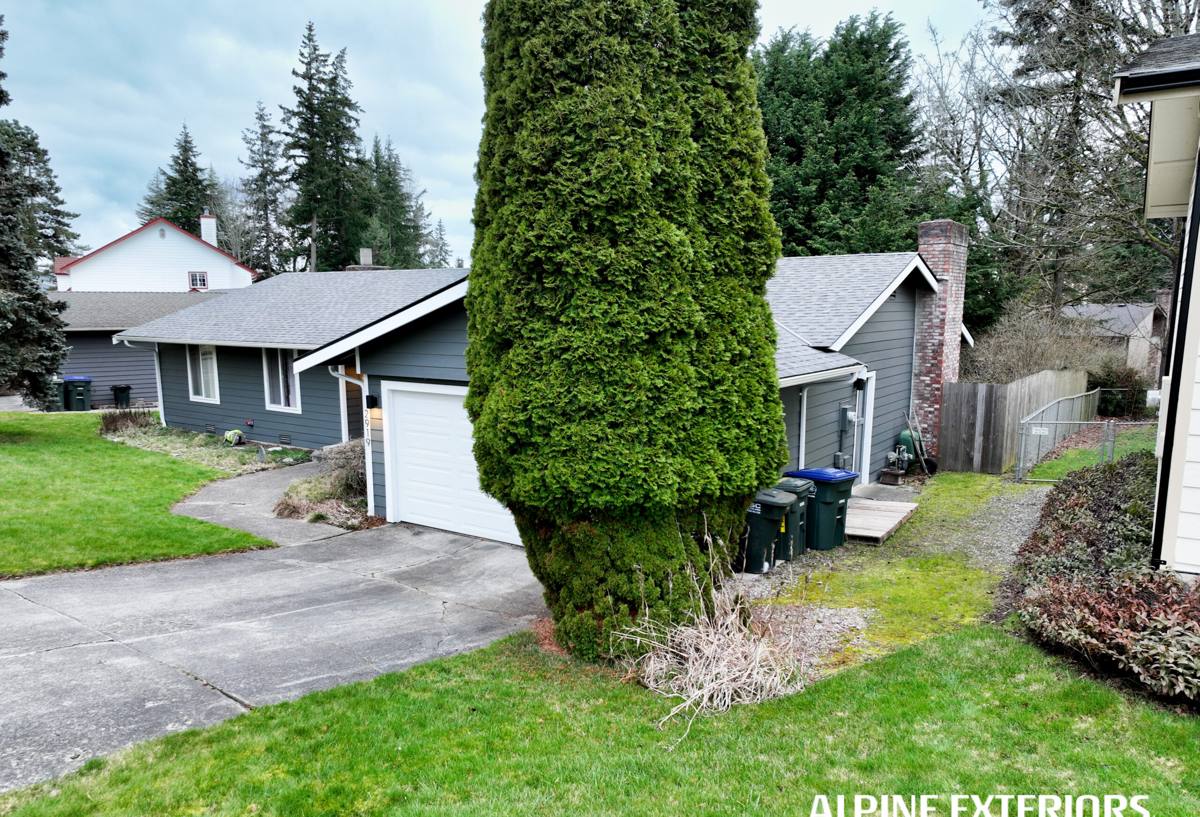
What Salt Air, Rain, and Moss Actually Do to Siding
Salt Air and Metal Fasteners
Salt in the air accelerates corrosion on anything metal — fasteners, flashing, trim connectors. Cheap or mismatched hardware can start rusting years before the siding around it shows any wear, and once fasteners fail, panels loosen and water finds a way behind them. Coastal installations need corrosion-resistant fasteners and flashing details, not the same hardware you'd use on a home in a dry inland valley.
Driving Rain and Water Intrusion
Wind-driven rain off the bay doesn't just fall straight down — it gets pushed sideways into seams, laps, and butt joints. Any siding system that isn't detailed with proper overlaps, flashing, and a drainage plane behind it will eventually let water past the surface. Once moisture gets behind cladding on a Pacific Northwest home, it doesn't dry out quickly, and that's when sheathing rot and mold problems start.
Moss, Shade, and Slow Drying
Whatcom County's moss season is long, and Birch Bay Village's mix of mature trees and coastal humidity keeps some wall sections shaded and damp for extended stretches. Moss and algae growth on siding isn't just cosmetic — it holds moisture against the surface longer than bare siding would, which matters more for materials that absorb water than for ones engineered to resist it.
Why We Install Only James Hardie Fiber Cement Here
We standardized on James Hardie fiber cement siding and don't install vinyl, LP SmartSide, Cemplank, Allura, or unfinished wood siding like primed spruce or cedar. That's not a marketing position — it's a practical one, built on what actually holds up on homes exposed to salt air and sustained moisture year after year.
Vinyl siding can crack in cold snaps and warp under heat, and its seams are a weak point exactly where wind-driven coastal rain wants to get in. LP SmartSide is an engineered wood product, and wood-based sidings — treated or not — depend on unbroken paint and caulking to keep moisture out; once that seal is compromised near the water, the wood substrate is vulnerable in a way non-combustible fiber cement isn't. Primed spruce and cedar look good on day one but need active, ongoing maintenance — recoating, caulk inspection, moisture checks — to survive a marine climate long-term, and that maintenance burden is easy to underestimate until the first signs of rot show up at butt joints and corners.
James Hardie fiber cement is cement, sand, and cellulose fiber — it doesn't rot, it's non-combustible, and it holds paint and factory finish far longer than wood-based alternatives because it doesn't expand and contract with moisture the way wood does. That stability is exactly what a salt-air, high-rainfall environment rewards.
ColorPlus Factory Finish
Most Hardie installations we do use the ColorPlus factory-applied finish rather than field-applied paint. It's baked on under controlled conditions, resists fading and chipping better than a job-site paint job, and carries its own finish warranty. In a climate where sun, salt, and rain all attack a painted surface, starting with a factory finish instead of a field-applied one removes one of the biggest variables in how long the color lasts.
What a Correct Fiber Cement Installation Actually Involves
Fiber cement siding is only as good as the water management system behind it. A beautiful Hardie exterior with the wrong flashing details or no drainage gap will still trap moisture — the product isn't the whole story.
- Drainage plane / rain screen gap: a small air gap behind the siding lets any moisture that gets past the cladding drain and dry out instead of sitting against the sheathing.
- Flashing at every horizontal transition: window heads, doors, decks, and roof-to-wall intersections all need proper flashing, not just caulk, to redirect water away from the wall assembly.
- Corrosion-resistant fasteners: stainless or hot-dip galvanized fasteners rated for coastal exposure, placed according to Hardie's fastening schedule — not whatever was on hand.
- Correct joint treatment: butt joints and panel seams sealed and detailed per manufacturer specs so wind-driven rain can't work its way in sideways.
- Proper clearance at grade and roof lines: siding held to the manufacturer's minimum clearance from decks, patios, and roofing so splash-back and ponding don't sit against the bottom edge.
Skipping any one of these doesn't show up immediately. It shows up two, five, or ten years later as a soft spot at a corner or a stain bleeding through paint — by which point the fix is far more involved than the original installation would have been.
Choosing the Right Hardie Product Line for a Birch Bay Village Home
James Hardie makes several siding profiles, and the right one depends on the home's style, exposure, and existing trim. For homes on more exposed lots closer to the water, we pay extra attention to fastening and joint detail regardless of which profile is chosen; for shaded, tree-covered lots further into the Village, we also think about how much moss and algae exposure the finish will see.
| Product Line | Best Fit | Key Consideration in This Climate |
|---|---|---|
| HardiePlank Lap Siding | Most single-family homes, traditional and modern styles | Widely used profile; needs correct lap overlap and flashing at every course |
| HardiePanel Vertical Siding | Accent walls, gables, modern designs | Vertical seams need careful joint treatment against sideways-driven rain |
| HardieTrim Boards | Corners, window and door trim, fascia | Matches expansion/contraction rate of the panel siding, reducing seam gaps over time |
| HardieShingle | Accent gables, Cape Cod and cottage-style homes | More seams than lap siding; installation precision matters more in wet climates |
What Drives the Cost of a Fiber Cement Siding Job
There's no single number that applies to every home, but the same handful of factors move the price on nearly every project we quote:
| Factor | Why It Matters |
|---|---|
| Home size and wall complexity | More corners, dormers, and trim details mean more cutting, flashing, and labor time |
| Tear-off vs. overlay | Removing old siding down to the sheathing costs more up front but lets us check for hidden moisture damage first |
| Existing moisture damage | Rotted sheathing or framing found during tear-off has to be repaired before new siding goes on |
| Product line and trim package | Panel vs. lap profile, shingle accents, and trim board upgrades all shift material cost |
| Site access | Steep lots, limited driveway access, or tight setbacks near neighboring homes add labor time |
We walk through these factors with every homeowner before finalizing a quote, so there's no guessing about where the number comes from.
How the Process Works, Start to Finish
The first visit is a walk-around of the home, not a sales pitch. We look at current siding condition, check for soft spots or existing moisture damage, and talk through which Hardie product line fits the home's style and exposure. If there's evidence of past water intrusion, we'll flag it before any siding decision is made — that repair has to happen regardless of what cladding goes back on.
Once the scope is set, we handle tear-off (when needed), inspect and repair the sheathing underneath, install the drainage plane and flashing details, then hang and fasten the Hardie panels or planks to spec. Trim, caulking at the appropriate joints, and a final walk-through with the homeowner close out the job. We explain what maintenance, if any, the finish needs going forward — with ColorPlus finishes, that's usually just periodic washing, not repainting.
Why a Crew That Already Works Birch Bay Village Matters
A contractor who's worked this stretch of Whatcom County coastline has already seen how salt exposure and moisture behave on homes here — which fastener choices hold up, which flashing details actually keep driving rain out, and which wall orientations need extra attention because of shade and tree cover. That's different from a crew that mainly works dry, inland jobs and treats every coastal project as a one-off.
Local familiarity also means realistic scheduling around this area's wetter months, and no surprises about permitting or typical lot conditions in the neighborhood. It's the difference between a siding job that's technically installed and one that's installed for the specific conditions it has to survive.
Maintaining Fiber Cement Siding in a Marine Climate
Fiber cement is low-maintenance compared to wood, but "low-maintenance" isn't "no-maintenance," especially this close to the water. A simple seasonal routine keeps a Hardie exterior performing the way it's designed to:
- Rinse siding with a garden hose a couple of times a year to clear salt residue and organic buildup before it feeds moss or algae growth
- Check caulking at trim joints, window and door surrounds annually — recaulk if it's cracked or pulling away
- Keep gutters clear so overflow doesn't run down the wall face and sit against the siding's bottom edge
- Trim back tree branches and shrubs that keep wall sections shaded and slow to dry
- Look for any soft spots, stains, or fastener corrosion after major storms and address them early rather than waiting
None of this requires a professional visit every year — it's the kind of upkeep any homeowner can do in an afternoon, and it goes a long way toward getting the full lifespan out of the siding.
Get a Straight Answer on Your Home
If you're weighing siding options for a home in Birch Bay Village, we're glad to take a look and give you a straightforward assessment — what condition your current siding is in, what a Hardie installation would involve on your specific home, and a real cost range based on your home's size and details. There's a free, no-pressure estimate form below whenever you're ready.