 Birch Bay Window
 Why Roofs Wear Out Faster in Birch Bay Village
Birch Bay Village sits close enough to the water that homes here take a different kind of beating than roofs a few miles inland. Salt-laden air corrodes exposed metal faster than dry-climate fasteners and flashing were ever designed for. Wind-driven rain off the strait doesn't just fall on a roof, it gets pushed sideways and up under shingle tabs and flashing edges that would stay dry almost anywhere else. And the long, wet stretch of the year that Whatcom County sees every fall through spring gives moss and algae months at a time to take hold on north-facing slopes and shaded valleys.
None of that means a roof in Birch Bay Village is doomed to fail early. It means the materials, fastening, and detailing have to account for conditions that a generic install spec doesn't cover. A roof put on without that in mind can start showing granule loss, soft decking, or moss-driven shingle lift years before it should.
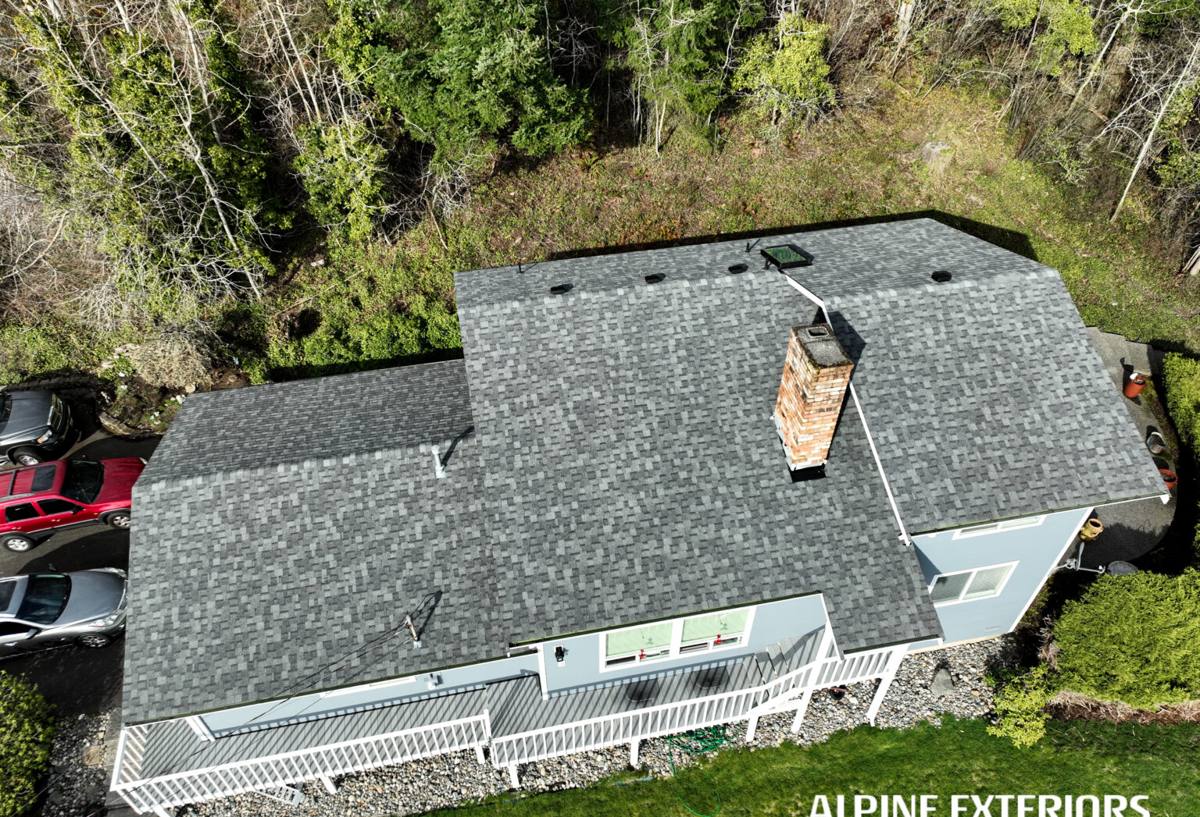
Signs a Replacement Is the Right Call, Not a Repair
Not every roof problem means a full tear-off. But there are signals worth taking seriously, especially on a home that's been through a few Puget Sound winters:
- Shingles that are cupping, cracking, or losing granules in visible patches, especially on south and west-facing slopes
- Moss or algae growth that keeps returning within a season or two of cleaning
- Soft spots, sagging, or a spongy feel underfoot in the attic decking
- Water stains on interior ceilings or in the attic near valleys, chimneys, or vent penetrations
- Rusted, lifted, or missing flashing around chimneys, skylights, and roof-to-wall transitions
- A roof that's 20+ years old with the original underlayment, regardless of how it looks from the ground
If you're seeing two or more of these, it's worth having someone look at the roof from the top down and the attic up, not just the curb view.
What a Correct Roof Replacement Actually Involves
Full Tear-Off and Deck Inspection
We don't install new roofing over old material, and we don't recommend anyone in this climate does either. A tear-off is the only way to actually see the decking underneath, which is where moisture problems on a coastal roof usually show up first. Soft, delaminated, or water-stained sheathing gets replaced before anything new goes down, not patched around.
Underlayment That Matches the Exposure
Given the amount of wind-driven rain Birch Bay Village homes see, underlayment choice matters more here than in a sheltered inland neighborhood. We use synthetic underlayment as a baseline and add self-adhered ice-and-water membrane at eaves, valleys, and any low-slope transitions, the areas most likely to see wind-forced water intrusion.
Flashing Done Right, Not Just Reused
Flashing around chimneys, skylights, sidewalls, and roof valleys is where most leaks actually start, not in the field of the shingles. We install new flashing as part of a replacement rather than reusing old pieces, since corroded or improperly lapped flashing is one of the most common causes of early callbacks on coastal homes.
Ventilation That Works With the Attic, Not Against It
A roof deck that can't breathe traps moisture underneath it, which shortens the life of the decking and the shingles above it regardless of how good the materials are. We check intake and exhaust ventilation as part of every replacement and correct imbalances, since a beautiful new roof over a poorly vented attic will still develop problems.
Choosing a Roofing Material for a Coastal Whatcom County Home
There's no single "best" roofing material for Birch Bay Village, but there are real trade-offs worth understanding before you decide. Here's how the common options compare against the specific conditions this area sees:
| Material | Salt Air Durability | Moss Resistance | Maintenance |
|---|---|---|---|
| Architectural asphalt shingle | Good with corrosion-resistant fasteners and flashing | Moderate; benefits from zinc/copper strips and regular cleaning | Low to moderate |
| 3-tab asphalt shingle | Fair; thinner profile wears faster in wind exposure | Moderate, same as architectural | Moderate |
| Standing seam metal | Very good with marine-grade coatings and fasteners | Very good; smooth surface sheds moss | Low |
| Cedar shake | Fair; needs consistent maintenance near salt air | Poor without diligent upkeep; organic material feeds moss and algae | High |
Our default recommendation for most Birch Bay Village homes is a quality architectural shingle with the right underlayment and flashing package, or standing seam metal for homeowners who want the lowest long-term maintenance and don't mind the higher upfront cost. We're generally cautious about cedar shake in this specific setting, not because it's a bad product, but because its organic surface and the moisture-retention habits of wood shakes make it a harder material to keep ahead of moss in a climate that already favors moss growth. If a homeowner wants cedar for the look, we'll install it correctly, but we'll also be upfront about the maintenance commitment it takes to keep it performing near the water.
Our Roof Replacement Process, Start to Finish
- On-site evaluation. We walk the roof and the attic, not just estimate from the ground, and document decking condition, ventilation, and flashing trouble spots.
- Written scope and material selection. You get a clear breakdown of what's being replaced, what underlayment and flashing package is included, and what material options fit your budget and the home's exposure.
- Scheduling around the weather. Coastal wind and rain windows matter for roofing timing. We plan tear-off and dry-in around the forecast, not just the calendar.
- Tear-off and deck repair. Old material comes off, decking is inspected and repaired where needed, and the deck is dried in the same day whenever possible.
- Underlayment, flashing, and material installation. Installed in the sequence that actually sheds water correctly, not just in a way that looks finished.
- Ventilation check and final walkthrough. We confirm intake and exhaust venting is balanced and walk the finished roof with you before calling the job done.
Moss, Algae, and Keeping a New Roof Looking Like One
A properly installed roof in Birch Bay Village will still see moss pressure; that's the climate, not a defect. What changes is how fast it takes hold and how much damage it can do before it's addressed. A few habits go a long way:
- Keep gutters and valleys clear of needles and debris, especially before the fall rains start
- Trim back overhanging branches that keep shaded roof sections damp longer than the rest of the roof
- Have moss physically removed rather than just treated with chemicals, which can discolor shingles and damage the surrounding landscaping if overused
- Consider zinc or copper control strips near the ridge on shingle roofs, which release trace metals that discourage moss regrowth over time
- Get a roof looked at every couple of years, not just when a leak shows up inside the house
Cost Factors on a Birch Bay Village Roof Replacement
Every roof is priced on its own specifics, but the main variables that move the number are consistent. Rather than quote a figure that won't mean much without seeing your roof, here's what actually drives the cost up or down:
| Factor | Why It Matters |
|---|---|
| Roof size and number of layers to remove | More tear-off labor and disposal, especially on homes with two layers of old shingles |
| Roof pitch and access | Steep or hard-to-access roofs take longer and require more safety equipment |
| Decking condition | Rotted or soft sheathing found during tear-off adds material and labor to replace it properly |
| Material choice | Asphalt, metal, and cedar carry different material and labor costs per square |
| Flashing and penetration complexity | Chimneys, skylights, and multiple valleys each add detail work |
We won't know exact numbers for your home until we've walked the roof, but we'll always explain what's driving the price, not just hand you a total.
Why a Crew That Already Works Birch Bay Village Matters
A roofing crew that regularly works this stretch of Whatcom County already knows what a Birch Bay Village roof is up against before they climb the ladder: how far the salt air reaches inland, which slopes hold moss longest, and how wind-driven rain behaves on this shoreline compared to a sheltered inland lot. That local pattern recognition shows up in small decisions, like where to add extra ice-and-water membrane or which fastener grade to spec, that a crew unfamiliar with the area might not think to make. It also means we're a known, reachable contractor if a question comes up after the job is done, not a name from an out-of-town ad.
If your roof is showing its age, or you just want an honest read on how many years it has left, we're happy to take a look. Fill out the form below for a free, no-pressure estimate on your Birch Bay Village roof replacement.