 Birch Bay Window
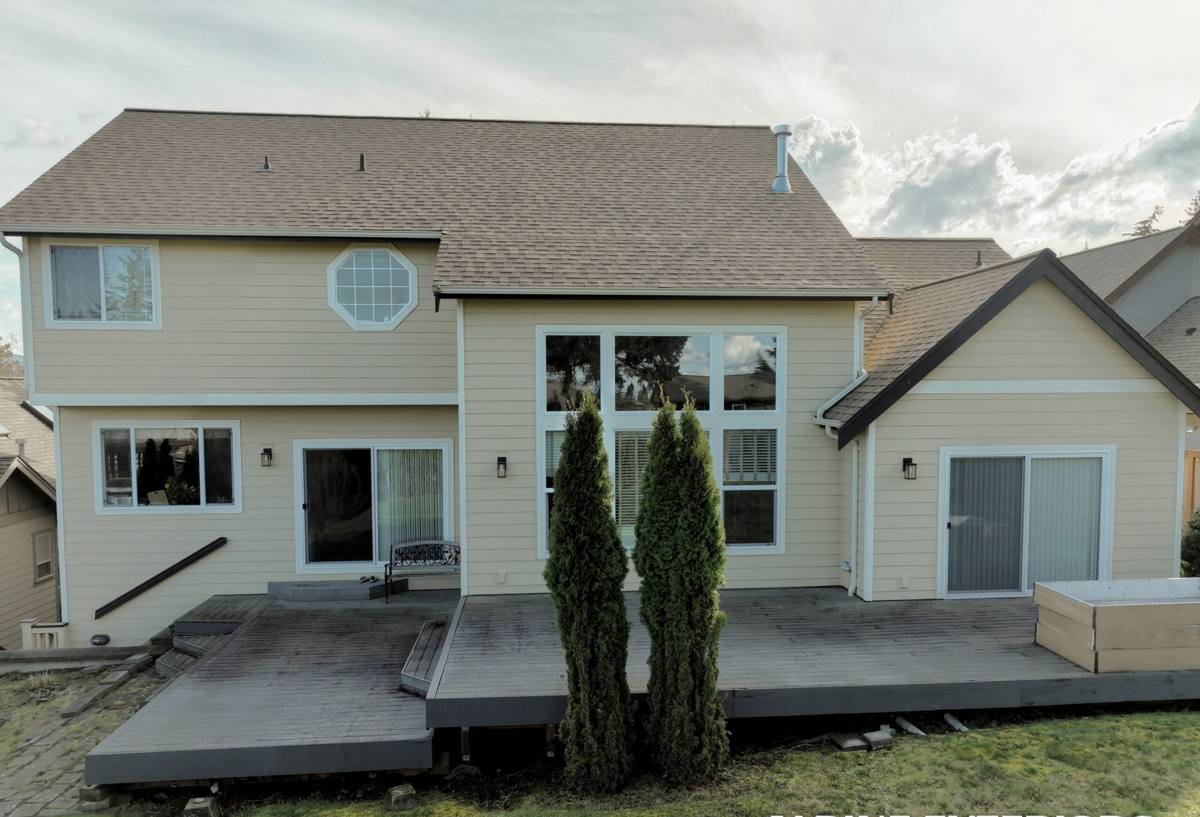
 Deck Replacement in Blaine: Built for This Coastline
Blaine sits close enough to the water that salt air is a daily fact of life, not an occasional nuisance. Combine that with Whatcom County's long, wet winters and the moss season that follows, and a deck here ages differently than one fifty miles inland. Fasteners corrode faster. Framing stays damp longer between dry spells. Moss and algae take hold on any horizontal surface that doesn't drain and dry quickly. A deck replacement done right in Blaine has to account for all of that from the ground up, not just swap old boards for new ones.
We work throughout Birch Bay and the surrounding Whatcom County coastline, including Blaine, and we see the same failure patterns repeat on decks that weren't built with this climate in mind: rot at the ledger board, corroded hangers hidden under boards that still look fine on top, and surface staining that's actually the first sign of deeper moisture retention. Replacing a deck is a chance to fix those root causes, not just refresh the appearance.
Why Decks Fail Faster Near Blaine's Shoreline
Salt Air and Metal Hardware
Airborne salt accelerates corrosion on any exposed metal — joist hangers, structural screws, bolts, and even the coating on some fasteners rated for general outdoor use but not truly coastal exposure. Once a hanger or bolt starts to corrode, it loses holding strength quietly, often years before there's any visible sign from above deck.
Driving Rain and Wind-Driven Moisture
Rain here doesn't just fall straight down. Wind off the water pushes moisture sideways, under railings, into board gaps, and behind ledger connections at the house. Decks with poor drainage paths or gaps that trap water hold moisture far longer than they should between storms.
Moss and Algae Season
Whatcom County's mild, damp winters give moss and algae months to establish themselves on any deck surface that stays shaded or doesn't shed water well. Beyond looking bad, moss holds moisture directly against the decking material, which speeds up rot in wood and can dull or degrade the surface of composite products over time.
Signs a Blaine Deck Needs Full Replacement, Not Just Repair
Not every deck problem calls for a full tear-out. But there's a point where patching individual boards or hardware stops making sense — either because the structure itself is compromised, or because repairs would cost most of what replacement does without solving the underlying issue. Look for:
- Soft, spongy decking or spring in the boards when you walk across them
- Visible rot or dark staining at the ledger board where the deck meets the house
- Rust streaking below joist hangers, bolts, or screw heads
- Persistent moss or algae that returns within weeks of cleaning
- Railings that wobble or posts that have visible movement at the base
- A deck more than 15-20 years old built with older fastener standards or no proper ledger flashing
- Multiple boards cracking, cupping, or splitting in the same season
If you're seeing two or more of these at once, it's usually a sign the structure has been absorbing moisture for a while, not just the surface.
What a Correct Deck Replacement Involves
The Substructure Comes First
The framing underneath is what actually holds the deck up, and it's the part most likely to fail quietly. A proper replacement means inspecting or rebuilding the ledger connection, joists, beams, and posts — not just laying new decking over an old frame and hoping it holds. In a climate like this, we pay particular attention to the ledger flashing detail, since that's the single most common point where water gets behind the house's siding and starts long-term rot that's expensive to fix later.
Fasteners and Hardware Rated for the Exposure
Given the salt air along this stretch of coastline, we use corrosion-resistant fasteners and structural hardware suited to coastal exposure rather than general-purpose galvanized hardware that's fine inland but degrades faster here. This is a small cost difference at build time and a large difference in how long the connections actually last.
Drainage and Airflow Under the Deck
Water needs somewhere to go, both off the surface and out from underneath. Proper board spacing, ledger flashing that directs water away from the house, and clear ventilation under the structure all reduce the standing moisture that drives rot and moss growth. Decks built too low to the ground or too tight against the house tend to struggle here no matter what decking material sits on top.
Choosing a Decking Material for This Climate
There's no single "correct" material for every homeowner — budget, maintenance tolerance, and appearance preference all matter. What matters more in Blaine is understanding how each option actually behaves under salt air, near-constant winter dampness, and moss pressure.
| Material | Moisture & Salt Air Behavior | Maintenance | Typical Lifespan Here |
|---|---|---|---|
| Pressure-treated wood | Resists rot when properly treated, but fasteners and hardware need coastal-rated corrosion resistance | Regular cleaning, periodic sealing/staining | 15-20 years with upkeep |
| Cedar | Naturally moisture-resistant, but softer surface can hold moss if not cleaned regularly | Sealing every 1-2 years, moss cleaning | 15-20 years with upkeep |
| Composite decking | Doesn't rot, but lower-quality boards can still trap moss or algae on the surface | Periodic washing, no sealing needed | 25-30+ years |
| PVC/capped composite | Fully sealed surface sheds water and resists staining well in wet climates | Occasional washing | 25-30+ years |
We'll walk you through the honest trade-offs for your specific deck rather than pushing one product line. Wood costs less upfront but asks for more of your time every year. Composite and capped products cost more initially but hold up with far less maintenance in a climate that's hard on exposed wood surfaces.
Our Deck Replacement Process
- On-site assessment — we inspect the existing structure, ledger connection, and framing to determine what's salvageable and what needs to be rebuilt.
- Honest scope and estimate — you get a clear breakdown of what's structural, what's cosmetic, and what your material options cost, with no pressure toward the most expensive choice.
- Permitting — decks in Blaine and unincorporated Whatcom County typically require a building permit depending on size and height; we handle that process as part of the job.
- Tear-out and structural rebuild — old decking, and any compromised framing or hardware, comes out and gets replaced with coastal-rated materials.
- Decking, railing, and finish work — installed to manufacturer spacing and fastening specs, with attention to drainage and airflow underneath.
- Final walkthrough — we go over the finished deck with you, including basic care guidance specific to the material you chose.
Permits and Local Requirements
Deck replacements in and around Blaine generally need to meet current building code for railing height, guard spacing, stair geometry, and structural connections — even if the deck it's replacing was built under an older standard. Depending on the property, there may also be setback requirements to consider, particularly for decks near a property line or shoreline. We handle the permit process and code compliance as part of the job so you're not left tracking that down yourself.
Why a Local Crew Matters for This Job
Deck replacement isn't a job where generic, one-size-fits-all specs hold up well against this coastline. A crew that already works in Blaine and along the Birch Bay shoreline knows which ledger and flashing details actually keep water out here, which fastener grades hold up against salt air over years rather than months, and how much drainage and airflow a deck really needs to keep moss from taking over by the second winter. That local experience shows up in fewer callbacks and a deck that's still solid a decade or more from now, not just on installation day.
Keeping a New Deck in Good Shape
Whatever material you choose, a few habits go a long way in this climate: keep gutters and downspouts clear so runoff isn't landing directly on the deck, sweep off standing debris and wet leaves before they trap moisture against the surface, and clean moss or algae as soon as you notice it rather than waiting until it's established. For wood decks, staying on top of sealing schedules matters more here than in drier climates. For composite and capped products, periodic washing is usually all that's needed.
If your deck is showing rot, rust, persistent moss, or just age, we're happy to take a look and give you a straight assessment of what it needs. Reach out for a free, no-pressure estimate using the form below.