 Birch Bay Window
 Window Replacement Built for Sumas, Whatcom County
Sumas sits in a part of Whatcom County that doesn't get a break from moisture. Between the driving rain off the water, the marine air that carries salt inland, and a moss season that can stretch from fall through spring, window assemblies here take a beating that drier climates never see. Vinyl frames chalk and warp faster, wood sashes rot from the inside out before paint failure ever shows on the surface, and old aluminum-frame single-panes fog with condensation that never fully dries between storms. We've worked windows all along the Birch Bay to Sumas corridor long enough to know which failure patterns are cosmetic and which ones mean the wall behind the window is already compromised.
This page is specifically about window replacement for Sumas homes — not a general overview. If you're trying to figure out whether your windows need replacing, what a correct install actually looks like, or why hiring a crew unfamiliar with this region is a real risk, this is written for you.
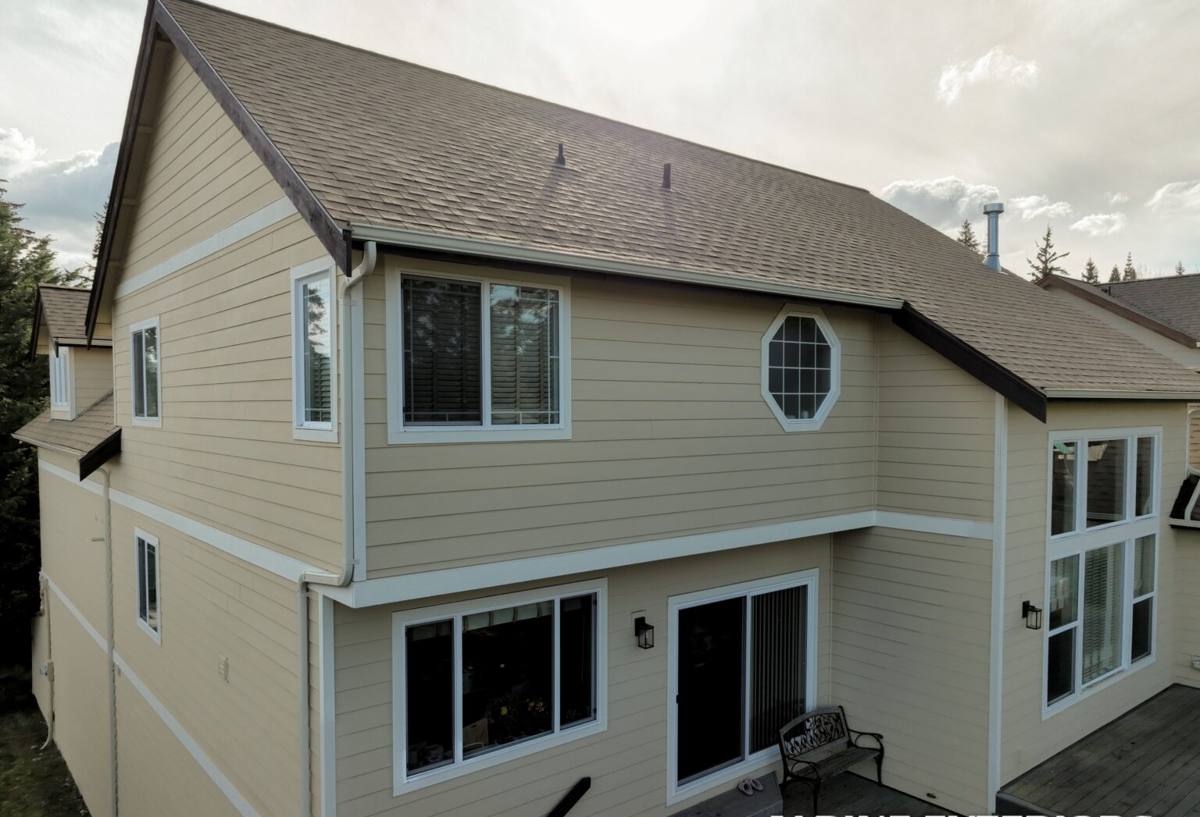
Signs a Sumas Home Actually Needs New Windows
Not every problem window needs full replacement — sometimes a failed seal or a bad sweep can be repaired. But in this climate, certain symptoms point to a window (or the wall around it) that's past the point of patching.
- Fogging or a permanent haze between the panes of a double-pane window — the gas seal has failed and can't be restored
- Soft or spongy wood at the sill or lower corners of the frame, even under paint that still looks decent
- Visible daylight or a draft you can feel with your hand along the frame edge in wind-driven rain
- Moss or dark streaking building up on the sill or brick mold faster each year, even after cleaning
- Windows that are difficult to open, don't stay up on their own, or have locks that no longer pull the sash tight
- Interior condensation on the glass in winter that wasn't there a few years ago
- A noticeable jump in heating costs with no other explanation
If you're seeing two or more of these on the same window, replacement is usually the more honest recommendation — repeated resealing or reglazing on a frame that's already absorbing water tends to be money spent delaying the inevitable.
What a Correct Window Replacement Job Actually Involves
Window replacement looks simple from the outside — old window out, new window in — but the difference between a job that lasts twenty-plus years and one that fails in five almost always comes down to what happens at the rough opening, not the window unit itself.
Flashing and Water Management
Every opening gets flashed so that any water that gets past the exterior cladding is directed back out, not into the wall cavity. In a climate with as much driving rain as we get here, a skipped or shortcut flashing detail is the single most common cause of hidden rot behind a window that "looks fine." We flash the sill pan, the sides, and the head in the correct shingle-lap order so water always sheds downward and outward.
Air Sealing and Insulation
The gap between the window frame and the rough opening needs to be filled with a material that stays flexible and doesn't compress or shrink over time — not stuffed with fiberglass and forgotten. A poorly sealed gap is where most of the draft complaints and a good share of the moss-related staining originate, since damp air finding its way into that cavity has nowhere good to go.
Fastening and Structural Fit
The window needs to be shimmed level, plumb, and square before it's fastened — not just tipped into the opening and screwed down. An out-of-square install stresses the sash, wears the hardware early, and can crack glass units over time as the frame racks with the house.
Interior and Exterior Trim
Trim gets reset or replaced to match existing sightlines, caulked with a paintable, exterior-grade sealant, and finished so the transition between old siding or trim and the new window doesn't become its own water entry point.
Choosing the Right Window for This Climate
There's no single "best" window — the right choice depends on your home's exposure, your budget, and how much upkeep you want to take on. Here's how the common options stack up for a wet, marine-influenced climate like ours.
| Frame Material | Moisture Performance | Maintenance | Typical Lifespan |
|---|---|---|---|
| Vinyl | Good — won't rot, but can warp if a dark color absorbs heat unevenly | Low — occasional cleaning | 20–30 years |
| Fiberglass | Excellent — dimensionally stable, resists warping and moisture intrusion | Low | 30+ years |
| Wood (clad exterior) | Good on the exterior face; interior wood still needs monitoring | Moderate — exterior clad is low-maintenance, interior wood may need refinishing over time | 20–30 years, depends on upkeep |
| Solid wood (unclad) | Requires diligent upkeep in this climate — we generally steer clients away from unclad wood on exposed elevations | High — regular repainting and sealing | Varies widely with maintenance |
| Aluminum | Poor thermal performance, prone to interior condensation in our winters | Low, but condensation issues are hard to fully solve | 20+ years, but performance degrades |
We steer most Sumas homeowners toward vinyl or fiberglass for exposed elevations — not because wood windows are a bad product, but because unclad wood in a climate with this much sustained moisture and moss pressure demands a maintenance schedule most homeowners underestimate. If wood's the look you want, a clad-exterior wood window gets you the appearance with far less exposure risk.
Glass Package
Double-pane, low-E glass with an argon fill is the standard we recommend for this region. It cuts heat loss in winter, reduces solar gain in the rare hot stretch, and the low-E coating helps limit UV fading on interior floors and furniture. Triple-pane is worth discussing on north-facing or wind-exposed elevations, but it's a real cost jump that doesn't pay for itself on every wall of every house.
Our Process, Start to Finish
1. On-Site Assessment
We walk the exterior and interior of each window being considered, check for soft framing, look at how water currently sheds off the siding above each opening, and note anything that suggests hidden damage beyond the glass itself.
2. Honest Recommendation and Estimate
You get a written scope covering exactly which windows we recommend replacing versus repairing, what frame and glass options fit the home and budget, and a clear price — not a vague range that grows once work starts.
3. Measuring and Ordering
Replacement windows are measured to the actual opening, not a catalog standard, so the fit is tight and the flashing detail works the way it's supposed to.
4. Removal and Inspection
Once the old unit is out, we inspect the rough opening before anything new goes in. If there's rot or water damage behind the old frame — which does happen more than homeowners expect in this climate — we address it before installing the new window, not after.
5. Installation
Flashing, air sealing, shimming, and fastening happen in that order, following the sequence described above, on every window regardless of how "simple" the opening looks.
6. Trim, Cleanup, and Walkthrough
Interior and exterior trim is finished, the site is cleaned up, and we walk the job with you before calling it done.
What Affects the Cost
Every home is different, so we won't quote a number without seeing the job, but these are the factors that most commonly move the price up or down.
| Factor | Why It Matters |
|---|---|
| Number and size of windows | Larger openings and full-house projects have better per-unit economics than one-off replacements |
| Frame material chosen | Vinyl is typically the most budget-friendly; fiberglass and clad wood cost more upfront but demand less upkeep |
| Condition of the existing opening | Hidden rot or water damage found during removal adds repair work before the new window can go in |
| Access and elevation | Second-story or hard-to-reach windows take more time and equipment |
| Trim and siding tie-in | Matching existing trim profiles or repairing surrounding siding adds labor beyond the window itself |
| Glass package | Upgrading to triple-pane or specialty coatings raises material cost per unit |
Permits and Energy Code
Window replacement in Washington falls under the state energy code, which sets minimum performance requirements for U-factor and solar heat gain — this is part of why "any window will do" isn't accurate advice. Depending on the scope of the project and whether the rough opening size is changing, a permit may be required. We handle that determination and the paperwork as part of the job so you're not left figuring out code requirements on your own.
Why Local Experience in Sumas Matters
A crew that mostly works drier inland markets can install a window that looks perfect on day one and still fail early here, because the failure mode in this climate isn't usually the window unit — it's what happens at the flashing and sealing details when driving rain and sustained moisture hit that joint year after year. We work this stretch of Whatcom County regularly, which means we've seen how moss builds on sills that don't shed water fast enough, how salt-laden air affects hardware and finishes over time, and which details actually hold up through a full wet season rather than just through the first inspection. That's the difference between a window that's still tight in fifteen years and one that's showing the same problems the old one had.
If your windows in Sumas are showing drafts, fogging, soft framing, or just aren't keeping up with the weather anymore, we'll come take a look and give you an honest read on repair versus replacement — no pressure, no upsell. Fill out the form below for a free estimate.