 Birch Bay Window
 California Creek's Coastal Climate and What It Does to a Roof
California Creek sits close enough to the water that homes here deal with a combination most inland Whatcom County properties don't: salt-laden marine air, wind-driven rain that gets pushed sideways under eaves and flashing, and a moss season that runs long because temperatures stay mild and surfaces rarely get a chance to fully dry out. Any one of these on its own is manageable. Together, over years, they wear down roofing materials faster than most homeowners expect.
Salt air is corrosive to unprotected metal fasteners and untreated flashing. Driving rain finds every gap in a roof system that wasn't detailed correctly — not just at the field of the roof, but at valleys, penetrations, and wall transitions. And moss doesn't just sit on top of a roof; given enough damp weeks in a row, it roots into shingle mat and lifts tabs, which is how a lot of asphalt roofs in this area start leaking years before their rated lifespan is up.
None of this is unique to California Creek — it's the reality for most of the Birch Bay shoreline and much of coastal Whatcom County. But it does mean roofing decisions that work fine forty miles inland don't always hold up the same way out here, and it's worth choosing materials and installation details with that specific exposure in mind.
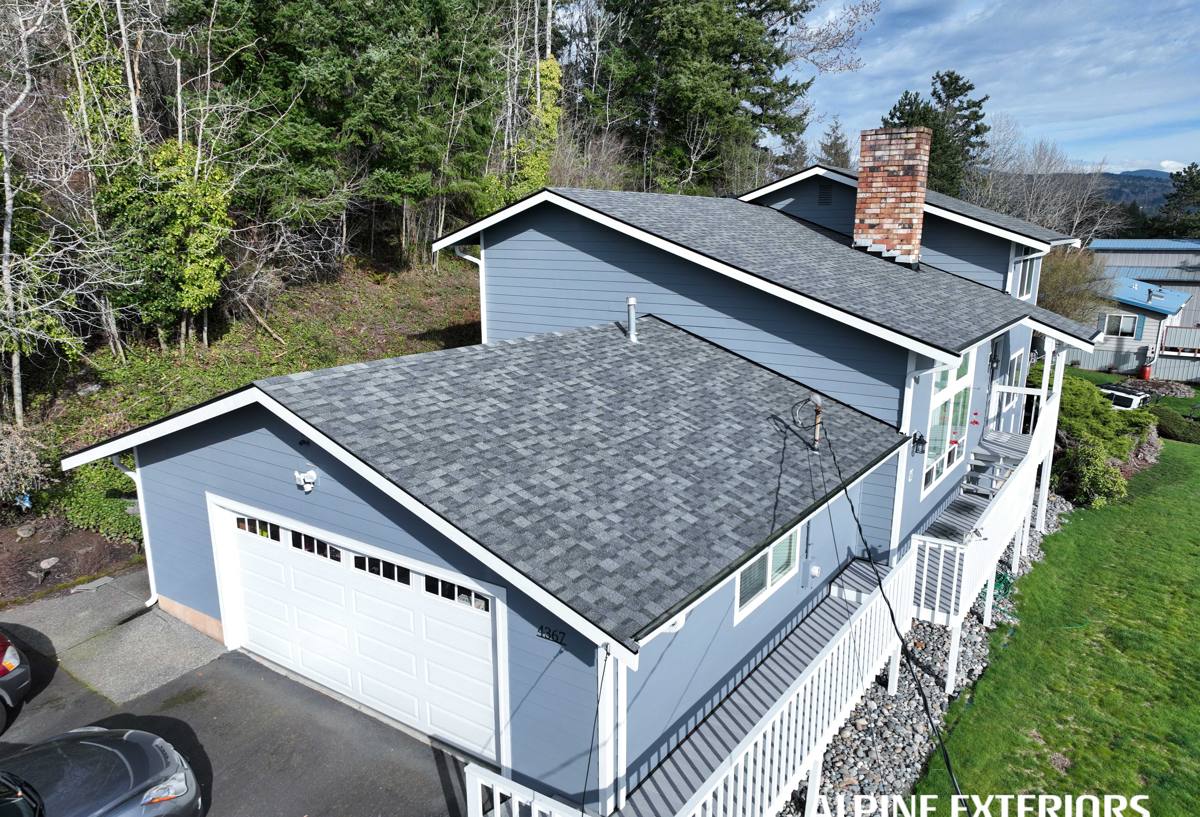
Why Metal Roofing Holds Up Well in This Environment
Metal roofing isn't the right fit for every home or every budget, but for the conditions California Creek deals with, it has real, practical advantages over asphalt shingles:
- A smooth, steep-shedding surface gives moss and algae far less to grab onto than the rough texture of asphalt granules.
- Metal panels don't absorb water the way shingle mat does, so they aren't prone to the freeze-thaw and wet-dry cycling that degrades other materials over time.
- Properly installed metal roofing has strong wind resistance, which matters on a shoreline where storms push rain and gusts sideways rather than straight down.
- A correctly installed system can last two to three times longer than asphalt shingles, which means fewer full re-roofs over the life of the house — a real benefit in a climate where tear-off work has a narrower dry-weather window.
That said, metal roofing only delivers those benefits when the system is matched to the site and installed correctly. A metal roof installed with the wrong fasteners, poor flashing, or no allowance for panel movement can develop problems just as fast as a poorly installed asphalt roof — sometimes faster, because a metal roof failure tends to show up as a hidden leak rather than an obvious missing shingle.
Choosing the Right Metal Roofing System for a Salt-Air Site
Standing Seam vs. Exposed-Fastener Panels
Standing seam panels use concealed clips instead of exposed screws, which means there are far fewer penetration points where water — or salt-laden moisture — can work its way in over time. It's our standard recommendation for primary homes in exposed coastal locations like California Creek, because it holds up longer with less maintenance.
Exposed-fastener panels are a legitimate, lower-cost option and work well on outbuildings, detached garages, and secondary structures. The trade-off is that the screws and rubber washers holding the panels down are exposed to weather and will need periodic inspection and eventual replacement, since gaskets harden and shrink faster in salt air and constant damp than they do inland.
Metal Type, Gauge, and Coating
Aluminum is naturally corrosion-resistant and doesn't rust, which makes it a strong choice for homes closest to the water. Steel panels are more affordable and plenty durable, but they depend on a factory metallic coating (typically a zinc-aluminum alloy coating) plus a quality paint finish to resist corrosion — cutting corners on either of those in a salt-air environment shortens the roof's service life. Panel gauge (thickness) affects dent resistance and wind performance; we match gauge to the home's exposure rather than defaulting to the thinnest option available.
What a Correct Metal Roof Installation Actually Involves
The panels themselves get most of the attention, but the details underneath and around them are what actually determine whether a metal roof performs well in driving rain and salt air over the next several decades.
- Underlayment: A high-quality synthetic underlayment across the field, with self-adhered ice-and-water membrane at eaves, valleys, and around every penetration — the places wind-driven rain is most likely to get pushed uphill or sideways.
- Fastener compatibility: Fasteners and clips matched to the panel metal to avoid galvanic corrosion, which happens when dissimilar metals react against each other and accelerates rapidly in salt air.
- Flashing at every transition: Chimneys, skylights, dormers, and wall-to-roof intersections are where most roof leaks actually originate, metal or otherwise. Each needs custom-formed flashing, not a generic trim piece.
- Room for panel movement: Metal expands and contracts with temperature swings. Standing seam clips are designed to let panels move without stressing the seams; rigidly fastening panels down defeats that and leads to buckling or fastener failure over time.
- Ventilation: Proper ridge and soffit venting keeps warm, moist interior air from condensing against the underside of cold metal panels, which can cause hidden deck damage that has nothing to do with the roof surface itself.
- Gutter and drainage sizing: In a climate with genuine driving-rain events, undersized gutters and downspouts overflow and send water right back against the fascia and siding. We size drainage for the rain load this area actually sees, not a generic minimum.
Comparing Metal Roofing Systems
There's no single "best" metal roof — the right choice depends on the structure, its exposure, and the homeowner's priorities. Here's a general comparison to frame the conversation:
| System | Typical Lifespan | Maintenance Level | Relative Cost | Best Fit |
|---|---|---|---|---|
| Exposed-Fastener Steel | 20–30 years | Moderate — periodic fastener checks | $ | Garages, shops, budget-conscious projects |
| Standing Seam Steel | 40–60 years | Low | $$ | Primary homes in wind- and rain-exposed areas |
| Standing Seam Aluminum | 40–60+ years | Low | $$$ | Homes closest to the water with the highest salt exposure |
| Stone-Coated Steel | 30–50 years | Low to moderate | $$ | Homeowners who want a shingle or tile look with metal's durability |
These are general ranges, not quotes — actual cost and lifespan depend on roof complexity, pitch, existing decking condition, and how much tear-off work is involved. We'll walk through the real numbers for your specific roof during an estimate.
Our Process for a California Creek Metal Roof
Inspection and Assessment
We start on the roof itself, not with a sales pitch. That means checking the condition of the decking, existing ventilation, flashing at chimneys and skylights, and how much moss or organic buildup has accumulated in valleys and low-slope sections — all of which affects what the new system needs to address.
Material and System Selection
We talk through standing seam versus exposed-fastener, steel versus aluminum, and coating options based on how exposed the home actually is — a property with more tree cover and wind protection has different needs than one with an open, unobstructed view of the water.
Installation
Landscaping and gutters get protected before work starts. Any tear-off is done in sections to limit how much deck is exposed to weather at once. Underlayment, flashing, and panels go down in that order, with every transition point detailed individually rather than treated as an afterthought.
Final Walkthrough
Before we call a job finished, we walk the roof and the ground: seams and flashing get checked, and on exposed-fastener jobs we do a magnetic sweep of the yard and driveway for stray screws and clippings — small metal debris left behind is a common source of flat tires and lawnmower damage that's easy to prevent.
Moss, Algae, and Coastal Debris: Ongoing Care
Metal roofing resists moss far better than asphalt, but it isn't maintenance-free. Needles, leaves, and other debris can still collect in valleys and around penetrations, and if that debris sits wet for long stretches during moss season, it can trap moisture against the panel and lead to staining or, over enough years, localized coating wear. A little seasonal attention prevents that from becoming a real problem.
- Clear needles and leaves out of valleys and around penetrations each fall, before the wet season settles in.
- Trim back overhanging branches — less debris on the roof and more sun exposure both help keep surfaces drier.
- Check gutters and downspouts before the heavy winter rain arrives, since a clogged gutter undermines even a well-installed roof.
- After major windstorms, look for dents, scratches, or loosened fasteners rather than waiting for a visible leak.
- Rinse general grime and salt residue with a garden hose occasionally; avoid pressure washing, which can damage coatings and force water under seams.
Why Local California Creek Experience Matters
A metal roofing system that's correct for inland Whatcom County isn't automatically correct here. Crews who regularly work Birch Bay and the surrounding shoreline know how the wind actually moves across these roofs, how much rain a gutter system really needs to handle in a driving storm, and which fastener and coating combinations hold up under sustained salt exposure instead of failing early. That experience shows up in details that aren't visible from the ground — the flashing behind a chimney, the clip spacing on a standing seam run, the underlayment choice at a valley — but that are exactly what determines whether a metal roof performs for forty years or needs attention in ten.
If you're weighing a metal roof for a California Creek home, we're glad to take a look and give you a straight assessment of what your roof needs, no pressure and no obligation. Reach out for a free estimate using the form below.