 Birch Bay Window
 Why Cherry Point Siding Wears Differently Than Inland Homes
Cherry Point sits close enough to Puget Sound and the Strait of Georgia that homes here take a different kind of beating than a house ten miles inland in Whatcom County. Salt-laden air rides in off the water, wind-driven rain hits siding sideways instead of straight down, and the long gray stretch from fall through spring keeps north- and west-facing walls damp for days at a time. Add in the shade from mature evergreens common on Cherry Point lots, and you get a moss season that can run six months or longer on the walls that never see direct sun.
None of that is unusual for this part of Washington. But it does mean siding repair here has to account for things a generic "patch and paint" job ignores: salt corrosion on fasteners and trim, moisture that's found its way behind the cladding rather than just staining the surface, and moss and algae that will come right back if the underlying cause isn't addressed. A repair that looks fine for a season but doesn't account for these local pressures usually isn't a repair — it's a delay.
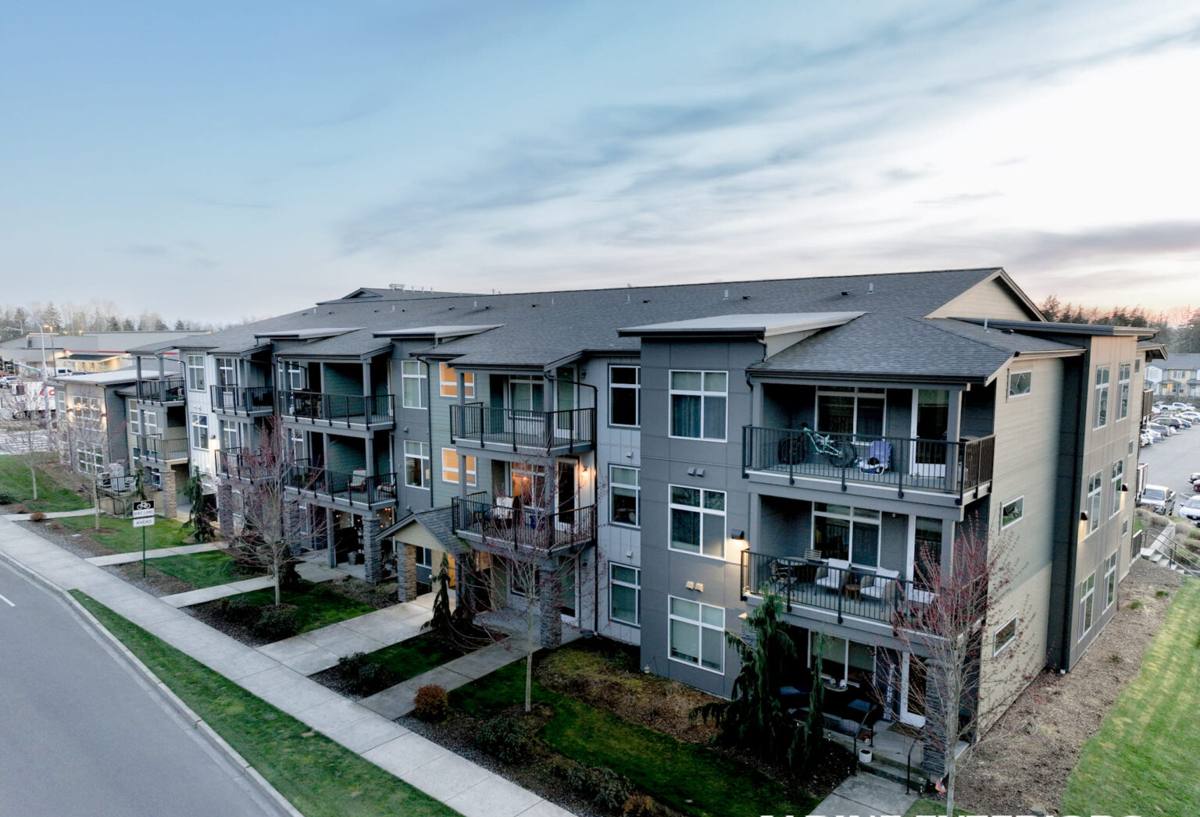
What We Look For on a Cherry Point Repair Call
When we walk a property near Birch Bay and Cherry Point, we're not just looking at the spot the homeowner called about. Damage in this environment tends to have a cause somewhere upstream of the visible problem, so we check the whole system before we touch anything.
Common issues we find
- Moss and algae staining on shaded siding, especially north walls and areas under tree cover — cosmetic at first, but it holds moisture against the surface if left alone.
- Corroded or failing fasteners — nails and screws that weren't rated for coastal exposure can rust, streak the siding, and eventually lose their grip.
- Caulk and sealant failure around trim, window edges, and butt joints — UV and repeated wet-dry cycling break down sealant faster here than in drier parts of the state.
- Warped, delaminating, or soft panels — a sign that moisture has already gotten behind the cladding, common on older wood, engineered wood, or poorly maintained composite siding.
- Impact and wind damage — branches, debris, and gusts off the water can crack or dislodge panels, especially on exposed corners and gable ends.
- Gaps at penetrations — vents, hose bibs, light fixtures, and utility lines are common entry points for wind-driven rain if the flashing or sealant has aged out.
We also check the wall assembly behind the siding wherever we have access — house wrap condition, flashing at windows and doors, and whether the original installation left drainage gaps for water to escape. In a climate this wet, a repair that reseals the surface without confirming the wall can actually drain is only solving half the problem.
Repair vs. Replace: How We Make the Call
Not every damaged section needs to come off the wall, and not every repair is worth doing. We walk homeowners through the honest version of this decision rather than defaulting to the most or least expensive option.
| Situation | Typical Approach | Why |
|---|---|---|
| Isolated crack, hole, or impact damage in otherwise sound siding | Spot repair — replace or patch the affected boards/panels | Surrounding material is still performing; no reason to disturb it |
| Moss/algae staining with no underlying rot | Clean, treat, reseal, and address the moisture source (shade, drainage, gutter overflow) | Cosmetic issue with a clear cause we can correct |
| Widespread fastener corrosion or caulk failure | Re-fastening and resealing across the affected elevation | Piecemeal fixes won't keep pace with continued corrosion |
| Soft, delaminating, or rotted panels over a large area | Full elevation or full-house replacement | Moisture has compromised the material and likely the wall behind it |
| Siding is an aging product line prone to moisture issues (older wood composite, some engineered wood) | Replacement recommended even if damage looks localized | One failed area is often an early sign of a systemic problem |
If a repair is the right call, we do it properly — matching material, color, and reveal so it doesn't read as a patch job from the curb. If the damage points to a bigger problem, we'll tell you that plainly instead of stringing repairs along on a wall that's past the point of fixing.
Why Material Matching Matters Here
A lot of Cherry Point and Birch Bay homes have siding that's aged, weathered, or been repainted more than once, which makes matching a repair to the existing wall harder than it looks. Fiber cement, engineered wood, and vinyl all age differently, and sun/salt exposure can shift color unevenly across elevations. When we do a spot repair, we account for that — sourcing compatible material, feathering paint lines where needed, and being upfront if an exact match isn't realistic on an older wall. We'd rather tell you that a full elevation will look more even than pretend a patch will disappear.
Our Repair Process
- On-site inspection. We assess the damaged area and the surrounding wall assembly, not just the spot you noticed.
- Diagnosis of the cause. Moss, moisture intrusion, fastener failure, and impact damage each get fixed differently — we identify which one you're dealing with before quoting anything.
- Honest repair-or-replace recommendation. You get a straight answer, with the reasoning, in writing.
- Repair or replacement work. Matched materials for repairs; correctly installed James Hardie fiber cement where replacement is the right call.
- Sealing and finish work. Caulking, painting, and flashing detail finished to blend with the surrounding siding.
- Walkthrough. We show you what was done and what to watch for going forward, especially on shaded or exposed elevations.
What to check before you call anyone
- Note which elevation the damage is on (north/shaded walls behave differently than south-facing ones)
- Look for staining below the damaged area — it can indicate water is tracking down from above
- Check nearby gutters and downspouts — overflow is a common hidden cause of localized rot
- Take a photo of the damage and surrounding siding so a contractor can gauge material and color match remotely
- Avoid pressure-washing damaged siding before an inspection — it can force water further into gaps or weak spots
Why Hire a Crew That Already Works This Area
Siding repair isn't just a trade skill — it's a local one. A crew that regularly works Cherry Point and the greater Birch Bay area already knows which elevations take the worst of the wind-driven rain, how aggressively moss grows back under the tree cover common to this stretch of Whatcom County, and which older siding products in the area tend to fail first. That local pattern recognition is the difference between a repair that lasts and one that's a rerun of the same call in two years.
It also matters for something less obvious: knowing what "normal" looks like on a Cherry Point home versus what's actually a red flag. A contractor unfamiliar with this environment might over-treat routine algae staining or under-treat early moisture damage because it doesn't match what they see inland. We've spent enough time on roofs and walls in this specific stretch of coastline to tell the difference.
Why We Only Install James Hardie When Replacement Is the Right Call
When a repair call turns into a replacement conversation — because the damage is widespread, the material has reached the end of its useful life, or moisture has gotten into the wall assembly — we only install James Hardie fiber cement siding. It's non-combustible, engineered for the kind of wet, wind-driven climate Cherry Point sits in, and holds its factory-applied ColorPlus finish far longer than field-painted alternatives in a salt-air environment. We don't install vinyl, LP SmartSide, Cemplank, Allura, or primed wood siding, because we've seen how each of those products performs — or struggles to perform — in exactly this kind of climate over the long haul. Hardie isn't the cheapest option on day one, but it's the one we're willing to warranty and stand behind on homes that face this much weather.
Get an Honest Look at Your Siding
If you're dealing with damaged, stained, or aging siding on a Cherry Point or Birch Bay home, we'll come take a real look at it — not a sales pitch dressed up as an inspection. We'll tell you straight whether a repair makes sense, what's causing the problem, and what your options are if it doesn't. Use the form below for a free, no-pressure estimate.