 Birch Bay Window
 Why Lynden Decks Need to Be Built for the Weather, Not Just the Look
A deck in Lynden lives outside year-round, and Whatcom County doesn't give outdoor structures an easy ride. Long stretches of driving rain, high humidity, short winter freezes, and a moss season that can stretch from late fall into spring all put steady pressure on wood, fasteners, and framing. A deck that looks great on installation day can start showing problems within a couple of seasons if it wasn't built with this climate in mind. We build decks for homes in Lynden and across the broader Whatcom County area, and the difference between a deck that lasts fifteen-plus years and one that needs early repairs almost always comes down to decisions made before the first board goes down: how the ledger is flashed, how the framing is spaced, what fasteners are used, and what decking material actually fits the site.
This page focuses specifically on deck building for Lynden homeowners — what the local conditions demand, what a correctly built deck involves, how our process works from first call to final walkthrough, and why working with a crew that already understands this region's weather patterns matters more here than it would in a drier climate.
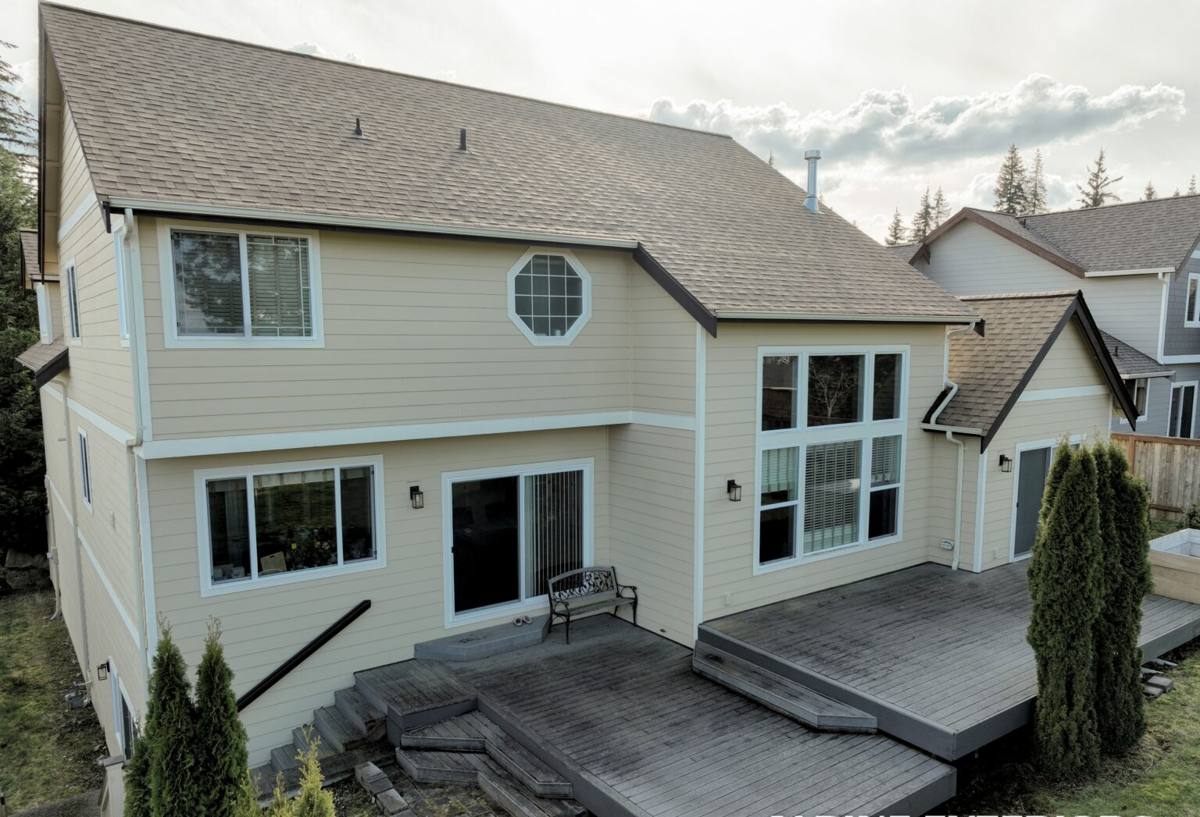
What Whatcom County Moisture Does to a Poorly Built Deck
Water is the enemy of every deck, but it's a slower, sneakier enemy than most homeowners expect. It doesn't usually show up as a dramatic failure — it shows up as soft spots near the house, dark staining on the underside of boards, fasteners bleeding rust streaks, and moss creeping across shaded sections that never fully dry out between storms. In a region with as much sustained rainfall and humidity as ours, a few specific failure points come up again and again on decks that weren't built correctly the first time:
- Ledger board rot — where the deck attaches to the house is the single most common failure point when flashing is missing or installed incorrectly, letting water track behind the siding and into the rim joist.
- Fastener corrosion — standard or mismatched hardware reacts with treated lumber chemicals and moisture over time, leading to streaking, weakened connections, and eventual fastener failure.
- Moss and algae buildup — shaded, poorly ventilated decking surfaces stay damp longer, which accelerates wood decay and creates a slip hazard underfoot.
- Trapped moisture under the deck — inadequate spacing between joists and decking, or decking laid too tight, prevents airflow and keeps the underside of boards wet for days after a storm.
- Footing movement — footings that aren't set to the correct depth can shift slightly with seasonal ground moisture changes, eventually throwing the whole structure out of level.
None of these are exotic problems. They're the predictable result of building a deck the same way you'd build one in a dry climate, without adjusting for how much water this region actually sees.
Choosing the Right Decking Material for a Lynden Property
There's no single "best" decking material — the right choice depends on your budget, how much maintenance you're willing to do, and how much shade and moisture exposure your specific yard gets. Here's how the common options actually compare once you factor in our local climate:
| Material | Moisture Performance | Maintenance | Typical Lifespan |
|---|---|---|---|
| Pressure-treated lumber | Good when properly sealed and re-coated; prone to checking and warping if neglected | Annual cleaning and re-sealing recommended | 15-20 years with upkeep |
| Cedar | Naturally rot- and insect-resistant, but still needs sealing to prevent graying and moisture absorption | Periodic cleaning and re-oiling | 15-20 years with upkeep |
| Composite decking | Excellent — engineered to resist moisture absorption and won't rot or splinter | Occasional washing to prevent surface algae film | 25-30+ years, varies by product warranty |
| PVC decking | Excellent — fully synthetic, no wood fiber to absorb moisture | Low; occasional washing | 25-30+ years, varies by product warranty |
In a region with a long moss season, the maintenance column matters as much as the price tag. A cheaper wood deck that gets neglected for a season or two can end up costing more in repairs than a composite deck would have cost upfront. We'll walk through the honest trade-offs for your specific site — sun exposure, tree cover, and how the deck will actually be used — rather than pushing one product across the board.
A Note on Fasteners and Hardware
Whatever decking material you choose, the fasteners and structural hardware matter just as much. We use corrosion-resistant fasteners rated for treated lumber contact, and we match hardware to the decking material to avoid the galvanic reaction that causes premature rust staining and weakened connections. This is one of those details that's invisible once the deck is finished but shows up as a maintenance headache within a few years if it's skipped.
The Structural Details That Determine How Long a Deck Lasts
The decking surface is what you see, but the framing underneath is what determines whether the deck is still solid in fifteen years. A handful of details separate a deck that ages well from one that doesn't:
Ledger Flashing
Proper flashing — including a waterproof membrane behind the ledger board and metal flashing that directs water away from the house — is the single most important detail on any attached deck. This is where the majority of hidden rot problems originate.
Joist Spacing and Airflow
Correct joist spacing supports the decking material properly while still allowing airflow underneath, so the structure can dry out between rain events instead of staying damp for days.
Footing Depth
Footings need to be set below the local frost line and on stable, well-draining soil. Skipping this or guessing at depth is a common shortcut that leads to gradual settling and an uneven deck a few years down the line.
Fastener and Hardware Selection
As noted above, matching connectors and fasteners to the materials involved prevents corrosion-driven failures at structural connection points — the joist hangers, post bases, and ledger bolts that carry the actual load.
Our Deck Building Process, Start to Finish
We keep the process straightforward and communicate clearly at each stage, so you know what's happening and why:
- Site visit and assessment — we look at the yard's grade, drainage, sun and shade exposure, and how the deck will attach to the house before recommending an approach.
- Design and material discussion — we go over layout, size, decking material options, and railing choices based on how you plan to use the space and what fits your budget.
- Written estimate — a clear breakdown of materials and labor, no vague allowances or surprise line items added later.
- Permitting — we handle the permit application and coordinate any required inspections through Whatcom County or the relevant local jurisdiction.
- Construction — footings, framing, ledger flashing, decking, and railing installed in sequence, with attention to the structural details covered above at every stage.
- Final walkthrough — we go over the finished deck with you, point out any care and maintenance recommendations specific to the materials used, and address any questions before we consider the job done.
Permits and Local Building Requirements
Most attached decks above a certain height or size require a building permit in Whatcom County, and there are setback and railing height requirements that need to be met regardless of which jurisdiction your property falls under. Skipping the permit process might save a few days upfront, but it can create real problems later — from failed inspections on a future home sale to insurance complications if something goes wrong. We handle the permitting as part of the process so you don't have to navigate it yourself, and so the finished structure is fully compliant, not just structurally sound.
Maintaining a Deck Through a Long Moss Season
Even a well-built deck needs some seasonal attention in a climate like ours. Here's a practical maintenance checklist we give homeowners after a new deck is finished:
- Sweep debris and standing leaves off the surface regularly, especially in shaded areas where moisture lingers longer.
- Clean the deck surface at least once a year to remove early moss and algae growth before it takes hold.
- Check and re-seal wood decking on the manufacturer-recommended schedule — typically every one to two years depending on sun exposure.
- Inspect the ledger board area annually for any signs of staining, softness, or gaps in flashing.
- Keep gutters and downspouts near the deck clear so runoff isn't draining directly onto or under the structure.
- Trim back overhanging vegetation to improve airflow and sun exposure on shaded sections.
- Check railing and stair connections periodically for looseness, which can be an early sign of fastener corrosion.
Composite and PVC decking cut down significantly on this list, but no deck material is entirely maintenance-free in a climate with this much sustained moisture.
What Drives the Cost of a Deck Project in This Area
Deck pricing varies quite a bit based on size, material, and site conditions, but a few factors consistently move the number up or down:
| Cost Factor | Why It Matters |
|---|---|
| Decking material | Composite and PVC cost more upfront than pressure-treated lumber but reduce long-term maintenance costs |
| Deck height and footing depth | Taller decks and deeper footings require more concrete, framing lumber, and labor |
| Site access and grade | Sloped or hard-to-access yards can add labor time for excavation and material transport |
| Railing style | Cable, glass, and composite railing systems cost more than standard wood or metal baluster railing |
| Permit and engineering requirements | Larger or elevated decks may require engineered drawings in addition to standard permit fees |
We'll walk through these factors specific to your property during the estimate, so you have a clear picture of where the budget is going and where there's room to adjust without cutting corners on the structural details that actually matter.
Why It Matters to Hire a Crew That Already Works in This Area
A contractor who builds decks primarily in drier inland climates or warmer regions doesn't necessarily carry over the habits that matter here — the flashing details, the fastener choices, the airflow spacing, the footing depth for our soil and frost conditions. Building decks in Whatcom County, including homes in and around Lynden, means building for the reality of driving rain and a moss season that lasts several months out of the year. That's not a one-time decision made at the design stage; it shows up in dozens of small choices made throughout construction, and it's the difference between a deck that needs attention every year and one that just holds up.
If you're planning a new deck or need to know whether an existing one was built to last in this climate, we're happy to take a look and give you a straightforward, no-pressure estimate. There's no obligation — just an honest assessment of what your property needs and what it would take to do it right. Use the form below to get started.