 Birch Bay Window
 Lynden's Climate and What It Does to a Roof
Lynden sits inland from the Salish Sea, but it still lives under the same marine-influenced weather pattern as the rest of Whatcom County. Moist, salt-tinged air moves in off the water and settles over the farmland and low-lying valleys around town, and it doesn't leave for long stretches of the year. Add driving rain that comes in sideways during winter storms, a wet season that can run from October well into May, and a moss and algae season that never fully shuts off, and you get a climate that is genuinely hard on roofing materials.
Asphalt shingles take the worst of it — granule loss, moss rooting into the mat, and shortened lifespans are common complaints we hear from homeowners in this area. Metal roofing handles that environment differently, but it isn't immune to problems. Fastener backout from repeated expansion and contraction, sealant failure at penetrations, and galvanic corrosion where the wrong metals touch are the issues we watch for on metal roofs specifically. Getting a metal roof right in Lynden means designing for this exact combination of moisture, wind, and temperature swing, not just installing panels and moving on.
Why Metal Roofing Fits Lynden Homes
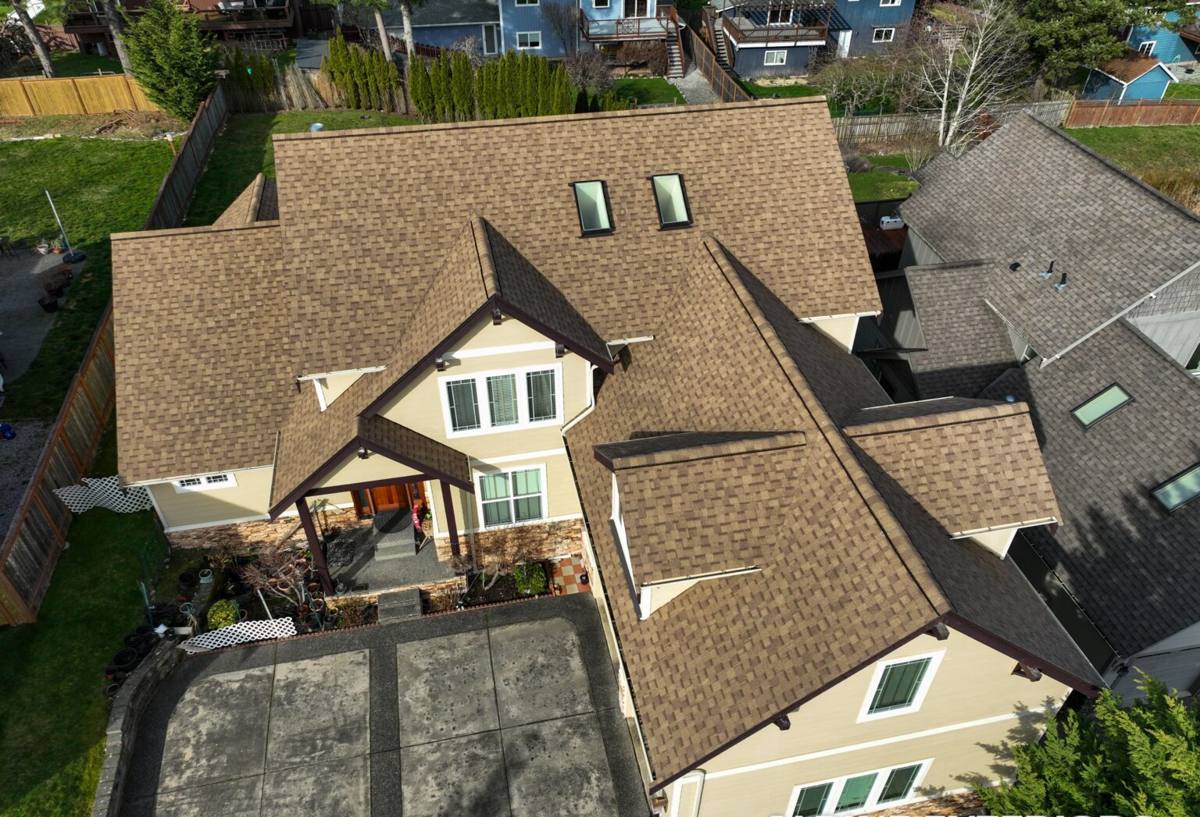
Metal sheds water fast, doesn't give moss and algae the organic surface they need to take hold the way shingles do, and holds up to wind-driven rain better than most other roofing materials on the market. For a property in a climate that stays wet for most of the year, that combination matters more than curb appeal alone.
Standing Seam vs. Exposed Fastener Panels
Standing seam panels use concealed clips and interlocking seams, so there are no exposed screws for water to work its way past over time. It costs more up front but generally needs less maintenance and handles thermal movement more gracefully. Exposed-fastener panels (often called 5V or corrugated) cost less and install faster, but the screws are visible and their rubber washers do wear out — meaning the roof will need occasional fastener checks and washer replacement over its life. Neither option is wrong; the right one depends on your budget, your roof's pitch and complexity, and how much long-term maintenance you're willing to take on.
What a Correct Metal Roof Installation Actually Involves
A metal roof is only as good as what's underneath it and how it's fastened down. In a climate like this one, the details matter more than they would somewhere drier.
Underlayment and Moisture Barrier
We use a synthetic underlayment rated for extended UV and moisture exposure, since metal roofs in this region can sit under long stretches of wet weather before a dry spell lets any trapped moisture escape. Ice and water shield goes down at eaves, valleys, and any low-slope transition — the places where wind-driven rain is most likely to get pushed uphill under the panels.
Fastening and Flashing Details
Fasteners need to be set to the correct torque — too loose and they back out over years of thermal cycling; too tight and the washer seal is crushed and fails early. Flashing at chimneys, vents, and wall transitions gets custom-formed rather than pieced together with sealant alone, because caulk is a maintenance item, not a permanent fix. Where dissimilar metals meet — copper flashing against a steel panel, for example — we separate them properly to prevent galvanic corrosion, which otherwise eats through the less noble metal over time.
Ventilation
Metal roofs need a ventilated attic or a properly designed vented assembly underneath them. Without airflow, the humid air common to this part of Washington condenses on the underside of cold metal panels, which can lead to hidden moisture problems in the decking long before anything shows up on the surface.
Panel and Material Options
There's no single "best" metal roofing material — each option trades off cost, appearance, and maintenance differently. Here's how the common choices compare for a home in this climate.
| Panel Type | Typical Lifespan | Best For | Maintenance Notes |
|---|---|---|---|
| Standing seam steel | 40–60 years | Homeowners who want the lowest long-term maintenance | Concealed fasteners; occasional seam and sealant checks at penetrations |
| Exposed-fastener steel (5V/corrugated) | 30–45 years | Budget-conscious projects, simpler roof lines | Fastener/washer inspection every few years |
| Stone-coated steel | 40–50 years | Homeowners who want a shingle or shake look with metal durability | Coating inspection after major storms; otherwise low upkeep |
| Aluminum | 40–60 years | Coastal-adjacent properties concerned about corrosion | Naturally corrosion-resistant; softer, so more care needed during install and foot traffic |
Signs an Existing Metal Roof Needs Attention
If you already have a metal roof in Lynden, a few warning signs are worth catching early — they're far cheaper to fix than the water damage that follows if they're ignored.
- Rust streaking or bleeding around fastener heads or cut edges
- Panels that flex, hum, or rattle noticeably in wind
- Moss or algae building up in seams, valleys, or under debris that's collected on the roof
- Visible gaps or dried, cracked sealant at flashing and penetrations
- Chalking or fading paint finish, especially on south- and west-facing slopes
- Any staining on interior ceilings or in the attic after a heavy rain event
Our Installation and Repair Process
We keep the process straightforward and honest from the first visit to the final walk-through.
- On-site assessment — we inspect the existing roof deck, ventilation, and any problem areas before recommending anything.
- Material and panel discussion — we walk through the real trade-offs between panel types and finishes for your specific roof and budget, not just the option with the best margin.
- Tear-off or overlay decision — based on the condition of the existing roof and local code requirements, not just what's easiest.
- Underlayment and flashing installation — done to the standards described above, with attention to every valley, penetration, and edge.
- Panel installation — fastened and sealed to the manufacturer's specification and adjusted for this climate's wind and moisture load.
- Cleanup and walk-through — site cleared of debris and fasteners, and we go over the finished roof with you before we consider the job done.
What Affects the Cost of a Metal Roof in Lynden
Metal roofing costs more up front than asphalt shingles, but it's a wide range depending on the specifics of your roof. The factors below move the price more than anything else.
| Cost Factor | Why It Matters |
|---|---|
| Roof pitch and complexity | Steep or cut-up roofs with multiple valleys and hips take longer to flash correctly and use more material |
| Panel type | Standing seam runs higher than exposed-fastener panels due to material and labor |
| Tear-off vs. install-over | Removing an old roof adds labor and disposal cost but is sometimes required for proper decking inspection |
| Penetrations | Chimneys, skylights, and multiple vent stacks each require custom flashing work |
| Site access | Steep lots, tall roofs, or limited staging area can add time and equipment cost |
Maintaining a Metal Roof in This Climate
Metal roofing needs less maintenance than shingles, but "less" isn't "none" — especially in a climate that stays wet as long as this one does.
- Have the roof inspected roughly once a year, ideally before the wet season sets in
- Clear debris out of valleys and around penetrations where moss and organic buildup tend to collect
- Check fastener tightness periodically on exposed-fastener panels
- Keep gutters and downspouts clear so water isn't backing up under the roof edge
- Trim back overhanging branches to cut down on shade, debris, and moss growth
- Avoid walking on the roof unnecessarily, and use soft-soled shoes when access is required, to protect the finish
Why Hire a Crew That Already Works in Lynden
A metal roof is a long-term investment, and how it's installed matters more than which brand of panel goes on top. A crew that already works throughout Whatcom County knows how local wind and rain patterns behave on this type of terrain, understands the permitting and inspection process for the area, and has already worked out the flashing and ventilation details that matter here through repeated experience — not guesswork on a one-off job. That local familiarity shows up in fewer callbacks, straighter answers about what your roof actually needs, and a roof that's built for the climate it has to survive, not just the one on the spec sheet.
If you're weighing a new metal roof, a repair, or just want an honest opinion on the condition of what you have now, we're glad to take a look. Fill out the form below for a free, no-pressure estimate.