 Birch Bay Window
 Storm Damage Roof Repair for Lynden Homes
When a wind event or heavy rain system moves through Whatcom County, Lynden homes near Birch Bay take it on the chin. The same weather pattern that makes this stretch of coastline beautiful — onshore wind, driving rain off the Strait, and long stretches of overcast, damp weather — is exactly what stresses a roof past its limits. A single storm can lift shingles, drive water under flashing, or snap a branch onto a slope you can't see from the ground. Our crew handles storm damage roof repair for Lynden-area homes specifically, not as an afterthought to a general roofing menu, and that focus shows up in how fast we respond and how thoroughly we check the work when we're done.
This page covers what local homes actually need after a storm, what a repair should include if it's done right, and how our process works from the first call to the final check. We're not going to quote you a number here — every roof and every storm is different — but we'll walk through the honest factors that drive cost and decision-making.
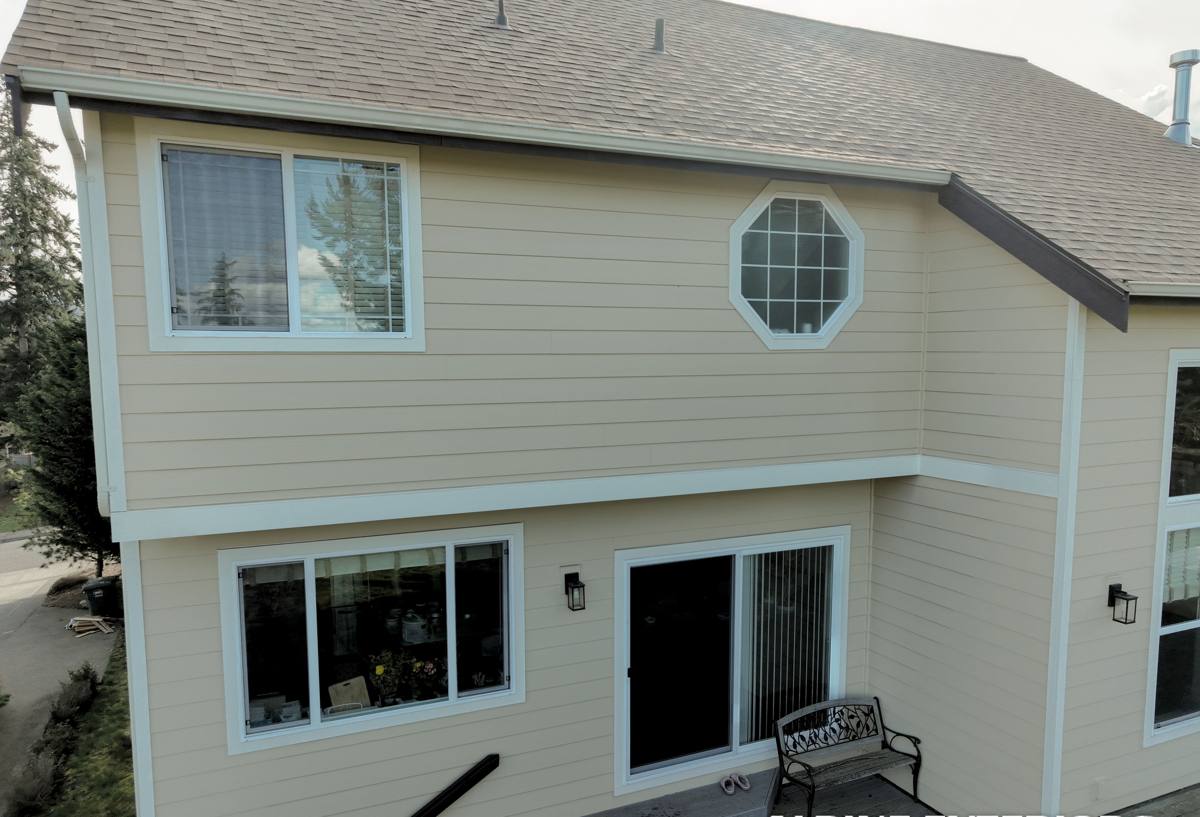
Why Whatcom County Weather Is Hard on Roofs
Birch Bay and the Lynden area sit close enough to the water that salt-laden air is a real factor in how roofing materials age, even a few miles inland. Salt air accelerates corrosion on exposed metal — flashing, fasteners, vent caps, gutter hardware — well before the shingles themselves would normally need attention. A roof that looks fine from the driveway can have flashing that's already thinning at the edges.
Add in driving rain that comes in sideways during a real storm, and you get water intrusion at points that would stay dry in a calmer climate: exposed nail heads, shingle laps that face the prevailing wind, and any spot where flashing has started to lift or corrode. Then there's moss. Whatcom County's mild, wet stretches from fall through spring give moss and algae months to establish themselves on north-facing and shaded slopes. Moss doesn't just look bad — it holds moisture against the shingle surface, works its way under shingle tabs, and can lift edges just enough for wind-driven rain to get underneath during the next storm. Storm damage rarely happens in isolation here; it usually finds a roof that moss, salt air, or age has already softened up.
Signs Your Lynden Roof Has Storm Damage
Some storm damage is obvious — a missing shingle, a branch through the roof deck, a stain spreading across a ceiling. Other damage is easy to miss until it's caused real trouble underneath. After any significant wind or rain event, it's worth checking for the following:
- Shingles that look curled, cracked, creased, or are missing outright, especially on the side of the roof that faced the wind
- Granules collecting in gutters or at the base of downspouts — a sign shingles have been scoured by wind-driven debris or hail
- Flashing that's visibly bent, lifted, or separated around chimneys, vents, and roof-to-wall transitions
- New or worsening water stains on interior ceilings or in the attic, particularly near exterior walls or valleys
- Sagging or soft spots on the roof deck when viewed from the attic side
- Debris — branches, needles, moss clumps — pooled in valleys or against a chimney where it can trap water
- Gutters pulled away from the fascia or full of shingle fragments
If you see any of these, the roof needs a proper inspection rather than a guess from the ground. Some of the most damaging leaks start small and stay hidden for months.
What a Correct Storm Damage Repair Involves
Emergency Stabilization First
If a storm has left an active leak or exposed roof deck, the first job is stopping water from getting further into the structure — tarping the affected area and securing anything loose. This isn't the fix, it's triage, and it should happen before any detailed estimate work so the damage doesn't compound while decisions get made.
A Full Inspection, Not a Spot Check
A correct repair starts with looking at the whole roof, not just the obviously damaged section. Storms rarely damage only one spot — wind uplift and driving rain tend to stress an entire slope or the whole roof at once. That means checking flashing at every penetration, the condition of the underlayment where it's exposed, the state of the ridge and valleys, and whether moss or existing wear has already compromised areas near the storm damage.
Matching the Repair to the Roof
Shingle repairs need to use compatible material — matching the existing shingle type, and where possible the manufacturer and color line, so the patched section sheds water the same way the rest of the roof does and doesn't stand out as an obvious patch. Underlayment gets replaced in any section that was exposed to weather, not just where a shingle was physically missing, since underlayment that's been rained on repeatedly can lose its ability to seal.
Flashing and Sealant Work
Given how hard salt air is on metal flashing in this area, storm repairs are a natural point to check flashing condition even outside the immediate damage zone. Corroded or loosely fastened flashing around chimneys, skylights, and vent stacks is often what turns a minor storm event into a real leak the next time it rains.
Debris and Moss Cleanup
Any moss, needles, or debris in valleys and against penetrations gets cleared as part of the repair, not left for later. Moss left in place after a repair will keep holding moisture against new work and shortens its effective life.
Repair or Replace? The Honest Factors
Not every storm-damaged roof needs a full replacement, and not every roof is worth patching indefinitely. The table below covers the factors we actually weigh when giving a homeowner a straight answer.
| Factor | Leans Toward Repair | Leans Toward Replacement |
|---|---|---|
| Roof age | Under roughly 12-15 years, or well within expected lifespan for the material | Near or past the material's typical service life |
| Extent of damage | Isolated to one slope or a small section | Spread across multiple slopes or the whole roof |
| Underlying condition | Deck and underlayment are sound elsewhere | Widespread moss damage, soft decking, or prior patch-on-patch history |
| Shingle availability | Matching shingles are still available | Discontinued product, or a mismatched patch would be visually obvious |
| Storm frequency | First significant damage event in years | Repeated storm damage on the same roof over recent seasons |
Most storm calls we take in the Lynden area are legitimate repairs, not replacements. But if an inspection turns up a roof that's already near the end of its service life and moss or salt-air corrosion has done real cumulative damage, we'll tell you that plainly instead of stacking another patch on a roof that's not going to hold.
Our Process, Start to Finish
- Call or request an estimate. Tell us what happened and what you're seeing — a missing shingle, a leak, storm debris on the roof.
- On-site inspection. We walk the roof (or use appropriate access for steep or unsafe pitches) and document the actual condition, not just the visible damage.
- Written estimate. You get a clear breakdown of what needs repair, what materials will be used, and why — no pressure to upsell into a full replacement if a repair is the honest answer.
- Scheduled repair. Work is scheduled around weather windows, since roofing repairs need a dry stretch to do properly, especially with the Whatcom County rain calendar.
- Final check. Once the repair is complete, we walk it again to confirm flashing, seals, and shingle work are solid before calling the job done.
A Word on Insurance Claims
Many storm damage repairs in this area are covered under homeowners insurance, particularly when the cause is a documented wind or storm event rather than gradual wear. We can provide a written inspection report and photos that describe the damage and its likely cause, which is what most adjusters ask for. We're not a public adjuster and won't promise a claim outcome, but we'll give you an honest, well-documented assessment you can bring to your insurer.
Why a Local Lynden and Birch Bay Crew Matters
Storm damage repair has a time-sensitive element that general roofing work doesn't always have — a delayed response can mean the difference between a contained repair and water damage spreading into insulation, drywall, and framing. A crew that already works the Birch Bay and Lynden area can get to your property faster after a storm, and just as importantly, already understands how this specific stretch of Whatcom County weather behaves: which slopes take the worst of the wind, how much moss buildup is normal versus a warning sign, and how quickly salt air chews through unprotected flashing. That local knowledge shapes what we look for during an inspection and how we prioritize a repair, rather than treating every roof the same regardless of where it sits.
If a recent storm has left your roof damaged, missing shingles, or you're just not sure whether what you're seeing needs attention, we're glad to take a look. Request a free, no-pressure estimate using the form below and we'll get back to you with a straight answer about what your roof actually needs.