 Birch Bay Window
 Metal Roofing Built for the Nooksack Climate
Homes in and around Nooksack deal with a specific combination of weather stress: long stretches of wet, gray months, wind-driven rain that finds its way under poorly flashed roofing, and a growing season for moss and algae that can run most of the year. Whether a house sits closer to the coastal air near Birch Bay or further inland toward the Nooksack River valley, the underlying problem is the same — roofing materials that can't shed moisture fast enough or resist organic growth end up failing years before they should. Metal roofing is one of the few systems that handles all three of those stresses well, which is why we get asked about it constantly from homeowners in this part of Whatcom County.
This page covers what a metal roof needs to do in Nooksack's climate specifically, what a correctly installed system actually involves, and how our process works from first estimate to finished roof.
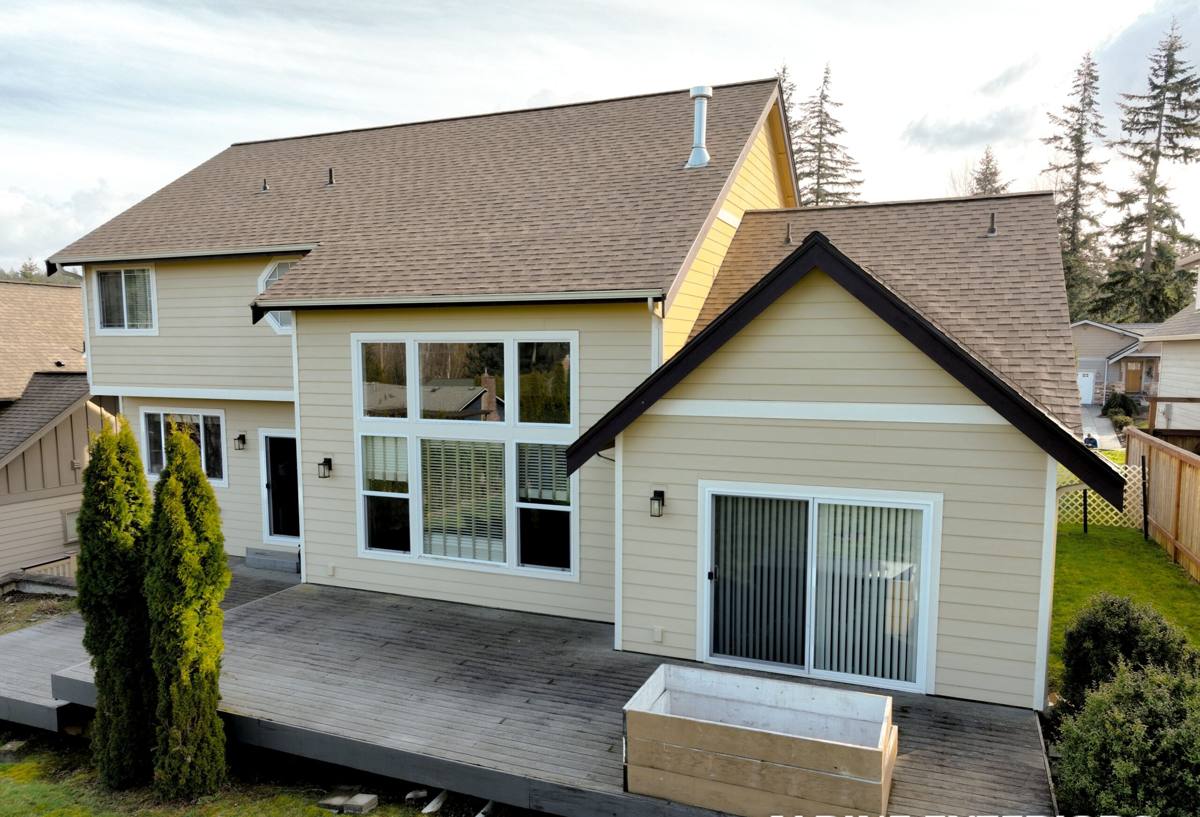
What Whatcom County Weather Does to a Roof Over Time
Moss and Organic Growth
Shade from surrounding trees, persistent moisture, and mild temperatures make this region close to ideal growing conditions for moss and algae. On asphalt shingles, moss roots into the granule surface and lifts shingle edges, which lets water track underneath. On an aging roof, that moss season isn't a cosmetic issue — it's a slow, steady path to leaks.
Wind-Driven Rain
Storms coming off the water don't just drop rain straight down — wind pushes it sideways and up under laps, flashing, and fasteners that were installed for calmer conditions. Roofs here need details that assume rain will hit at an angle, not just from above.
Freeze-Thaw and Temperature Swings
Whatcom County doesn't see extreme cold for long stretches, but it does see enough freeze-thaw cycling in winter to stress out roofing materials that trap moisture. Water that gets into a seam or fastener hole and then freezes will expand that opening a little more each cycle.
Why Metal Roofing Holds Up Where Other Materials Struggle
Metal roofing doesn't solve every problem automatically — a badly installed metal roof can still leak — but the material itself has real advantages for this climate when it's installed correctly.
- Hard, non-porous surface — moss and algae have a much harder time rooting into painted steel or aluminum than into shingle granules, and what does grow on the surface rinses off far more easily.
- Fast water shedding — steep-profile panels and standing seams move water off the roof quickly instead of letting it sit and soak into a surface.
- No granule loss — shingles lose their protective granules over time; metal panels keep their finish and their water-shedding ability for decades without that gradual degradation.
- Fewer field seams — long panel runs mean fewer horizontal joints where wind-driven rain can work its way in, compared to a shingle roof's thousands of individual laps.
The tradeoff is upfront cost and the fact that metal roofing rewards correct installation and punishes shortcuts more than shingles do. A shingle roof with a mediocre flashing detail might leak eventually; a metal roof with the same mistake tends to show it sooner, because the whole system is built around precise, continuous water management rather than layered, forgiving overlaps.
Metal Roofing Systems We Install
Not every metal roofing product fits every house or every budget. Here's how the main options compare for a Whatcom County home.
| System | How It's Fastened | Best For | Tradeoffs |
|---|---|---|---|
| Standing Seam | Concealed clips, no exposed fasteners on the field | Homes wanting the longest service life and cleanest look | Higher upfront cost; needs skilled installation |
| Exposed Fastener Panel | Screws driven through the panel face into structure | Budget-conscious projects, outbuildings, shops | Fasteners and washers age and need periodic inspection/replacement |
| Stone-Coated Steel | Interlocking panels, often shingle or shake profile | Homeowners wanting a traditional look with metal's durability | More seams and profile detail than standing seam; higher material cost |
For most primary residences in this area, we lean toward standing seam because the concealed fastener system removes the single biggest long-term weak point of metal roofing — exposed screws and their rubber washers, which eventually harden, shrink, and leak. Exposed-fastener panel is a legitimate, cost-effective choice for shops, garages, and outbuildings where the maintenance tradeoff makes sense.
What a Correct Metal Roofing Installation Actually Involves
The panels are the visible part of a metal roof, but most of what determines whether it stays watertight for the next 40-plus years is underneath and around them.
Underlayment and Ice/Water Protection
A high-temperature synthetic underlayment goes down first, with self-adhered ice-and-water membrane at eaves, valleys, and any low-slope transitions — the spots where wind-driven rain and ponding water are most likely to test the roof.
Panel Layout and Fastening
Panels are measured and laid out so seams line up cleanly and expansion/contraction from temperature swings is accounted for. Metal panels move slightly as they heat and cool, and fastening methods that don't allow for that movement lead to oil-canning or fastener stress over time.
Flashing at Valleys, Walls, and Penetrations
Valleys, chimneys, skylights, and wall transitions are where the large majority of roof leaks originate, metal roof or not. Custom-formed flashing, correctly lapped and sealed in the right sequence, is what actually keeps water out — not caulk applied after the fact to cover a gap.
Ventilation
A metal roof still needs a properly vented attic or roof deck underneath it. Trapped moisture and heat cause condensation on the underside of the panels and can shorten the life of the roof deck, regardless of how good the metal itself is.
Our Process for a Nooksack Metal Roofing Project
- On-site assessment — we look at the existing roof, deck condition, ventilation, and any problem areas (valleys, chimneys, low-slope sections) before recommending a system.
- System and color selection — we go over standing seam vs. exposed fastener vs. stone-coated options based on your budget, roof shape, and how long you plan to be in the home.
- Written estimate — a clear scope of work covering tear-off (or overlay, if appropriate), underlayment, flashing details, and panel system, with no vague allowances.
- Deck inspection and repair — once tear-off starts, we address any soft or damaged decking before anything goes back down; this is not something to skip to save a day.
- Installation — underlayment, flashing, and panels installed in sequence, with attention to the details that actually matter in this climate: valleys, eaves, and penetrations.
- Final walkthrough — we review the finished roof with you, including care and maintenance expectations, before calling the job done.
Repairs and Maintenance for Existing Metal Roofs
Not every call is a full replacement. If you already have a metal roof in the Nooksack area, or inherited one with a home purchase, here's what we check on a service call:
- Fastener condition and washer integrity on exposed-fastener systems
- Sealant at penetrations, boots, and flashing laps
- Panel seams for separation or movement damage
- Valley and eave areas for debris buildup that traps moisture against the panel
- Signs of moss or algae staining, and whether it's cosmetic or affecting a seam
- Fastener or panel corrosion, especially near dissimilar-metal contact points
Most metal roof repairs in this climate come down to fastener maintenance and flashing resealing rather than panel failure — the panels themselves tend to outlast the small components holding them together.
Cost Factors for Metal Roofing in This Area
Every roof is different, but the main variables that move a metal roofing project's cost are consistent:
| Factor | Why It Matters |
|---|---|
| System type | Standing seam costs more than exposed-fastener panel due to material and labor complexity |
| Roof complexity | Valleys, dormers, and multiple roof planes add flashing work and labor time |
| Tear-off vs. overlay | Removing an old roof and repairing the deck adds cost but avoids trapping moisture problems underneath new metal |
| Deck condition | Rot or soft decking found during tear-off requires repair before installation continues |
| Panel gauge and finish | Heavier-gauge steel and premium paint systems cost more but hold up longer against this climate |
As a broad range, metal roofing typically runs higher upfront than asphalt shingles — often meaningfully more per square foot depending on system and complexity — but with a service life that's usually two to three times longer. We'll give you real numbers specific to your roof after a site visit; we don't quote off square footage alone.
Why It Matters to Hire a Crew That Already Works This Area
Metal roofing performs well here, but only when it's installed by people who understand what this climate actually does to a roof over 20, 30, or 40 years — not just what looks right on installation day. A crew that regularly works Whatcom County knows to prioritize valley and eave detailing for wind-driven rain, to spec ventilation correctly for our moisture levels, and to flag deck issues that come from years of moss and trapped water rather than treating every tear-off the same way. Local experience also means faster response for service calls and a working knowledge of what permitting and inspection expects in this county.
If you're weighing a metal roof for a home in the Nooksack area, we're happy to take a look and walk you through what makes sense for your roof, your budget, and this climate — no pressure, no hard sell. Use the form below to request a free estimate.