 Birch Bay Window
 Roofs in Nooksack Take a Different Kind of Beating
Homes around Nooksack sit inside the same weather system that shapes the rest of Birch Bay and Whatcom County: long stretches of damp, overcast days, driving rain that comes in sideways more often than straight down, and moisture-laden air off the Salish Sea that never fully lets a roof dry out between storms. That combination is hard on roofing in ways that drier climates never have to plan for. It's not one big storm that wrecks a roof here — it's months of steady dampness working into seams, fasteners, and low-slope valleys that never got a proper chance to shed water.
Add in the region's long moss season, and you've got a roofing environment that rewards careful installation and punishes shortcuts. A roof put on without attention to ventilation, flashing detail, and moisture control might look fine for a year or two, then start showing problems that trace straight back to how it was installed, not just the age of the shingles.
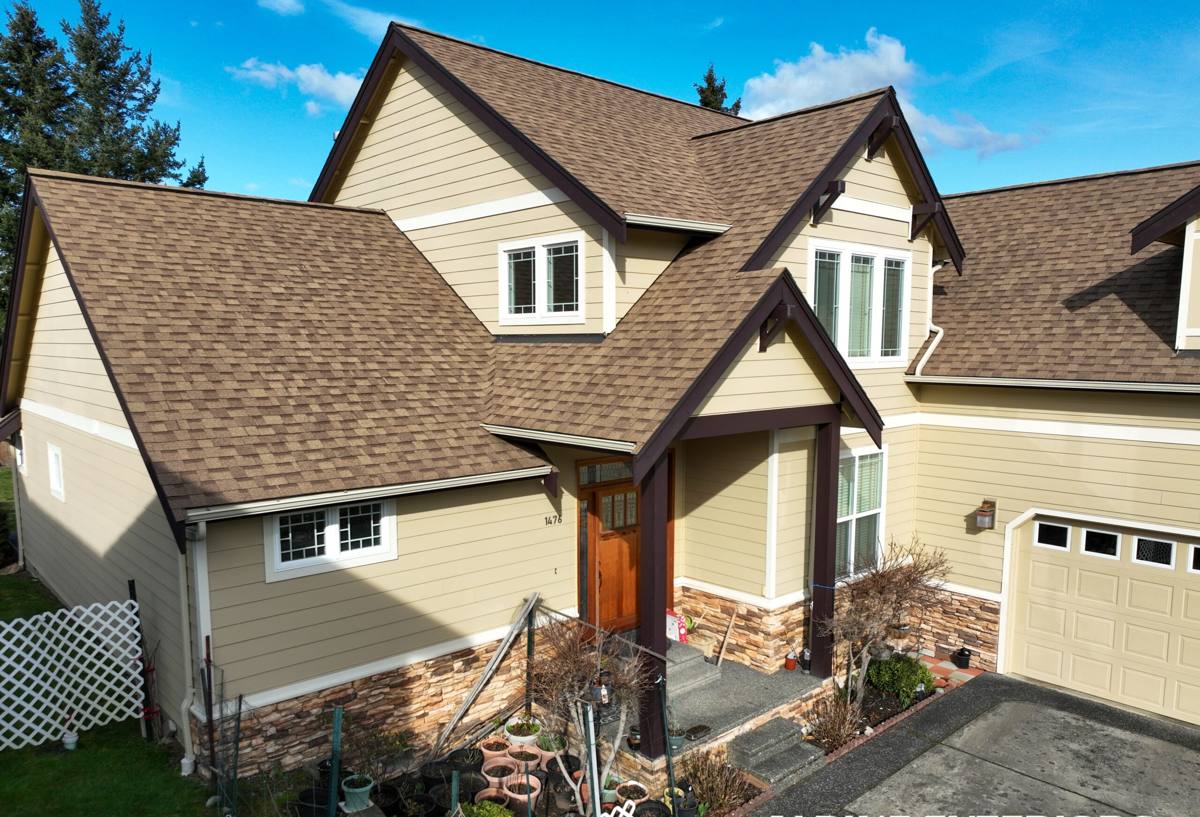
Signs a Nooksack Home Needs a New Roof, Not Another Patch
We get calls for roof repairs all the time, and a lot of them are the right call — a single damaged section, a flashing leak, storm damage to one slope. But there's a point where patching stops making sense and a full replacement is the honest recommendation. Some signals we look for:
- Granule loss heavy enough that you can see bare asphalt on multiple slopes, not just one weathered patch
- Moss or algae staining that keeps coming back within a season or two of cleaning, even after treatment
- Soft or spongy decking felt underfoot in the attic, or daylight visible through the roof boards
- Multiple past repairs in different spots, which usually means the underlying material is failing broadly, not locally
- Shingles curling, cupping, or losing their tab edges — a sign the mat itself is breaking down
- A roof already past 20-25 years old (for standard asphalt) that's never had underlayment or ventilation upgrades
If a roof is showing two or more of these at once, a new installation is almost always cheaper over five years than continuing to chase leaks one at a time.
What a Correct New Roof Installation Actually Involves
Tear-Off and Deck Inspection
We don't install new roofing over old material. A full tear-off is the only way to actually see the deck — the plywood or board sheathing underneath everything — and in a climate this damp, that inspection matters more than in drier regions. Any deck boards that are soft, delaminated, or stained from long-term moisture get replaced before anything new goes down. Skipping this step is one of the most common ways a "new roof" fails early.
Underlayment and Moisture Barriers
Given how much rain this area sees, underlayment isn't a place to cut corners. We use synthetic or self-adhered underlayment sized to the job, with extra protection — ice-and-water-shield-style membrane — at eaves, valleys, and anywhere water tends to pool or back up. Valleys in particular take a beating from driving rain here, and a weak point at a valley is one of the most common leak sources we find on older roofs.
Flashing Details
Flashing around chimneys, skylights, sidewalls, and roof-to-wall transitions is where most leaks actually start, not in the field of the shingles themselves. Correct flashing means new metal, properly lapped and sealed, not old flashing reused under new shingles to save a step. This is one of the areas where installation quality matters far more than which brand of shingle you chose.
Ventilation
A roof that can't breathe traps moisture in the attic, which speeds up deck rot from underneath and can encourage moss growth from the inside out. We check intake (soffit vents) and exhaust (ridge or box vents) as part of every new roof install, and we'll tell you plainly if your attic's ventilation needs an upgrade — it's a small added cost that protects the much larger investment of the roof itself.
Choosing a Roofing Material for This Climate
There's no single "best" roofing material — the right choice depends on budget, roof pitch, the look you want, and how much long-term maintenance you're willing to do. Here's an honest comparison of the main options we install:
| Material | Typical Lifespan | Moisture & Moss Behavior | Maintenance Needs |
|---|---|---|---|
| Architectural asphalt shingle | 25-30 years | Good when installed with proper underlayment; can hold moss without regular cleaning | Periodic moss/debris removal |
| 3-tab asphalt shingle | 15-20 years | Thinner profile, sheds water fine but wears faster in constant damp | Similar cleaning, shorter lifespan |
| Metal (standing seam or panel) | 40-50+ years | Sheds water and resists moss growth well due to smooth, sloped surface | Low; occasional fastener/seam check |
| Cedar shake/shingle | 20-30 years with upkeep | Attractive look but absorbs moisture; needs active moss and mildew management in this climate | Higher — regular treatment required |
We'll walk through these trade-offs honestly during your estimate. A lot of Nooksack homeowners land on architectural asphalt for the balance of cost and performance, but metal is worth a serious look on homes with heavy moss history or steep, hard-to-maintain rooflines, since it gives moss far less to hold onto.
Our Process From First Call to Final Walkthrough
- On-site inspection — we get on the roof (not just the ground) to check the deck, flashing points, ventilation, and slope-specific wear before quoting anything.
- Written estimate — a clear scope covering material, tear-off, deck repair allowance, flashing, and ventilation work, so there are no surprise line items later.
- Scheduling around weather — we plan installs with realistic weather windows in mind rather than rushing a roof open during an active storm system.
- Tear-off and deck repair — old material comes off completely, decking is inspected and repaired as needed before anything new is installed.
- Underlayment, flashing, and material installation — done in the order that actually sheds water correctly, not just the order that's fastest.
- Cleanup and magnetic sweep — job site and yard cleared of debris and stray fasteners.
- Final walkthrough — we go over the finished roof with you before calling the job done.
What Drives the Cost of a Nooksack Re-Roof
Every roof is different, so we won't quote a number without seeing the actual roof — but these are the factors that move the price up or down:
| Factor | Why It Matters |
|---|---|
| Roof size and number of slopes | More square footage and more valleys/hips mean more material and labor |
| Deck condition | Rotted or soft sheathing found during tear-off adds repair cost not visible from the ground |
| Pitch and access | Steep or hard-to-access roofs take longer and require more safety setup |
| Material choice | Asphalt, metal, and cedar carry very different material and labor costs |
| Ventilation upgrades | Adding or correcting intake/exhaust venting is a modest add-on with real payoff |
| Layers of existing roofing | Multiple old layers mean more tear-off labor and disposal |
Why a Crew That Already Works Nooksack Makes a Difference
Roofing crews that work regularly in this part of Whatcom County get familiar with things that don't show up in a manufacturer's install manual: how fast moss re-establishes on north-facing slopes here, which valley and flashing details actually hold up against sideways rain rather than just vertical rain, and how local permitting and inspection expectations run for re-roofs in the area. That familiarity shows up in fewer callbacks and a roof that performs the way it's supposed to for the region it's actually in — not just the region the shingle warranty was written for.
It also matters for scheduling honesty. A crew that knows this area's weather patterns won't promise a tear-off start date that ignores the realistic chance of rain rolling in that week. That's a small thing until it's the difference between a roof deck that stayed dry during installation and one that didn't.
Caring for Your New Roof After Installation
A correctly installed roof still benefits from basic upkeep, especially in a climate that grows moss as readily as this one does. A simple annual checklist:
- Clear gutters and downspouts of debris at least twice a year, more often near trees
- Have moss or algae growth addressed early, before it works under shingle edges
- Check attic ventilation isn't blocked by insulation or storage
- Look for any flashing that appears lifted or separated after a heavy storm
- Schedule a quick visual inspection every few years, even with no visible problems
None of this is complicated, but skipping it is how a well-installed roof still ends up with an avoidable problem a decade in.
If you're weighing a repair against a full replacement, or just want an honest read on where your current roof stands, we're happy to take a look. Estimates are free, there's no pressure, and you can use the form below to get started.