 Birch Bay Window
 Siding Repair in Nooksack: What Local Homes Are Up Against
Nooksack sits inland in the Nooksack Valley, but "inland" doesn't mean dry. Homes here still take a beating from the same wet Pacific Northwest weather pattern that soaks the rest of Whatcom County — long stretches of steady rain, heavy morning dampness that lingers in the valley, and a moss and algae season that can run most of the year on shaded or north-facing walls. Add in the salt-laden air that blows in off the coast during storm systems, and siding across this whole region ages faster than most homeowners expect.
Siding repair is a different job than siding replacement. It's about finding exactly where water, rot, or physical damage has gotten in, stopping it, and restoring the wall without tearing off material that's still doing its job. Done well, it buys a home years of extra life on its existing siding. Done poorly — or skipped — it turns a small, fixable problem into sheathing and framing damage that costs far more to correct.
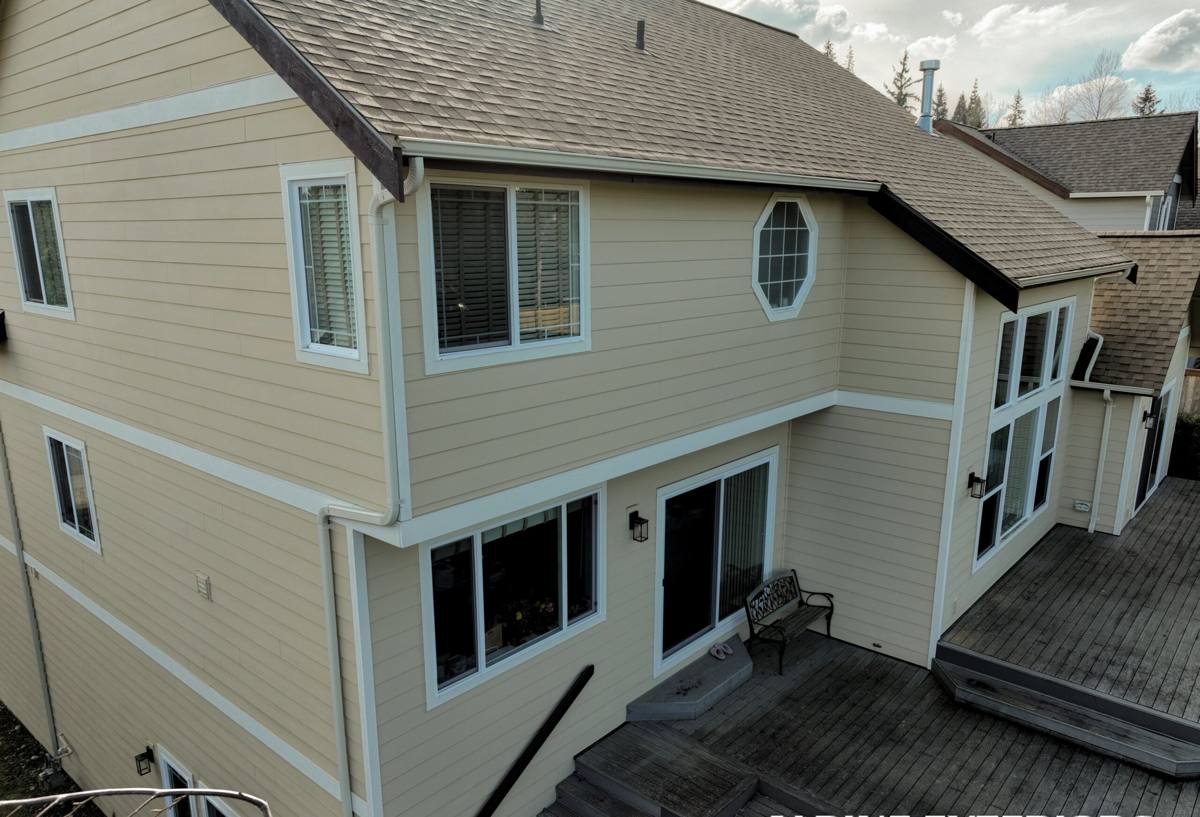
How Whatcom County's Climate Damages Siding Over Time
Every siding repair we do in Nooksack traces back to one of a handful of climate-driven causes:
- Driving rain that gets pushed sideways by wind finds any gap in caulking, flashing, or board joints and works its way behind the siding rather than running off the face of it.
- Persistent moisture and shade keep moss, algae, and mildew established on walls that don't get much sun, especially the north and east sides of a house near tree cover.
- Salt-influenced air moving inland from the coast accelerates corrosion on fasteners, flashing, and any exposed metal trim, which weakens the points that are supposed to keep water out in the first place.
- Freeze-thaw cycling in colder snaps opens up small cracks that trapped moisture then expands, turning hairline damage into real gaps by spring.
None of these forces are dramatic on their own. The damage they cause builds slowly, which is exactly why so many repair calls we get involve problems that have been quietly developing for a year or more before anyone noticed.
Common Siding Repair Problems We Find in Nooksack Homes
The specific issues vary by siding material and age, but a few patterns show up again and again on repair calls in this area:
- Soft or delaminating boards at the bottom courses, where splash-back and standing moisture do the most damage over time.
- Rot around trim, corners, and penetrations — anywhere a hose bib, vent, light fixture, or deck ledger board interrupts the siding and the seal around it has failed.
- Moss and algae staining that's cosmetic at first but, left alone, holds moisture against the surface and accelerates whatever's underneath it.
- Cracked, split, or warped panels from age, impact, or repeated wet-dry cycling.
- Failed caulk joints at seams and butt joints, which is one of the most common — and most overlooked — entry points for water.
- Popped or backed-out nails that leave small gaps water can exploit, even though the board itself is fine.
Most of these are individually minor. The risk is what's happening behind them — sheathing and framing don't announce water damage until it's significant, so a competent repair always starts with finding out how far the moisture has actually traveled, not just patching what's visible.
Why Small Problems Get Expensive
A cracked board is a straightforward fix. Water that's been getting behind that crack for eight months is not. By the time siding damage is visible from the outside, there's a reasonable chance the sheathing behind it has already absorbed moisture, which is why we don't treat repair calls as a cosmetic patch job — we treat them as a diagnostic one.
Repair or Replace? How We Make the Call
Not every damaged section needs to come off, and not every repair is worth doing instead of replacing. We look at a few factors before recommending either path:
| Factor | Favors Repair | Favors Replacement |
|---|---|---|
| Extent of damage | Isolated to one board or a small section | Spread across a wall or recurring in multiple spots |
| Underlying sheathing | Dry, sound, no soft spots | Soft, discolored, or water-stained when probed |
| Siding material and age | Sound material, matching stock available | Failing material, discontinued profile, or near end of service life |
| Cause of damage | One-time event (impact, isolated caulk failure) | Ongoing moisture pattern likely to recur |
| Cost over time | Repair costs meaningfully less than replacing the wall | Repeated repairs would approach the cost of doing it right once |
We'll walk you through which column your situation falls into before we recommend anything — not every repair call should end in a bigger job, and we'll say so plainly if a patch is genuinely the right call.
What a Correct Siding Repair Actually Involves
A repair that just covers the visible damage without addressing what let water in will fail again, usually faster the second time. A repair done right involves:
- Moisture testing around the damaged area to establish how far water has actually traveled, not just where it's visible.
- Removing damaged material back to sound substrate, not just the section that looks bad.
- Inspecting and repairing the water-resistive barrier (house wrap or building paper) underneath, since that's the real waterproofing layer — siding is the first line of defense, not the last.
- Correcting flashing details at windows, trim, and penetrations if that's what let water in to begin with. Replacing a board without fixing the flashing that failed just delays the repeat visit.
- Matching material and fastening pattern so the repair holds up structurally and doesn't stand out visually.
- Proper caulking and sealant at joints, using products rated for the application, not a generic tube from whatever's on the truck.
Our Repair Process
- Inspection. We look at the damaged area and the surrounding wall, and probe for soft spots you can't see from the ground.
- Diagnosis. We identify the actual cause — failed caulk, bad flashing, moss holding moisture, impact damage — because the fix depends on the cause, not just the symptom.
- Written scope. You get a clear explanation of what needs to happen and why, before any work starts.
- Repair. We remove damaged material, address the underlying issue, and rebuild the section correctly — including flashing and sealant work, not just new boards.
- Final check. We confirm the repair is watertight and the surrounding siding is secure before we call it done.
Why Damaged Sections Get Replaced With James Hardie, Not Whatever Was There Before
When a repair calls for replacing a section of siding rather than patching it, we install James Hardie fiber cement — not the original material, whatever it was. That's a deliberate standard, not an upsell. We install Hardie exclusively across all of our siding work, including repairs, for a few concrete reasons:
- It's non-combustible, which matters on a wall that may also have wood trim or cedar accents nearby.
- Hardie's HZ5 product line is engineered specifically for the kind of moisture, freeze-thaw, and fungal exposure that Pacific Northwest climates like ours produce — the same exposure that caused the original damage.
- ColorPlus factory finish resists the fading and moisture absorption that plain painted surfaces struggle with, which matters directly on repair sections that need to blend and hold up in shaded, damp-prone spots.
- It carries a strong, transferable warranty when installed to Hardie's specifications, which we follow on every repair section, not just full re-sides.
Mixing a patch of mismatched or lesser material into an existing wall is how you end up back at square one in a few years. Replacing a damaged section with a material engineered for this exact climate is how you don't.
Why a Crew That Already Works in Nooksack Makes a Difference
Siding repair is diagnostic work as much as it is carpentry. A crew that's worked across Whatcom County — from the salt air near the coast at Birch Bay to the damp, shaded valley walls further inland around Nooksack — has already seen how the same moisture problems show up differently depending on a home's exposure, orientation, and age. That familiarity shortens the guesswork: we know what a failing caulk joint looks like after a wet winter here versus impact damage, and we know which repair details actually hold up against another year of Whatcom County weather instead of needing a repeat visit.
Signs You Need Siding Repair Now
- Soft or spongy spots when you press on the siding
- Visible cracks, splits, or warping in one or more boards
- Peeling paint or bubbling that keeps returning in the same spot
- Moss or algae growth that's thickening rather than staying cosmetic
- Gaps at trim, corners, or around windows and vents
- Water stains or discoloration on interior walls near an exterior wall
- A musty smell near an exterior wall with no obvious source
If any of these sound familiar, it's worth having it looked at before the next wet season rather than after. We're happy to come take a look at your home in Nooksack and give you a straight answer on what it needs — reach out for a free, no-pressure estimate.