 Birch Bay Window
 Roofing in an Exclave: What Makes Point Roberts Different
Point Roberts sits in an unusual spot. It's part of Whatcom County and the state of Washington, but it's physically cut off from the rest of the U.S. mainland — the only way in by land is through Canada. That geography matters more than most homeowners realize when it comes to something as practical as getting a roof replaced. Material deliveries, crew scheduling, and even emergency tarp-and-repair calls all have to account for the border crossing. A roofing contractor who doesn't already have that logistics figured out will either pass the friction on to you in delays, or cut corners to avoid dealing with it.
Beyond the logistics, Point Roberts homes face the same exposure as the rest of the Birch Bay and Whatcom County coastline — open water on multiple sides, near-constant marine air, and a wet season that runs long. A roof here isn't just a box to check off; it's the single biggest defense a house has against a climate that doesn't let up for months at a time.
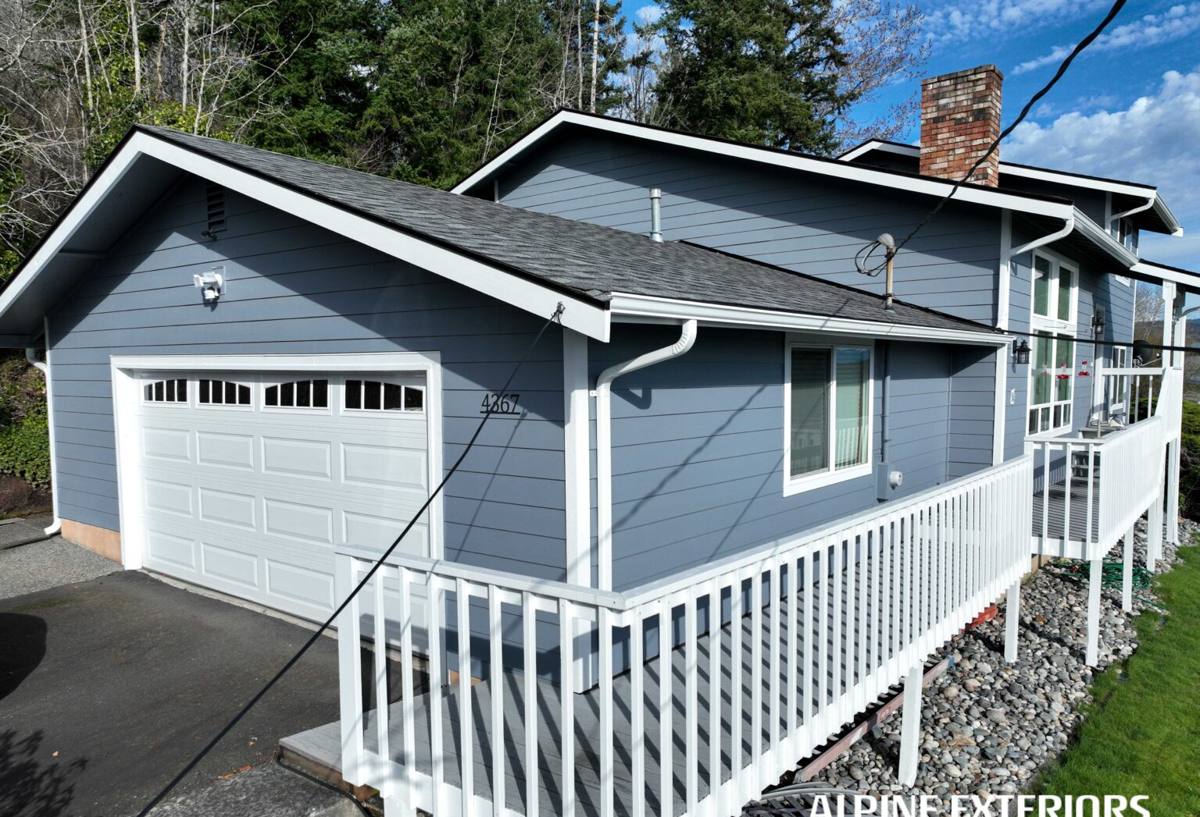
How Salt Air, Rain, and Moss Wear Down Asphalt Shingles Here
Asphalt shingles are a solid, cost-effective roofing choice almost anywhere in the country, but the Pacific Northwest coast asks more of them than a lot of climates do. Three things do most of the damage in Point Roberts:
Salt Air
Being surrounded by saltwater means metal components — nails, flashing, vent stacks, drip edge — corrode faster here than they would inland. Once flashing starts to rust or pit, water finds its way underneath the shingle field long before the shingles themselves look worn.
Driving Rain
Storms off the water often come in sideways, not straight down. That kind of wind-driven rain gets tested at every seam, valley, and penetration point on the roof. A roof that would hold up fine in a calm, straight-down rain can leak in Point Roberts if the underlayment and flashing details weren't built for wind-driven moisture.
Moss Season
Cool, shaded, and damp for a large part of the year, this area grows moss aggressively — especially on north-facing slopes and anywhere tree cover blocks the sun. Moss isn't just cosmetic. It holds moisture against the shingle surface, lifts shingle edges as it grows, and can work its way under tabs, giving water a path into the roof deck.
None of these factors are dealbreakers for asphalt shingles — but they mean the installation details matter more here than they would in a drier, calmer climate.
What a Correctly Installed Roof Needs in This Climate
A shingle roof that's going to hold up in Point Roberts needs a few things done right, every time, not just on the parts that show:
- Full synthetic underlayment as a continuous water barrier beneath the shingles, not just felt paper alone.
- Ice-and-water shield at eaves, valleys, and around penetrations — the spots most likely to see wind-driven rain work its way backward under shingles.
- Corrosion-resistant flashing and fasteners rated for coastal, salt-air exposure rather than standard-grade galvanized components.
- Balanced attic ventilation so moisture from inside the house doesn't condense against the roof deck during the long wet stretches.
- Proper nailing pattern and shingle exposure so the roof can actually resist wind uplift during coastal storms.
- Algae-resistant shingle granules on north-facing and shaded slopes where moss and algae growth is worst.
Skip any one of these and the roof might look fine for a year or two — the problems that show up from cut corners in this climate tend to surface as leaks, not as obviously bad workmanship.
Signs Your Point Roberts Roof Needs Attention
Because coastal weather works on a roof from multiple directions at once, it helps to know what to actually look for before a small issue becomes a ceiling stain:
- Moss buildup, especially on shaded or north-facing slopes
- Granules collecting in gutters or at downspout outlets
- Shingle edges curling, cupping, or lifting
- Rust streaks below flashing, vent stacks, or valleys
- Dark streaking across the shingle field (algae growth)
- Soft spots or sagging when walked or visually inspected from the ground
- Daylight visible through the attic roof deck
- Interior ceiling stains, especially after a windy rainstorm
Any one of these on its own isn't necessarily an emergency, but they're worth a look before the next wet season starts.
Our Asphalt Shingle Roofing Process
Whether the job is a full replacement or a targeted repair, we run the same disciplined process on every Point Roberts roof:
- On-site inspection. We walk the roof (or use a lift/drone where access is limited) and check the deck, flashing, ventilation, and current shingle condition — not just the surface.
- Honest scope and estimate. You get a written estimate that spells out materials, labor, and any deck repair that's needed, with no vague allowances buried in the fine print.
- Scheduling around logistics. Because Point Roberts requires a border crossing for crews and material deliveries, we plan the job timeline realistically instead of promising a schedule we can't hold to.
- Tear-off and deck inspection. Old roofing comes off down to the deck so we can actually see and repair any rot or soft sheathing before new material goes down — not guess at it from above.
- Underlayment, flashing, and ventilation installed to spec. This is where the climate-specific details from the section above get built in, not skipped.
- Shingle installation. Installed to the manufacturer's nailing and exposure requirements so the warranty is actually valid if you ever need it.
- Final walkthrough and cleanup. We review the finished roof with you, answer questions, and make sure the property is cleared of debris and stray fasteners.
Choosing the Right Shingle for a Coastal, Moss-Prone Roof
Not every asphalt shingle product is built the same way, and in a climate like this, the differences matter more than they would somewhere drier.
| Shingle Type | Typical Lifespan | Best Fit For Point Roberts |
|---|---|---|
| 3-Tab | 15–20 years | Budget projects; lower wind resistance, less ideal for exposed coastal slopes |
| Architectural / Dimensional | 25–30 years | Strong all-around choice — better wind rating and thicker profile handle driving rain well |
| Algae-Resistant (AR) versions | Same as base product | Recommended on shaded or north-facing slopes prone to moss and algae staining |
| Impact-Rated / Premium | 30+ years | Best for homeowners wanting maximum durability and longer warranty coverage |
We don't push a single product on every roof. The right pick depends on the slope's sun exposure, how long you plan to stay in the home, and your budget — we'll walk through the honest trade-offs of each option for your specific roof.
Cost Factors for Asphalt Shingle Roofing in Point Roberts
Every roof is different, but a few factors consistently move the price up or down on jobs out here:
| Factor | Why It Affects Cost |
|---|---|
| Roof size and pitch | More surface area and steeper slopes mean more material and labor time |
| Deck condition | Rotted or soft sheathing found during tear-off adds repair costs beyond the base estimate |
| Number of valleys, vents, and penetrations | Each one needs flashing detail, which adds labor |
| Shingle tier selected | 3-tab, architectural, and premium products carry different material costs |
| Access and logistics | Point Roberts scheduling and delivery logistics factor into project timelines |
| Tear-off vs. layover | Removing old layers costs more upfront but avoids trapping moisture problems underneath |
We'll always give you a broad, honest range up front and a firm number once we've actually inspected the deck — not a lowball figure that grows once the tear-off starts.
Why Local Experience with Point Roberts Logistics Matters
A lot of roofing companies will quote a job in Point Roberts without ever having actually worked one. That gap shows up fast — in delayed material deliveries, crews who didn't plan for the border crossing, or contractors unfamiliar with how aggressively moss and salt air affect a roof here compared to more inland parts of Whatcom County. Working this area regularly means we've already solved those logistics problems, so your project timeline is realistic from the first estimate instead of slipping once the work is underway.
It also means we know what actually fails on roofs out here versus what's just cosmetic — which keeps you from paying for repairs you don't need, while making sure the things that do matter (flashing, ventilation, underlayment) get done right the first time.
Maintenance to Extend Roof Life in This Climate
A well-installed shingle roof still benefits from some basic upkeep in a climate this wet and moss-prone:
- Keep gutters and downspouts clear so water isn't backing up under the roof edge
- Have moss physically removed rather than left to grow — scraping and gentle treatment beats letting it lift shingle tabs
- Trim back overhanging branches to cut down on shade and debris buildup
- Schedule a roof check after major windstorms, not just once a year
- Have flashing and vent boots inspected periodically, since these fail before the shingle field usually does
None of this requires a major time investment, but staying ahead of it is a lot cheaper than dealing with water damage after the fact.
If your Point Roberts home is due for a new roof, or you're just not sure how much life is left in the one you've got, we're happy to take a look. Reach out for a free, no-pressure estimate using the form below — we'll give you a straight assessment of what your roof actually needs.