 Birch Bay Window
 Siding on Point Whitehorn's Shoreline Has to Work Harder
Point Whitehorn sits close enough to the water that its homes take a different kind of weather than houses a few miles inland in Whatcom County. Wind comes off the water carrying salt, rain arrives sideways instead of straight down, and the tree cover that shades so many lots here keeps siding damp long after a storm has passed. Any siding product installed in this pocket of Birch Bay needs to handle all three of those things at once, year after year, without babysitting from the homeowner.
That's a different design problem than "siding for the Pacific Northwest" in general. A product that performs fine in a drier, more open part of the county can still struggle on a shoreline lot where salt-laden air accelerates corrosion on fasteners and trim, and where shade plus moisture create ideal conditions for moss and algae to take hold on anything with texture or grain. We install fiber cement specifically because it's built to shrug off exactly this combination.
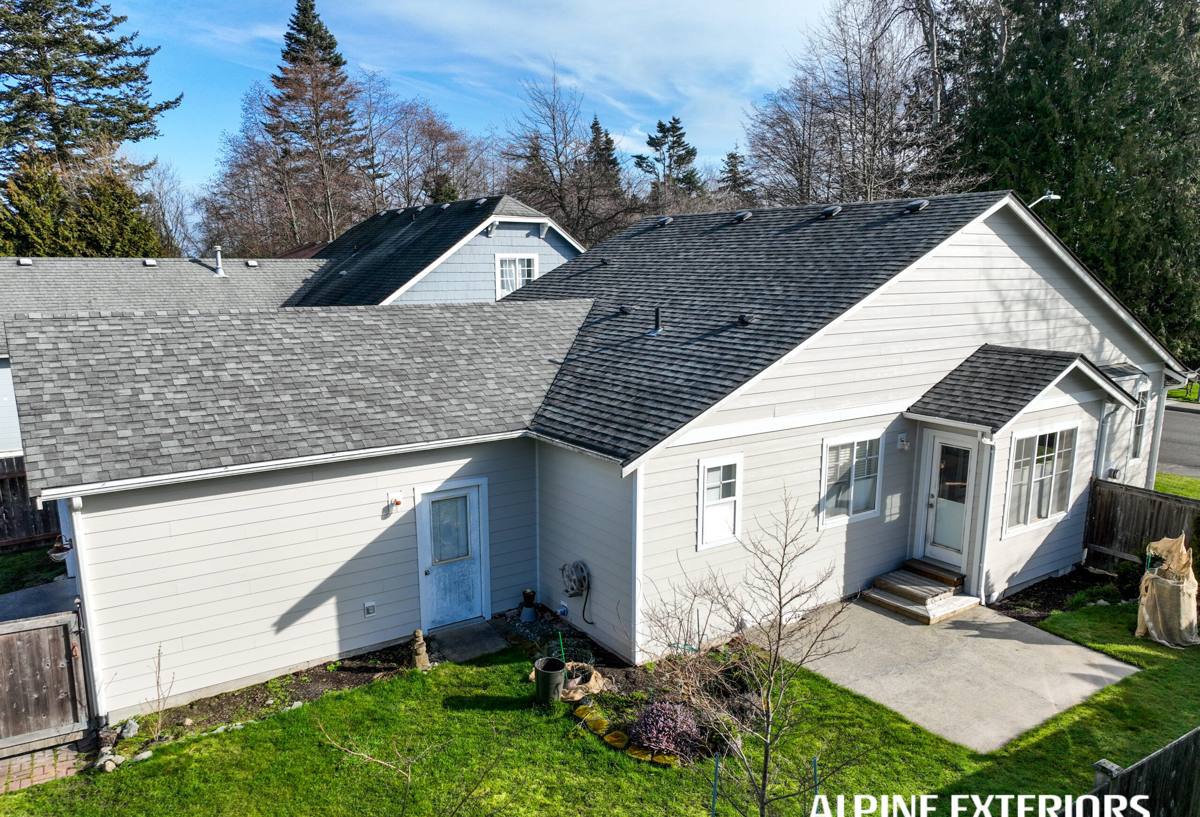
What Salt Air, Driving Rain, and Moss Season Actually Do to Siding
Each of these three stressors attacks siding differently, and understanding the mechanism matters when you're deciding what to put on your home.
Salt Air
Airborne salt is corrosive to exposed metal — nails, screws, flashing, and trim fasteners — and it can accelerate the breakdown of some paint films and adhesives over time. Siding materials and fastening hardware both need to be chosen with that in mind, not just the visible panel itself.
Driving Rain
Wind-driven rain doesn't just run down a wall, it gets pushed sideways and upward, finding any gap, seam, or under-caulked joint. On a shoreline lot exposed to open water, this happens far more often than on a sheltered inland site. Siding that isn't installed with correct overlaps, flashing, and clearances will take on moisture behind the panel, where it does the real damage — to sheathing, framing, and insulation you can't see.
Moss and Algae Season
Whatcom County's tree cover and long wet season mean shaded, north-facing walls can stay damp for weeks at a stretch. That's an ideal environment for moss and algae to establish on any surface with texture, grain, or a porous painted finish. Once established, it holds moisture against the wall even longer, compounding the problem.
Why We Only Install James Hardie Fiber Cement
We don't install vinyl, LP SmartSide, primed wood, cedar, or other fiber cement brands. That's a deliberate standard, not a marketing line. Fiber cement as a category resists the things that hurt siding in a marine climate: it's non-combustible, it doesn't rot the way wood-based products can when moisture gets behind them, and it holds a factory-applied finish far longer than field-applied paint on any substrate.
Within fiber cement, we standardized on James Hardie specifically because of two things: their HZ5 climate-engineered formulation, built for exactly the wet, moderate-temperature conditions found here, and ColorPlus Technology, a factory-baked finish that resists fading and holds up to UV and moisture far better than field paint. Hardie also backs its products with a strong, transferable warranty — useful for resale, which matters on shoreline property. We'd rather install one product correctly and stand behind it than offer a menu of options with different failure modes and different warranty fine print.
Choosing the Right Hardie Product Line
Hardie makes several siding profiles, and the right mix for a Point Whitehorn home depends on wall orientation, exposure, and the look you're going for. We typically walk a property and recommend a combination rather than one product used everywhere.
| Hardie Product | Best Used For | Why It Fits This Climate |
|---|---|---|
| HardiePlank Lap Siding (HZ5) | Primary wall siding, most elevations | Climate-engineered for the Pacific Northwest's wet, moderate-temperature weather; the standard workhorse choice here |
| HardiePanel Vertical Siding | Accent walls, gables, modern designs | Fewer horizontal seams for water to find on exposed, wind-facing walls |
| HardieShingle Siding | Accent areas, dormers | Textured look without the moisture-holding tendencies of real wood shingle or shake |
| HardieTrim Boards | Corners, window and door trim, fascia | Matched fiber cement trim avoids mixing in wood trim that fails faster than the field siding |
On the most exposed, water-facing walls of a shoreline home, we lean toward tighter fastening schedules and extra attention to flashing detail — the product line matters, but the installation detailing matters just as much in this location.
What a Correct Installation Involves
Fiber cement siding fails early almost exclusively because of installation shortcuts, not because the material itself is weak. In a location like Point Whitehorn, the margin for error is smaller than it would be inland.
Water Management Behind the Siding
Correct installation starts with a drainable water-resistive barrier and properly lapped flashing at every window, door, and penetration — installed so water is directed out and down, never trapped behind the panel. This is the step that matters most and shows the least once the siding is up.
Fastening
Hardie specifies fastener type, spacing, and placement for a reason — get it wrong and panels can crack, cup, or work themselves loose under wind load over the years. In a location that sees more wind-driven weather than average, we don't deviate from Hardie's fastening specs to save time.
Gaps, Caulking, and Clearances
Panels need the correct gap at trim and butt joints, sealed with the right sealant, and siding needs proper clearance from grade, roofing, and decks so it isn't sitting in standing water or splash-back. Skipping these details is invisible on install day and shows up as damage years later.
Finish Integrity
Cut edges and any field-touched areas need factory-matched touch-up paint, not a generic exterior paint, to keep the ColorPlus warranty intact and to keep the finish performing the way it's designed to.
Our Process, Start to Finish
- Walk-through and assessment — we look at wall exposure, existing moisture damage, trim condition, and how water currently moves around the house.
- Written estimate — product lines, scope, and a clear breakdown, no vague allowances.
- Tear-off and inspection — once old siding is off, we check sheathing and framing for hidden moisture damage before anything new goes up.
- Water-resistive barrier and flashing — the unglamorous step that determines how the wall performs for the next 30-plus years.
- Hardie installation to spec — correct fastening, gaps, and trim detailing, not shortcuts.
- Final walkthrough — we go over the finished work with you before calling the job done.
Cost Factors Worth Understanding
Every home is different, so we don't quote a number without seeing the property, but these are the variables that actually move the price on a Point Whitehorn job.
| Factor | Why It Affects Cost |
|---|---|
| Extent of hidden moisture damage | Sheathing or framing repair found during tear-off adds work beyond the siding itself |
| Wall complexity | Dormers, multiple gables, and cut-in trim take more labor per square foot than simple flat walls |
| Product mix | Combining lap, panel, and shingle profiles costs more than a single product used throughout |
| Access and site conditions | Shoreline lots with limited access, slopes, or heavy tree cover can add setup and staging time |
| Trim and detail scope | Full trim replacement in matched fiber cement costs more upfront but avoids mismatched wood trim failing early |
Why Local Experience in Point Whitehorn Matters
A crew that regularly works this stretch of coastline already knows which walls take the worst of the wind and rain, how much moss pressure to expect on shaded elevations, and where salt exposure tends to hit fasteners and trim hardest. That's not something you get from a general contractor bid sheet — it comes from having done the work here before and seen how these houses actually hold up over time. It shows up in small decisions: where we tighten up flashing details, which walls get extra attention, and which product combination makes sense for a specific lot's exposure.
It also matters when something needs a warranty call years down the road. A crew still working in the area, installing the same product to the same standard, is a very different position to be in than trying to track down whoever did the job after they've moved on or closed up shop.
Signs Your Current Siding May Be Struggling
- Persistent dark streaking or moss growth that returns quickly after cleaning
- Soft or spongy spots when you press on the siding, especially near the bottom courses
- Visible cupping, cracking, or separated seams
- Peeling or chalking paint that needs repainting more often than every 8-10 years
- Rust staining running down from fasteners or trim
- Interior signs like musty smells or peeling paint on walls that back up to exterior siding
If your home is showing any of these, it's worth having someone look at it before small issues become structural ones. If you're planning ahead for a replacement, or already seeing warning signs, we're happy to come take a look and put together a straightforward, no-pressure estimate using the form below.