 Birch Bay Window
 Roofing in Point Whitehorn: A Different Set of Problems
Point Whitehorn sits close enough to the water that homes here deal with a combination most inland Whatcom County roofs never see: salt-laden air off the Strait of Georgia, wind-driven rain that gets pushed sideways under poorly sealed edges, and a wet season long enough to keep moss and moisture active on north-facing slopes for much of the year. A roof that would hold up fine in Lynden or Everson can wear out faster out here, simply because the exposure is harsher and the drying window between storms is shorter.
That doesn't mean Point Whitehorn homes need exotic materials or a completely different playbook. It means the details that get skipped on a rushed job — flashing, ventilation, fastener choice, underlayment quality — matter more here than almost anywhere else in the county. We've replaced enough roofs in this immediate area to know which corners actually cost homeowners money later, and which upgrades are worth paying for versus which ones are marketing.
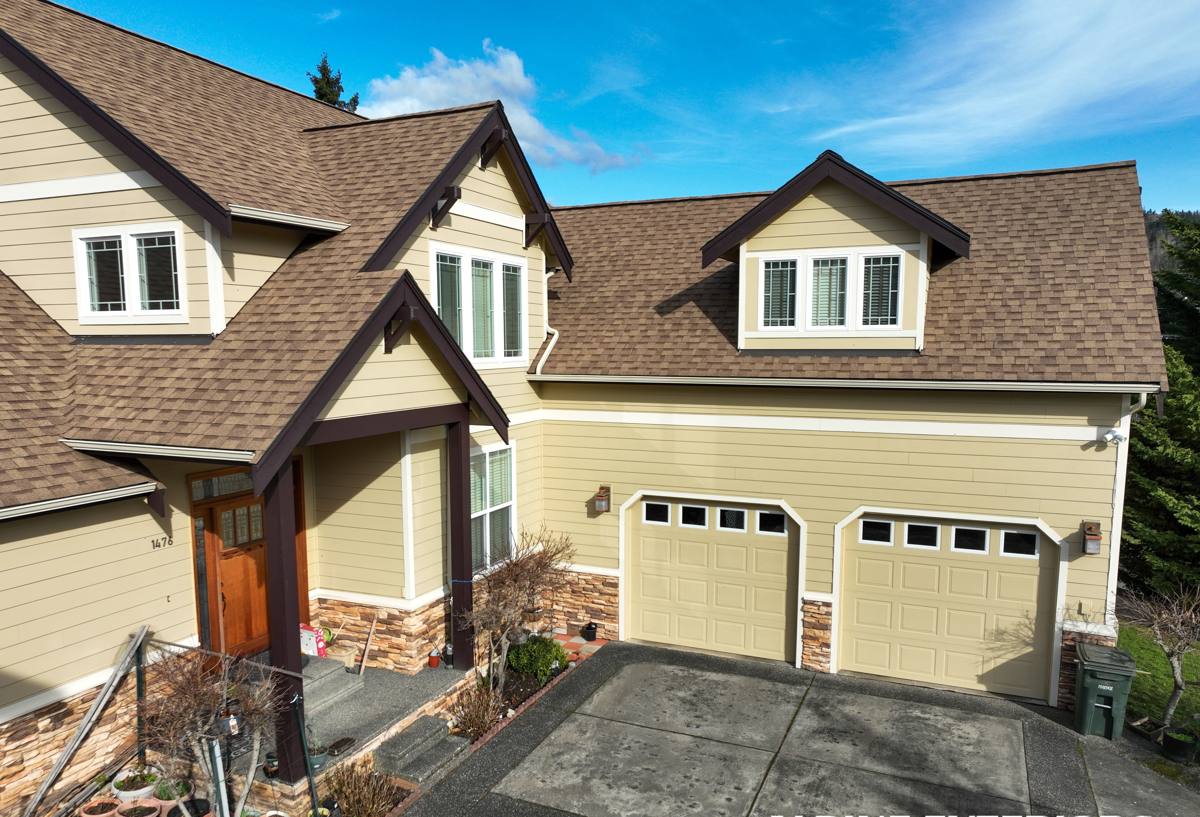
What Salt Air and Moss Actually Do to a Roof
Salt Air and Metal Components
Salt in the air accelerates corrosion on anything metal — nails, flashing, vents, and gutter hardware. Standard electro-galvanized fasteners can start showing rust streaks years before they should, and once a fastener corrodes, it loses grip and can back out, opening a path for water. This is why fastener and flashing material choice is one of the first things we look at differently on a Point Whitehorn job versus a roof further inland.
Driving Rain and Wind Exposure
Being close to open water means storms hit with less to slow them down first. Wind-driven rain doesn't just fall on a roof — it gets pushed uphill under shingle tabs and around anything that isn't properly lapped or sealed. Roof edges, valleys, and any place two roof planes meet are where this shows up first as leaks, usually well after the storm that caused the damage.
Moss, Shade, and Moisture Retention
Point Whitehorn's tree cover and the region's long damp stretch from fall through spring create ideal moss conditions, especially on north- and east-facing slopes that don't get much direct sun to dry out. Moss isn't just cosmetic — it holds moisture against the roofing material, lifts shingle edges as it grows, and can work its way under flashing over time. A roof that's shedding moss constantly is aging faster than its warranty assumes.
Signs a Point Whitehorn Roof Needs Replacing, Not Patching
- Granule loss heavy enough that you're finding grit in gutters and downspouts every season
- Moss regrowth within months of cleaning, especially on shaded slopes
- Soft spots or sagging when walked, which usually means deck damage underneath
- Daylight visible through the roof deck from inside the attic
- Multiple past repairs in different areas rather than one isolated issue
- Shingles that are curling, cracking, or missing tabs in more than a few spots
- Rusted or lifted flashing around chimneys, vents, or skylights
- Interior water stains on ceilings or upper walls, particularly after wind-driven storms
One or two of these on their own might mean a targeted repair is enough. Several at once, especially on a roof already past 18-20 years, usually means repairs are just delaying the inevitable and spending money that won't carry forward into a new roof.
What a Correct Roof Replacement Involves Out Here
Tear-Off and Deck Inspection
We remove the old roofing down to the deck rather than layering over it. This is the only way to actually see what's underneath — soft or delaminated plywood, prior water damage, or ventilation gaps that have been hidden for years. Any damaged decking gets replaced before anything new goes down; skipping this step is the single most common reason a "new" roof fails early.
Underlayment Built for Wet, Wind-Driven Conditions
Given how much driving rain Point Whitehorn sees, we don't treat underlayment as an afterthought. A synthetic underlayment with strong wet-grip and tear resistance, paired with self-adhered membrane at eaves, valleys, and other vulnerable transitions, gives the roof a real second line of defense if wind ever pushes water past the primary roofing material.
Flashing and Fastener Choices for Salt Exposure
For homes this close to salt air, we favor corrosion-resistant flashing and fastener materials over the cheapest standard-grade options. It costs a little more up front and saves a lot of grief later, since flashing failure is one of the most common causes of hidden leaks on coastal Whatcom County roofs.
Ventilation That Matches the Climate
Proper intake and exhaust ventilation keeps the attic dry and temperature-stable, which reduces condensation buildup and helps the roof deck dry out between storms instead of staying damp. On homes with heavy tree cover and shaded slopes, we pay particular attention to balancing ventilation so moisture isn't getting trapped where moss and rot can take hold.
Material Choices: What Fits Point Whitehorn Homes
| Material | Where It Fits Well | Trade-Offs to Know |
|---|---|---|
| Architectural asphalt shingles (higher wind rating) | Most homes, especially where budget and proven performance matter | Needs quality underlayment and flashing to perform well in driving rain; algae-resistant granules help with moss-prone areas but don't eliminate cleaning needs |
| Metal roofing (standing seam or coated panel) | Homes wanting long service life and better shedding of wind-driven rain | Higher upfront cost; requires marine-grade or coated fasteners near the coast to avoid accelerated corrosion |
| Synthetic/composite shingles | Homes wanting a shake or slate look with less maintenance than natural materials | Product quality varies widely by manufacturer; we vet warranty terms and installation requirements carefully before recommending a specific line |
We don't push one material for every home. The right call depends on the roof's pitch, how much shade and tree cover it gets, the homeowner's maintenance appetite, and budget. What we won't do is put a low-cost, low-wind-rating shingle on a roof that's fully exposed to Strait winds just to hit a lower number — that's a repair call waiting to happen.
How the Replacement Process Works
1. On-Site Assessment
We walk the roof (or inspect from the ground plus attic access if walking isn't safe), check the deck condition where visible, look at flashing and ventilation, and talk through what we're seeing with the homeowner before recommending anything.
2. Written Estimate
You get a clear, itemized estimate — materials, scope of tear-off, any deck repair contingencies, and timeline. No pressure to sign on the spot.
3. Scheduling Around Weather
Given how wet this area can get, we schedule tear-off and dry-in carefully and keep an eye on the forecast. An open roof deck sitting exposed overnight in a coastal storm is a risk we plan around, not one we take.
4. Installation and Cleanup
Tear-off, deck repair as needed, underlayment, flashing, roofing material, and ventilation components go in per manufacturer spec. We do a full magnetic sweep and site cleanup before calling the job done.
5. Final Walkthrough
We walk the finished roof and the property with the homeowner, answer questions, and go over warranty paperwork.
Why Local Experience in This Area Matters
A crew that's worked Point Whitehorn and the broader Birch Bay area already knows what a roof here is up against before they climb the ladder. That means recognizing salt-related corrosion patterns early, knowing which slopes on a given lot orientation tend to hold moss and moisture longest, and not being surprised by how fast weather can turn during a project. It also means understanding the practical side — narrow driveways, tree-lined lots, and limited staging space that are common on properties out here, and planning the job around them instead of discovering the problem mid-tear-off.
None of that replaces sound roofing fundamentals — good tear-off, proper flashing, correct ventilation, quality materials installed to spec. But local familiarity means fewer surprises, fewer change orders, and a roof that's actually built for the conditions it will face rather than a generic install.
Maintaining a New Roof in a Coastal, Moss-Prone Area
- Keep gutters and downspouts clear so water isn't backing up under roof edges during heavy rain
- Trim back overhanging branches to reduce shade and debris buildup on moss-prone slopes
- Have moss growth removed gently (not power-washed) as soon as it appears rather than letting it establish
- Schedule a visual roof check after major windstorms, especially ones with sustained wind off the water
- Watch for granule buildup in gutters as an early sign of wear, even on a newer roof
A roof built correctly for this environment and maintained with basic seasonal attention should comfortably reach its expected service life, even with the added stress of salt air and a long moss season.
If your Point Whitehorn home is due for a roof replacement or you're not sure whether a repair will hold, we're happy to take a look and give you a straight answer. Request a free, no-pressure estimate using the form below.