 Birch Bay Window
 Board & Batten Siding Built for Sandy Point's Coastline
Sandy Point sits right up against Whatcom County's saltwater exposure, and that changes what "good siding" actually means. A board and batten installation that would hold up fine twenty miles inland can start failing early here — not because the material is bad, but because it was never matched to what a shoreline property throws at it year-round. Salt-laden air corrodes fasteners and trim hardware faster than people expect. Wind-driven rain off the water doesn't just wet the surface of a wall, it pushes moisture sideways and upward under laps and around penetrations. And the long, wet moss season that settles over Whatcom County keeps north-facing and shaded elevations damp for months at a stretch, which is exactly the environment organic growth and slow rot problems need.
Board and batten is a strong style choice for the area — the vertical lines read well against the coastal, cottage, and modern-farmhouse looks common around Birch Bay — but the style only holds up long-term if the substrate, fasteners, flashing, and drainage plane underneath it are built for saltwater exposure, not just for "coastal Washington" in general.
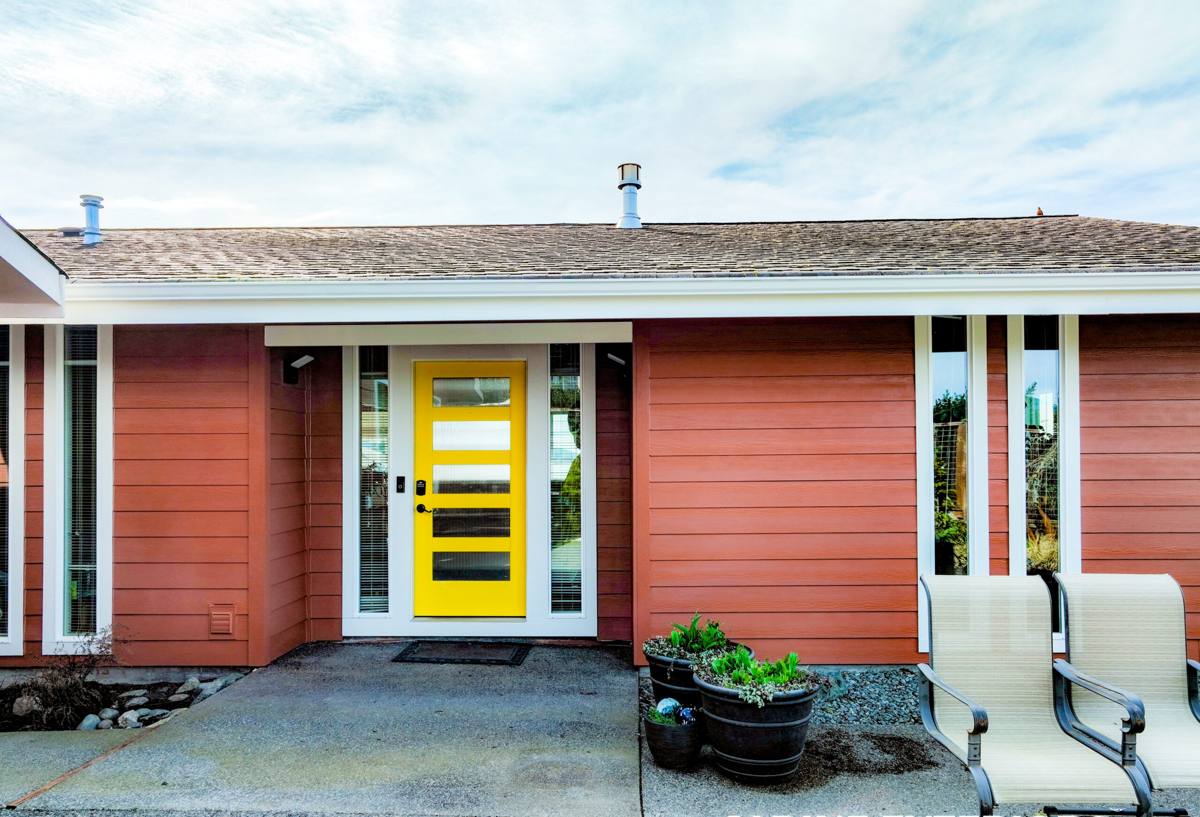
What Board & Batten Siding Is (and Isn't)
Board and batten is a two-layer siding pattern: wide vertical boards installed with a gap between them, then narrower battens fastened over each seam to cover the joint. Done right, it's a clean, durable wall system. Done wrong — thin battens, poor fastening, no drainage gap behind the boards — it's a pattern that traps water exactly where you don't want it, right behind the seams.
A few things board and batten is not:
- It is not a decorative trim treatment layered over an existing weak substrate — the boards themselves are the primary weather barrier.
- It is not interchangeable across materials without changing the install details — vinyl, wood, and fiber cement board-and-batten systems all behave differently in wind and moisture.
- It is not a one-size-fits-all spec — batten spacing, board width, and fastener pattern should be set based on the wall's sun/wind/moisture exposure, not just picked from a catalog.
What Correct Installation Looks Like on a Salt-Air Property
Drainage Plane and Rainscreen Gap
On a shoreline-exposed wall, we don't fasten board and batten directly against the weather-resistive barrier. A rainscreen gap — a thin drainage/ventilation space behind the siding — lets any moisture that does get past the boards drain and dry out instead of sitting against the sheathing. This detail matters more in Sandy Point than it does on a sheltered inland lot, because driving rain here has more force behind it and more salt content, which slows natural drying.
Fastener Selection
Standard galvanized fasteners corrode faster in salt air. We use fastener types and coatings rated for coastal exposure, and we follow the manufacturer's fastening schedule exactly — under-fastened battens are one of the most common board and batten failures we see on waterfront homes, because a batten that isn't holding tight lets wind-driven rain work its way behind the seam.
Flashing at Penetrations and Transitions
Every window, door, vent, and roofline transition is a place water can get behind the siding. On exposed coastal walls we treat flashing as non-negotiable, not an afterthought — proper head flashing, kick-out flashing at roof-to-wall intersections, and sealed penetrations wherever a fixture passes through the wall.
Bottom Edge and Ground Clearance
Board and batten that starts too close to grade, a deck, or a paved surface stays damp longer and is first in line for moss and mildew. We hold proper clearance and detail the starter course so splash-back and standing moisture don't sit against the bottom of the boards.
Why We Install Only James Hardie for This Application
We don't offer vinyl, LP SmartSide, Cemplank, Allura, primed spruce, or cedar board and batten. That's a deliberate standard, not a lack of options. On a saltwater-exposed lot like Sandy Point, the material's long-term behavior under repeated wet-dry cycling matters more than upfront cost or how it looks on install day.
James Hardie fiber cement doesn't rot, and it's non-combustible — a real advantage during Whatcom County's dry summer wildfire-smoke stretches, even though the bigger year-round threat here is moisture, not fire. Hardie's ColorPlus factory-applied finish is baked on under controlled conditions, which holds up better against salt-air fading and moss staining than field-applied paint, and it carries a stronger, transferable finish warranty than most site-painted alternatives. Hardie also engineers specific product lines (HZ5) for harsher climate zones, which is the right match for a coastal Whatcom County wall rather than a generic national spec.
Cedar and primed spruce board and batten can look excellent, but they demand a repainting and caulk-maintenance cycle that gets harder to keep up with in a long moss season — miss a cycle or two and moisture starts working into the wood before anyone notices. Vinyl board and batten is low-maintenance but it isn't the same style statement — the panel is thinner, the shadow lines are flatter, and it isn't rated to the same fire and impact standards as fiber cement. We'd rather install one system correctly, to spec, every time, than offer five products and hope each one gets detailed right.
Our Process Working in Sandy Point Specifically
Sandy Point is a tight-knit waterfront community with narrow access roads, limited staging space on many lots, and homes that are close together. A crew unfamiliar with the area shows up and loses half a day figuring out logistics. Because we already work this stretch of Whatcom County, our process is built around it:
- On-site assessment — we walk the exterior, check existing sheathing and moisture conditions, and identify which elevations take the worst wind-driven rain.
- Material and detail plan — board width, batten spacing, fastener schedule, and flashing plan are set for this specific wall's exposure, not copied from a generic spec sheet.
- Staging and access plan — material delivery and site staging are planned around the lot's access, so we're not blocking a shared road or a neighbor's driveway mid-project.
- Tear-off and substrate check — if we're replacing existing siding, we inspect the sheathing underneath before closing anything back up. Hidden moisture damage gets addressed, not covered.
- Installation to manufacturer spec — rainscreen gap, fastener pattern, and flashing details installed as engineered, not shortcut for speed.
- Final walkthrough — we go over the finished wall with you, including what maintenance to expect and when to check it.
What Drives Cost on a Board & Batten Project
| Factor | Why It Matters Here |
|---|---|
| Existing wall condition | Hidden moisture or rot behind old siding adds sheathing repair before new siding goes up |
| Wall exposure | Water-facing and wind-exposed elevations may need upgraded flashing or drainage details |
| Board width and batten spacing | Custom spacing for a specific architectural look takes more layout time than a standard pattern |
| Trim and penetration count | More windows, vents, and roof transitions mean more flashing detail work |
| Access and staging | Tight lots and limited road access can affect crew efficiency and delivery logistics |
| Tear-off vs. new construction | Removing and disposing of old siding adds labor that new construction doesn't require |
Maintenance to Expect Over the Years
Fiber cement board and batten is low-maintenance, not zero-maintenance. In this climate, plan on periodically rinsing off the north and shaded elevations where moss and algae tend to collect, checking caulk joints at trim and penetrations every year or two, and keeping an eye on the ground clearance at the base of the wall if landscaping or mulch has crept up over time. None of this is heavy work, but skipping it is how a well-installed wall starts showing problems early.
Checklist Before You Hire a Board & Batten Crew in Sandy Point
- Ask specifically whether they install a rainscreen/drainage gap on coastal-exposed walls — not every crew does this by default
- Confirm the fastener type and schedule they're using, not just the siding brand
- Ask how they handle flashing at windows, doors, and roof-to-wall transitions
- Ask what happens if they find moisture damage in the existing sheathing during tear-off
- Get the manufacturer's written warranty terms, not just a verbal description of coverage
- Ask if they've worked this specific stretch of Whatcom County's coastline before, and what they've adjusted because of it
Getting Started
If your Sandy Point home's siding is showing moss staining, failing caulk joints, or you're planning a board and batten look for a remodel or new build, we're glad to take a look and walk you through what your specific walls need. The estimate is free, there's no pressure, and you'll get a straight answer about what correct installation looks like for your property — just fill out the form below to get started.