 Birch Bay Window
 Why Sandy Point Decks Wear Out Differently
If you own a home in Sandy Point, you already know your deck doesn't age the way a deck in a drier, inland part of Whatcom County does. Sandy Point sits close to the water, which means salt-laden air, near-constant humidity, and driving rain off the Strait are part of daily life for anything built outdoors. Add in the long, gray moss season that stretches across much of the fall, winter, and spring here, and you've got a combination that ages framing lumber, fasteners, and decking surfaces faster than most manufacturers' warranty language assumes.
A deck that would hold up for fifteen or twenty years in a sheltered inland yard can start showing real structural problems in half that time this close to the water. That's not a knock on any particular builder — it's just what coastal exposure does. The homes that hold up best are the ones where the deck was built, or rebuilt, with that exposure in mind from the start.
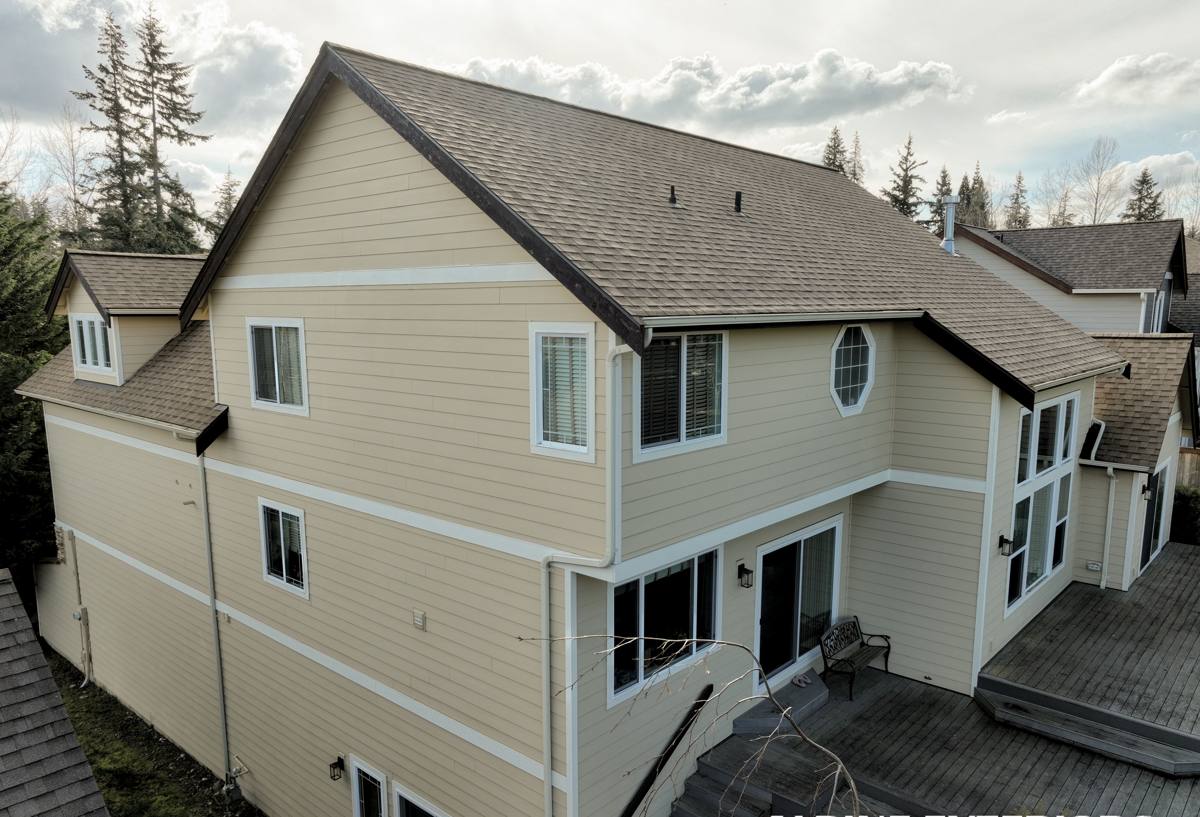
What Salt Air, Rain, and Moss Actually Do to a Deck
It helps to understand the specific failure points, because they're different from what causes deck problems in most of the country.
Salt Air and Corrosion
Airborne salt accelerates corrosion on any exposed metal — fasteners, joist hangers, post bases, and railing hardware. Once corrosion starts on a structural fastener, it doesn't just look bad; it weakens the connection between boards, joists, and the ledger board that ties the deck to the house. Standard hot-dip galvanized hardware is often not enough this close to salt water. This is one of the most common reasons we see decks that look fine on the surface but are unsafe underneath.
Driving Rain and Moisture Intrusion
Wind-driven rain off the Strait doesn't just fall straight down — it gets pushed sideways and up under railings, into end grain, and behind ledger boards. Without proper flashing and drainage detailing, water gets trapped where it can't dry out, which is exactly where rot starts. The ledger board connection (where the deck attaches to the house) is the single most common point of hidden rot and structural failure on decks in this climate.
Moss, Algae, and Slip Hazards
Whatcom County's long, wet season gives moss and algae months to establish themselves on any shaded or north-facing deck surface. Beyond the maintenance headache, a mossy deck surface is genuinely slick — it's a real fall hazard for kids, older family members, and anyone carrying something down the steps. Some decking materials resist this far better than others, which is a factor worth weighing when you're choosing what to replace an old deck with.
Signs Your Deck Needs Replacement, Not Just Repair
Not every aging deck needs a full rebuild — but coastal exposure narrows the window where repair still makes sense. Here's what tells us a deck has crossed that line:
- Soft, spongy, or spring-loaded spots when you walk across the deck surface
- Visible rot, splitting, or discoloration at the ledger board or around post bases
- Rust staining running down from fasteners or hardware
- Railings or stair stringers that feel loose or wobble under normal weight
- Gaps opening up between boards, or boards cupping and warping
- Persistent moss or algae that comes back within weeks of cleaning
- A deck more than 15–20 years old that has never had structural hardware upgraded
- Any sign of movement or separation where the deck meets the house
If you're seeing more than one or two of these, it's worth having someone look at the framing underneath, not just the surface boards. Surface staining or a few loose boards can sometimes be a repair. Ledger rot, hardware corrosion, or structural movement usually can't.
Choosing the Right Decking Material for This Climate
There's no single "best" decking material for every home — it depends on your budget, how much upkeep you want to do, and how exposed your specific deck is to wind, rain, and sun. Here's how the common options actually perform in a salt-air, high-moisture environment like Sandy Point:
| Material | Coastal Durability | Maintenance | Moss/Algae Resistance |
|---|---|---|---|
| Pressure-treated wood | Good if hardware and flashing are upgraded; framing lumber still needs protection | Regular cleaning, resealing every 1–2 years | Low — needs active cleaning |
| Cedar or other natural wood | Attractive but softer; more sensitive to constant moisture | Higher — sealing, staining, inspection | Low to moderate |
| Traditional composite | Solid, but uncapped boards can absorb moisture at cut edges | Low — occasional washing | Moderate |
| Capped composite / PVC | Best moisture resistance of the group; handles salt air well | Very low | High |
We'll walk you through these trade-offs honestly during your estimate — including upfront cost versus long-term maintenance — rather than steering you toward whatever's easiest for us to install. The right call is usually about how much time you want to spend maintaining the deck versus paying more upfront.
What a Correct Deck Replacement Actually Involves
A deck replacement done right in this climate isn't just pulling up old boards and screwing down new ones. The parts that matter most are the parts you won't see once it's finished:
Framing and Structure
Joists, beams, and posts need to be sized and spaced correctly for your deck's use and local snow/wind load requirements, and framing lumber should be rated for ground contact or exterior exposure where it's in contact with moisture.
Ledger Board Flashing
This is the connection point most likely to fail in a coastal climate. Proper flashing — installed correctly, in the right layered order — keeps water from getting trapped between the ledger and the house siding.
Corrosion-Resistant Hardware
Given the salt exposure in Sandy Point, we use fasteners and joist hangers rated for coastal or high-corrosion environments rather than standard-grade hardware, particularly at the ledger, post bases, and stair connections.
Drainage and Ventilation
Proper board spacing and airflow underneath the deck let it dry out between rain events instead of staying damp — which is one of the biggest factors in how long the structure lasts.
Guardrails and Stairs Built to Code
Railing height, baluster spacing, and stair geometry all need to meet current code, not just match what was there before — especially on an older deck that may predate current requirements.
Our Deck Replacement Process
Here's how a typical project goes, from first call to finished deck:
- On-site assessment. We inspect the existing deck, including the framing and ledger connection where accessible, not just the surface.
- Honest scope review. We tell you what actually needs replacing versus what could be salvaged, and walk through material options and their trade-offs for your specific site and sun/wind exposure.
- Written estimate. Clear scope, materials, and pricing before any work starts — no surprise change orders for things we could have caught upfront.
- Permitting. We handle the permit process for work that requires it, so you're not the one navigating county paperwork.
- Demolition and disposal. Old decking and framing removed and hauled off.
- Structural rebuild. Framing, ledger flashing, and hardware installed to hold up against local conditions, not just to pass a quick inspection.
- Decking, railing, and stairs. Installed to manufacturer spec — this matters especially for composite and capped-composite products, where improper fastening voids warranties.
- Final walkthrough. We go over the finished deck with you before we consider the job done.
Permits and Local Building Considerations
Deck replacement work in Whatcom County typically requires a permit when the structure is being rebuilt, raised, or structurally altered — not always for like-for-like surface board replacement, but it depends on the scope and height of the deck. Requirements can also vary depending on setbacks and whether your property falls under any shoreline or critical-area review given the proximity to the water in Sandy Point. We handle this as part of the process so you're not stuck figuring out county requirements on your own, and so the finished deck is actually built to current code — which matters both for safety and for resale down the line.
Why Hire a Crew That Already Works in Sandy Point
Deck-building fundamentals don't change from neighborhood to neighborhood, but the exposure conditions do. A crew that regularly works Sandy Point and the surrounding Birch Bay area already knows which sides of a house typically take the worst wind-driven rain, which decking materials actually hold up to the salt air here versus just performing well in a showroom, and which structural details are worth upgrading even when they weren't required when the original deck was built.
That local familiarity shows up in small decisions — hardware selection, flashing details, board spacing for drainage — that don't cost much more to get right the first time but make a real difference in how long the deck lasts. It also means we're not learning the local climate on your project.
Getting Started
If your deck is showing its age, or you just want an honest opinion on whether it needs repair or full replacement, we're happy to take a look. We'll give you a straightforward assessment and a free, no-pressure estimate — no obligation, just clear information so you can make the right call for your home. Use the form below to get started.