 Birch Bay Window
 James Hardie Siding for Sandy Point Homes
Sandy Point sits on the water in the Birch Bay area of Whatcom County, and that waterfront location puts real demands on a home's exterior. Many properties here sit close to the shoreline or along the neighborhood's canals, which means siding is exposed to salt-laden air, driving rain off the water, and a moss and mildew season that runs longer than it does just a few miles inland. We install James Hardie fiber cement siding, and only James Hardie, and Sandy Point is exactly the kind of environment that explains why.
This page focuses on one thing: what James Hardie siding needs to look like on a Sandy Point home, why the local climate makes that material choice matter more than it might elsewhere, and what our process looks like from first assessment to finished install. If you're weighing a siding replacement or new construction siding on a Sandy Point property, this is the detail that actually determines how the job performs ten or twenty years out.
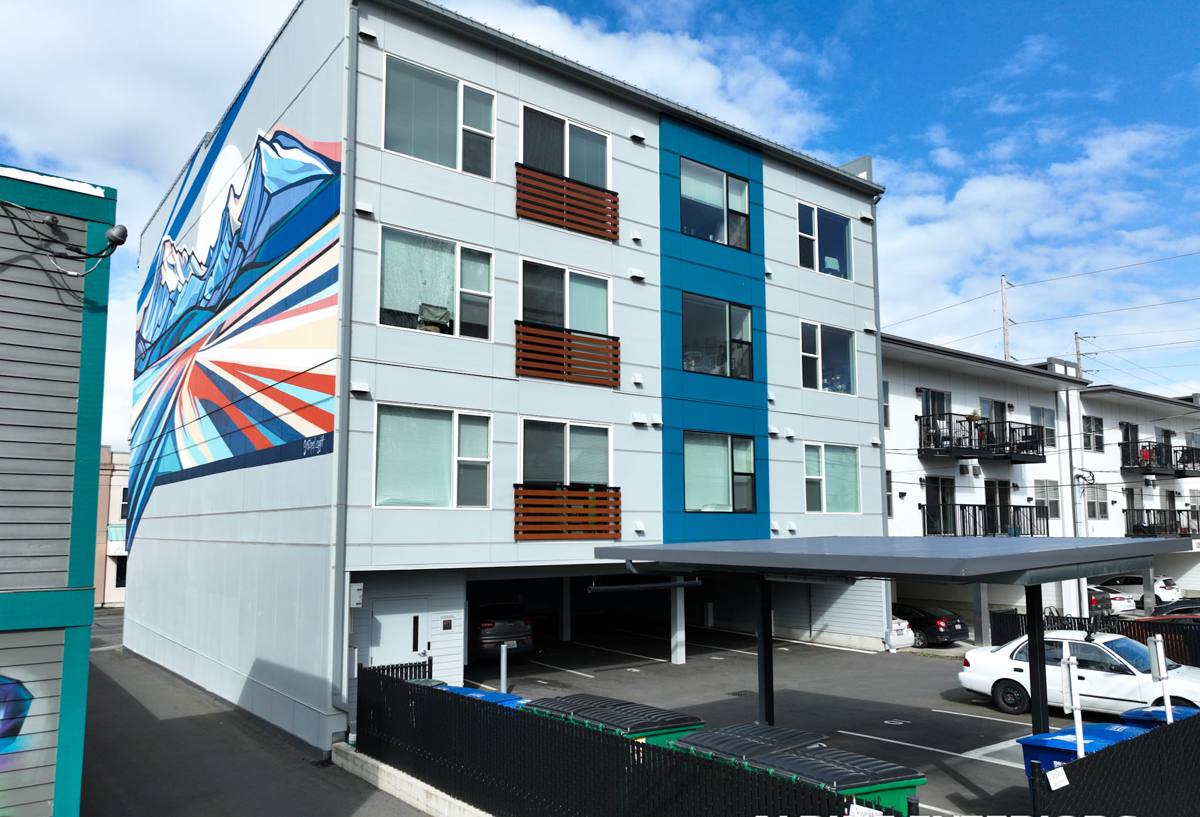
What Sandy Point's Waterfront Climate Does to Siding
Salt Air and Corrosion
Being close to the water means Sandy Point homes take on more airborne salt than properties set back from the shoreline. Salt is corrosive to fasteners, flashing, and any exposed metal trim, and over time it can also degrade lower-quality paint finishes faster than a drier, more inland climate would. That corrosion risk needs to factor into every material choice on the exterior, from the siding itself down to the nails holding it on, not just the parts a homeowner can see day to day.
Driving Rain and Wind Exposure
Open water exposure also means more wind, and wind-driven rain behaves differently than a straight-down shower. It gets pushed sideways into wall assemblies, lap joints, and anywhere trim meets siding. A siding system that holds up fine on a sheltered, tree-covered lot can still fail on a waterfront lot in Sandy Point because the water is finding its way in from the side, not just from above. That's a heavier and more sustained moisture load than the area's average rainfall numbers suggest on their own.
A Long Moss and Mildew Season
Mild temperatures, near-constant humidity, and plenty of shaded exterior walls add up to a moss and mildew season that can run most of the year across this part of Whatcom County. North-facing walls and anything shaded by trees or a neighboring structure are usually the first places it shows up. Any siding material that's even slightly porous, or that holds moisture against its own substrate, becomes a growth surface over time — and once moss and mildew take hold, they hold moisture against the wall even longer, which compounds the problem.
Why We Install Only James Hardie Fiber Cement
We used to install a wider range of siding products. We don't anymore, and that change came directly from what we kept finding on service calls and tear-offs in waterfront Whatcom County — not from a supplier relationship or a sales incentive.
- Non-combustible core: Fiber cement doesn't feed a fire the way wood-based siding products can, which matters for home safety and can matter for insurance underwriting as well.
- Factory-applied ColorPlus finish: The color is baked on under controlled conditions at the factory rather than brushed on in the field, and it holds up longer against fading, chalking, and moisture intrusion than site-applied paint does.
- Climate-engineered HZ5 formulation: Hardie's HZ5 product line is engineered for regions with heavy moisture exposure and freeze-thaw cycling, which describes waterfront Whatcom County, including Sandy Point, well.
- Dimensional stability: Fiber cement doesn't swell, cup, or warp the way engineered wood siding can when it repeatedly absorbs and releases moisture over a wet season.
- A strong transferable warranty: Hardie backs the product with one of the more robust warranty structures in the siding industry, provided the installation follows their published specifications.
We won't install LP SmartSide, vinyl siding, Cemplank, Allura, primed spruce, or cedar. Each of those products has a legitimate place in the broader market, and plenty of homeowners elsewhere are satisfied with them. But on a waterfront lot in Sandy Point, we've made a professional judgment call: we'd rather stand fully behind one system than offer a cheaper option that quietly shifts long-term maintenance risk and moisture callbacks onto the homeowner.
What a Correct James Hardie Installation Involves
Fiber cement only performs the way Hardie designed it to when it's installed to spec. A Hardie board installed loosely or with the wrong details will still develop moisture problems in a climate like Sandy Point's — the material itself is only half of the equation.
Flashing and Drainage Detail
Every window, door, and roof-to-wall transition needs flashing that's correctly lapped to shed water outward, not just caulked and hoped for. On a waterfront lot exposed to wind-driven rain, these transition points are the most common places water finds its way behind the siding. We also detail drainage behind the panels — a rain-screen gap or equivalent — so that any moisture that does get past the surface has somewhere to drain and dry rather than sitting against the sheathing.
Fasteners, Joints, and Trim
Fastener type, spacing, and depth all matter, and in a salt-air environment we pay particular attention to corrosion-resistant fastener grades so they don't become the first failure point. Joints get factory-mitered where possible or properly caulked and back-primed where they can't be, and trim gets the same clearance-from-grade and clearance-from-roofline treatment as the field siding, since those transition areas are where a lot of amateur installs cut corners.
Shaded and North-Facing Walls
On lots with mature trees or homes situated to keep certain walls in shade most of the day, we pay extra attention to those elevations specifically, since they're the ones most likely to develop moss and mildew first. That can mean slightly different detailing around drainage and clearance on those walls compared to the sun-facing side of the same house.
Comparing Siding Materials in a Waterfront Climate
| Material | Moisture Behavior | Salt Air Durability | Typical Longevity in Sandy Point |
|---|---|---|---|
| James Hardie fiber cement | Dimensionally stable; resists swelling and warping | High, especially with HZ5 formulation and correct fasteners | 30+ years with correct installation and upkeep |
| Vinyl siding | Can distort or bow under heat and wind load over time | Moderate; seams and fastener points are exposure risks | Variable; often shorter on exposed waterfront lots |
| LP SmartSide / engineered wood | Wood-based core is moisture-sensitive at cut edges and joints | Moderate; depends heavily on caulk and edge-sealing upkeep | Strongly tied to maintenance consistency |
| Cedar / primed wood | Absorbs and releases moisture readily | Lower without frequent refinishing | Shorter without a consistent maintenance schedule |
Cost Factors on a Sandy Point Siding Project
Every siding job is priced around the specifics of the house, so we won't quote a number here that doesn't apply to your property. What we can walk through are the variables that actually move the estimate, so you know what a contractor should be asking about before handing you a price.
| Factor | Why It Matters |
|---|---|
| Existing siding removal | Tear-off of old vinyl, wood, or damaged siding adds labor and disposal cost versus building over a bare wall |
| Sheathing and moisture damage found underneath | Rot or soft sheathing discovered once old siding comes off needs to be repaired before new siding goes on |
| Wall complexity and trim detail | Multiple gables, dormers, or extensive trim work take more time than a simple rectangular wall plane |
| Siding profile and finish selection | Lap width, texture, and ColorPlus color selection affect material cost within the Hardie product line |
| Access and site conditions | Waterfront lots with limited staging area or steep grade can add setup time compared to an open, easy-access lot |
Signs Your Siding Needs Attention
Because moisture problems in this climate often start behind the siding before they're visible on the surface, it's worth knowing what to watch for.
- Moss or dark streaking on siding that keeps coming back shortly after cleaning
- Soft or spongy spots when you press on the siding, especially near the bottom courses or corners
- Paint or finish that's bubbling, peeling, or chalking off well before it should
- Visible gaps, cracking, or separation at seams, joints, and trim transitions
- Warping, bowing, or panels that no longer sit flat against the wall
- Interior signs like water stains or a musty smell along exterior walls
Our Process, Start to Finish
We start with an on-site walk of the existing siding, looking specifically at how it's held up against moisture, salt exposure, and shade over time — not just how it looks from the street. From there we put together a clear, written scope of work and estimate before any contract is signed, so there's no ambiguity about what's included. Once a project starts, we handle removal of the old material, address any sheathing or framing issues we find underneath before covering them up, and install the new James Hardie siding to Hardie's published specifications, including the flashing, drainage, and fastener details we've covered above as standard practice rather than optional add-ons. At the end of the job we walk the property with the homeowner, register the material warranty, and leave you with what you need to know for basic upkeep going forward.
Why a Crew That Already Works Sandy Point Matters
A contractor who regularly works this stretch of Whatcom County's coastline already knows how salt air, wind exposure, and a long wet season behave differently here than they do even a short distance inland. That familiarity shows up in the small decisions on a job site: which fastener grade gets used, how tightly flashing gets lapped, where extra drainage detailing gets added on a shaded or exposed wall. Those are exactly the details that determine whether a siding job holds up for one wet season or for decades, and they're harder to get right from a general playbook than from direct, local experience.
A Simple Checklist Before Hiring for a Sandy Point Siding Job
- Ask what siding material they install and why, and get their reasoning in writing along with the warranty terms
- Confirm current Washington contractor licensing and active liability insurance
- Ask specifically how they detail flashing at windows, doors, and roof-to-wall transitions for wind-driven rain
- Ask about fastener corrosion resistance given the property's salt air exposure
- Get a clear, written scope of work and price before signing anything
If you're considering new siding for a home in Sandy Point, we're happy to come take a look and give you an honest read on what the exterior actually needs. Reach out below for a free, no-pressure estimate.