 Birch Bay Window
 Siding Repair for Sandy Point Homes
Sandy Point is a shoreline community within the greater Birch Bay area of Whatcom County, and it takes the region's marine weather about as directly as a property can. Homes here sit close to the water, which means more salt in the air, more wind-driven rain hitting the walls sideways instead of falling straight down, and a moss and mildew season that runs longer than it does even a short distance inland. Siding that's holding up fine on a sheltered, tree-covered lot a few miles away can already be showing real wear on a Sandy Point home, simply because of how much more direct exposure the walls take.
Siding repair is a different job than a full re-side, and it deserves to be treated that way. A good repair isn't just about making a damaged board disappear — it's about figuring out why that section failed in the first place, fixing the actual cause, and putting back a patch that matches the surrounding wall in material, profile, and color so it doesn't stand out or become the next weak point. We install and repair James Hardie fiber cement siding exclusively, and on a property with Sandy Point's exposure, that consistency matters as much for repair work as it does for a full installation.
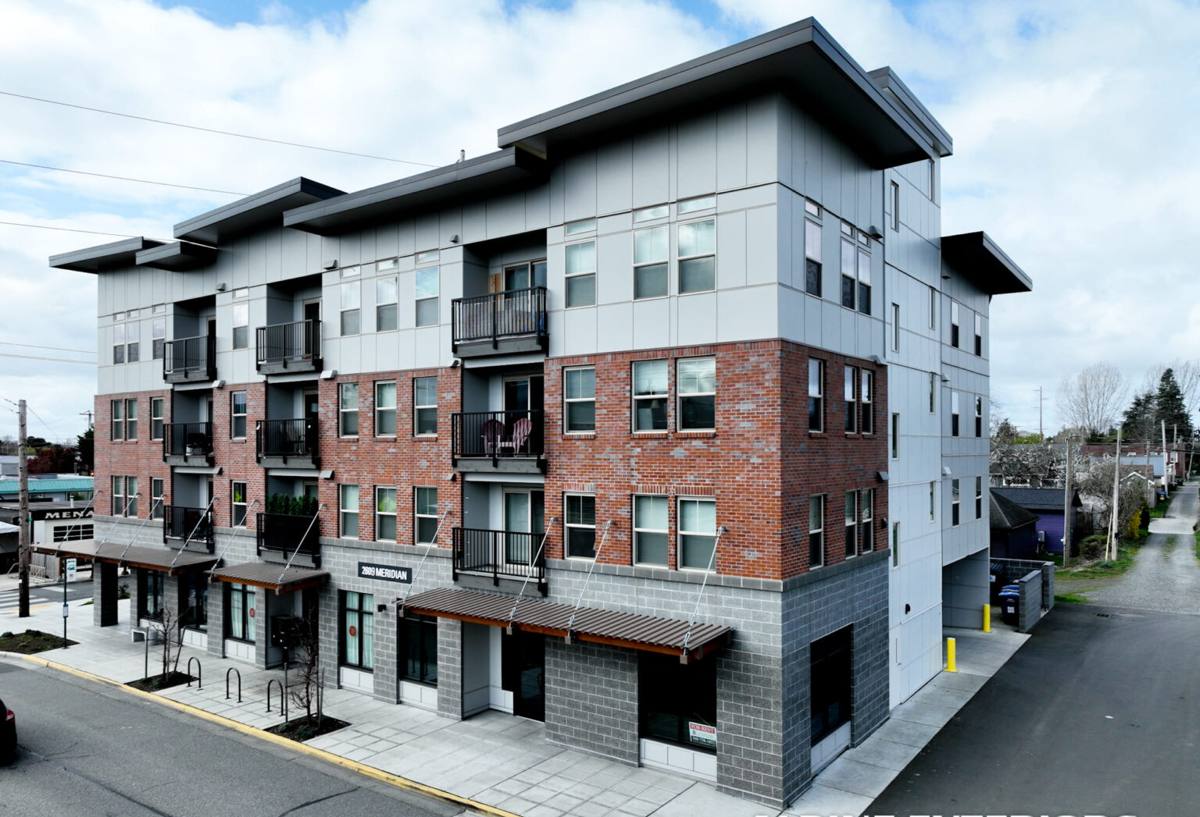
What Sandy Point's Shoreline Climate Does to Siding
Salt Air and Corrosion
Being this close to the water means Sandy Point homes deal with more airborne salt than inland Whatcom County properties. Salt accelerates corrosion in exposed fasteners, metal flashing, and lower-grade hardware, and it can degrade a weak or field-applied finish faster than a drier climate would. When we're diagnosing a repair, corroded fasteners or streaking rust stains below nail heads are one of the first things we check for, because that kind of corrosion is often what let water in behind the siding in the first place.
Driving Rain and Wind-Driven Moisture
Waterfront exposure brings more wind, and wind-driven rain doesn't behave like a normal rain shower — it gets pushed sideways into seams, corners, and anywhere a joint or piece of trim isn't sealed as tightly as it should be. That's a heavier, more sideways moisture load than a simple annual rainfall total suggests, and it's why repairs that look fine on a calm, sunny day can still be failing behind the surface. A joint that's slightly open or a piece of flashing that's lifted even a little becomes a real entry point once wind gets behind the rain.
A Moss Season That Doesn't Let Up
Mild temperatures, persistent dampness, and plenty of shaded wall area on most homes add up to a moss and mildew season that stretches across much of the year in this part of the county. North-facing walls and anything shaded by a neighboring structure tend to show it first, as green or dark staining that holds moisture directly against the siding surface. Left alone, that trapped moisture is exactly the condition that turns a cosmetic issue into a repair job, and eventually into a repair job that's bigger than it needed to be.
Common Siding Repair Issues We See Here
Repair calls in a shoreline community like Sandy Point tend to fall into a fairly consistent set of patterns. Recognizing them early is usually the difference between a straightforward patch and a job that's grown to include rotted sheathing underneath.
- Impact damage from storms, falling branches, or yard equipment, isolated to one or two boards
- Cracked, shrunken, or fully failed caulk joints at corners, trim, and butt joints
- Rust streaking below fasteners, a sign of corroding hardware in a salt-air environment
- Soft, discolored, or swelling trim near the bottom edge of the wall, close to grade
- Flashing that's lifted, gapped, or improperly lapped around windows, doors, or roof-to-wall transitions
- Persistent moss or mildew staining on shaded or north-facing walls that keeps returning after cleaning
- Damage near a deck ledger connection, where water has been tracking into the wall behind the siding
Repair vs. Replacement: How We Make the Call
Not every damaged section of siding means the whole wall needs to come off. But on a shoreline property, it's also easy to underestimate how far trapped moisture has traveled behind the surface. We open things up before making a recommendation rather than guessing from the outside.
| What We Find | What It Usually Means | Typical Approach |
|---|---|---|
| Isolated impact damage, sheathing behind is dry | Localized failure, no ongoing moisture problem | Cut back to sound material and patch with matched Hardie product |
| Failed caulk or open joints, minor staining behind | Early-stage water intrusion, caught before real damage | Re-seal, re-flash if needed, and monitor or patch as required |
| Soft or spongy sheathing found behind the siding | Water has been getting in for a while, likely more than one season | Repair the substrate first, then patch or replace the affected siding section |
| Widespread staining, multiple failed joints, or an aging non-Hardie product nearing end of life | The wall assembly as a whole is compromised, not just a section | Partial or full re-side is usually the more honest long-term recommendation |
Why We Only Work With James Hardie Fiber Cement
We used to install and repair a wider range of siding products. We narrowed that down after years of service calls and tear-offs in exactly this kind of coastal, wet climate, where the difference between materials shows up fast rather than slowly.
- Non-combustible core: Fiber cement doesn't feed a fire the way wood-based siding can, which matters for household safety and can matter for insurance as well.
- Factory-applied ColorPlus finish: The color is baked on under controlled factory conditions rather than brushed on in the field, which holds up longer against fading, chalking, and moisture intrusion than site-applied paint — a real advantage in salt air.
- Climate-engineered HZ product lines: Hardie's HZ5 formulation is built for regions with heavy moisture exposure and freeze-thaw cycling, which describes waterfront Whatcom County well.
- Dimensional stability: Fiber cement doesn't swell, warp, or cup the way engineered wood products can after repeated wet-season moisture cycles, which keeps a patched section sitting flush with the surrounding wall.
- Strong transferable warranty: Hardie backs its products with a solid warranty structure, provided the installation and repair work follow spec.
We don't install or permanently patch with LP SmartSide, vinyl siding, Cemplank, Allura, primed spruce, or cedar. If a Sandy Point home currently has one of those products and needs repair, we'll always give an honest assessment of what a patch can realistically accomplish versus when it makes more sense to start transitioning that section, or eventually the whole elevation, to a material we fully stand behind. We'd rather tell a homeowner the truth about a product's limits than quietly patch over a problem that's going to come back.
Diagnosing the Source First
The most important part of any siding repair happens before a single board comes off: figuring out why that section failed. A crack from a one-time impact is a different problem than a joint that's been slowly failing for two winters, and treating them the same way almost guarantees a callback. We check the sheathing and framing behind visibly damaged siding, not just the siding itself, because that's where the real answer usually is.
Matching Material and Color
Hardie's ColorPlus finish is applied in a factory setting, which is part of what makes it durable — but it also means an exact color match years after original installation can be genuinely difficult with field-applied touch-up paint alone. For small nicks and scuffs, manufacturer touch-up product works well. For a damaged board, replacing the full piece with matched Hardie product, rather than trying to patch and repaint in place, is usually what actually blends into the wall and ages consistently with the rest of the siding going forward.
Fasteners, Flashing, and Drainage
A repair is only as good as what's behind the new piece of siding. That means corrosion-resistant fasteners suited to a salt-air environment, flashing that's properly lapped rather than just caulked over, and a drainage path that lets any moisture that does get behind the panel find its way back out instead of sitting against the sheathing. Skipping these details is exactly how a repair on a shoreline property ends up needing to be redone within a couple of wet seasons.
Our Process, Start to Finish
- An on-site inspection of the damaged area and the surrounding wall, checking for moisture behind the surface, not just what's visible
- An honest read on whether the situation calls for a targeted patch, a larger section replacement, or a broader conversation about re-siding
- A clear, written scope of work and price before anything is cut into
- Repair work using matched James Hardie product, correct fasteners, and proper flashing and drainage detail as standard practice
- A final walk-through so you can see exactly what was done and why
Cost Factors for Siding Repair in Sandy Point
| Factor | What It Affects | Why It Matters Here |
|---|---|---|
| Extent of hidden moisture damage | Whether sheathing or framing repair is needed before new siding goes on | Wind-driven rain can carry damage further behind the wall than it appears from outside |
| Number and location of damaged sections | Labor time and material matching | Scattered damage across multiple walls takes more diagnostic time than one contained area |
| Age and condition of existing siding | Whether a color match is realistic or a larger section should be replaced | Older ColorPlus finishes have had years to weather, which affects how closely new material blends in |
| Flashing and trim condition | Whether trim and flashing need replacement alongside the siding | Compromised flashing is a common root cause of repeat failures on shoreline homes |
| Access and site conditions | Labor time and equipment needs | Waterfront lots can have tighter setbacks or landscaping that affects staging |
Exact pricing depends on what we find once the damaged area is opened up, which is why we walk the property in person and give a real, written number rather than a phone estimate.
Why a Local Sandy Point Crew Matters
A contractor who already works this stretch of Birch Bay's shoreline on a regular basis has seen how salt air, wind-driven rain, and a long moss season actually play out on real homes here, not just in general terms. That shows up in the judgment calls made on a repair: which sections are worth patching versus replacing outright, how much extra attention a north-facing wall needs compared to a sun-facing one, and which fastener and flashing details are worth the added time so the same problem doesn't resurface next winter. On a property this exposed, that local familiarity is part of what makes a repair actually last.
A Simple Checklist Before Hiring for a Siding Repair
- Ask whether they'll open up the wall to check for hidden moisture before quoting a fix
- Confirm current Washington contractor licensing and active insurance
- Ask what siding material they use for repairs and whether it will visibly match your existing wall
- Ask specifically how they handle flashing and drainage behind the repaired section
- Get a written scope of work before anything is cut into
If a section of siding on your Sandy Point home is cracked, stained, soft, or just not looking right, we're glad to take a look and give you an honest read on what it actually needs. Reach out below for a free, no-pressure estimate.