 Birch Bay Window
 Custom Windows Built for Semiahmoo's Waterfront Exposure
Semiahmoo sits right where Whatcom County's marine weather hits hardest — open water on multiple sides, wind with nowhere to break, and salt-laden air that settles on everything from window frames to door hardware. Homes here take a different kind of beating than houses a few miles inland in Blaine or Custer. If you're planning a window replacement or a custom window package for a Semiahmoo home, the product and the installation both need to account for that exposure, not just the standard Pacific Northwest rain load.
"Custom windows" doesn't mean fancy shapes or oversized picture units, though we do plenty of that. It means the window is specified and built for the actual opening, the actual wall assembly, and the actual weather load of your specific site — not a generic stock size that happens to fit close enough. On a waterfront lot, that distinction matters more than almost anywhere else we work.
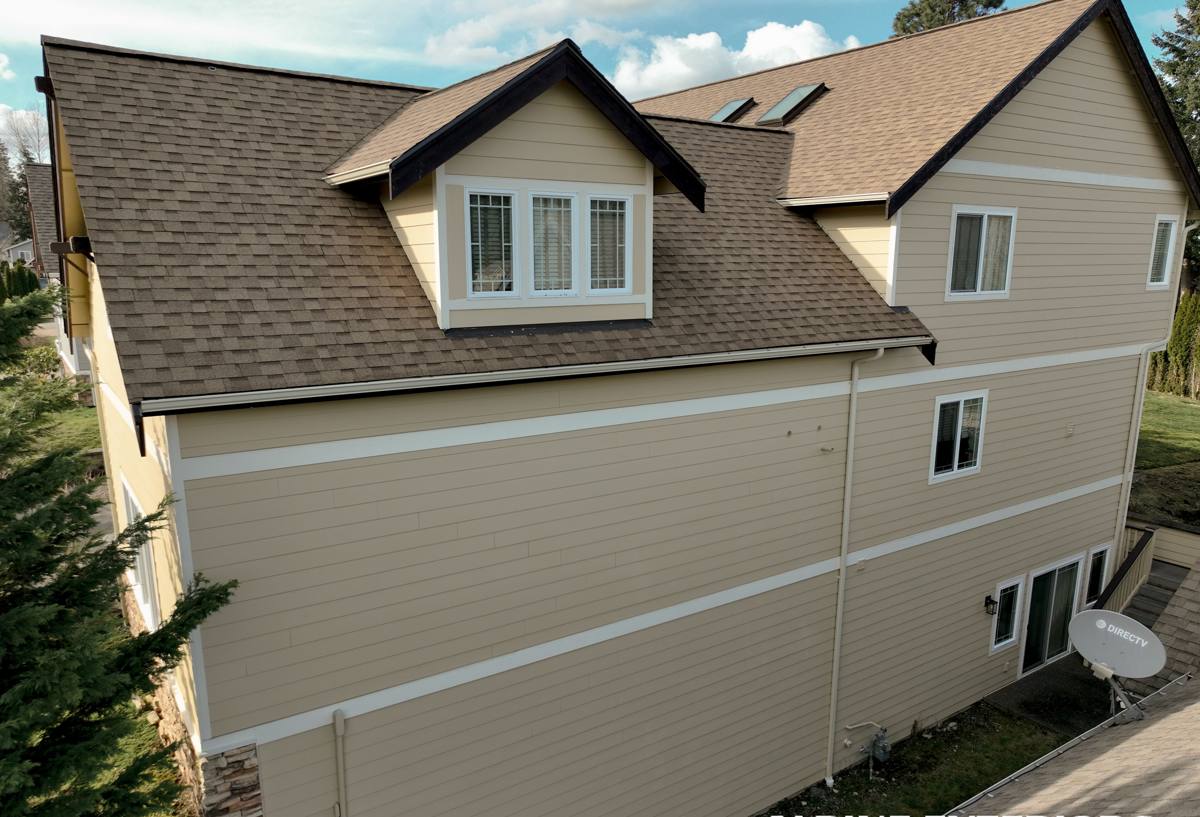
What Semiahmoo's Climate Actually Does to Windows
Three things drive most of the window failures we see out here, and they compound each other:
- Salt air corrosion — airborne salt attacks unprotected fasteners, aluminum cladding, and hardware finishes faster than almost anything else in this region. Cheap or mismatched hardware pits and seizes within a few years near the water.
- Driving rain — wind-driven rain doesn't just fall on Semiahmoo homes, it's pushed sideways into wall assemblies and window openings. A flashing detail that would hold up fine in a sheltered inland yard can leak here within a season or two.
- Extended moss and mildew season — the long damp stretch from fall through spring keeps sills, sashes, and trim wet for weeks at a time. Wood that isn't properly sealed or detailed for drainage stays wet long enough to start breaking down.
None of these are exotic problems — they're the normal cost of living on the water in Whatcom County. The fix isn't avoiding windows near the coast, it's specifying and installing them correctly for that exposure.
Why Standard Installations Underperform Here
A window that's simply "put in and caulked" might pass a walk-through and still fail in two or three years on a site like this. The most common failure points we find on older Semiahmoo installs are missing or reversed flashing laps, sill pans that were skipped or improvised, and hardware that was never rated for marine exposure. None of these show up as a problem on day one — they show up as staining, soft trim, or fogged glass two to five winters later.
Choosing the Right Window Materials for a Coastal Lot
Material choice matters more here than the marketing on any given brand's brochure. We look at long-term maintenance burden and moisture behavior, not just upfront price.
| Material | Coastal Performance | Maintenance |
|---|---|---|
| Vinyl (quality-grade) | Good salt and moisture resistance, no corrosion risk | Low — occasional cleaning, no repainting |
| Fiberglass | Excellent dimensional stability, holds up well to wind and salt exposure | Low — very stable, minimal upkeep |
| Aluminum-clad wood | Good if cladding and flashing are done correctly; interior wood adds warmth | Moderate — depends on cladding seams and finish quality |
| Bare wood | Weakest choice on an exposed waterfront lot without heavy upkeep | High — regular painting/sealing required to prevent rot |
We don't refuse to install any particular material — but on a fully exposed Semiahmoo lot, we'll tell you honestly if bare wood is going to be a maintenance headache you didn't sign up for, versus a clad or fiberglass unit that shrugs off the same conditions with a fraction of the upkeep.
Hardware and Fasteners Matter as Much as the Frame
This is the detail most homeowners never think to ask about, and it's often the first thing to fail near the water. Standard zinc-plated fasteners and hinges corrode fast in salt air. We spec stainless or marine-grade hardware on Semiahmoo jobs specifically because replacing a corroded hinge or lock set on a custom window a few years in is an avoidable annoyance.
What a Correct Custom Window Job Involves
A properly done window replacement on a coastal Whatcom County home has the same core steps as anywhere else — but the details get more attention:
- Opening assessment. We check the existing rough opening, sill condition, and any signs of past water intrusion before ordering anything.
- Sill pan flashing. A sloped, sealed sill pan under every window so any water that gets past the frame drains back out instead of sitting in the wall.
- Correct flashing lap sequence. Water-resistive barrier and flashing tape installed shingle-style — each layer overlapping the one below — so wind-driven rain has no path inward.
- Backer rod and sealant, not sealant alone. Gaps are filled with proper backer rod before sealing, which gives the sealant joint the flexibility to move with temperature and moisture cycles instead of cracking.
- Marine-appropriate hardware. Stainless or coated fasteners and corrosion-resistant hardware on the frame and sash.
- Interior and exterior trim finish. Sealed and detailed so moss and mildew don't get a foothold in trim joints.
Skip any one of these steps and the window can still look fine going in — the problems just show up later, usually as staining, soft wood, or a draft that wasn't there the first winter.
Glass Packages Worth Considering Near the Water
Standard double-pane glass works fine in most of Whatcom County, but a few upgrades pay off specifically on an exposed waterfront site:
- Low-E coatings help control heat loss through the long, overcast winter without noticeably darkening the view.
- Argon or krypton gas fill improves insulation value, which matters more on a wall that's facing constant wind.
- Laminated glass adds impact and sound resistance — useful on homes taking direct wind and debris off open water.
- Tempered glass where code requires it near doors, low sills, or large picture windows.
We'll walk through which combination makes sense for your specific exposure and budget rather than upselling every option on every job — a sheltered window on the lee side of the house doesn't need the same spec as one facing open wind and spray.
Our Process for a Semiahmoo Custom Window Project
Every job starts with an in-person walk-through, not a phone estimate. We look at each opening, note the wall assembly, check for existing moisture damage, and measure for a true custom fit rather than a nearest-standard-size unit. From there:
- We provide a written estimate with material and labor broken out, so you know what you're paying for.
- Windows are ordered to the exact opening dimensions — no field-trimming a stock size to make it fit.
- Installation follows the flashing and sealing sequence above on every opening, not just the ones facing the water.
- We do a final walk-through with you to check operation, sightlines, and finish before calling the job done.
Timelines depend on the number of openings and whether it's a straightforward replacement or involves any framing or structural changes, but we'll give you a realistic schedule up front — not an optimistic one that slips.
Why Hire a Crew That Already Works Semiahmoo
Window installation isn't the same job everywhere in Whatcom County. A crew used to sheltered, inland lots may not think twice about flashing sequence or hardware grade because they've never had to — their work holds up fine in less exposed conditions. On a Semiahmoo waterfront property, those shortcuts show up fast. A crew that regularly works this specific stretch of coastline knows which walls take the worst of the wind-driven rain, which hardware actually holds up to the salt air, and how long the moss season really runs — and builds the job around that from the start, instead of learning it the hard way on your house.
Local experience also means straight answers about what your specific site needs. Not every opening on a Semiahmoo home faces the same exposure — a window on the sheltered side of the house doesn't need the same spec as one facing open water. We'll tell you where it's worth spending more and where a standard-grade window is genuinely fine.
Signs It's Time to Replace, Not Just Reseal
Not every window problem means a full replacement. But a few signs point toward it rather than a repair:
- Fogging or moisture between panes — the seal has failed and the insulated glass unit can't be repaired, only replaced.
- Soft or spongy wood at the sill or trim — a sign water has been getting in for a while, not a fresh problem.
- Visible corrosion streaks below hardware or fasteners — usually means the hardware and possibly the frame need replacing, not just cleaning.
- Persistent draft or cold spot even after recaulking — often means the flashing or seal behind the trim has failed, which reapplying caulk won't fix.
- Difficulty opening, closing, or locking — frame movement or swelling from moisture intrusion.
If you're only seeing minor cosmetic wear, a repair or reseal may genuinely be the more honest answer — we'll tell you that instead of pushing a full replacement you don't need yet.
Get a Straight Answer on Your Semiahmoo Windows
If you're weighing a window replacement or a custom package for a Semiahmoo home, we're glad to come take a look and give you an honest read on what your specific openings need — no pressure, no inflated scope. Fill out the form below for a free estimate.