 Birch Bay Window
 Semiahmoo's Climate Is Harder on a Roof Than Most Homeowners Realize
Semiahmoo sits right up against the water, and that changes what a roof has to survive. Salt-laden air moves inland with the wind off the bay, driving rain comes in sideways during winter storms, and the shade from mature trees keeps roof surfaces damp for days after the rain stops. Add in a moss season that can run from fall through spring in Whatcom County, and you have a combination that ages roofing materials faster than it would in a drier, more inland part of Washington.
None of that means Semiahmoo homes need exotic or overbuilt roofs. It means the installation details that get skipped on an easier job — fastener choice, underlayment type, ventilation, and flashing at every penetration — actually matter here. A new roof installed without those details in mind can look fine for a few years and still fail early where it counts: at the edges, the valleys, and the vents.
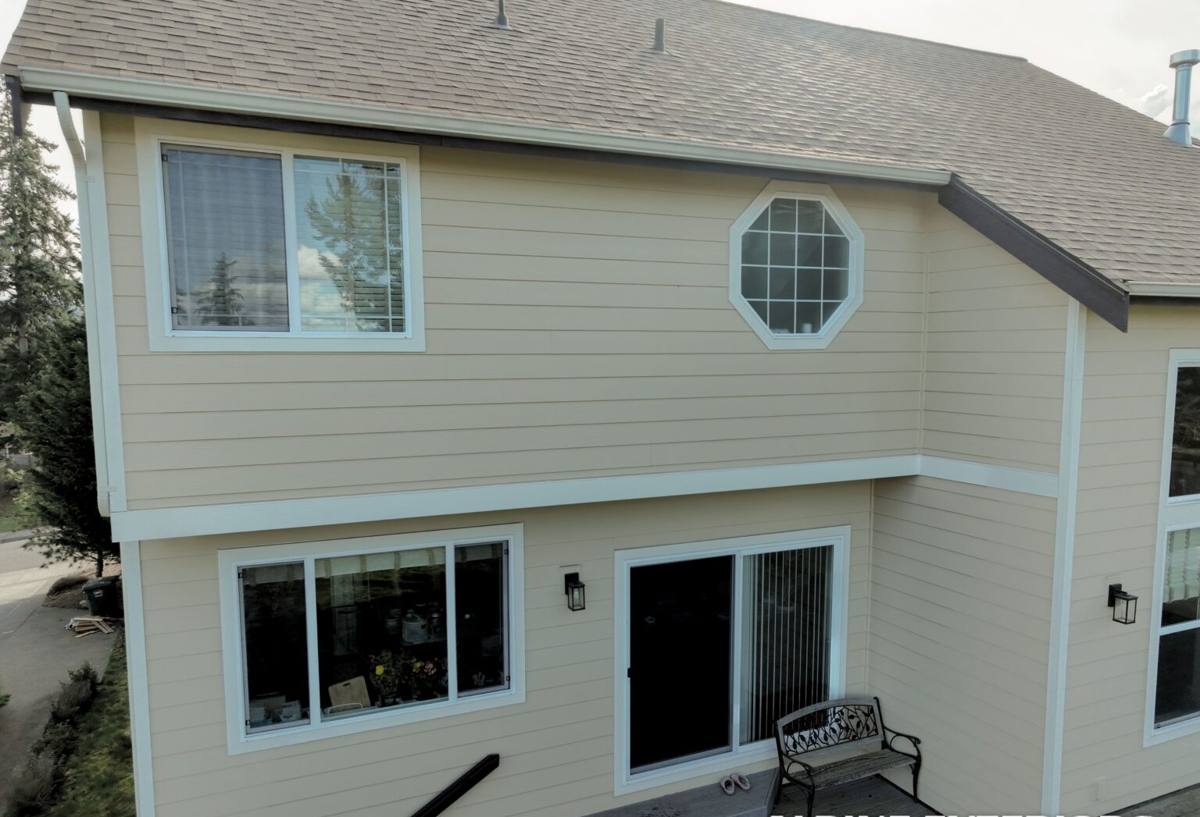
Signs a Semiahmoo Home Needs a New Roof, Not Another Repair
Age is part of the picture, but in this climate we look at wear patterns first. A roof that's granule-loss heavy on the south and west slopes, has soft or spongy decking near valleys, or shows moss growth that keeps coming back within months of a cleaning is usually past the point where patching makes sense.
- Shingles curling, cracking, or losing granules in patches rather than evenly across the roof
- Moss or algae streaking that returns quickly after cleaning, especially on north-facing or shaded slopes
- Dark staining or soft spots on interior ceilings near exterior walls, a sign moisture is already getting past the roofing layer
- Rusted or corroded flashing, fasteners, or vent caps — common near the water where salt air accelerates corrosion
- Visible sagging along the ridge or between rafters, which points to decking or structural issues, not just surface wear
- Multiple past repairs in different spots, which usually means the underlying roof system is failing generally, not locally
If a roof is showing two or more of these at once, a repair is usually a short-term patch on a system that's already compromised.
What a Correct New Roof Installation Actually Involves
A new roof is more than laying shingles over what's there. Done right, it's a full system, and each layer does a specific job — especially in a climate with this much moisture exposure.
Tear-Off and Decking Inspection
We remove the old roofing down to the deck rather than layering over it. That's the only way to actually see the plywood or OSB underneath, which is where hidden rot from past leaks or trapped moisture usually shows up first. Any soft or delaminated decking gets replaced before anything new goes down — skipping this step is how a new roof ends up with problems within a few years.
Underlayment and Water-Resistant Barrier
In a coastal, high-rainfall area, the underlayment matters as much as the shingle. We use synthetic underlayment across the full roof and self-adhering ice-and-water membrane at the eaves, valleys, and any low-slope transitions — the spots where driving rain and wind-blown water are most likely to find a way in.
Flashing at Every Penetration
Chimneys, vent stacks, skylights, and wall-to-roof transitions are where most leaks actually start, not in the open field of shingles. Correct flashing, properly lapped and sealed, is non-negotiable — and it's also the detail most likely to get rushed on a cut-rate job.
Fasteners and Hardware
Standard galvanized fasteners corrode faster in salt air. Depending on the roof system and manufacturer specs, we use corrosion-resistant fasteners and hardware suited to a marine-influenced climate, particularly on homes closer to the water.
Ventilation
A roof that can't breathe traps moisture in the attic, which shortens the life of the decking and the shingles from underneath. Balanced intake and exhaust ventilation is part of every install, not an upsell.
Comparing Roofing Materials for a Semiahmoo Home
There isn't one universally "best" material — it depends on the home's exposure, roof pitch, budget, and how much long-term maintenance an owner wants to take on. Here's how the common options stack up for this specific climate.
| Material | Typical Lifespan | Moss Resistance | Salt Air / Coastal Durability | Maintenance Load |
|---|---|---|---|---|
| Architectural asphalt shingle | 25–30 years | Moderate (better with algae-resistant granules) | Good with proper flashing/fasteners | Periodic moss treatment recommended |
| Standing seam metal | 40–50+ years | High — sheds moss more easily | Very good with coated/coastal-rated panels | Low |
| Synthetic composite (slate/shake look) | 40–50 years | High | Good | Low to moderate |
| Cedar shake | 20–30 years with upkeep | Low without regular treatment | Requires more upkeep near salt air | High — needs regular moss/moisture maintenance |
Most Semiahmoo homeowners land on architectural asphalt for value and appearance, or standing seam metal when they want to minimize long-term moss and maintenance work. We'll walk through the trade-offs for your specific roof pitch and exposure rather than push one product across the board.
Ventilation and Moisture Management: The Part Most Re-Roofs Skip
A lot of roof failures we see aren't from the shingle wearing out — they're from moisture getting trapped underneath it. In a shaded, damp climate like this one, an attic without adequate airflow stays humid longer after every rain, which softens decking from below and gives moss and algae a foothold on the surface from the underside out. Balanced ventilation — enough intake at the eaves and exhaust at the ridge — keeps air moving through the attic space so both the decking and the roofing material dry out at a normal rate instead of staying wet.
This is also why we won't install a new roof over inadequate ventilation just because it's faster. It's the kind of shortcut that doesn't show up as a problem for a couple of years, and by then it's a hidden repair instead of a five-minute decision made during installation.
Our Installation Process, Start to Finish
- On-site inspection and estimate — we walk the roof (or use a lift/drone where pitch requires it), check the attic for existing ventilation and moisture signs, and give you a written scope and estimate.
- Material selection — we go over the comparison above in the context of your home's exposure, pitch, and budget, and help you land on the right system rather than the most expensive one.
- Permitting — new roof installations typically require a permit through the applicable Whatcom County or local jurisdiction process; we handle that paperwork so it's not on you.
- Tear-off and decking inspection — full removal of old roofing, decking checked and replaced where needed.
- Underlayment and flashing installation — ice-and-water membrane at vulnerable areas, synthetic underlayment throughout, new flashing at every penetration.
- Roofing material installation — installed to manufacturer spec, including nailing pattern and exposure, which affects both warranty validity and wind performance.
- Ventilation and final detail work — ridge and intake ventilation confirmed, vent boots and caps installed or replaced.
- Cleanup and final walkthrough — job site cleared of debris and old materials, magnetic sweep for stray fasteners, and a walkthrough so you know what was done and what to watch for.
Moss Season Doesn't End When the Roof Goes On
A new roof reduces moss problems but doesn't eliminate the conditions that cause them — shade, moisture, and organic debris are still part of living in this area. Overhanging branches, gutters that collect needles and leaves, and north-facing slopes that don't get much sun will always need more attention than the rest of the roof. We're upfront about this during installation so you know what routine maintenance looks like going forward, rather than assuming a new roof means no more moss conversations.
Why Hiring a Crew That Already Works in Semiahmoo Matters
A roofing crew that mostly works drier, inland areas can still do competent work, but they're not necessarily thinking about salt-air corrosion on fasteners, wind uplift on a bluff-exposed roof, or how much shade a particular slope gets through the winter. Crews who work this stretch of Whatcom County regularly build those considerations into the estimate and the install by default, because they've seen what happens when they're skipped.
Local, regular work here also means faster response if something needs attention after installation — during a storm, after an unusual wind event, or just for a routine check a few years in. That kind of continuity is harder to get from a crew that's just passing through the area for one job.
Before You Hire: A Practical Checklist
- Ask whether the estimate includes full tear-off and decking inspection, not just a layer-over
- Confirm what underlayment and ice-and-water shield are specified, and where they'll be used
- Ask what fastener and flashing materials are being used, especially for a home close to the water
- Confirm attic ventilation will be assessed and addressed as part of the job, not treated as an add-on
- Get manufacturer warranty terms in writing, including what voids them
- Ask how debris, moss buildup, and cleanup are handled during and after the job
- Confirm who's pulling the permit and handling inspections
If a contractor can't give you clear, specific answers to these, that's worth noticing before you sign anything.
If your Semiahmoo roof is showing its age, or you just want a straight assessment of where it stands, we're glad to take a look. Use the form below to request a free, no-pressure estimate — we'll tell you honestly what we see and what your real options are.