 Birch Bay Window
 Semiahmoo sits right on the water, and that changes what a window installation needs to hold up against. Homes a few miles inland in Whatcom County deal with rain and cold snaps like most of Western Washington. Homes along the Semiahmoo shoreline near Birch Bay deal with all of that plus salt-laden air, wind-driven rain that hits window walls sideways instead of straight down, and a moss and algae season that runs longer than it does even a short drive east. Window installation here is the same trade, but the margin for error is smaller.
What Semiahmoo's Coastal Climate Does to Windows
Salt air is corrosive to unprotected metal. Over years, it attacks weep hole screens, hardware, screen frames, and any exposed fasteners that weren't rated for a marine-adjacent environment. You'll see it first as pitting or white corrosion on hardware, or screens that go from bright aluminum to chalky gray faster than they should.
Driving rain off the water is a different problem than ordinary rainfall. Wind pushes water sideways and upward into gaps that a calm-weather installation would never expose. If flashing, sill pans, or sealant details are even slightly off, water finds its way behind the trim and into the wall cavity — and by the time it shows up as a stain on drywall, it's often been happening for a season or more.
Moss and algae growth is a slower-moving issue but a real one. Persistent damp shade around north-facing walls and window wells keeps wood trim and sills wet longer between dry spells, which accelerates rot in any wood components that aren't properly primed, sealed, or clad.
None of this means Semiahmoo homes need exotic materials. It means the installation details — flashing sequence, sealant choice, hardware grade, and drainage — matter more here than they would twenty miles inland, and cutting corners on any of them shows up sooner near the water than it would elsewhere.
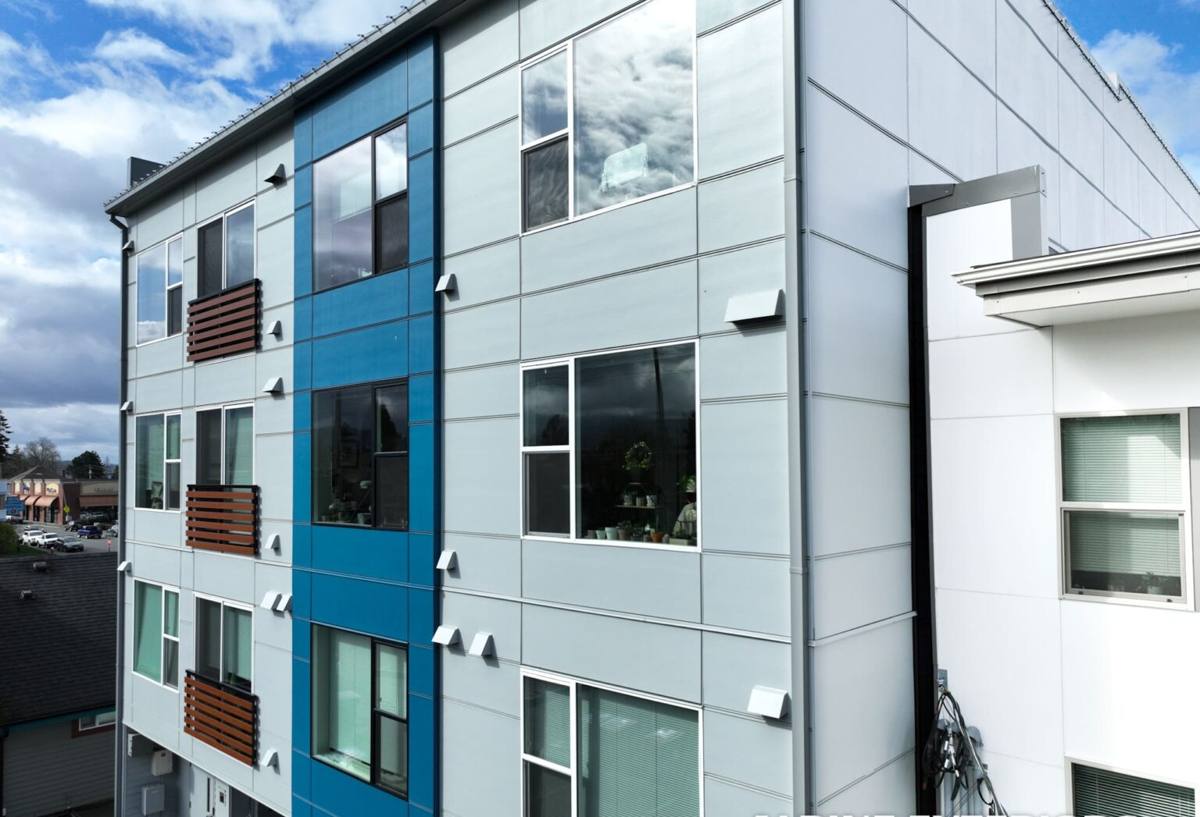
Signs a Semiahmoo Home's Windows Are Falling Behind
Most homeowners don't think about window condition until something is obviously wrong. In a coastal environment, the early signs are worth catching before they turn into wall damage or a full frame replacement.
- Corroded, stiff, or pitted hardware — latches and cranks that used to move smoothly
- Condensation forming between the panes (a sign the seal has failed on a double-pane unit)
- Visible gaps, cracked caulk, or daylight around the frame when the window is closed
- Soft or spongy wood trim near the sill, especially on north- or west-facing walls
- Persistent moss, algae, or dark staining on trim that keeps coming back after cleaning
- Drafts you can feel with a hand near the frame on a windy day
- Windows that are difficult to open, close, or lock — frames can shift slightly as wood swells and dries with the seasons
- Rising heating bills without a clear other explanation
Any one of these on its own might just mean a repair or a re-caulk. Several of them together, especially on a home more than fifteen to twenty years old, usually mean the windows themselves have reached the end of their useful service life.
What a Correct Window Installation Actually Involves
Window installation is often sold as a simple swap — old window out, new window in. Done correctly, especially near the water, it's a water-management project first and a window-fitting project second.
Water Management and Flashing
Before a new window ever goes in, the rough opening needs a sloped sill pan and properly lapped flashing so that any water that does get past the exterior finish drains back out instead of pooling against wood framing. This is the single most important part of the job for long-term performance, and it's also the part that's invisible once the trim goes back on — which is exactly why it's the step most likely to get rushed by crews that don't specialize in it.
Air Sealing and Insulation
The gap between the window frame and the rough opening needs to be sealed and insulated correctly — not overpacked with expanding foam that can bow the frame, and not left with gaps that let air and moisture through. Done right, this is what actually stops the draft you feel near the frame on a windy day, more than the glass itself.
Fastening and Structural Fit
The window needs to be shimmed level, plumb, and square before it's fastened, with the right fastener spacing and length for the framing material. A window that's slightly out of square will bind, won't seal evenly, and puts uneven stress on the hardware — which is often why a window that seemed fine when installed becomes hard to operate a few years later.
Choosing a Frame Material for Salt Air and Driving Rain
There's no single "best" window material for every home — the right choice depends on your home's exposure, your maintenance preferences, and your budget. Here's how the common options hold up in a Semiahmoo-type coastal environment specifically.
| Frame Material | Salt Air / Coastal Performance | Maintenance |
|---|---|---|
| Vinyl | Good — won't corrode or rust; UV-stable modern formulations hold up well to marine exposure | Low — occasional cleaning, no painting |
| Fiberglass | Very good — dimensionally stable, resists corrosion and doesn't expand/contract much with temperature swings | Low — durable finish, minimal upkeep |
| Aluminum | Fair — durable but prone to corrosion over time near salt air unless properly coated and maintained | Moderate — watch for pitting or corrosion at hardware and fasteners |
| Wood / Wood-Clad | Requires the most care — exposed wood is vulnerable to the area's moss and moisture cycle without diligent upkeep | High — regular painting, sealing, and inspection needed |
We don't push one brand or material on every homeowner. What we do recommend against, as a matter of professional standard, is installing unclad or minimally protected wood on direct water-facing exposures near Semiahmoo without a clear maintenance plan behind it — not because wood windows are bad, but because the moisture cycle here is unforgiving of skipped maintenance in a way it isn't for a home set back from the shoreline.
Our Semiahmoo Installation Process
- On-site assessment. We look at your home's actual exposure — which walls face the water and prevailing wind, current window condition, and any signs of past water intrusion around the openings.
- Honest scope and options. We walk through frame material, glass package, and any framing repairs the assessment turned up, with a straightforward explanation of trade-offs — no upsell pressure toward the most expensive option.
- Careful removal. Old windows come out without damaging surrounding siding or trim any more than necessary, and we check the rough opening and framing for hidden rot or water damage before anything new goes in.
- Flashing and sill pan installation. This is where we don't cut time — proper sloped drainage and lapped flashing sequence, every time, regardless of how the opening looks on the surface.
- Setting, shimming, and fastening. The window is leveled, plumbed, squared, and fastened correctly before any insulation or sealant goes in around it.
- Air sealing and trim. Proper insulation in the gap, correct sealant at exterior joints, and trim reinstalled or replaced to match your home.
- Final check. Every window is opened, closed, and locked to confirm smooth operation before we consider the job finished.
Why a Crew That Already Works Semiahmoo Matters
Window installation done well in most of Whatcom County still requires competence. Window installation done well right on the Semiahmoo shoreline requires that same competence applied with more discipline around water management, because the consequences of a shortcut show up faster and worse near the water. A crew that regularly works this specific stretch of coastline has already seen which details actually matter here — where flashing tends to fail if it's rushed, which orientations take the worst of the wind-driven rain, and how the moss and damp cycle behaves on real Semiahmoo-area homes rather than in a training manual.
That local familiarity isn't about knowing shortcuts — it's about not needing to learn the hard lessons on your house. It also means a crew that isn't guessing at material choices for salt air exposure, and isn't surprised when a fifteen-year-old window comes out with more hidden water damage around the opening than expected.
What Affects the Cost of a Semiahmoo Window Project
Every home is different, and we'd rather give you an honest range and a real number after a look at your windows than a quote pulled out of thin air. That said, a few factors consistently move the price up or down:
- Number and size of openings — the biggest driver of overall project cost
- Frame material — vinyl is typically the most economical, fiberglass and wood run higher
- Glass package — standard double-pane versus upgraded low-E or triple-pane glazing
- Condition of the rough opening — hidden rot or water damage found during removal adds repair scope
- Trim and siding work — matching existing exterior finish around new openings
- Access and home configuration — second-story or hard-to-reach windows take more time
Generally, a straightforward single-window replacement is a modest project, while a whole-home window replacement is a much larger investment — but it's also the point where efficiency, comfort, and long-term maintenance savings add up the most. We'll walk through your specific numbers rather than quoting a generic range that may not apply to your home.
If your Semiahmoo-area home has windows showing their age, or you're planning ahead of the next wet season, we're glad to take a look and give you a straightforward, no-pressure estimate. The form below is the easiest way to get started.