 Birch Bay Window
 Storm Damage Roof Repair in Custer: Why This Corner of Whatcom County Is Hard on Roofs
Custer sits in the open flatland north of Ferndale, close enough to the Salish Sea to catch marine air and driving rain but without much in the way of tree cover or terrain to break the wind. When a storm rolls through Whatcom County, it tends to hit properties out here at a low angle, pushing rain and debris sideways into roof planes rather than straight down. That's a different kind of stress than a sheltered, tree-lined lot sees, and it shows up in the roofing problems we get called out for — lifted shingles on the windward side, water finding its way under flashing that was fine the week before, and debris damage that's easy to miss from the ground.
We work roofs throughout this stretch of Whatcom County, and storm damage repair is one of the calls we get most often after a bad front comes through. The job isn't just about patching whatever's visibly broken. It's about figuring out what the storm actually did to the roof system — shingles, flashing, underlayment, decking — and fixing that correctly instead of covering it up.
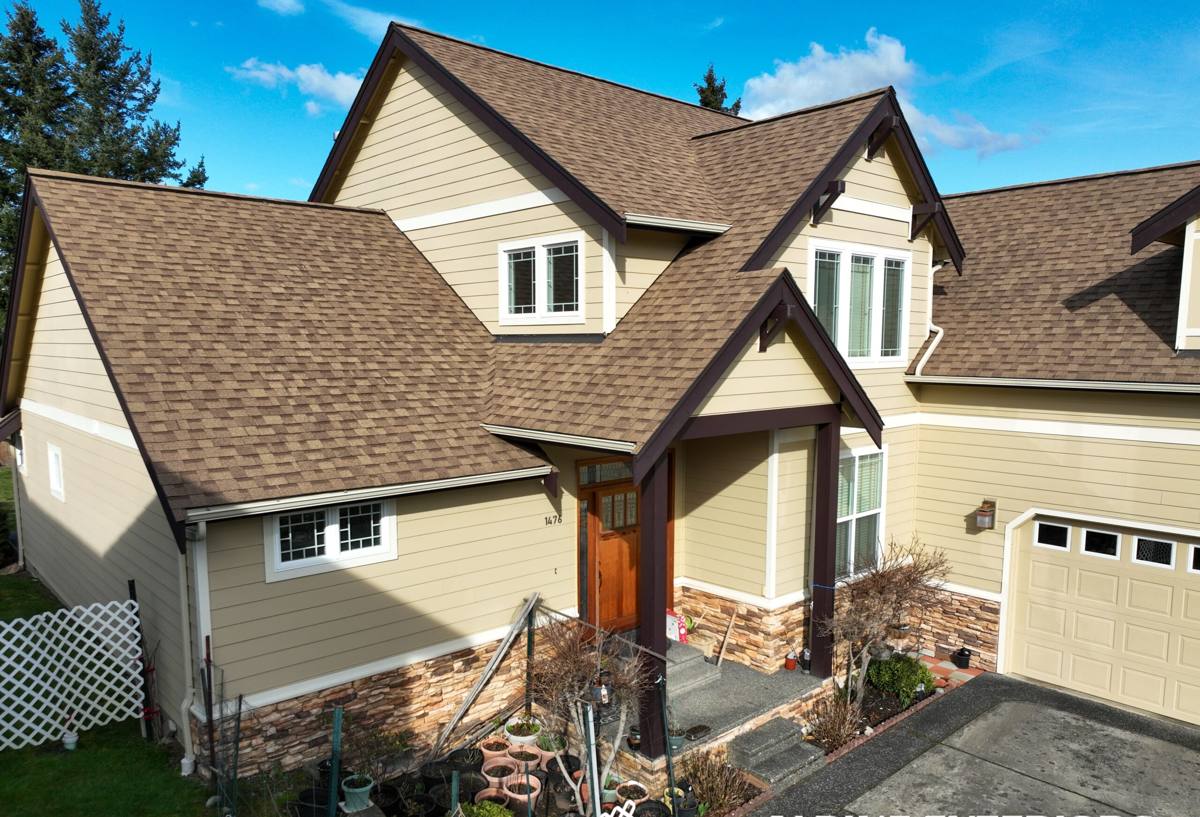
What Storms Actually Do to a Custer Roof
Wind Uplift and Lifted or Missing Shingles
Open agricultural land around Custer doesn't slow wind down the way a more built-up or wooded area would. Gusts get under shingle tabs, especially on older roofs where the sealant strip has weakened, and once a shingle lifts even slightly it's vulnerable to being torn off outright or letting wind-driven rain underneath on the next storm. Missing shingles are the obvious damage. Lifted but still-attached shingles are the damage most homeowners miss, and it's often the more urgent problem because the seal is already broken.
Wind-Driven Rain Past Flashing and Seams
Flat, exposed terrain means storms push rain sideways into roof valleys, chimney flashing, vent boots, and any place two roof planes or a roof and a wall meet. These are the spots where a roof is built from multiple pieces instead of one continuous surface, and they're exactly where storm-driven rain finds a way in that it wouldn't on a calm, straight-down rain day. A flashing detail that's held up fine for years can fail the first time it takes wind-driven rain from an unusual direction.
Debris Impact
Branches, gravel, and loose debris carried by wind can bruise or puncture shingles, crack ridge caps, and dent metal flashing or gutters. Impact damage isn't always dramatic-looking. A bruised shingle mat can look intact from the ground but lose its granule protection and start failing months later.
Moss and Standing Moisture After the Storm
Whatcom County's mild, wet climate means moss has a long growing season, and storm damage often creates the conditions moss needs to take hold faster — a lifted shingle edge that traps moisture, a clogged valley from storm debris, or a gutter that's now pulling away from the fascia. A roof that comes through a storm with minor damage but sits wet and unaddressed for a few weeks can end up with a moss and rot problem on top of the original storm damage.
Signs Your Custer Roof Took Storm Damage
- Shingles that are missing, cracked, curled, or visibly lifted at the edges
- Granules collecting in gutters or at the base of downspouts after a storm
- Water stains on ceilings or in the attic that weren't there before the last storm
- Bent, dented, or displaced flashing around chimneys, vents, or roof valleys
- Gutters pulled loose from the fascia or sagging under debris weight
- Visible daylight through the roof deck when viewed from inside the attic
- Soft or spongy spots when walking the roof, which usually mean the decking underneath has already taken on water
Repair vs. Replacement After a Storm: How We Make the Call
Most storm damage in Custer is repairable without a full roof replacement, especially when the roof was in reasonable shape before the storm hit and we get to it before water has had weeks to sit in the decking. But that's not always the case, and we won't tell a homeowner they need a full replacement when a targeted repair will genuinely hold, or the reverse — patch something that's already past the point where patching makes sense.
| Situation | Repair Usually Makes Sense | Replacement Usually Makes Sense |
|---|---|---|
| Isolated missing or lifted shingles, roof otherwise sound | Yes — targeted shingle and flashing repair | Not on its own |
| Damaged flashing, deck and shingles otherwise fine | Yes — reflash the affected area | Rarely needed |
| Soft or rotted decking under the damaged area | Only if limited to a small section | Yes, if widespread |
| Roof was already near end of service life before the storm | Short-term only | Yes — storm damage often accelerates the timeline |
| Repeated storm damage in the same spot over several seasons | Rarely a lasting fix | Yes — points to a design or ventilation issue worth addressing |
Our Storm Damage Repair Process
1. On-Site Assessment
We walk the roof and check the attic from the inside, not just what's visible from the ground or a photo. Storm damage hides in valleys, under ridge caps, and behind flashing, and a proper assessment means actually looking at those spots rather than assuming the visible damage is the whole story.
2. Written Scope Before Work Begins
Once we know what the storm did, we give a written scope that spells out what's being repaired, what materials are involved, and what it costs — before any work starts. If we find the roof needs more than initially expected once we're into it, we stop and talk to you before proceeding, not after the fact.
3. Repair with Matching Materials Where Possible
We match shingle type and color as closely as the market allows for patch repairs, and we treat flashing and underlayment work as part of the repair, not an afterthought bolted on around it. A shingle repair without properly integrated flashing underneath it is a repair that's likely to fail again in the next storm.
4. Cleanup and Follow-Up
We clear debris, old materials, and displaced granules from gutters and the ground, and we're available afterward if something doesn't look or perform right. Storm repairs are also a natural point to flag anything else we noticed on the roof — a ventilation issue, an aging area that's not urgent yet but worth watching — so you're not surprised by it later.
Insurance and Storm Damage Claims
Many storm damage repairs in Whatcom County go through a homeowner's insurance policy, and we're used to working alongside that process. We can document damage with clear photos and a written assessment that an adjuster can use, and we'll give you an honest read on what's storm-related damage versus what's pre-existing wear, since insurers draw that line carefully and inflating a claim isn't something we'll do. We're not a public adjuster and don't manage the claim itself, but we'll give you the documentation and straight answers you need to work with your insurer.
Why a Local Crew Matters for Storm Repair in Custer
A crew that already works this part of Whatcom County knows how storms actually move across this open terrain and which parts of a roof take the brunt of it — valleys facing the prevailing wind, flashing on the windward side of a chimney, gutters on the exposed side of the house. That local knowledge shortens the assessment and means less guesswork about whether damage is storm-related or something that was already developing. It also means a crew that's around for the follow-up, not one that showed up once after a storm and moved on to the next county.
What to Do Right After a Storm
- Check the attic for water stains, wet insulation, or daylight through the decking as soon as it's safe to do so
- Photograph any visible exterior damage — missing shingles, bent flashing, debris on the roof — before cleanup begins
- Avoid walking a wet or storm-damaged roof yourself; a compromised deck can be more fragile than it looks
- Get a professional assessment before filing an insurance claim, so you know the actual scope of damage
- Address even minor damage promptly — a small opening left through a rainy season becomes a bigger repair
- Confirm current Washington contractor licensing and active liability insurance before hiring anyone for repair work
If a recent storm has left you with missing shingles, a leak, or just an uneasy feeling about your roof, we're happy to take a look. Reach out below for a free, no-pressure estimate — we'll give you a straight answer on what the storm actually did and what it takes to fix it right.