 Birch Bay Window
 Roofing in Sumas Has to Handle More Than Sunny-Day Installs
Sumas sits in a part of Whatcom County where the weather doesn't do anything by half measures. Rain comes in sideways off sustained wind, moss finds a foothold on any north-facing slope that stays shaded and damp for months at a time, and the marine air that moves through this corner of the county carries enough moisture and salt to work on metal fasteners and flashing year-round. A roof that was installed without accounting for those conditions doesn't fail dramatically — it fails slowly, with a soft spot in the decking here, a lifted shingle tab there, until a homeowner is looking at interior water stains and wondering how long it's actually been going on.
Roof replacement isn't a project most homeowners go looking for. It's usually the leak, the missing shingles after a windstorm, or the roofer who came out for a repair and found the deck too far gone to patch. Whatever brought you here, the goal of this page is to walk through what actually matters for a Sumas roof replacement — not generic roofing advice, but the specific things this climate and this kind of housing stock tend to run into.
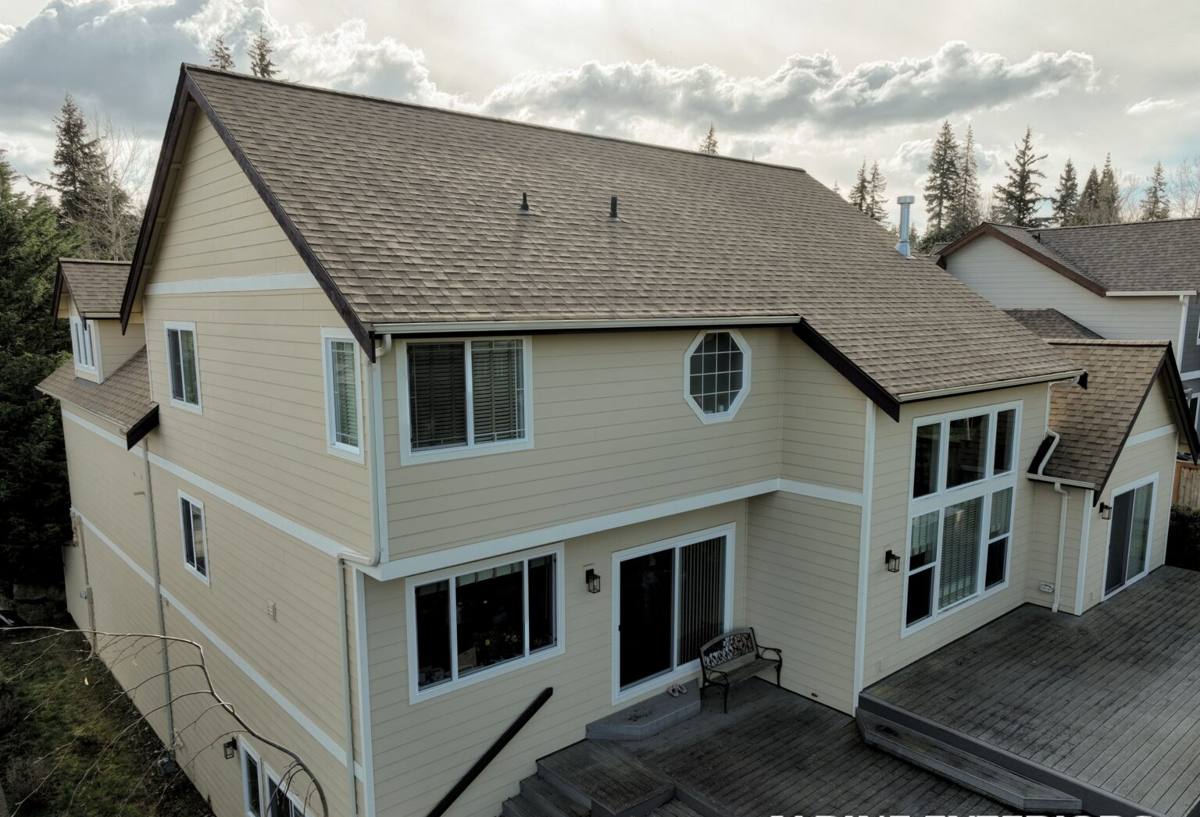
Signs a Sumas Roof Has Moved Past Repair
Repairs make sense when the problem is localized — a cracked pipe boot, a section of flashing that worked loose, a handful of wind-lifted shingles. Replacement becomes the honest recommendation when the damage is systemic rather than isolated. Some signals worth paying attention to:
- Granule loss heavy enough that you're finding sand-like grit in gutters and downspout splash areas every season
- Moss or algae streaking that comes back within a few months of cleaning, which usually means moisture is holding in the shingle mat itself, not just sitting on the surface
- Soft or spongy decking felt underfoot during an inspection, especially near valleys and eaves
- Daylight visible through the roof deck from inside the attic, or consistent damp insulation in the same spot
- A roof that's already had two or more repair visits for unrelated leaks within a couple of years
- Shingles that are curling, cupping, or losing their seal strip — a sign the asphalt has aged out regardless of how the surface looks from the ground
Age matters too. Most asphalt composition roofs in this climate are realistically due for replacement in the 18-25 year range, sometimes sooner on slopes that stay shaded and wet for long stretches of the year.
What a Correct Roof Replacement Actually Involves
Full Tear-Off, Not a Layover
Installing new shingles over an existing layer is faster and cheaper, but it traps moisture, hides the condition of the deck, and shortens the life of the new roofing. On a full replacement, we strip the roof to bare decking every time. There's no other way to know what's actually underneath.
Deck Inspection and Repair
Once the old roofing is off, the decking gets inspected board by board. In a climate that stays wet as long as this one does, it's common to find sections of sheathing that have softened from long-term moisture exposure, particularly around old flashing points, valleys, and chimney penetrations. Any compromised decking gets replaced before anything new goes down — skipping this step is one of the most common shortcuts in the industry, and it's the one that causes the most expensive problems later.
Underlayment Built for Wet Weather
A synthetic or self-adhered underlayment gives the roof a real second line of defense, which matters here more than in drier regions. Ice-and-water shield style membrane at eaves, valleys, and around penetrations adds protection in exactly the spots where wind-driven rain and pooling water cause the most trouble.
Flashing Done Right
Flashing failure, not shingle failure, is behind a large share of the leaks we get called out for. Step flashing at walls, proper counter-flashing at chimneys, and correctly lapped valley metal all have to be installed in the right sequence with the underlayment and roofing — not caulked together after the fact as a shortcut.
Ventilation That Matches the Attic
A roof replacement is the right time to correct ventilation, not an afterthought. Balanced intake at the eaves and exhaust at the ridge keeps moisture from condensing inside the attic, which is one of the biggest drivers of premature decking rot and interior moss-and-mildew smell in homes throughout this part of the county.
Choosing Materials for Whatcom County Conditions
There's no single "best" roofing material — the right choice depends on the roof's exposure, slope, budget, and how much long-term maintenance a homeowner wants to take on. Here's how the common options compare for this specific climate:
| Material | Typical Lifespan Here | Moss/Moisture Behavior | Maintenance Load |
|---|---|---|---|
| Asphalt composition shingle (standard) | 18-25 years | Moderate moss resistance; benefits from algae-resistant granules | Periodic moss treatment recommended |
| Asphalt composition shingle (impact/algae-resistant) | 25-30 years | Better resistance to algae staining and moss growth | Lower, but not maintenance-free |
| Standing seam metal | 40-50+ years | Sheds moisture fast; moss struggles to hold on smooth metal | Low; occasional fastener/sealant check |
| Synthetic/composite shingle | 30-50 years | Good moisture resistance; consistent performance in wet cycles | Low to moderate |
We don't push one material on every homeowner. A shaded, north-facing roof that stays damp most of the year is a different conversation than a steep, sun-exposed south slope, even on the same house.
How Our Replacement Process Works
- On-site inspection. We walk the roof, check the attic from inside where accessible, and look at ventilation, flashing points, and any problem areas before quoting anything.
- Written scope and material options. You get a clear breakdown of what's being replaced, what materials are being proposed, and why — not a vague lump-sum number.
- Scheduling around the weather. Given how much of the year sees rain in this region, we plan tear-off and dry-in carefully so your home isn't left exposed longer than necessary.
- Tear-off and deck assessment. Old roofing comes off, decking gets inspected, and any necessary repairs are documented and completed.
- Underlayment, flashing, and ventilation installed. These layers go in correctly and in the right order — the part of the job that doesn't show but determines how long everything else lasts.
- Roofing installed to manufacturer specification. Fastening patterns, exposure, and nailing lines matter for warranty coverage and wind performance alike.
- Final walkthrough and cleanup. Site is cleared of debris and nails, and we go over the finished roof with you before calling the job done.
The Part of the Roof You Never See: Ventilation and Moisture Control
Homeowners understandably focus on the shingles themselves — color, texture, brand. But in a climate with this much sustained damp weather and moss pressure, what happens underneath the surface layer often determines how long the roof actually lasts. Poor attic ventilation traps warm, moist air against the underside of the decking, which accelerates rot from the inside even while the shingles up top still look fine. Getting the intake-to-exhaust ratio right, and making sure insulation isn't blocking soffit vents, is unglamorous work that pays off in years of added roof life.
What Affects the Cost of a Roof Replacement
| Factor | Why It Matters |
|---|---|
| Roof size and number of facets | More square footage and more valleys/hips mean more material and labor time |
| Pitch and accessibility | Steep or hard-to-access roofs require more safety setup and slow the work |
| Layers of existing roofing | Multiple old layers add tear-off labor and disposal cost |
| Deck condition | Rotted sheathing found during tear-off adds material and labor not visible in a surface quote |
| Material choice | Standard asphalt, upgraded asphalt, metal, and synthetic products all carry different price points and lifespans |
| Ventilation and flashing corrections | Fixing inadequate ventilation or old flashing adds scope but reduces future callbacks |
We'd rather tell you upfront what could add to a quote — like the possibility of finding soft decking once tear-off starts — than surprise you with it mid-project.
Why It Matters That We Already Work in Sumas
Roofing crews that mostly work elsewhere and take the occasional Whatcom County job don't always price or plan for what this climate actually does to a roof over time. A crew that regularly works in and around Sumas knows to expect moss regrowth on shaded slopes, to plan tear-off days around realistic rain windows instead of best-case forecasts, and to flash penetrations with the assumption that wind-driven rain will find any weak point eventually. That familiarity shows up less in the sales pitch and more in the details — the flashing sequence, the underlayment choice, the ventilation math — that determine whether a roof is still performing in year twenty or leaking in year eight.
After the Roof Goes On: Keeping It Performing
- Have gutters cleaned at least twice a year so water isn't backing up under the shingle edge
- Check for moss regrowth each spring, especially on shaded or north-facing slopes, and treat early rather than letting it establish
- Keep overhanging branches trimmed back to reduce shade, debris buildup, and physical wear on the roofing
- After major windstorms, do a visual check from the ground for lifted or missing shingles
- Have attic ventilation checked periodically to confirm insulation hasn't blocked soffit intake vents
- Address any interior ceiling stains immediately rather than waiting for a bigger leak to appear
If your roof is showing its age or you just want an honest read on whether repair or replacement makes sense, we're glad to come out and take a look. The estimate is free, there's no pressure attached to it, and you'll get a straight answer either way — just fill out the form below to get started.