 Birch Bay Window
 Terrell Creek's Roofs Take a Different Kind of Beating
Terrell Creek sits back from the open shoreline that gives Birch Bay its name, but the roofs here don't get an easy pass. Between the tree cover along the creek corridor, the salt-laden air drifting in off the water, and the steady parade of Pacific storm systems that soak Whatcom County from fall through spring, a roof in this neighborhood is working against a combination most drier climates never deal with. It isn't one hazard — it's three or four, stacked on top of each other, year after year.
Homes tucked under fir and cedar canopy get shade most of the day, which sounds like a benefit until you consider what shade does to a roof: it keeps shingles damp longer after every rain, slows drying, and creates the exact conditions moss and algae need to take hold. Add wind-driven rain that finds its way under poorly lapped shingles and flashing, plus salt air that speeds up corrosion on exposed metal, and you have a roof assembly that ages faster here than it would on an open, sun-exposed lot farther inland.
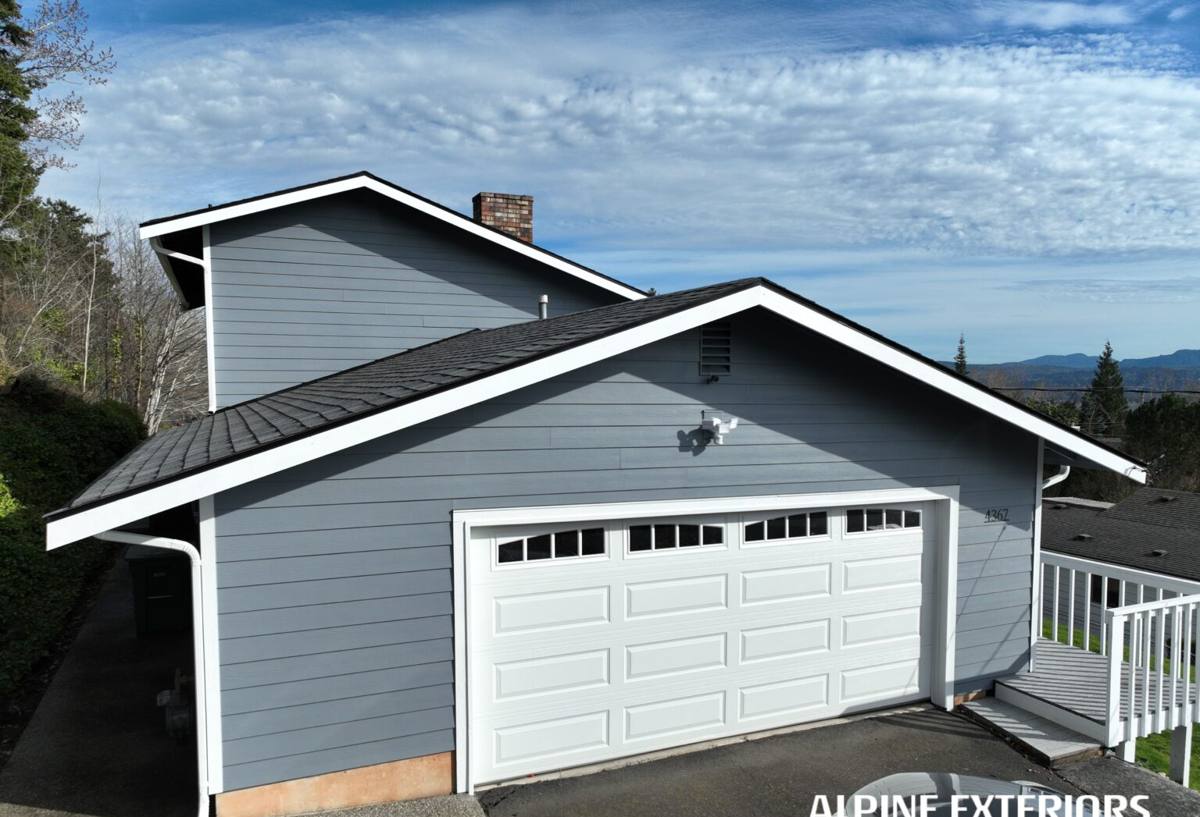
Signs a Terrell Creek Roof Is Nearing the End
Because of the shade and moisture load, roofs in this part of Birch Bay often show wear that doesn't match the textbook "curling shingle" description homeowners expect. Here's what we actually see when we're called out to look at a roof that's struggling:
- Moss established at the ridge and in shaded valleys — not a light dusting, but a mat you can lift a corner of
- Granule loss showing up as gritty runoff in gutters or bald patches on south- and west-facing slopes
- Soft or spongy decking near valleys, chimneys, or skylights when walked, a sign moisture has reached the sheathing
- Dark streaking or a greenish cast across the field of the roof, not limited to the shaded side
- Interior signs — a ceiling stain, a musty smell in the attic, or daylight visible through the roof deck
- Nail pops, lifted shingle tabs, or flashing that's visibly rusted or pulling away at chimneys and sidewalls
Any one of these on its own might mean a repair. Several together, especially decking softness or interior staining, usually means the roof has reached the point where patching is a delay tactic, not a fix.
What a Correct Roof Replacement Actually Involves
Tear-Off and Deck Inspection
We don't install new roofing over old. A full tear-off is the only way to see the deck itself, and in a moss-heavy, tree-shaded neighborhood like Terrell Creek, deck condition is where a lot of roofs quietly fail. Years of moss holding moisture against the shingles eventually lets water reach the plywood or plank sheathing underneath. Any soft, delaminated, or rotted decking gets identified and replaced before anything new goes down. Skipping this step is the most common shortcut that leads to an early second replacement.
Underlayment and Water Protection
This part of Whatcom County doesn't get deep freeze-thaw cycles, but it gets plenty of wind-driven rain, which behaves a lot like ice damming when it comes to finding gaps. We run synthetic underlayment across the full deck and self-adhering ice-and-water membrane at the vulnerable points — eaves, valleys, and every roof penetration — where wind can push rain sideways and uphill under shingle laps.
Flashing
Flashing failure causes more roof leaks than shingle failure does. Chimneys, skylights, sidewalls, and roof-to-wall transitions all get new step flashing, counterflashing, and proper sealant details rather than a bead of caulk over what was already there. In a salt-air environment we pay particular attention to the metal itself, since cheap or under-gauge flashing corrodes faster this close to the water.
Ventilation
A roof replacement is also the moment to fix attic ventilation, and on a shaded, moisture-prone lot it matters more than usual. Balanced intake at the soffits and exhaust at the ridge keeps the underside of the deck dry, which extends shingle life and reduces the moisture moss feeds on from below.
Material Choices for a Terrell Creek Roof
There's no single "best" roofing material — there's a best fit for this lot, this tree cover, and this budget. Here's how the main options stack up for a shaded, coastal, moss-prone property like the ones we see throughout Terrell Creek:
| Material | Moss & Algae Resistance | Wind/Rain Performance | Maintenance | Typical Lifespan |
|---|---|---|---|---|
| Standard 3-tab asphalt | Low — no algae-resistant granules | Adequate if properly installed | Higher; moss and algae return quickly under shade | Shorter end of the asphalt range in this climate |
| Architectural (laminate) asphalt | Moderate to good with algae-resistant granules | Good; heavier and more wind-rated | Moderate; still benefits from periodic moss treatment | Longer end of the asphalt range |
| Standing seam metal | Very good; moss struggles to anchor on smooth panels | Excellent in wind-driven rain | Low; occasional debris clearing | Longest of the common options |
| Cedar shake | Poor without diligent upkeep; shade accelerates decay | Fair; more installation-sensitive | High; needs regular treatment given the moisture load here | Highly maintenance-dependent |
For most Terrell Creek homes under partial tree canopy, we steer clients toward architectural asphalt with algae-resistant granules or standing seam metal. Cedar shake can look right for a wooded lot, but between the shade and the moisture this area holds onto, it demands a maintenance commitment most owners don't want to keep up with — and we'd rather set that expectation honestly up front than sell a roof that turns into a second job.
Moss Season Is Longer Here Than It Looks
"Moss season" in Whatcom County isn't really a season — on a shaded lot near the creek, it's closer to a standing condition that gets worse in the wet months and never fully dries out in the summer ones. Moss doesn't just sit on top of shingles looking bad; its root structure lifts granules and shingle edges, holds water against the roof surface, and works its way into laps and fasteners over time.
Zinc or copper strips installed along the ridge during a replacement help suppress regrowth by releasing trace metal ions with every rain — a passive, low-maintenance defense that's worth including on a shaded roof from day one rather than added later. It's not a substitute for occasional gentle cleaning, but it buys real time between treatments.
We're direct with homeowners about this: on a heavily shaded lot, no roofing material makes moss impossible, and anyone who tells you otherwise is overselling. What a correct install does is stack the odds in your favor — the right granules, ridge protection, and enough ventilation to keep the deck itself dry even while the surface deals with the climate it's in.
How We Handle a Terrell Creek Replacement
- On-site inspection. We walk the roof, conditions permitting, and check the attic from inside, looking at decking, ventilation, flashing, and the extent of moss or granule loss.
- Written estimate. You get a clear scope of work — material options, what decking repair might be needed, and what's included — before anything starts, with no surprise add-ons buried in fine print.
- Scheduling around the weather. We plan tear-off days around dry windows where possible and keep the deck protected if conditions turn while work is in progress.
- Tear-off and deck repair. Old roofing comes off down to the deck, damaged sheathing is replaced, and we flag anything that changes the original scope before proceeding.
- Underlayment, flashing, and installation. Installed to manufacturer spec and to the wind-driven-rain realities of this location, not just the minimum code requirement.
- Final walkthrough. We review the finished roof with you, cover ventilation and any moss-prevention steps, and make sure the site is cleaned up, including a magnetic sweep for stray nails.
What Drives the Cost of a Roof Replacement Here
Every roof is priced on its own specifics, but the factors that move the number up or down are consistent. Understanding them helps you read any estimate — ours or anyone else's — with clear eyes:
| Factor | Why It Matters |
|---|---|
| Roof pitch and complexity | Steeper roofs and more valleys, dormers, or roof-to-wall transitions mean more labor, more flashing detail, and more safety staging |
| Decking condition | Rot or delamination found during tear-off requires plywood or plank replacement, which can't be quoted precisely until the old roofing is off |
| Layers being removed | A roof with one existing layer tears off faster and cheaper than one with two |
| Material selection | Standard asphalt, premium algae-resistant asphalt, and standing seam metal sit at different price tiers, with metal carrying the highest upfront cost |
| Ventilation upgrades | Adding or correcting soffit and ridge venting is inexpensive during a tear-off and far more disruptive to add later |
| Access and site conditions | Tree cover, tight driveways, and creek-adjacent grading can affect how easily materials and equipment reach the roof |
The honest answer to "what will this cost" is that it depends on what we find once the old roofing is off, which is exactly why we don't quote a full replacement sight-unseen over the phone.
Why Hiring a Crew That Already Works Terrell Creek Matters
A roof replacement isn't just a materials swap — it's a set of decisions about flashing details, ventilation balance, and moss defense that need to match the specific conditions of the lot. A crew that's worked shaded, salt-air, creek-adjacent properties throughout Birch Bay already knows where water tends to find its way in on this kind of site, which flashing details hold up under driving rain off the bay, and how much ridge and soffit ventilation a tree-covered roof actually needs versus what a generic spec sheet assumes.
That local experience also shows up in smaller, practical ways: knowing which permitting and inspection steps apply in unincorporated Whatcom County, planning around the wet-season weather windows that actually happen here rather than a national average, and being straightforward about which upgrades — like algae-resistant shingles or ridge zinc strips — are worth the small added cost on a shaded lot, versus which ones are unnecessary upsells on a different kind of property.
Ready When You Are
If your roof in Terrell Creek is showing moss buildup, granule loss, soft spots, or you're just not sure how much life it has left, we're happy to take a look and walk you through what we find — no pressure, no obligation. Fill out the form below to schedule a free estimate.