 Birch Bay Window
 Siding Installation in Terrell Creek: Built for This Exact Climate
Terrell Creek is one of the residential pockets that make up the greater Birch Bay area in Whatcom County — set back a bit from the immediate shoreline, but still well inside the same marine weather system that defines this whole stretch of coastline. Homes here deal with salt-laden air moving in off the water, long stretches of wind-driven rain through fall and winter, and a moss season that can run most of the year on shaded or north-facing siding. That combination is hard on a house, and it's especially hard on siding that wasn't built or installed with this specific exposure in mind.
This page is about one thing: siding installation for Terrell Creek homes specifically. Not a general overview of siding options, and not a companywide pitch — what this neighborhood's climate actually does to exterior walls, what a correct installation has to account for because of it, how we run the job from first visit to finished wall, and why it matters that the crew doing the work already knows this area rather than treating it like anywhere else in the county.
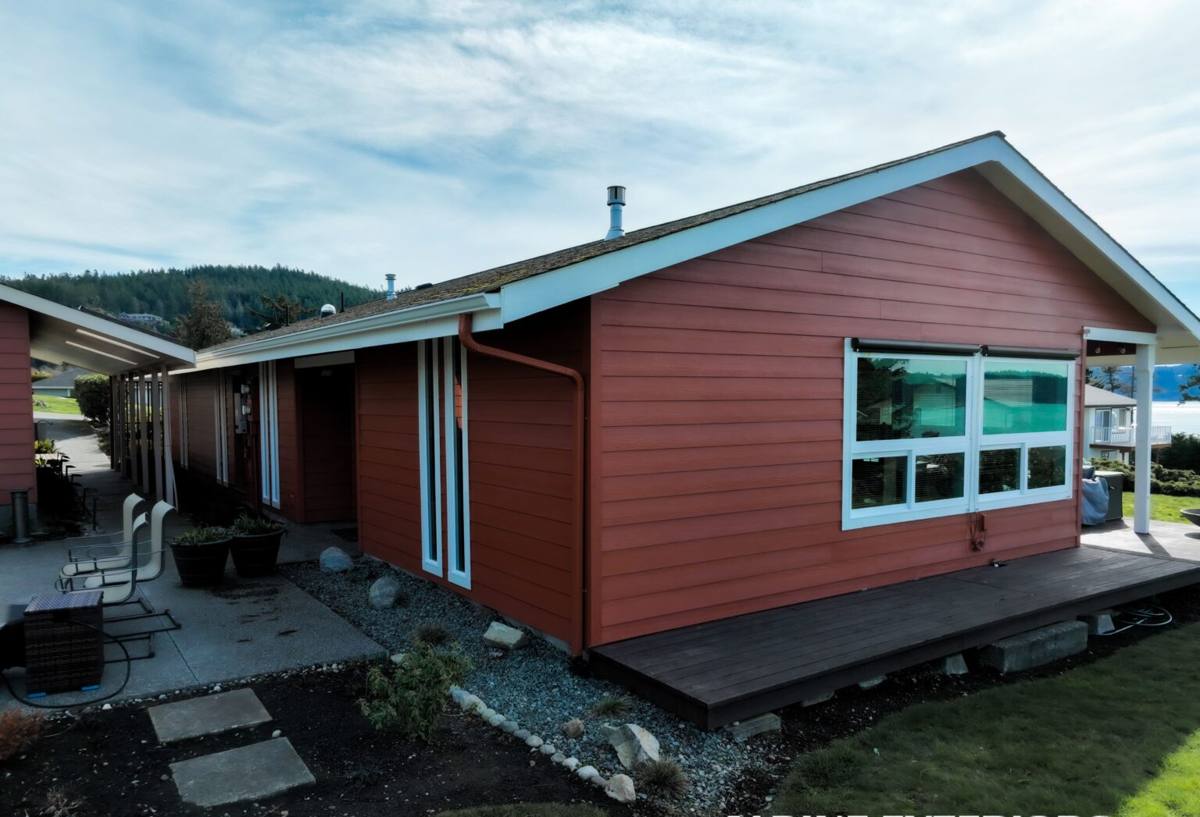
What Terrell Creek's Climate Does to Siding
Salt Air, Even Set Back From the Water
You don't have to be right on the beach to feel the effects of salt air in this part of Whatcom County — it travels. Salt accelerates corrosion on fasteners, flashing, and any exposed metal trim, and it breaks down lower-grade paints and coatings faster than a drier, more inland climate would. For siding, that means the fastener grade and the finish quality matter more here than they would fifteen or twenty miles inland, even on a house that isn't waterfront.
Driving Rain, Not Just Rainfall Totals
Storms moving through this part of the county rarely drop rain straight down. Wind pushes it sideways into wall assemblies, into window and door flashing, and into the joints where trim meets siding or where a roofline meets a wall. That sideways-driven moisture finds gaps that a calmer climate would never test, which is exactly why installation details — not just the siding material itself — decide how a wall performs over time.
A Long Moss and Mildew Season
Mild temperatures and near-constant dampness give moss and mildew a long growing season on shaded surfaces, and Terrell Creek's mix of tree cover and low-lying terrain means plenty of walls stay damp longer than they would in full sun. Any siding material with even a little surface porosity becomes a growth surface over time in conditions like this, particularly on north-facing walls and anywhere close to overhanging trees.
Why We Install Only James Hardie Fiber Cement Siding
We used to install a broader range of siding products. We narrowed that down after years of service calls and tear-offs in coastal Whatcom County towns like this one, where salt air, sustained moisture, and heavy moss exposure show up on every job — not because of a supplier deal or a sales angle.
- Non-combustible core: Fiber cement doesn't feed a fire the way wood-based siding products can, which matters for safety and can matter for insurance as well.
- Factory-applied ColorPlus finish: The color is baked on under controlled factory conditions instead of brushed on at the job site, so it holds up longer against fading, chalking, and moisture exposure than field-applied paint.
- Climate-engineered HZ product lines: Hardie's HZ5 formulation is built for regions with sustained moisture and freeze-thaw cycling, which describes coastal Whatcom County accurately.
- Dimensional stability: Fiber cement doesn't swell, cup, or warp the way engineered wood products can after repeated wet-season exposure.
- Strong transferable warranty: Hardie backs the product with one of the stronger warranty structures in the industry, provided the installation follows their spec.
We won't install LP SmartSide, vinyl siding, Cemplank, Allura, primed spruce, or cedar. Those products all have a place in the market, and plenty of homeowners elsewhere are satisfied with them. But for a climate that hits siding with salt air, driving rain, and a near year-round moss season, we've made a professional call to install one system we fully stand behind rather than offer something cheaper that quietly shifts maintenance risk onto the homeowner a few years down the road.
What a Correct Siding Installation Involves Here
Hardie siding performs the way it's engineered to only when the installation follows the manufacturer's spec closely, and in a climate like Terrell Creek's, the details that are easy to shortcut are the same ones that matter most. A correct job includes:
- Rain screen drainage gap: A small cavity behind the siding lets any moisture that does get past the exterior surface drain and evaporate instead of sitting against the wall sheathing.
- Correct fastener type and spacing: Hardie specifies both for a reason — loose spacing or the wrong fastener grade is one of the more common causes of early siding failure we find on tear-offs in this area.
- Properly lapped house wrap and flashing: Every seam, window, and penetration needs to shed water downward and outward, especially on walls that take wind-driven rain directly.
- Sealed butt joints and trim transitions: Open or poorly sealed joints are where salt-laden moisture finds its way behind the siding first.
- Correct clearance from grade, decks, and roof lines: Siding installed too close to the ground or to a horizontal surface stays wet longer and wicks moisture at the bottom edge.
None of this is exotic or optional. It's the manufacturer's published installation spec, followed consistently on every wall rather than shortcut on the parts that are harder to see once the job is finished and painted over.
Our Siding Installation Process
- On-site assessment: We walk the home, look at the current siding condition, check for existing moisture damage behind it, and note anything specific to the lot — tree cover, shaded walls, low grading — that will affect the job.
- Written scope and estimate: Before any work starts, you get a clear, written scope covering material quantities, prep and tear-off work, and timeline.
- Tear-off and substrate check: Old siding comes off and the sheathing underneath gets inspected for rot or moisture damage. If we find damage, we address it before new siding goes on rather than covering it up.
- House wrap and flashing: A properly lapped weather-resistive barrier and flashing at every window, door, and penetration go on before a single piece of siding, since this layer does most of the actual water management.
- Hardie installation to spec: Panels or lap siding go on with correct fastener spacing, clearance, and joint treatment, following Hardie's published installation requirements for this climate zone.
- Final walkthrough: We go over the finished job with you, point out anything worth knowing for future maintenance, and make sure everything matches what was in the original scope.
Signs a Terrell Creek Home Needs New Siding
- Moss or dark staining that returns quickly after cleaning, especially on shaded or north-facing walls
- Soft or spongy siding, particularly low on the wall or around window and door trim
- Visible warping, cupping, or panels that no longer sit flat against the wall
- Peeling or bubbling paint that keeps coming back despite repainting
- Rust staining around fasteners or trim, more common this close to salt air
- Gaps opening up at butt joints, corners, or trim transitions
- A musty smell or visible mold on interior walls that back up to exterior siding
Cost Factors for a Terrell Creek Siding Project
| Factor | What Drives It | Climate-Specific Consideration |
|---|---|---|
| Home size and wall area | Total square footage of siding needed | Larger, more exposed walls need more attention to flashing detail |
| Tear-off vs. overlay | Whether old siding comes off or gets covered | Tear-off lets us check for hidden moisture damage first, which matters in this climate |
| Substrate repair | Condition of sheathing found once old siding is removed | More common on walls that have taken years of wind-driven rain without a rain screen |
| Trim and detail complexity | Number of windows, corners, and architectural features | Each transition point is a place water can get in if not flashed correctly |
| Siding profile and finish | Lap, panel, or shingle style; ColorPlus color selection | Factory finish holds up better than field-applied paint against salt air |
These are general cost drivers, not a quote. Every lot in Terrell Creek has its own mix of sun exposure, tree cover, and grading, and the only way to know what a specific home actually needs is to walk it in person. We're cautious about giving firm numbers over the phone for exactly that reason — two homes on the same street can need very different scopes once old siding actually comes off.
Why a Crew That Already Works This Area Matters
A contractor who works this stretch of Whatcom County regularly has already seen how salt air, wind-driven rain, and moss behave on real Terrell Creek walls across a full year, not just how a product performs on a spec sheet. That experience shows up in small decisions on install day: which walls need extra flashing lap, where a rain screen gap is worth the added time, and which fastener grade actually holds up instead of just meeting the minimum spec. Those are the choices that decide whether siding is still performing cleanly in twenty-five years or showing problems in five.
It also means fewer surprises during the job itself. A crew that's pulled siding off older homes in this area knows roughly what to expect once the old material comes off — where moisture damage tends to hide, which wall orientations usually need more repair, and how to plan around that instead of discovering it mid-project with no contingency in place.
A Quick Checklist Before Hiring for Siding Work
- Ask what siding material they install and why, not just what's cheapest to quote
- Confirm current Washington contractor licensing and active insurance
- Ask how they handle substrate repair if moisture damage turns up once old siding is removed
- Get a written scope of work, including fastener type and rain screen details, before signing anything
- Ask what's covered under warranty — material and installation labor are often covered separately
If your Terrell Creek home needs new siding, or you're just not sure whether what's on the walls now is holding up the way it should, we're glad to take a look and give you a straightforward, honest read on it. Reach out using the form below for a free, no-pressure estimate.