 Birch Bay Window
 Cottonwood Beach Roofs Work Harder Than Most
Cottonwood Beach sits close enough to the water that every roof in the neighborhood is dealing with conditions a typical inland Whatcom County home never sees. Salt-laden air drifts in off the water, wind-driven rain finds its way under shingles that would stay dry anywhere else, and the shaded, moisture-heavy stretches of fall through spring give moss months to take hold before a homeowner even notices it. None of that means asphalt shingle roofing is the wrong choice here — it remains one of the most practical, cost-effective options for this stretch of coast. It just means the roof has to be installed and maintained with those specific stresses in mind, not treated like a generic re-roof job.
This page is about that one job, done right, for this one area: what the local climate actually does to a shingle roof over time, what a correct installation includes, how our process works, and why hiring a crew that already knows Cottonwood Beach saves homeowners money and headaches down the road.
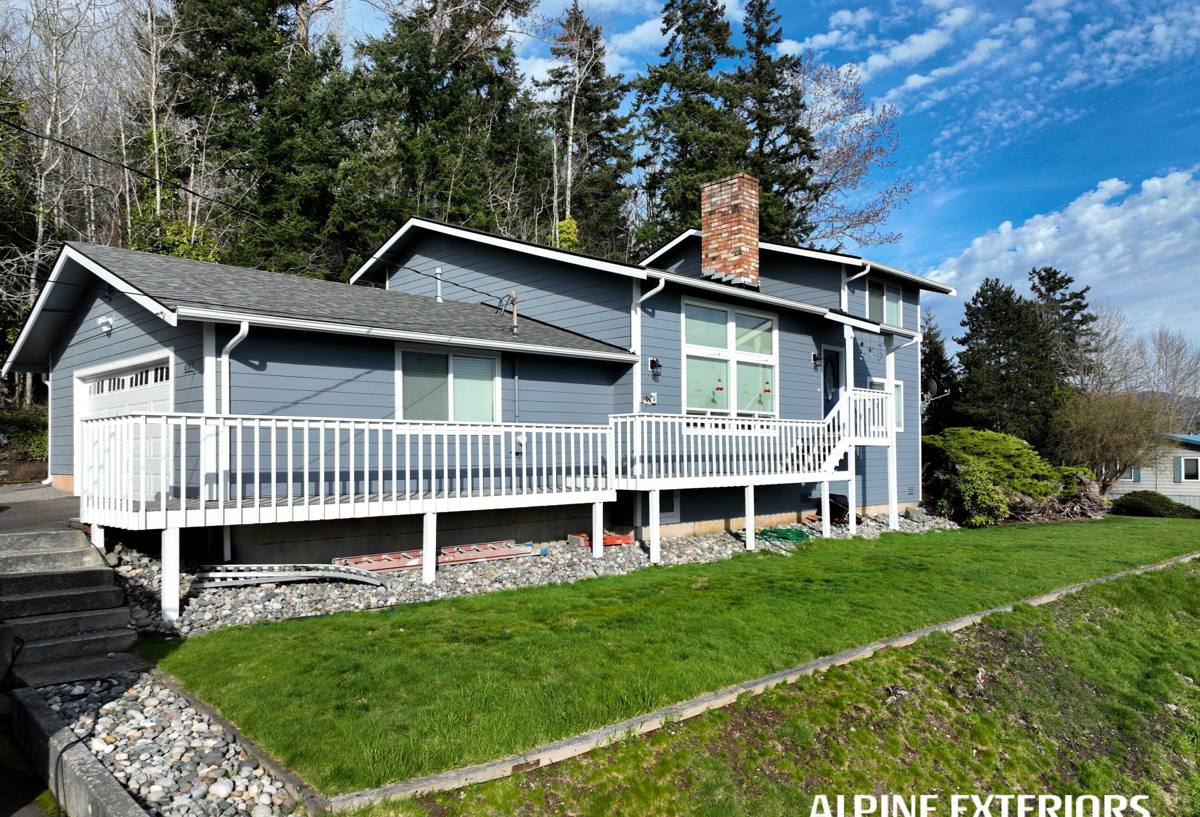
What Salt Air and Driving Rain Do to a Shingle Roof
Asphalt shingles are built to shed water and hold up under UV exposure, but coastal air adds a corrosion element that inland roofs don't deal with. Salt carried on the wind settles on metal flashing, nail heads, and drip edges, and over years it accelerates rust and pitting in components that are supposed to outlast the shingles themselves. A roof with premium shingles but bargain-grade flashing will fail at the flashing long before the shingles wear out.
Driving rain is the other half of the equation. Storms coming off the water don't just fall straight down — they push sideways, forcing water up and under shingle tabs, into exposed nail lines, and through any gap in the underlayment or flashing detail. A roof that would perform fine in a calm rain can leak in a Cottonwood Beach wind event if the underlayment, valleys, and penetrations weren't built for wind-driven moisture from the start.
Why This Matters for Material Choice
It's why we lean toward shingles with strong wind ratings and manufacturers that back them with a real warranty for coastal exposure, paired with corrosion-resistant flashing and fasteners. Cutting corners on either piece shows up as a callback within a few years, not a few decades.
Moss, Algae, and the Long Wet Season
Whatcom County's wet season runs long, and Cottonwood Beach's tree cover and coastal humidity keep roofs damp for extended stretches even when it isn't actively raining. That combination — shade, moisture, and mild temperatures — is exactly what moss and algae need to establish themselves. Left unchecked, moss doesn't just look bad. It holds water against the shingle surface, works its way under tabs as it grows, and can lift shingles enough to let water in during the next storm.
Algae staining (the dark streaking many homeowners notice on north-facing slopes) is mostly cosmetic, but it's a sign of sustained moisture exposure, and it tends to show up first on roofs that are already holding water longer than they should. Shingles rated for algae resistance help, but they don't eliminate the need for basic seasonal upkeep.
Choosing the Right Shingle for This Location
Not every asphalt shingle product is a good fit for a property this close to the water. We generally steer homeowners toward mid- to upper-tier architectural shingles with documented wind and algae-resistance ratings, rather than builder-grade 3-tab products that weren't engineered with coastal exposure in mind.
| Shingle Class | Typical Wind Rating | Algae Resistance | Best Fit For |
|---|---|---|---|
| Standard 3-tab | 60–70 mph | Limited or none | Budget projects set back from direct coastal wind |
| Architectural / laminate | 110–130 mph | Often included | Most Cottonwood Beach homes; balance of cost and durability |
| Premium impact/high-wind rated | 130+ mph | Standard | Exposed lots, waterfront-facing slopes, higher wind exposure |
We'll walk through the actual options and their trade-offs during the estimate rather than assume every home needs the top tier — a set-back lot with tree screening doesn't take the same beating as a home with an open view of the water.
What a Correct Installation Actually Involves
The shingles themselves get most of the attention, but on a coastal roof the components underneath and around them do more of the real work.
Underlayment and Ice-and-Water Protection
We use synthetic underlayment rated for the wind and moisture load this area sees, with self-adhering ice-and-water membrane at eaves, valleys, and any low-slope transitions — the spots most likely to take on wind-driven rain.
Flashing and Fasteners
Corrosion-resistant flashing at chimneys, walls, skylights, and valleys, installed so water sheds over each layer rather than relying on sealant to hold a gap closed. Sealant fails; properly lapped metal doesn't.
Ventilation
A shingle roof that can't breathe traps moisture in the attic, which shortens the life of the shingles from underneath and adds to the moss problem by keeping the roof deck damp longer than it should be. Balanced intake and exhaust ventilation is part of a correct install, not an upsell.
Nailing Pattern and Wind Sealing
Proper nail placement and count, matched to the shingle manufacturer's high-wind installation instructions, is what actually keeps shingles attached during a coastal storm — more so than the shingle's rated wind speed on its own.
Our Process
We keep the process straightforward and communicate clearly at each step, because a roof job on an occupied home shouldn't be a surprise-filled experience.
- On-site inspection and estimate: we look at the existing roof, deck condition, ventilation, and any problem areas specific to the home, and give a clear written estimate.
- Material selection: we go over shingle options and trade-offs for the specific exposure of the lot, not a one-size-fits-all recommendation.
- Tear-off and deck check: old roofing comes off down to the deck, and we address any soft or damaged sheathing before anything new goes down — a common gap in cut-rate re-roofs.
- Underlayment, flashing, and shingle installation: installed in the order and manner described above, matched to manufacturer specs for wind and moisture performance.
- Cleanup and walk-through: site cleared of debris and nails, and we walk the finished roof with the homeowner before we consider the job done.
Signs a Cottonwood Beach Roof Needs Attention
Because moss and salt-air wear happen gradually, a lot of homeowners don't notice a problem until it's already caused interior damage. Worth checking for periodically:
- Moss growth thicker than a light green haze, especially on north- or shade-facing slopes
- Granules collecting in gutters or downspouts, a sign shingles are wearing thin
- Shingle tabs that look curled, cupped, or lifted at the edges
- Rust staining or visible corrosion at flashing, vents, or nail heads
- Dark streaking across roof slopes (algae) even where moss hasn't taken hold
- Any soft spots, discoloration, or staining on interior ceilings after a storm
- Daylight visible through the roof deck from inside an accessible attic
Catching any of these early is almost always cheaper than waiting for a leak to show up inside the house.
Maintenance That Actually Extends Roof Life Here
A well-installed shingle roof in Cottonwood Beach still benefits from basic seasonal upkeep given the amount of moisture and moss pressure the area sees. Keeping gutters clear so water doesn't back up under the eaves, removing overhanging branches that keep sections of the roof shaded and damp, and having moss treated or removed before it works under shingle tabs all go a long way. None of this needs to be elaborate or constant — it's a once or twice a year check that catches small issues before they become deck damage or interior leaks.
Why Local Experience in Cottonwood Beach Matters
A roofing crew that only works inland jobs may not think twice about flashing grade, nailing pattern for wind exposure, or how much moss pressure a given lot's tree cover creates. Working this stretch of Whatcom County regularly means we already know which details matter on a Cottonwood Beach roof and which corners genuinely can't be cut — because we've seen what happens when they are. That's the difference between a roof that needs attention again in five years and one that performs for its full expected lifespan under real coastal conditions.
If you're weighing a repair, a full replacement, or just want an honest read on how much life is left in your current roof, we're happy to take a look. Reach out for a free, no-pressure estimate using the form below.