 Birch Bay Window
 Why Bellingham Homes Need a Different Approach to Windows
Bellingham sits close enough to the water that homes here take on a different kind of weather stress than houses even twenty miles inland. Salt-laden air off Bellingham Bay and the Strait works into hardware and finishes over time. Driving rain, pushed sideways by wind off the water, tests every seal and flashing detail a window has. And the long, damp stretch from fall through spring — what a lot of us just call moss season — keeps wood trim, sills, and siding wet for weeks at a stretch. A window that was engineered and installed for a drier climate, or installed without real attention to flashing and sealing, tends to show its weaknesses here faster than it would somewhere like eastern Washington.
Energy-efficient windows done right in this area aren't just about a lower heating bill, though that matters. They're about a window that keeps performing — sealing out wind, shedding water correctly, resisting condensation — after five, ten, twenty years of Whatcom County weather. That's the standard we build to on every Bellingham job.
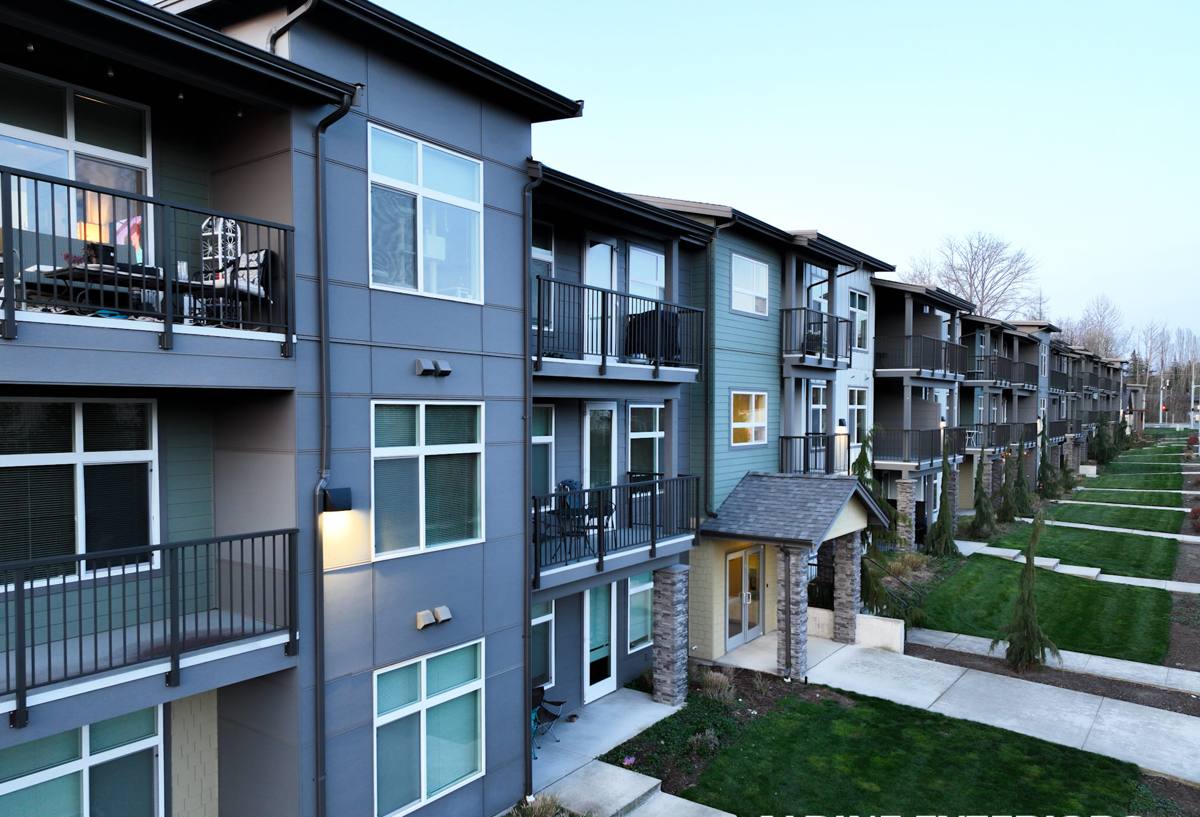
What "Energy-Efficient" Actually Means in This Climate
Energy efficiency in a window comes down to a handful of measurable properties, and in a marine climate like ours, some matter more than others.
U-Factor
U-factor measures how much heat a window lets escape. Lower is better. In Whatcom County's mild-but-damp winters, a low U-factor window keeps interior surfaces warmer, which matters directly for condensation control — a cold window surface is exactly where moist indoor air condenses first.
Solar Heat Gain Coefficient (SHGC)
SHGC measures how much solar heat passes through the glass. Bellingham doesn't get the intense summer sun that drives SHGC decisions in warmer regions, so this is usually a secondary factor here compared to U-factor and air infiltration — but orientation still matters on south- and west-facing rooms that catch more direct sun.
Air Infiltration Rating
This measures how much air leaks through the window assembly itself, independent of the glass. In a location that regularly sees wind-driven rain, a poor air infiltration rating usually means a poor water infiltration rating too — the two go hand in hand. This is one of the most important numbers for our area and one of the most overlooked by homeowners comparing quotes.
Common Problems We See in Bellingham Windows
Every region has its own failure patterns, and after years of work in and around Whatcom County, a few show up again and again:
- Fogged or failed insulated glass units (IGUs): the seal between panes breaks down and moisture gets trapped between the glass — usually a sign of age or a manufacturing seal issue, accelerated by constant moisture exposure.
- Soft or rotting sills and jambs: wood components that stay damp for weeks during moss season without a chance to fully dry.
- Green or black growth on sills and tracks: moss and algae take hold anywhere water sits instead of draining, especially on north-facing exposures that get less sun to dry them out.
- Corroded hardware: salt air accelerates corrosion on cranks, locks, and hinges, especially on homes closer to the bay.
- Persistent interior condensation: often blamed on the window itself, but frequently a combination of an aging window's cold glass surface and a tightly sealed home with limited ventilation.
- Drafts that show up specifically during storms: a sign that air infiltration is fine in calm weather but the seal fails under wind pressure — a classic marine-climate installation issue.
What a Correct Installation Actually Involves
The window unit itself only does part of the job. In this climate, the installation details determine whether a good window performs like one for the next twenty years or starts failing in five.
Flashing and Water Management
Every opening needs a flashing system that directs water down and out, never allowing it to collect behind the trim or siding. This includes sill pan flashing beneath the window, properly lapped side and head flashing, and integration with the home's existing weather-resistive barrier. Skipping or rushing this step is the single biggest cause of hidden water damage behind window openings in our area.
Air Sealing
The gap between the window frame and the rough opening needs to be sealed with an appropriate low-expansion foam or backer rod and sealant — not just stuffed with fiberglass insulation, which does nothing to stop air movement.
Sealant Selection and Joinery
Exterior sealants need to be rated for sustained UV and moisture exposure, and applied at joints designed to shed water rather than trap it. Cheap or mismatched sealant is one of the fastest ways to see premature failure in a coastal climate.
Level, Plumb, and Square
A window installed out of square puts uneven stress on the frame, which can compromise both the seal and the operation of the sash over time — a slow failure that often isn't obvious until years later.
Frame Material Comparison for Whatcom County Conditions
There's no single "best" frame material for every home — it depends on your budget, your home's style, and how much maintenance you want to take on. Here's how the common options hold up in our climate specifically.
| Material | Moisture & Salt Air Performance | Maintenance | Notes for This Area |
|---|---|---|---|
| Vinyl | Good — won't rot or corrode | Low | Solid all-around choice for coastal exposure; quality varies significantly by manufacturer |
| Fiberglass | Excellent — very stable, resists warping | Low | Strong option for higher-exposure walls facing prevailing wind and rain |
| Wood (unclad) | Poor without diligent upkeep | High | Needs consistent refinishing to survive moss season; we're honest with clients about this maintenance burden before they commit |
| Wood-clad (aluminum or vinyl exterior) | Good on the exterior face | Moderate | Interior wood warmth with better weather protection outside; cladding seams need proper detailing |
| Aluminum | Fair — prone to condensation without thermal breaks | Low | Look for a thermally broken frame; standard aluminum conducts cold and invites condensation in our humidity |
Our Process for Bellingham Replacement Projects
We keep the process straightforward and give you real information at each step, not a sales script.
- On-site assessment: we look at existing window condition, sill and jamb condition, orientation and exposure, and any signs of past water intrusion.
- Honest recommendation: we walk you through material and glazing options that fit your home, your budget, and this climate — including telling you when a lower-cost option is genuinely fine for your situation.
- Accurate measurement: precise measurements matter more in retrofit installations than new construction, since we're working within an existing opening.
- Proper removal: old units come out carefully to protect surrounding siding and trim, and we inspect the opening for hidden rot or damage before anything new goes in.
- Correct installation: flashing, air sealing, and sealant work done to the standard described above — not shortcuts to save an hour on install day.
- Cleanup and walkthrough: we clear debris and walk you through how the new windows operate, including any maintenance recommendations specific to their material.
What Drives the Cost of a Window Project
Every home is different, and we'll always give you a specific number after seeing the job, but these are the main factors that move price up or down:
| Factor | Why It Matters |
|---|---|
| Frame material | Vinyl generally costs less upfront than fiberglass or wood-clad; each has different lifetime maintenance costs |
| Glazing package | Double-pane vs. upgraded low-E coatings and gas fills affects both price and performance |
| Opening condition | Hidden rot or damage discovered during removal adds repair work before the new window can go in |
| Number and size of openings | Larger and specialty-shaped windows cost more to manufacture and install |
| Access and exposure | Second-story or hard-to-access openings take more time and equipment |
| Trim and finish work | Matching existing interior or exterior trim adds labor beyond the window unit itself |
As a rough starting point, straightforward single-window replacements in this region often run from the low thousands per window into higher ranges for larger or specialty units — but exact pricing always depends on the specifics above, which is why we quote after an actual site visit rather than over the phone.
Signs It's Time to Replace, Not Repair
Not every window issue means full replacement. Use this as a general guide before you decide:
- Glass is fogged or has visible moisture between panes — the seal is gone and can't be repaired, only the IGU or window replaced.
- Sills or jambs are soft, spongy, or visibly rotted — a sign moisture has been getting past the seal for some time.
- Windows are difficult to open, close, or lock — often a sign of a frame that's shifted out of square.
- You feel a draft near a closed window on a windy day — a strong indicator of air infiltration failure.
- Energy bills have climbed without another clear explanation, and older single-pane or early double-pane units are still in place.
- Exterior hardware shows heavy corrosion despite reasonable care — common on homes with more direct salt air exposure.
Why a Locally Experienced Crew Matters Here
A window installer who mostly works drier inland climates may build good habits for that environment and still miss details that matter on the coast — sill pan flashing, sealant selection rated for sustained moisture exposure, or frame material choices that hold up against salt air. A crew that already works Bellingham and the surrounding Whatcom County communities has seen how local homes age, what fails first, and what actually holds up over a full cycle of wet winters and mossy shoulder seasons. That's not a marketing point — it's the difference between an installation that's still tight in fifteen years and one that needs attention again in five.
Get a Straightforward Estimate
If you're weighing whether to repair or replace, or just want an honest read on what your windows need, we're happy to take a look. The estimate is free, there's no pressure, and you'll get a clear explanation of what we see and what it would take to fix it — use the form below to get started.