 Birch Bay Window
 Metal Roofing in Blaine: Built for a Different Kind of Wear
Blaine sits at the northern edge of Whatcom County, close enough to the water that salt-laden air reaches most homes in town, not just the ones with a direct water view. Combine that with the driving, wind-pushed rain that comes ashore here through fall and winter, and a moss season that can run most of the year on shaded roof planes, and you have one of the more demanding roofing climates in the county. Metal roofing holds up well against all three of those stresses when it's specified and installed correctly for this exposure — but "correctly for this exposure" is doing a lot of work in that sentence, and it's where a lot of otherwise good roofs fall short.
We work across Whatcom County on exterior projects, and Blaine is regular territory for our crew. That matters for a roofing job specifically, because the difference between a metal roof that goes forty-plus years without trouble and one that starts showing fastener corrosion or leaking laps within a decade usually isn't the panel material itself — it's the flashing details, fastener choice, and underlayment decisions made underneath it.
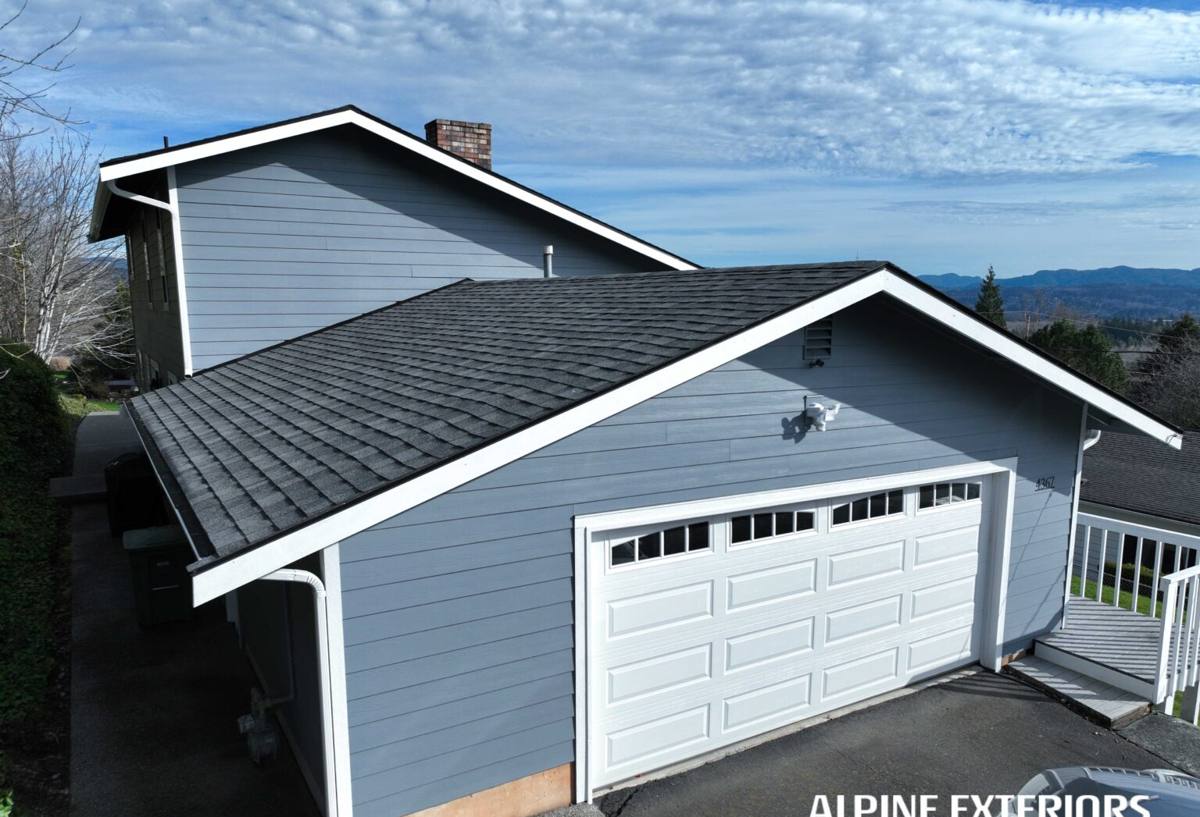
What Metal Roofing Needs to Get Right in This Climate
A metal roof is a system, not just a layer of panels. In a coastal town like Blaine, a few details separate a roof that performs for decades from one that develops problems early:
- Underlayment built for sustained moisture: A high-temperature synthetic or self-adhered underlayment gives the roof deck a real second line of defense, which matters more here than in a drier inland climate where the roof gets more chances to dry out between storms.
- Corrosion-resistant fasteners and clips: Standard fasteners corrode faster in salt air, and a fastener failure on a metal roof is a direct path to a leak. Fastener and clip material needs to match the panel material to avoid galvanic corrosion between dissimilar metals.
- Fully lapped, integrated flashing: Every valley, wall transition, penetration, and eave edge needs flashing that's actually tied into the panel system, not just caulked over after the fact. Wind-driven rain off the water finds gaps that a straight-down rain climate would never expose.
- Ventilation that lets the roof deck breathe: Trapped moisture underneath a metal roof causes deck rot and condensation problems that have nothing to do with the panels themselves. Intake and exhaust ventilation need to be sized and balanced for the actual roof, not assumed from a generic rule of thumb.
- Panel expansion allowance: Metal panels expand and contract with temperature swings, and fastening or trim details that don't account for that movement eventually work themselves loose or oil-can.
None of this is exotic. It's the difference between following a manufacturer's installation spec closely on the parts that are hard to see once the job is done, versus treating those same details as optional.
Choosing a Panel System: Standing Seam vs. Exposed Fastener
Most residential metal roofing in this area comes down to a choice between two panel types, and the right one depends on budget, roof pitch, and how long the homeowner plans to own the house.
| Factor | Standing Seam | Exposed Fastener |
|---|---|---|
| How panels attach | Concealed clips under raised, interlocking seams — no fasteners penetrate the panel face | Screws penetrate the panel face directly, each with a rubber washer seal |
| Coastal durability | Excellent; no exposed fastener heads to corrode or work loose over time | Good with corrosion-resistant screws, but washers and fastener heads are the first thing to age and need eventual replacement |
| Upfront cost | Higher, due to specialized panels and installation labor | Lower; a common entry point for metal roofing |
| Typical service life | 40-60+ years with correct installation | 25-40 years, largely tied to fastener and washer condition |
| Maintenance | Minimal; occasional seam and flashing inspection | Periodic fastener and washer checks, especially after wind events |
We'll walk through both options honestly rather than steering every homeowner toward the higher-cost system by default. An exposed fastener panel, installed correctly with the right hardware, is a legitimate choice for a garage, shop, or budget-conscious re-roof. For a primary home this close to the water and expected to last decades, standing seam's lack of exposed penetrations is usually the better long-term value, and it's what we recommend when a homeowner is planning to stay in the house long enough to see that difference pay off.
Panel Material and Finish
Steel and aluminum are the two common substrate choices. Steel is stronger per thickness and generally less expensive; aluminum won't rust even if the protective coating is eventually compromised, which is worth weighing for a home in more direct salt exposure. On finish, a PVDF-based paint system (often marketed under the Kynar name) holds color and chalk resistance meaningfully longer than a basic polyester finish, and in a climate that puts a finish through this much sustained UV and salt exposure, that difference shows up well before the roof reaches the end of its structural life.
Salt Air, Driving Rain, and Moss: Three Forces That Age a Blaine Roof
Salt Air
Salt-laden air off the water accelerates corrosion on any exposed metal, and a roof made entirely of metal has more surface area at stake than a shingle roof's fasteners and flashing alone. That's exactly why fastener and clip material selection isn't a minor spec detail here — it's one of the biggest factors in how long the roof actually lasts.
Driving Rain
Storms coming off the water in this part of Whatcom County rarely fall straight down. Wind pushes rain sideways and even upward under panel edges and around penetrations, which is a tougher test for flashing and lap details than a calm, straight-down rain climate would ever produce. A roof detailed for average conditions rather than Blaine's actual wind-driven pattern is the kind of roof that develops a slow leak nobody notices until there's staining on a ceiling below.
A Long Moss Season
Metal roofing's smooth, non-porous surface resists moss far better than asphalt shingles or wood shakes, which is one of its real advantages in this climate. It isn't moss-proof, though — organic debris that collects in valleys, against chimneys, or in shaded areas can still hold moisture against the panel and give moss and algae a foothold over time. Roofs on tree-covered or north-facing lots need more attention to debris clearing than roofs that get consistent sun.
Our Process for a Blaine Metal Roof Project
- On-site evaluation: We walk the roof in person to check deck condition, existing ventilation, valley and penetration layout, and sun/shade exposure before recommending a system. A phone estimate can't account for what's actually going on up there.
- System recommendation and honest pricing: We'll lay out panel type, material, and finish options with real trade-offs explained, not just a single quote with no context for why it's built the way it is.
- Tear-off and deck prep: Old roofing comes off, the deck gets inspected for rot or soft spots, and any needed repairs happen before new underlayment goes down — not discovered and skipped afterward.
- Underlayment and flashing installation: This is where most of the actual water management happens, and it's the stage we spend the most care on, since it's also the stage a homeowner can't inspect once the panels are on.
- Panel installation: Panels go on per manufacturer spec, with fastener spacing, clip type, and expansion allowance handled to match the system and this climate.
- Final walk-through and cleanup: We review the finished roof with the homeowner, confirm ventilation and flashing details, and clear the site of debris and packaging before calling the job done.
What Drives the Cost of a Metal Roof
| Cost Factor | Why It Matters |
|---|---|
| Roof size and pitch | More square footage and steeper pitches both increase material and labor time |
| Panel type | Standing seam costs more upfront than exposed fastener due to material and specialized installation labor |
| Substrate and finish | Aluminum and premium PVDF finishes cost more than steel with a standard polyester coating |
| Number of penetrations and valleys | Each chimney, vent, skylight, and valley adds flashing labor and material |
| Deck condition | Rot or soft decking found during tear-off adds repair cost not visible in an initial estimate |
| Tear-off vs. overlay | Removing old roofing adds labor and disposal cost but allows a full deck inspection, which we recommend for a roof meant to last decades |
These are general drivers, not a quote. Two homes in Blaine with the same square footage can land at very different numbers once we're actually on the roof and can see deck condition, valley count, and existing ventilation. We give real numbers after that walk-through, not before it.
Signs a Blaine Roof Needs Attention
- Rust staining or visibly corroded fasteners, more common this close to the water
- Panel seams or laps that have started to separate or lift
- Moss or dark buildup collecting in valleys or against roof penetrations
- Ceiling staining or a musty attic smell after a storm
- Oil-canning (visible wavy panel distortion) that's gotten worse over time
- Loose or missing fastener washers on an exposed fastener roof
- Visible daylight or gaps at flashing around chimneys, vents, or skylights
Why a Crew That Already Works Blaine Matters
A crew that regularly works Blaine and the rest of coastal Whatcom County has seen how salt air, driving rain, and moss actually behave on real roofs here over full years, not just how a panel system performs on a spec sheet. That experience shapes practical decisions on install day — which valleys collect the most debris, where extra flashing attention pays off against wind-driven rain, and which fastener and clip choices are worth the added cost so a homeowner isn't dealing with a callback after the next storm off the water. Blaine's exposed, coastal position isn't the same as more sheltered inland parts of the county, and a roof built without accounting for that difference tends to show it within a few wet seasons.
If you're considering a metal roof for a Blaine home — whether it's a full replacement, a re-roof over an aging system, or you're just trying to compare standing seam against other options — we're glad to walk the roof and give you a straightforward, honest assessment. Reach out using the form below to schedule a free, no-pressure estimate.