 Birch Bay Window
 Fiber Cement Siding for Lynden Homes
Lynden sits inland from the water, but it shares the same marine-influenced weather system that soaks Whatcom County for much of the year. The driving rain that rolls off the Strait of Georgia and Birch Bay doesn't stop at the coastline, and the long moss season that plagues shaded roofs and walls across this region reaches Lynden's tree-lined lots just as easily as it reaches waterfront properties. That's a demanding environment for exterior siding, and it's why we install one product system exclusively: James Hardie fiber cement.
This page is specifically about fiber cement siding for homes in and around Lynden. We're a crew based on the coast in Birch Bay, and we bring the same standards we hold on salt-air, high-moisture jobs to every Lynden project — correct fastener spacing, proper flashing and drainage detail, and a product that's actually engineered for this part of Washington rather than a generic siding line sold everywhere.
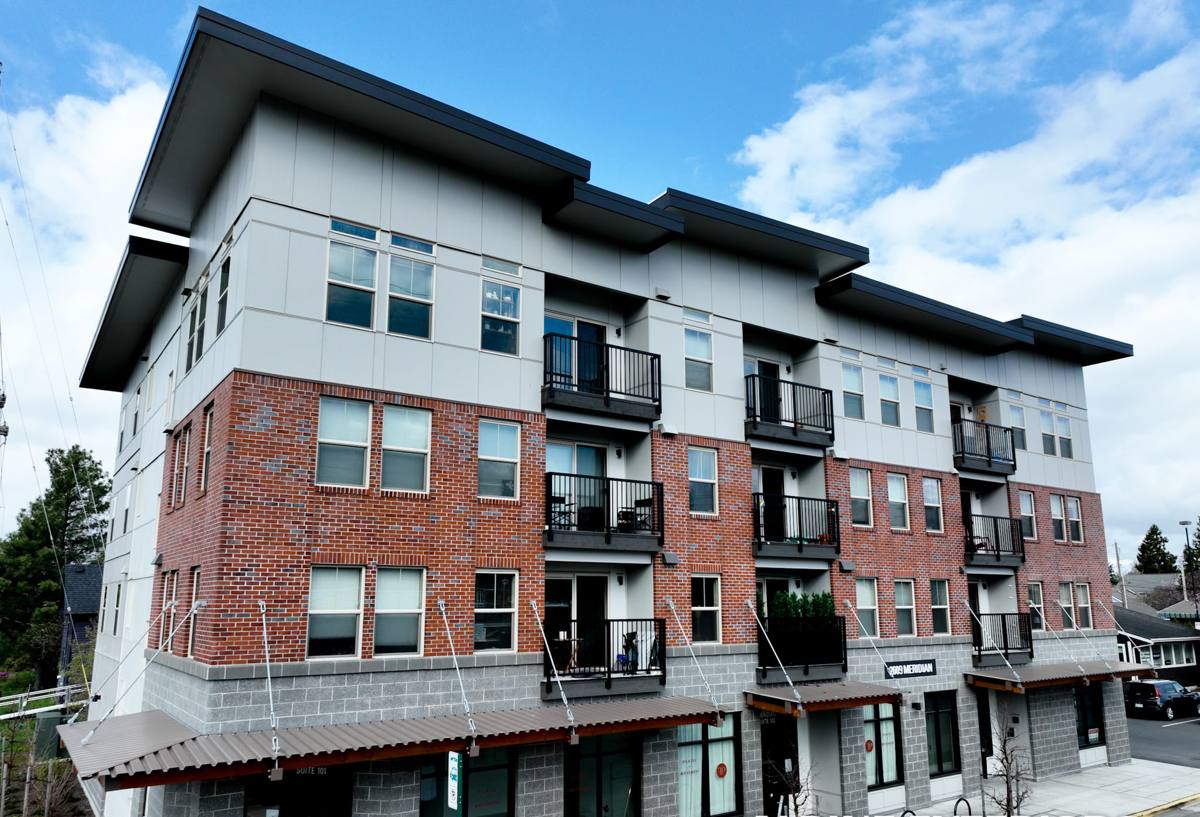
What Lynden's Climate Actually Does to Siding
A Long, Wet Moss Season
Whatcom County's moss and mildew season can run most of the year on shaded or north-facing walls, and Lynden's mix of mature trees and open farmland edges gives moss plenty of shaded, slow-drying surfaces to take hold on. Any siding material that's even slightly porous, or that holds moisture against the substrate instead of shedding it, becomes a growth surface over a few wet seasons. Once moss and mildew get established on a wall, they hold moisture against the surface longer, which speeds up whatever deterioration is already happening underneath.
Driving Rain and Wind-Driven Moisture
Storms moving through this part of Whatcom County regularly bring wind-driven rain that doesn't fall straight down — it gets pushed sideways into siding joints, window trim, and wall penetrations. That sideways moisture load is why flashing detail and joint work matter as much as the siding material itself. A product that resists moisture in a lab test can still fail on a real wall if the installation doesn't account for water moving horizontally, not just down.
Temperature Swings and Freeze-Thaw Cycling
Lynden runs a bit colder in winter than the immediate coastline, with more frequent frost and the occasional hard freeze. Siding that absorbs moisture and then goes through a freeze-thaw cycle is at real risk of cracking, cupping, or losing its bond to the substrate. Fiber cement engineered for this climate zone is built to handle that swing; wood-based and lower-grade products are more vulnerable to it.
Why We Only Install James Hardie Fiber Cement
We used to install a wider range of siding products. We don't anymore, and that change came from what we kept seeing on service calls and tear-offs across Whatcom County — not from a supplier relationship or a sales pitch. Here's what led us to standardize on one system:
- Non-combustible core: Fiber cement doesn't feed a fire the way wood-based siding can, which matters for safety and can matter for insurance.
- Factory-applied ColorPlus finish: The color is baked on under controlled factory conditions rather than brushed on in the field, which holds up longer against fading, chalking, and moisture than site-applied paint.
- Climate-engineered HZ product lines: Hardie's HZ5 formulation is built for regions with heavy moisture exposure and freeze-thaw cycling — a good match for inland Whatcom County's wetter, colder winters.
- Dimensional stability: Fiber cement doesn't swell, warp, or cup the way engineered wood products can when they repeatedly take on and release moisture over a wet season.
- Strong transferable warranty: Hardie backs the product with a robust warranty structure, provided installation follows their published specifications.
We won't install LP SmartSide, vinyl siding, Cemplank, Allura, primed spruce, or cedar. Each has a legitimate place in the market, and plenty of homeowners are satisfied with them elsewhere. But after years of seeing how this region's rain and moss season treat lower-grade or moisture-sensitive materials, we made a professional call: we'd rather stand fully behind one system than offer a cheaper option that quietly shifts long-term maintenance risk onto the homeowner.
What a Correct Fiber Cement Installation Involves
Fasteners and Spacing
Hardie's warranty and performance depend on using the correct fastener type, length, and spacing for the specific product and substrate. Under-fastened or incorrectly spaced siding can work loose over time, especially with the wind exposure this region sees during fall and winter storms.
Flashing and Drainage Detail
Every window, door, and wall penetration needs flashing that's properly lapped and integrated with the siding, along with a drainage plane behind the panels where called for. This is the detail that determines whether wind-driven rain stays outside the wall assembly or works its way in — and it's the single most common place we find problems on older installations we're asked to repair.
Joints, Trim, and Caulk Lines
Factory-mitered corners and properly caulked joints keep water from tracking into seams. Loose or poorly sealed joints are exactly the kind of detail that looks fine on installation day and causes problems two or three wet seasons later.
Clearance from Grade and Roof Lines
Fiber cement siding needs proper clearance from soil, decking, and roof surfaces to avoid constant moisture contact. Skipping this clearance is a common shortcut that leads to swelling and deterioration at the bottom courses of siding, even with a good product installed above it.
Choosing a Siding Profile
Hardie's fiber cement system comes in more than one profile, and picking the right one matters as much for a Lynden home as the underlying material does. HardiePlank lap siding is the most common choice — it gives the traditional horizontal clapboard look and works well on most house styles in this area. HardieShingle offers a textured, staggered look for homes going for a more traditional or coastal-cottage appearance, while HardiePanel gives a smooth or vertical board-and-batten profile for a more modern or farmhouse-style front. All three are engineered from the same climate-rated fiber cement, so the choice comes down to appearance and architectural style rather than one profile holding up better than another in this climate.
Comparing Siding Options for a Lynden Home
| Material | Moisture Behavior | Maintenance in This Climate | Typical Longevity Here |
|---|---|---|---|
| James Hardie fiber cement | Dimensionally stable, resists swelling and moss adhesion | Low; factory finish resists fading, chalking, and mildew staining | 30+ years with correct installation |
| Vinyl siding | Can warp or distort with temperature swings | Low upfront, but seams and fasteners remain exposure points | Variable; shorter under wind exposure |
| LP SmartSide / engineered wood | Wood-based core is moisture-sensitive at cut edges and joints | Moderate; regular edge sealing and caulk upkeep needed | Depends heavily on installation quality and upkeep |
| Cedar / primed wood | Absorbs and releases moisture readily | High; regular refinishing needed in a wet, moss-prone climate | Shorter without consistent maintenance |
What Drives the Cost of a Fiber Cement Project in Lynden
Every siding quote should spell out exactly what's driving the number, not just hand over a lump sum. The biggest factors are total square footage, whether old siding needs to be torn off and disposed of first, and how much trim, window, and corner detail the house has — a simple rectangular home with few windows costs less to side correctly than one with dormers, bump-outs, and lots of trim work. Siding profile choice also plays a role, since shingle-style siding takes more labor to install than straight lap siding. Site access and any needed repairs to the sheathing or framing underneath, found once old siding comes off, can also change the final number. We'd rather walk a homeowner through these specific cost drivers on their own house than quote a number with no explanation behind it.
Signs Lynden Siding Needs Attention
- Moss or mildew staining that returns quickly after cleaning, especially on shaded or north-facing walls
- Soft spots, bubbling, or visible swelling near the bottom courses or around window trim
- Cracked or separated caulk lines at joints, corners, and window flashing
- Paint or finish that's chalking, peeling, or fading unevenly across the wall
- Visible warping, cupping, or gaps between siding boards
- Interior wall or ceiling staining near exterior walls after a windy storm
Our Process for a Lynden Siding Project
We start with an on-site walk of the existing siding, looking specifically at how it's held up against this region's moisture and moss exposure — not just how it looks from the street. From there we put together a clear, written scope covering material, fastener and flashing detail, and timeline before any work begins. During the project, drainage and flashing details are handled as standard practice, not as optional upgrades quoted separately, because those details are what actually determine how long the siding lasts.
A Simple Checklist Before Hiring for Siding Work in Lynden
- Ask what siding material they install and why, and whether they'll put it in writing with a real warranty
- Confirm current Washington contractor licensing and active liability insurance
- Ask how they detail flashing at windows, doors, and roof-to-wall transitions for wind-driven rain
- Ask whether fastener type and spacing are called out in the written scope, not left to the crew's discretion on-site
- Get a clear, written scope of work before signing any contract
Why a Crew That Already Works This Area Matters
A contractor who regularly works both the Birch Bay coastline and inland communities like Lynden already understands how this region's rain, wind, and moss season behave across different exposures — not just in one spot. That familiarity shows up in the small decisions on a job: which fastener grade to use, where to add extra drainage detail, how tight to run a caulk line before a fall storm season sets in. Those are exactly the decisions that determine whether a siding job lasts fifteen years or thirty.
If you're weighing siding options for a Lynden home, we're happy to take a look and give you an honest read on what it needs — no pressure, no generic sales pitch. Reach out below for a free estimate.