 Birch Bay Window
 Roofing in Cherry Point Isn't the Same as Roofing Inland
Cherry Point sits right on the water, and that changes what a roof has to deal with year after year. Homes here take on salt-laden air off the Strait of Georgia, wind-driven rain that finds its way under poorly lapped shingles, and a moss season that can run most of the year in the shaded, damp pockets of Whatcom County. A roofing job that would hold up fine in a drier, inland part of Washington can start showing problems within a few years out here if it wasn't built with this specific exposure in mind.
We install and repair asphalt shingle roofs for homeowners throughout Birch Bay and the Cherry Point area, and the approach we take reflects what actually happens to a roof in this microclimate — not a generic install pulled from a manufacturer's manual written for a different region.
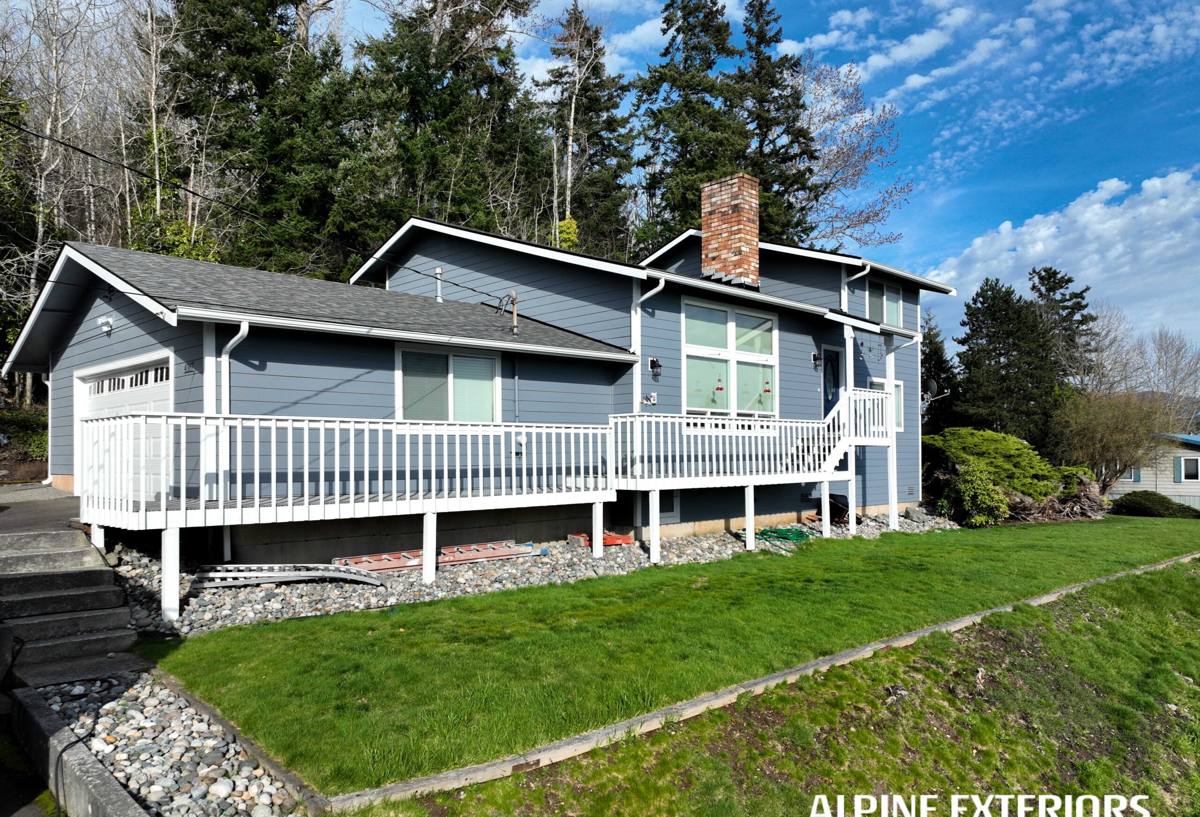
What Salt Air and Coastal Wind Do to a Roof Over Time
Salt air is corrosive to exposed metal, and a roof has more metal in it than most people realize: nails, flashing, vent boots, drip edge, and fastener heads. When those components are the wrong grade for a coastal environment, or when they're installed with gaps that let salt-carrying moisture sit against them, corrosion sets in early. Once flashing or fasteners start to fail, water finds a path in — even if the shingles themselves still look fine from the ground.
Wind off the water also puts more lateral stress on shingles than a typical inland installation ever sees. Shingles rated for standard wind exposure can lift at the tabs in a sustained coastal blow, especially if the sealant strip never bonded properly because of a cool, damp install day. Over time, repeated lifting fatigues the shingle and opens a path for wind-driven rain to get underneath.
Where This Shows Up First
- Rusting or streaking around nail heads and flashing edges, usually visible before any leak appears
- Lifted or cupped shingle tabs along roof edges and ridges, where wind pressure is highest
- Soft or discolored sheathing at valleys and penetrations, found during a tear-off or attic inspection
- Premature granule loss on the windward side of the roof compared to the sheltered side
Moss, Shade, and the Long Wet Season
A lot of Cherry Point and Birch Bay properties sit under a mix of conifers and mixed woods that keep parts of the roof shaded most of the day. Combine that shade with the region's long stretch of damp weather and you get ideal conditions for moss and algae growth. Moss isn't just cosmetic — as it establishes itself in the shingle surface, it holds moisture against the roof deck far longer than open air and sun would allow, and its root structure can work into shingle granules and lift tabs over time.
The fix isn't a one-time power wash. It's a combination of shingle selection, proper ventilation so the roof deck dries out between wet spells, and realistic maintenance expectations from day one. We're upfront with homeowners about which parts of their roof are going to need more attention because of tree cover, rather than pretending a standard install will solve a shade problem it can't.
Practical Moss Management
- Algae-resistant shingles with embedded copper or zinc granules, placed strategically on high-risk slopes
- Zinc or copper strips at the ridge on heavily shaded roofs, which let rain carry trace metal down the roof surface
- Keeping gutters and valleys clear so water doesn't pool and feed growth at the edges
- Gentle, low-pressure cleaning on a reasonable schedule — never pressure-washing granules off the shingle face
What a Correct Asphalt Shingle Install Looks Like Out Here
The shingles themselves are only part of the system. A roof that's going to hold up under Cherry Point conditions needs every layer working together:
Underlayment and Water Protection
We use synthetic underlayment as the primary water barrier under the shingle field, and we add self-adhered ice-and-water membrane at the vulnerable spots — eaves, valleys, around chimneys and skylights, and anywhere wind-driven rain is most likely to be pushed under the shingle edge. On a fully exposed, water-facing roof, we'll often extend that membrane further than a standard inland job would call for.
Flashing and Fasteners
Given the salt exposure, fastener and flashing grade matters more here than in most parts of the state. We use corrosion-resistant fasteners and properly lapped, sealed flashing at every penetration and transition — not just because it's code, but because it's the single biggest factor in whether a roof stays watertight through its warranty period.
Ventilation
A roof deck that can't breathe stays damp longer, which feeds moss and accelerates sheathing rot underneath. Balanced intake and exhaust ventilation is part of every install we do, sized correctly for the attic space rather than added as an afterthought.
Shingle Selection
We generally steer homeowners here toward architectural (laminated) shingles rated for higher wind speeds, with algae-resistant granules built in. They cost a bit more up front than basic three-tab shingles, but the added wind rating and moss resistance are worth it in a location that gets both driving rain and heavy shade on the same roof.
Comparing Shingle Options for a Coastal, Shaded Roof
| Factor | Standard 3-Tab | Architectural (Laminated) | Impact-Rated Architectural |
|---|---|---|---|
| Wind rating | Lower, more prone to tab lift in coastal wind | Higher, better suited to open coastal exposure | Highest, plus added resistance to debris impact |
| Moss/algae resistance | Basic, unless specified | Usually available with algae-resistant granules | Usually available with algae-resistant granules |
| Appearance | Flat, uniform look | Dimensional, heavier shadow line | Dimensional, heavier shadow line |
| Typical lifespan in this climate | Shorter, especially in shaded/coastal spots | Longer with proper install and ventilation | Longest, with added durability margin |
| Best fit | Budget projects, low exposure roofs | Most Cherry Point and Birch Bay homes | Fully exposed, high-wind, or high-value roofs |
Our Process for Cherry Point Roofing Jobs
Every roof gets evaluated on its own terms — tree cover, sun exposure, wind exposure, and the condition of the existing roof deck all factor into what we recommend.
1. On-Site Assessment
We walk the roof and the attic, not just the roof surface. Deck condition, ventilation, existing flashing, and moisture staining all get checked before we recommend a scope of work.
2. Straightforward Scope and Pricing
You get a written scope that explains what's being replaced, what underlayment and flashing package is being used, and why — no vague line items. Full re-roofs on an average Cherry Point home typically run into the mid-to-high five figures depending on size, pitch, and how much deck repair is needed, but we won't know your actual number until we've seen the roof.
3. Tear-Off and Deck Inspection
Old material comes off down to the deck so we can actually see what's underneath. Soft or water-damaged sheathing gets replaced before anything new goes down — covering a bad deck with new shingles just hides the problem.
4. Install to the Coastal Spec
Ice-and-water membrane at vulnerable areas, synthetic underlayment across the field, corrosion-resistant flashing and fasteners, balanced ventilation, and properly nailed shingles per manufacturer spec for the wind zone.
5. Final Walkthrough
We go over the finished roof with you, including anything specific to your property — shaded slopes that will need more moss attention, gutter areas to keep clear, and what your warranty actually covers.
Why a Roof Warranty Is Only as Good as the Install
Manufacturer warranties on asphalt shingles sound reassuring, but most of them are tied to installation meeting specific requirements — correct nailing pattern, proper ventilation, compatible underlayment. If a roof is installed incorrectly, a manufacturer can and sometimes will deny a claim based on installation error, regardless of what the shingle itself was rated for. That's a big part of why we're careful about ventilation and flashing details that some crews treat as optional: it's not just about performance, it's about whether your warranty actually protects you when you need it.
Maintenance That Actually Fits This Location
A Cherry Point roof isn't a install-it-and-forget-it project, especially on shaded lots. A little seasonal attention goes a long way toward getting full life out of the roof:
- Clear gutters and valleys before the fall rains set in, so water isn't backing up under shingle edges
- Have shaded or moss-prone slopes checked annually, not just when growth becomes visible from the ground
- Look for streaking or rust at flashing points after storms, which often shows up before a leak does
- Trim back overhanging branches where practical to reduce shade and debris buildup on the roof
- Address small flashing or sealant issues promptly — they're inexpensive to fix early and expensive to ignore
Why Local Experience Matters for This Job
A roofing crew that mostly works inland jobs doesn't always think about salt-air fastener grades, wind-driven rain at the eaves, or which slopes on a Whatcom County property are going to fight moss for ten months of the year. Those aren't exotic problems, but they're specific to this stretch of coastline, and building for them from the start costs a lot less than fixing a roof that was built for a different climate. We work in Birch Bay and Cherry Point regularly, and the details in this page reflect what we've learned needs attention here — not a generic checklist applied everywhere.
If you're planning a roof replacement, dealing with an aging roof that's showing early wear, or just want an honest read on what condition your roof is really in, we're happy to take a look. Reach out for a free, no-pressure estimate using the form below.